In brief
At a glance
Quick Facts
- Definition
- Water stress occurs when the demand for fresh water exceeds the available supply or when poor quality restricts its use.
- Primary metric
- The water exploitation index (WEI) compares total water withdrawals to renewable freshwater resources.
- Stress threshold
- A region is under water stress when withdrawals exceed 20% of renewable supply; severe stress above 40%.
- Global water use
- Agriculture accounts for about 70% of global freshwater withdrawals.
- Most stressed region
- The Middle East and North Africa is the most water-stressed region in the world.
- Economic impact
- Water stress can reduce GDP growth by up to 6% in some regions, according to the World Bank.
- Population affected
- Over 2 billion people live in countries experiencing high water stress.
- Climate link
- Climate change is projected to intensify water stress in already arid and semi-arid regions.
Key Takeaways
- Water stress occurs when the demand for fresh water exceeds the available amount during a certain period or when poor quality restricts its use.
- It is measured using indicators that compare total water withdrawals to renewable freshwater resources, often expressed as a percentage.
- The most widely used metric is the water exploitation index (WEI), which defines stress as withdrawals exceeding 20–40% of renewable supply.
- Water stress is driven by population growth, economic development, climate variability, and inefficient water use.
- High water stress threatens human health, food security, economic growth, and ecosystem integrity.
- Solutions include demand management, water reuse, desalination, and integrated water resource management.
What Is Water Stress and How Is It Measured?
Water stress is a condition in which the demand for fresh water—from households, agriculture, industry, and the environment—approaches or exceeds the sustainable supply of renewable water resources within a given region and time frame. It is not simply a measure of physical water availability; it also accounts for the quality of water and the capacity of a society to manage its water resources. When a region experiences water stress, it faces challenges in meeting the water needs of its population, economy, and ecosystems, often leading to competition among users and environmental degradation.
Measuring water stress involves quantifying the relationship between water use and water availability. The most common approach is to calculate the ratio of total freshwater withdrawals to total renewable freshwater resources, expressed as a percentage. This metric, often called the water exploitation index (WEI) or withdrawal-to-availability ratio, provides a baseline for categorizing stress levels. A region is typically considered to be under water stress when withdrawals exceed 20% of renewable supply, and under severe stress when the ratio surpasses 40%. However, measurement is complex and must consider temporal variability, environmental flow requirements, and the quality of available water. Advanced assessments incorporate multiple indicators, including groundwater depletion, drought frequency, and socio-economic factors such as access to water infrastructure and adaptive capacity.
How It Works
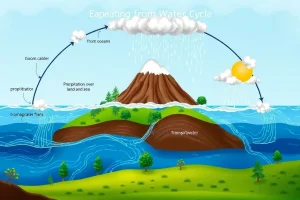
Water stress measurement relies on comparing water demand with water supply at various spatial and temporal scales. The fundamental calculation is the water exploitation index (WEI), defined as the ratio of total annual freshwater withdrawals to the long-term average available renewable water resources. Withdrawals include water taken from surface water bodies, groundwater, and desalination plants for domestic, agricultural, and industrial uses. Renewable resources refer to the water replenished through the hydrological cycle, primarily from precipitation that becomes surface runoff or groundwater recharge.
To capture the complexity of water stress, several refined indicators have been developed:
- Baseline water stress (BWS): Used by the World Resources Institute, this measures the ratio of total annual water withdrawals to available renewable water supplies, accounting for upstream consumptive use and flow requirements for ecosystems. A BWS score above 40% indicates high stress.
- Water exploitation index plus (WEI+): Employed by the European Environment Agency, this indicator considers net water consumption (withdrawals minus return flows) rather than gross withdrawals, providing a more accurate picture of pressure on resources.
- Falkenmark indicator (water scarcity index): This older metric defines water stress based on per capita renewable water availability, with thresholds of 1,700 m³/person/year for stress and 1,000 m³/person/year for scarcity.
- Water poverty index (WPI): A composite index that combines physical water availability with access, capacity, use, and environmental factors to reflect the multidimensional nature of water stress.
These measurements are often aggregated at the country or basin level, but finer spatial resolution is increasingly used to identify hotspots and seasonal variations. Remote sensing, hydrological models, and water accounting frameworks help fill data gaps in ungauged regions.
Main Causes or Drivers
Water stress arises from a combination of natural and human-induced factors. The primary drivers include:
- Population growth and urbanization: Larger populations and expanding cities increase domestic and municipal water demand, often in areas already facing limited supplies.
- Agricultural demand: Agriculture accounts for roughly 70% of global freshwater withdrawals. Irrigation-intensive farming, especially in arid regions, places immense pressure on water resources.
- Industrial and energy production: Manufacturing, mining, and thermoelectric power generation require substantial water withdrawals and can degrade water quality through pollution.
- Climate variability and change: Altered precipitation patterns, more frequent droughts, and reduced snowpack storage diminish renewable water supplies and increase uncertainty.
- Inefficient water use and infrastructure: Leaky distribution systems, outdated irrigation techniques, and lack of water recycling lead to high losses and unnecessary stress.
- Pollution: Contamination of surface and groundwater reduces the amount of usable water, effectively increasing stress even when physical supplies are adequate.
Environmental and Human Impacts
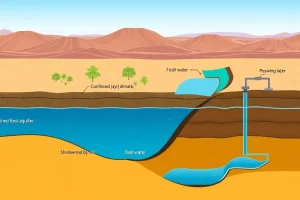
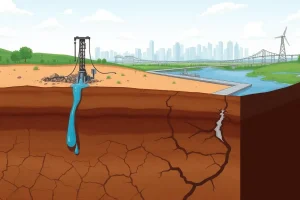
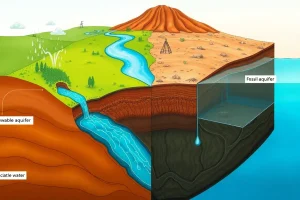
Water stress has far-reaching consequences for both natural ecosystems and human societies. Environmentally, reduced streamflows and over-extraction of groundwater can lead to the drying of wetlands, loss of aquatic habitats, and declining biodiversity. Rivers like the Colorado and the Yellow River have experienced periods where they no longer reach the sea, disrupting entire ecosystems. Groundwater depletion, a common response to surface water stress, causes land subsidence, reduced baseflow to streams, and saltwater intrusion in coastal aquifers.
For humans, water stress threatens food security by limiting irrigation potential and reducing crop yields. It can trigger or exacerbate conflicts over shared water resources, particularly in transboundary basins. Economic impacts include increased costs for water supply and treatment, reduced industrial output, and energy shortages in regions dependent on hydropower. Public health suffers when inadequate water supply leads to poor sanitation and hygiene, increasing the risk of waterborne diseases. In severe cases, water stress can force migration and contribute to social instability.
Regional Differences
Water stress is not uniformly distributed; it varies dramatically by region, season, and year. The Middle East and North Africa (MENA) is the most water-stressed region globally, with many countries withdrawing more than 80% of their renewable water annually. South Asia, particularly India and Pakistan, faces high stress due to dense populations, intensive agriculture, and groundwater overuse. In sub-Saharan Africa, physical water scarcity is less common, but economic water stress—lack of infrastructure to access available water—is widespread.
Even within water-rich regions, stress can occur locally or seasonally. For example, parts of southern Europe experience summer water stress due to tourism and irrigation demands, while the western United States faces chronic stress from prolonged drought and overallocation of the Colorado River. Climate change is expected to exacerbate regional differences, intensifying water stress in already arid areas and altering precipitation patterns in others.
Solutions
Addressing water stress requires a combination of supply-side and demand-side strategies, along with improved governance and international cooperation. Key solutions include:
- Water conservation and efficiency: Upgrading irrigation systems, fixing leaks in municipal networks, and promoting water-saving technologies in households and industries can significantly reduce demand.
- Water reuse and recycling: Treating and reusing wastewater for agriculture, industry, and even potable purposes augments supply without increasing withdrawals.
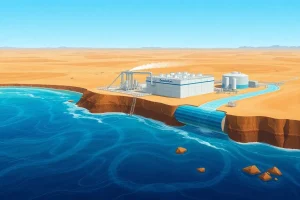
- Desalination: Converting seawater or brackish water to freshwater can provide a reliable source for coastal cities, though it is energy-intensive and costly.
- Integrated water resource management (IWRM): A holistic approach that coordinates the management of water, land, and related resources across sectors and boundaries to maximize social and economic welfare without compromising ecosystem health.
- Demand management and pricing: Economic instruments such as tiered water pricing and water markets can incentivize conservation and allocate water to higher-value uses.
- Nature-based solutions: Protecting and restoring watersheds, wetlands, and forests enhances natural water storage, filtration, and flood control.
Data Limitations and Uncertainties
Despite advances in water stress assessment, significant data limitations and uncertainties remain. Many regions lack comprehensive monitoring networks for streamflow, groundwater levels, and water quality, forcing reliance on modeled estimates that may not capture local conditions accurately. Renewable water availability is often calculated as long-term averages, masking seasonal and interannual variability that is critical for understanding stress.
Water withdrawal data is frequently incomplete or outdated, particularly for agriculture, which is the largest user but often self-supplied and poorly metered. The inclusion of environmental flow requirements—the water needed to sustain ecosystems—varies across indicators, leading to inconsistent stress classifications. Additionally, most metrics focus on physical water quantity, neglecting water quality degradation that can render supplies unusable. Transboundary basins pose further challenges, as data sharing between countries is often limited. These uncertainties mean that water stress assessments should be interpreted as indicative rather than absolute, and they highlight the need for improved monitoring and open data initiatives.
FAQ
What is water stress?
Water stress is the condition where the demand for fresh water exceeds the sustainable supply, or where poor water quality limits its use, leading to competition among users and environmental harm.
How is water stress measured?
It is commonly measured using the water exploitation index (WEI), which is the ratio of total freshwater withdrawals to renewable freshwater resources. Other indicators include baseline water stress, the Falkenmark indicator, and composite indices that consider environmental flows and socio-economic factors.
Why does water stress matter?
Water stress threatens human health, food production, economic development, and ecosystem stability. It can lead to water shortages, conflicts, and forced migration, making it a critical challenge for sustainable development.
References
- Food and Agriculture Organization of the United Nations (FAO). AQUASTAT Database. http://www.fao.org/aquastat
- World Resources Institute (WRI). Aqueduct Water Risk Atlas. https://www.wri.org/aqueduct
- European Environment Agency (EEA). Water Exploitation Index. https://www.eea.europa.eu/data-and-maps/indicators/use-of-freshwater-resources-3
- United Nations World Water Development Report. UNESCO. https://www.unesco.org/reports/wwdr
- Falkenmark, M., Lundqvist, J., & Widstrand, C. (1989). Macro-scale water scarcity requires micro-scale approaches. Natural Resources Forum, 13(4), 258-267.