In brief
At a glance
Quick Facts
- Primary Nutrients
- Nitrogen and phosphorus are the main nutrients causing eutrophication.
- Toxin Types
- Common HAB toxins include microcystins, saxitoxins, and brevetoxins, affecting liver, nervous system, and respiratory system.
- Largest Dead Zone
- The Gulf of Mexico dead zone averages over 5,000 square miles, driven by Mississippi River nutrient runoff.
- Economic Cost
- Freshwater HABs in the U.S. cost an estimated $300 million to $1 billion annually in lost recreation, property values, and treatment.
- Natural vs. Cultural
- Eutrophication can be natural (over centuries) or cultural (accelerated by human activities).
- Freshwater HAB Organisms
- Cyanobacteria, also called blue-green algae, are the most common HAB-causing organisms in freshwater.
Key Takeaways
- Eutrophication is the enrichment of water with nutrients, while a harmful algal bloom (HAB) is a rapid proliferation of algae that can cause harm; eutrophication often triggers HABs, but the two are not synonymous.
- Excess nitrogen and phosphorus from human activities are the primary drivers of cultural eutrophication, which increases the frequency and severity of HABs.
- HABs can produce potent toxins, create dead zones through oxygen depletion, and disrupt aquatic ecosystems, drinking water supplies, and local economies.
- Effective management requires reducing nutrient inputs at the source, monitoring water quality, and implementing policies that address both eutrophication and HABs.
What Is Eutrophication vs Harmful Algal Bloom?
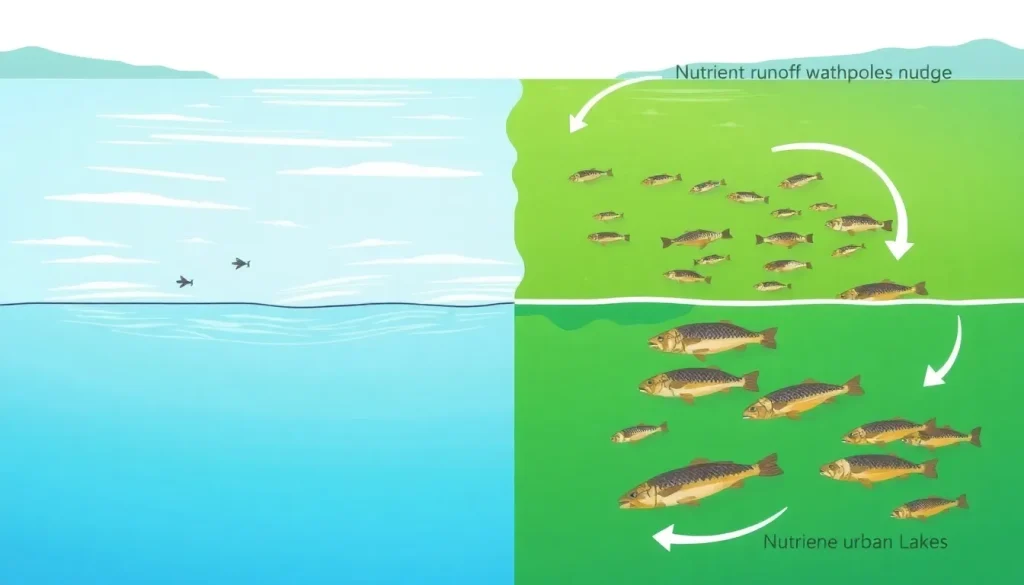
Eutrophication is the process by which a body of water becomes overly enriched with nutrients, particularly nitrogen and phosphorus, leading to excessive growth of plants and algae. Harmful algal bloom (HAB) refers to a rapid increase in the population of algae—often cyanobacteria (blue-green algae) in freshwater or dinoflagellates and diatoms in marine environments—that can produce toxins or otherwise cause harm to ecosystems, human health, or economies. While eutrophication frequently creates conditions that favor HABs, the two terms describe different phenomena: eutrophication is a process of nutrient enrichment, whereas a HAB is a biological event characterized by the proliferation of algae that have detrimental effects.
Eutrophication can occur naturally over centuries as lakes and coastal waters gradually accumulate nutrients from surrounding landscapes. However, human activities such as agriculture, wastewater discharge, and urban runoff have dramatically accelerated the rate of nutrient input, leading to what is termed “cultural eutrophication.” This accelerated process often results in dense algal blooms, some of which are harmful. Not all algal blooms are harmful; many are benign and form the base of aquatic food webs. Conversely, not all HABs are directly caused by eutrophication—some occur in nutrient-poor waters due to other factors like changes in water temperature, salinity, or light availability. The distinction is important for developing targeted management strategies: addressing eutrophication focuses on nutrient reduction, while managing HABs may also require monitoring, early warning systems, and direct bloom control measures.
How It Works
Eutrophication begins when excess nutrients, primarily nitrogen and phosphorus, enter a water body. These nutrients act as fertilizers, stimulating the rapid growth of phytoplankton (microscopic algae) and aquatic plants. In a balanced ecosystem, algae are consumed by zooplankton and other organisms, and the nutrients are recycled. However, when nutrient levels are too high, algae can grow explosively, forming dense blooms that block sunlight from reaching submerged vegetation. As the bloom dies and sinks, it is decomposed by bacteria, a process that consumes dissolved oxygen from the water. This can lead to hypoxia (low oxygen) or anoxia (no oxygen), creating “dead zones” where most aquatic life cannot survive.
Harmful algal blooms are a subset of these blooms that cause harm through several mechanisms. Some species produce potent toxins (e.g., microcystins, saxitoxins, brevetoxins) that can kill fish, shellfish, mammals, and birds, and can cause illness in humans through ingestion, skin contact, or inhalation of aerosolized toxins. Other HABs are harmful due to their sheer biomass: when they die and decompose, they deplete oxygen, leading to fish kills. Some non-toxic blooms can still cause harm by clogging fish gills, smothering corals, or producing unpleasant odors and scums that degrade recreational waters. The transition from a nutrient-enriched state to a HAB event depends on a complex interplay of factors including water temperature, light, water flow, and the presence of specific algal species.
Main Causes or Drivers
The primary driver of cultural eutrophication is the input of excess nutrients from human activities. Key sources include:
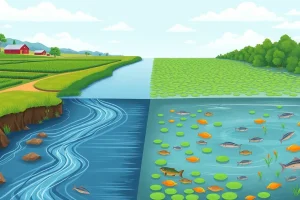
- Agricultural runoff: Fertilizers rich in nitrogen and phosphorus, as well as animal manure, wash into waterways during rainfall or irrigation.
- Wastewater and sewage: Treated and untreated domestic and industrial effluents often contain high levels of nutrients, particularly phosphorus from detergents and human waste.
- Urban stormwater: Runoff from streets, lawns, and construction sites carries fertilizers, pet waste, and organic debris into water bodies.
- Atmospheric deposition: Nitrogen compounds from fossil fuel combustion and agricultural emissions can be deposited into water bodies through rain or dry fallout.
- Aquaculture: Fish farming can release uneaten feed and excreta, adding nutrients to surrounding waters.
While nutrient enrichment is the main driver, the occurrence of a harmful algal bloom depends on additional factors. Warm water temperatures, stagnant or slow-moving water, and sufficient light all promote algal growth. Some HAB species have specific requirements: for example, certain cyanobacteria thrive in warm, stratified freshwater lakes, while some marine dinoflagellates prefer calm, nutrient-rich coastal waters. Climate change is altering these conditions, potentially increasing the frequency and geographic range of HABs. Changes in precipitation patterns can also flush more nutrients into waterways, while warmer temperatures extend the growing season for algae.
Environmental and Human Impacts
The consequences of eutrophication and HABs are far-reaching. Environmentally, the most visible impact is the formation of dead zones—areas of water so depleted of oxygen that they cannot support most marine life. The Gulf of Mexico dead zone, fueled by nutrient runoff from the Mississippi River Basin, is one of the largest in the world. Fish kills, loss of biodiversity, and degradation of habitat are common. HABs can also disrupt food webs by altering the composition of phytoplankton communities, sometimes favoring toxic species over nutritious ones.
Human health is at risk from exposure to algal toxins. Drinking water contaminated with microcystins can cause liver damage, while recreational contact can lead to skin rashes, respiratory irritation, and gastrointestinal illness. Shellfish contaminated with toxins like saxitoxin can cause paralytic shellfish poisoning, a potentially fatal condition. Economically, HABs impose costs through lost tourism and recreation, commercial fishery closures, increased water treatment expenses, and property value declines. In the United States alone, the economic impact of freshwater HABs is estimated to be in the hundreds of millions of dollars annually, though precise figures are difficult to ascertain due to underreporting and indirect effects.
Solutions
Addressing eutrophication and HABs requires a multi-pronged approach that targets nutrient reduction at the source, improves water management, and enhances monitoring. Key strategies include:
- Agricultural best management practices: Implementing precision fertilizer application, cover crops, buffer strips, and constructed wetlands to reduce nutrient runoff.
- Wastewater treatment upgrades: Removing nitrogen and phosphorus from sewage through advanced treatment processes, and reducing combined sewer overflows.
- Stormwater management: Using green infrastructure such as rain gardens, permeable pavements, and retention basins to filter runoff.
- Policy and regulation: Setting nutrient criteria for water bodies, enforcing discharge limits, and creating nutrient trading programs to incentivize reductions.
- Monitoring and early warning: Deploying satellite imagery, in-situ sensors, and citizen science programs to detect blooms early and issue public health advisories.
- Direct bloom control: In some cases, physical removal (skimming), chemical algaecides, or ultrasonic devices are used, though these methods often address symptoms rather than causes and can have unintended ecological effects.
Long-term success depends on integrated watershed management that coordinates actions across agricultural, urban, and industrial sectors. International cooperation is also essential for transboundary water bodies like the Baltic Sea or the Great Lakes, where nutrient pollution from one country affects others.
Common Misconceptions
One widespread misconception is that all algal blooms are harmful. In reality, algae are a natural and essential part of aquatic ecosystems, forming the base of the food web. Only a small fraction of algal species produce toxins or cause harm. Another misconception is that eutrophication always leads to harmful algal blooms. While nutrient enrichment increases the likelihood, many eutrophic waters do not experience HABs because other factors—such as water mixing, grazing by zooplankton, or the absence of toxin-producing species—prevent bloom formation. Conversely, some HABs occur in oligotrophic (low-nutrient) waters, driven by other environmental conditions.
It is also commonly believed that once a water body is eutrophic, the condition is irreversible. While recovery can be slow, many lakes and coastal areas have shown significant improvement following sustained nutrient reductions. For example, Lake Erie in North America and Lake Constance in Europe have seen declines in algal blooms after phosphorus inputs were curtailed. However, legacy nutrients stored in sediments can continue to fuel blooms for years, making long-term commitment essential.
FAQ
What is the difference between eutrophication and a harmful algal bloom?
Eutrophication is the process of nutrient enrichment in water, while a harmful algal bloom is a rapid growth of algae that can produce toxins or cause other harm. Eutrophication often leads to HABs, but not all eutrophication results in harmful blooms, and not all HABs are caused by eutrophication.
Can eutrophication occur without harmful algal blooms?
Yes. Eutrophication can lead to excessive growth of non-toxic algae or aquatic plants that still cause oxygen depletion and ecosystem disruption, but without the toxin production characteristic of HABs.
Why are harmful algal blooms dangerous?
HABs can produce potent toxins that contaminate drinking water, cause illness in humans and animals, kill fish and other wildlife, and create dead zones through oxygen depletion. They also have significant economic impacts on tourism, fisheries, and water treatment.
References
- U.S. Environmental Protection Agency. Nutrient Pollution: The Problem. https://www.epa.gov/nutrientpollution/problem
- National Oceanic and Atmospheric Administration. Harmful Algal Blooms. https://oceanservice.noaa.gov/hazards/hab/
- Smith, V.H. (2003). Eutrophication of freshwater and coastal marine ecosystems: a global problem. Environmental Science and Pollution Research, 10(2), 126-139.