In brief
At a glance
Quick Facts
- Definition of Firm Power
- Electricity sources that can be dispatched on demand and provide a guaranteed output, such as coal, natural gas, nuclear, and reservoir hydropower.
- Definition of Variable Renewable Energy
- Renewable sources whose output fluctuates with weather conditions, primarily wind and solar photovoltaic (PV) power.
- Grid Balancing Requirement
- Electricity supply must match demand in real time; VRE variability requires flexible backup, storage, or demand response to maintain grid stability.
- Capacity Factor
- Firm sources often have high capacity factors (80-90% for nuclear), while VRE capacity factors are lower (20-40% for solar, 30-50% for onshore wind) and location-dependent.
- Cost Trends
- Levelized costs of VRE have fallen dramatically, making them among the cheapest new generation sources, but system integration costs rise with higher VRE penetration.
- Firm Low-Carbon Options
- Hydropower, geothermal, nuclear, and biomass can provide firm, dispatchable low-carbon electricity, complementing VRE.
- Energy Storage Role
- Battery storage and pumped hydro can shift VRE output to times of demand, effectively firming up variable generation.
- Grid Flexibility
- A flexible grid with interconnections, demand response, and diverse generation can accommodate high shares of VRE without sacrificing reliability.
- 100% Renewable Debates
- Studies differ on whether 100% renewable electricity systems are feasible without firm low-carbon sources, hinging on storage costs and grid expansion.
- Capacity vs Energy
- Firm power provides capacity (ability to meet peak demand), while VRE provides energy (total electricity generated), both essential for a reliable system.
Key Takeaways
- Firm power is dispatchable and can be relied upon to meet demand at any time, while variable renewable energy (VRE) output depends on weather conditions and cannot be controlled directly.
- Integrating high shares of VRE requires system flexibility from firm low-carbon sources, energy storage, demand response, and grid interconnections to maintain reliability.
- No single technology is universally superior; a cost-effective, reliable, and low-carbon electricity system combines firm and variable resources tailored to regional conditions.
- The firm vs. variable distinction is central to energy policy debates on decarbonization pathways, grid stability, and the feasibility of 100% renewable energy systems.
What Is Firm Power vs Variable Renewable Energy?
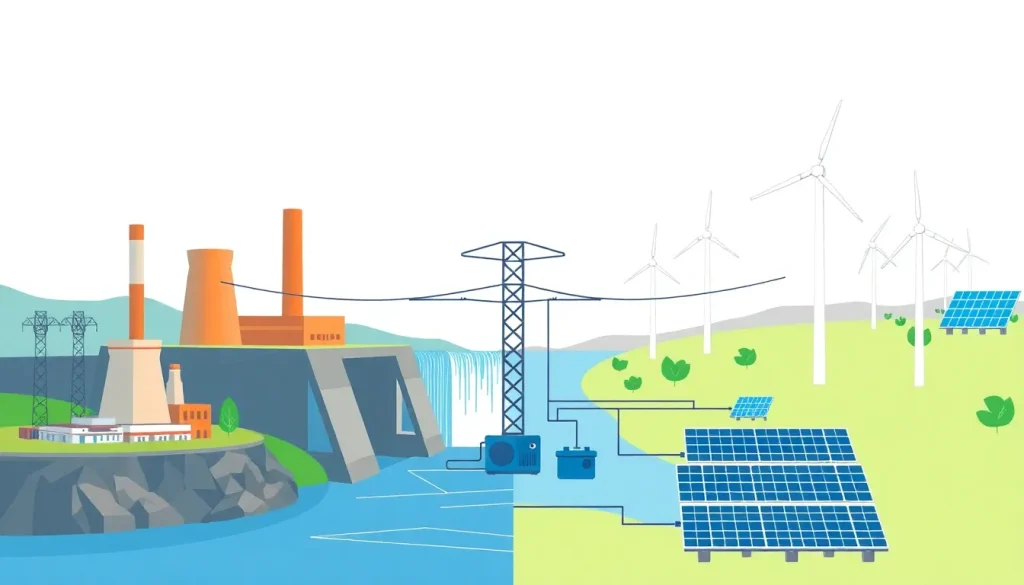
Firm power is electricity generation that can be guaranteed to be available at any given moment, regardless of external conditions. It is dispatchable, meaning grid operators can control its output—ramping it up or down—to match real-time demand. Typical firm sources include coal, natural gas, nuclear, and reservoir-based hydropower. In contrast, variable renewable energy (VRE) refers to sources whose output fluctuates based on natural phenomena, primarily wind and solar photovoltaic (PV) power. These sources cannot be dispatched on demand without complementary storage or backup, as their generation is tied to wind speeds and sunlight availability.
The distinction is not about whether a source is renewable, but about its predictability and controllability. For example, hydropower with large reservoirs is both renewable and firm, while run-of-river hydro without storage is variable. Geothermal and biomass can provide firm renewable power, whereas wind and solar are inherently variable. As VRE deployment grows, understanding this difference is essential for designing power systems that are both low-carbon and reliable. The challenge lies in balancing the variable output of wind and solar with resources that can fill gaps, ensuring that electricity supply always meets demand.
Overview
Electricity grids must maintain a constant balance between generation and consumption. Historically, this was achieved using firm, dispatchable power plants—coal, gas, nuclear, and large hydro—that could be scheduled to follow load patterns. The rise of VRE, driven by falling costs and climate policies, has introduced a new paradigm. Wind and solar now account for a growing share of global electricity, but their variability means that grid operators must manage fluctuations over multiple timescales: from seconds (cloud passing over a solar farm) to seasons (reduced wind in summer).
The integration of VRE does not render firm power obsolete; rather, it changes the role of firm resources. Instead of running continuously, many firm plants now operate flexibly, ramping up when VRE output drops and down when it surges. In some systems, firm capacity is maintained as a reliability backstop, while energy storage and interconnections help smooth variability. The optimal mix depends on local resources, existing infrastructure, and policy goals. A system dominated by VRE requires a portfolio of flexibility options, including firm low-carbon generation, to ensure security of supply.
How It Works
Firm power plants operate on principles that allow them to produce electricity on command. Thermal plants (coal, gas, nuclear) generate steam to drive turbines; their fuel can be stored and consumed as needed. Reservoir hydropower stores water behind dams, releasing it through turbines to generate electricity when required. These plants can typically adjust output within minutes and run for extended periods, providing baseload or peaking power.
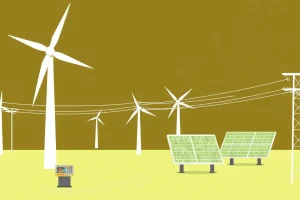
Variable renewable energy systems convert ambient energy directly into electricity. Wind turbines capture kinetic energy from moving air, while solar PV cells convert sunlight into direct current. Their output is determined by instantaneous resource availability, which can be forecast but not controlled. To integrate VRE into the grid, several mechanisms are employed:
- Forecasting: Advanced weather models predict wind and solar output hours to days ahead, allowing grid operators to schedule other resources.
- Geographic diversity: Spreading VRE plants over large areas smooths aggregate output, as local weather variations cancel out.
- Flexible backup: Fast-ramping plants (often natural gas) or hydropower can compensate for sudden drops in VRE.
- Energy storage: Batteries, pumped hydro, and other storage technologies absorb excess VRE and release it when needed, effectively firming the output.
- Demand response: Shifting electricity consumption to times of high VRE availability reduces the need for backup.
Importance and Impact
The firm vs. variable distinction is central to energy policy because it directly affects grid reliability, cost, and decarbonization pathways. A grid with insufficient firm capacity risks blackouts during periods of low VRE output and high demand. Conversely, overbuilding firm plants can lead to stranded assets and higher emissions if they are fossil-fuel-based. The economic impact is significant: while VRE has very low marginal costs, the system costs of integration—including backup, storage, and grid upgrades—must be accounted for in planning.
From a climate perspective, the ability to replace fossil-fuel firm power with low-carbon firm alternatives (nuclear, hydro, geothermal, biomass with carbon capture) or with VRE plus storage is critical for deep decarbonization. Many studies indicate that achieving net-zero emissions in the power sector is technically feasible with a mix of VRE and firm low-carbon sources, but the exact mix depends on regional conditions and technology costs. The debate over whether 100% renewable energy systems are viable without firm low-carbon resources continues, with implications for investment and policy design.
Benefits, Limitations and Trade-offs
Each category offers distinct advantages and drawbacks:
- Firm power benefits: High reliability, ability to provide essential grid services (inertia, frequency control), and long-duration supply. It can serve as baseload or peaking capacity.
- Firm power limitations: Many traditional firm sources emit greenhouse gases (coal, gas) or have long construction times and high upfront costs (nuclear, large hydro). Fuel supply chains can be vulnerable to disruption.
- VRE benefits: Zero fuel costs, very low operating expenses, rapid deployment, and minimal emissions during operation. Costs have fallen dramatically, making wind and solar among the cheapest new generation sources in many regions.
- VRE limitations: Output is variable and uncertain, requiring backup or storage. They typically provide less inertia, challenging grid stability. Land use and resource intermittency can constrain deployment.
The trade-offs become apparent in system design. A grid relying heavily on VRE must invest in flexibility resources, which can increase total system costs. Conversely, a grid dominated by firm power may have higher fuel and carbon costs. The optimal balance minimizes the overall cost while meeting reliability and environmental targets. Hybrid solutions, such as pairing solar with battery storage, are increasingly used to combine the low cost of VRE with the dispatchability of firm power.
Common Misconceptions
Several misunderstandings cloud the debate:
- “VRE cannot contribute to grid reliability.” While individual VRE plants are variable, a well-designed system with geographic diversity, forecasting, and complementary resources can achieve high reliability. Many grids already operate with significant VRE shares without compromising security.
- “Firm power always means fossil fuels.” Firm power can be low-carbon: nuclear, hydropower, geothermal, and biomass with carbon capture are firm and dispatchable. The challenge is scaling these options sustainably.
- “100% renewable grids are impossible.” Studies show that 100% renewable electricity is technically feasible with sufficient storage, transmission, and demand flexibility, though economic and political hurdles remain. The debate often hinges on the cost and availability of long-duration storage.
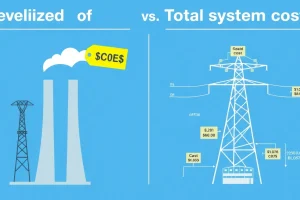
- “Firm power is always more expensive than VRE.” Levelized cost comparisons can be misleading because they ignore system integration costs. When reliability and flexibility are valued, firm power may be competitive, especially in regions with limited VRE resources.
Connections to Other Systems
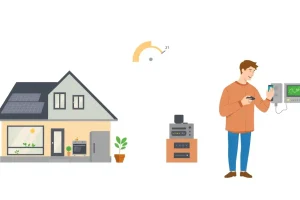
The firm vs. variable dynamic is deeply interconnected with other energy system components. Energy storage, particularly batteries and pumped hydro, acts as a bridge, converting variable output into firm, dispatchable power. Grid interconnections allow regions to share diverse resources: one area’s excess wind can offset another’s solar lull. Demand-side management, including smart appliances and industrial load shifting, can align consumption with VRE availability, reducing the need for firm backup.
Electrification of heating and transport (sector coupling) introduces new flexible loads that can absorb VRE, but also increases overall electricity demand, potentially requiring more firm capacity. Hydrogen produced from surplus VRE via electrolysis can be stored and used in fuel cells or turbines to provide long-duration firm power, creating a link between the power and gas systems. These connections highlight that the firm vs. variable challenge is not isolated; it is a central design problem for the entire low-carbon energy system.
FAQ
What is firm power?
Firm power is electricity generation that can be guaranteed to be available when needed, typically from dispatchable sources like natural gas, coal, nuclear, and reservoir hydropower.
How does variable renewable energy affect grid stability?
Variable renewable energy sources like wind and solar introduce fluctuations in electricity supply that must be balanced by flexible resources, storage, or demand management to maintain grid frequency and avoid blackouts.
Why is the distinction between firm and variable power important?
The distinction is critical for energy planning because a reliable electricity system requires a mix of both: variable renewables provide low-cost, clean energy, while firm resources ensure supply meets demand at all times.
References
- International Energy Agency (IEA), 'World Energy Outlook' series.
- Intergovernmental Panel on Climate Change (IPCC), 'Renewable Energy Sources and Climate Change Mitigation'.
- National Renewable Energy Laboratory (NREL), 'Renewable Electricity Futures Study'.
- U.S. Energy Information Administration (EIA), 'Electricity Explained'.