In brief
At a glance
Quick Facts
- Definition of Operational Carbon
- Greenhouse gas emissions from energy used to operate a building, including heating, cooling, lighting, and appliances.
- Definition of Embodied Carbon
- Emissions associated with the extraction, manufacturing, transportation, installation, maintenance, and disposal of building materials.
- Share of Global Emissions
- Buildings account for nearly 40% of global energy-related CO₂ emissions when both operational and embodied carbon are included.
- Embodied Carbon in Net-Zero Buildings
- In a net-zero energy building, embodied carbon can represent 100% of the total lifecycle emissions.
- Cement's Contribution
- Cement production alone is responsible for approximately 7–8% of global CO₂ emissions.
- Upfront vs. Lifecycle Embodied Carbon
- Upfront embodied carbon is emitted before occupancy; lifecycle embodied carbon includes maintenance, repair, and end-of-life stages.
- Reduction Potential
- Embodied carbon can be reduced by 20–50% through material selection, design optimization, and reuse without significant cost increases.
Key Takeaways
- Operational carbon comes from energy used to run a building (heating, cooling, lighting), while embodied carbon is the upfront emissions from materials and construction.
- Embodied carbon can account for 20–50% of a building’s total lifecycle emissions, and its share grows as buildings become more energy-efficient.
- Unlike operational carbon, embodied carbon is locked in once a building is constructed and cannot be reduced later through efficiency upgrades.
- Addressing both types of carbon is essential for achieving net-zero emissions in the built environment, which is responsible for nearly 40% of global energy-related CO₂ emissions.
What Is Operational Carbon vs Embodied Carbon?
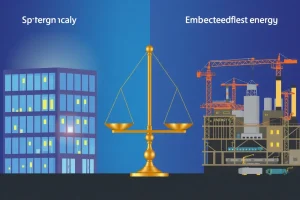
Operational carbon and embodied carbon are two distinct categories of greenhouse gas emissions associated with buildings and infrastructure. Operational carbon refers to the carbon dioxide (and other greenhouse gases) emitted during the use phase of a building—primarily from the energy consumed for heating, cooling, ventilation, lighting, and powering appliances. These emissions are ongoing and recur throughout the building’s lifetime. Embodied carbon, on the other hand, is the sum of all greenhouse gas emissions released during the production, transportation, installation, maintenance, and eventual disposal of building materials. It is often called “upfront carbon” because a large portion is emitted before the building is even occupied.
Understanding the distinction is critical for climate action. Historically, building regulations and green certifications focused almost exclusively on reducing operational energy use, because it was the largest source of emissions over a building’s life. However, as buildings become more energy-efficient and electricity grids decarbonize, the relative importance of embodied carbon has grown. In a highly efficient building powered by renewable energy, embodied carbon can represent the majority of its total lifecycle emissions. Therefore, a comprehensive approach to decarbonizing the built environment must address both operational and embodied carbon.
Overview
The built environment is a major contributor to global greenhouse gas emissions, responsible for roughly 40% of energy-related CO₂ emissions when both operational and embodied sources are considered. Traditionally, operational carbon has dominated the conversation because it accounts for the largest share over a building’s typical 50–100 year lifespan. Heating, cooling, and electricity use produce a steady stream of emissions year after year. However, embodied carbon is emitted in a concentrated burst during the construction phase, and its significance is now better understood thanks to lifecycle assessment (LCA) methodologies.
Embodied carbon can be further divided into “upfront embodied carbon” (emissions from raw material extraction, manufacturing, and construction) and “use-stage embodied carbon” (emissions from maintenance, repair, and replacement of materials over the building’s life). There is also “end-of-life embodied carbon” from demolition and disposal. Operational carbon, by contrast, is typically measured annually and summed over the building’s expected lifespan. Both are expressed in kilograms or tonnes of CO₂ equivalent (CO₂e).
How It Works
Operational carbon emissions are calculated by multiplying the building’s annual energy consumption (in kWh or other units) by the carbon intensity of the energy sources used. For example, a building heated with natural gas will have higher operational emissions than one using an electric heat pump, especially if the electricity comes from a low-carbon grid. Energy modeling tools can predict operational carbon during design, and actual emissions can be tracked through utility bills and building management systems.
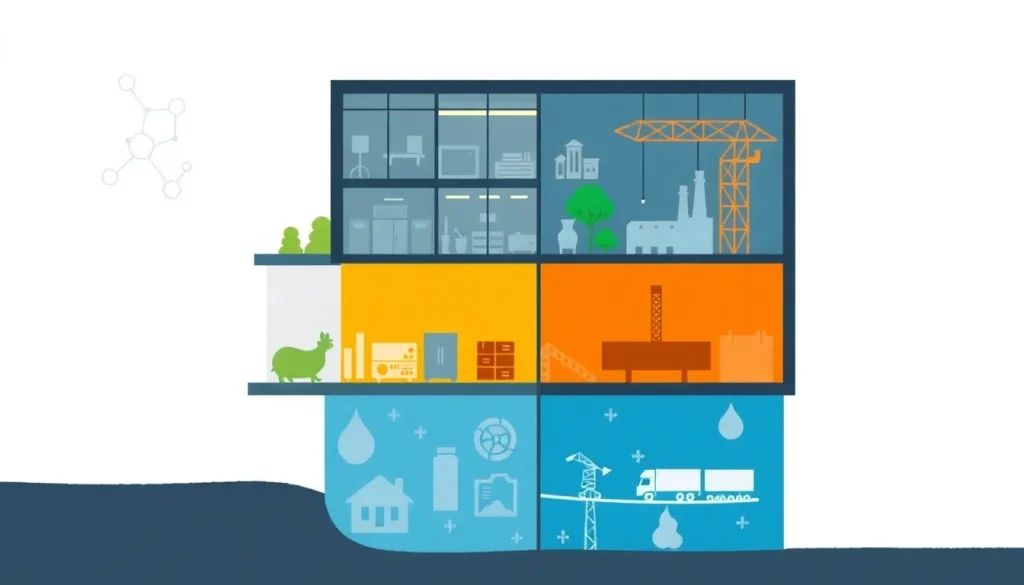
Embodied carbon is more complex to quantify because it involves tracking emissions across global supply chains. It is typically assessed using Life Cycle Assessment (LCA) standards such as ISO 14040/14044 or EN 15978. The process involves compiling an inventory of all materials used in a building (concrete, steel, glass, insulation, etc.) and multiplying each material’s quantity by its carbon factor—the amount of CO₂e emitted per unit of material. These carbon factors are derived from Environmental Product Declarations (EPDs) or LCA databases. The total embodied carbon is the sum of emissions from all materials and construction processes. Because embodied carbon is front-loaded, it has a greater impact on near-term climate warming than operational carbon, which is emitted gradually.
Importance and Impact
The relative importance of operational and embodied carbon depends on the building type, location, and energy source. In a typical office building with conventional energy systems, operational carbon may account for 70–80% of total lifecycle emissions. However, in a net-zero energy building—one that produces as much renewable energy as it consumes—embodied carbon can represent 100% of its carbon footprint. Similarly, for buildings with short lifespans (e.g., temporary structures or those in areas with high demolition rates), embodied carbon can dominate because there is less time for operational emissions to accumulate.
Globally, embodied carbon from the construction sector is estimated to account for about 11% of total energy-related CO₂ emissions. Cement production alone is responsible for approximately 7–8% of global CO₂ emissions. As urbanization continues, especially in developing countries, the embodied carbon from new construction is projected to rise significantly. Without intervention, embodied carbon from new buildings and infrastructure between now and 2050 could consume a substantial portion of the remaining carbon budget to limit global warming to 1.5°C.
Common Misconceptions
One common misconception is that operational carbon always outweighs embodied carbon. While this may be true for older, inefficient buildings, it is not the case for modern, energy-efficient structures. Another misunderstanding is that embodied carbon is only relevant during construction; in reality, materials replaced during renovations and maintenance also contribute to ongoing embodied emissions. Some also assume that wood buildings have zero embodied carbon because trees sequester carbon, but the full lifecycle—including harvesting, transport, and end-of-life decomposition or burning—must be accounted for. Finally, there is a belief that operational carbon is easier to reduce than embodied carbon, but both require distinct strategies and neither should be neglected.
Solutions
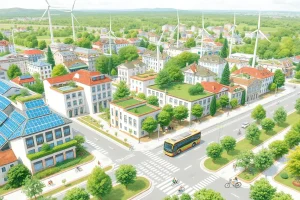
Reducing operational carbon involves improving energy efficiency, electrifying building systems, and sourcing renewable energy. Strategies include better insulation, high-performance windows, efficient HVAC systems, LED lighting, and on-site solar panels. Building certifications like LEED and BREEAM have long emphasized operational energy performance.
Reducing embodied carbon requires a different set of strategies focused on materials and design:
- Material selection: Choose low-carbon alternatives such as recycled steel, low-carbon concrete (using supplementary cementitious materials like fly ash or slag), and sustainably sourced timber.
- Design optimization: Use less material through efficient structural design, avoid over-specification, and design for adaptability and deconstruction to extend building life.
- Reuse and retrofit: Retaining existing structures and materials avoids the embodied carbon of new construction.
- Supply chain improvements: Source materials locally to reduce transport emissions and work with manufacturers that use renewable energy.
- Carbon sequestration: Use materials that store carbon, such as timber from sustainably managed forests, and consider carbon-cured concrete.
Policy tools like embodied carbon limits in building codes, mandatory lifecycle assessments, and carbon pricing can accelerate adoption.
Connections to Other Systems
Operational and embodied carbon are deeply interconnected with energy systems, material supply chains, and climate policy. The carbon intensity of the electricity grid directly affects operational emissions; as grids decarbonize, the balance shifts toward embodied carbon. Similarly, the production of building materials like steel and concrete relies heavily on fossil fuels, linking embodied carbon to industrial decarbonization efforts. Transportation networks also play a role, as the distance materials travel from factory to site contributes to their embodied carbon footprint.
On a broader scale, the concept of whole-life carbon—which combines operational and embodied emissions over a building’s entire lifespan—is gaining traction in regulations and green building standards. This holistic view encourages trade-offs: for example, adding insulation reduces operational carbon but increases embodied carbon. Lifecycle assessment helps determine the optimal balance. Additionally, the circular economy model promotes designing buildings for material reuse and recycling, which can reduce both operational and embodied carbon across multiple lifecycles.
FAQ
What is the difference between operational carbon and embodied carbon?
Operational carbon is emitted from the energy used to run a building (heating, cooling, lighting), while embodied carbon is emitted from the production, transport, and installation of building materials. Operational carbon is ongoing, whereas most embodied carbon is released before the building is used.
Why is embodied carbon becoming more important?
As buildings become more energy-efficient and electricity grids decarbonize, operational carbon decreases, making embodied carbon a larger share of total emissions. In net-zero energy buildings, embodied carbon can be the only remaining source of emissions.
How can embodied carbon be reduced?
Embodied carbon can be reduced by selecting low-carbon materials (e.g., recycled steel, low-carbon concrete), designing structures to use less material, reusing existing buildings, and sourcing materials locally. Whole-building lifecycle assessment helps identify the most effective strategies.
References
- World Green Building Council, "Bringing Embodied Carbon Upfront" (2019)
- IPCC, "Climate Change 2022: Mitigation of Climate Change" – Chapter 9: Buildings
- ISO 14040:2006 Environmental management – Life cycle assessment – Principles and framework