In brief
At a glance
Quick Facts
- Definition
- Areas of water with dissolved oxygen below 2 mg/L, unable to sustain most marine life.
- Primary Cause
- Excess nitrogen and phosphorus from agricultural runoff, sewage, and fossil fuel burning.
- Largest Dead Zone
- Gulf of Mexico, averaging over 15,000 square kilometers in summer.
- Global Count
- Over 400 dead zones identified worldwide, covering more than 245,000 square kilometers.
- Key Process
- Eutrophication: nutrient-fueled algal blooms decompose, consuming oxygen.
- Recovery Potential
- Dead zones can shrink within years if nutrient inputs are reduced, as seen in the Black Sea.
Key Takeaways
- Ocean dead zones are hypoxic (low-oxygen) areas where most marine life cannot survive, caused primarily by nutrient pollution from human activities.
- Excess nitrogen and phosphorus from agriculture, sewage, and fossil fuel burning trigger algal blooms that deplete oxygen as they decompose.
- Dead zones disrupt marine food webs, cause fish kills, harm coastal economies, and can lead to long-term ecosystem shifts.
- Reducing nutrient runoff through better farming practices, improved wastewater treatment, and policy interventions is the most effective solution.
What Is Ocean Dead Zones: Causes, Impacts and Solutions?
An ocean dead zone is a region of the sea where the concentration of dissolved oxygen is so low that it cannot support most marine organisms. These areas, also known as hypoxic zones, are defined by oxygen levels below 2 milligrams per liter (mg/L). While some mobile species like fish may flee, sessile organisms such as clams, worms, and crustaceans often die, leaving behind a barren seabed. Dead zones are a growing global phenomenon, with over 400 identified in coastal waters worldwide, and they represent one of the most severe consequences of nutrient pollution.
The term “Ocean Dead Zones: Causes, Impacts and Solutions” encompasses the scientific understanding of how these hypoxic regions form, the ecological and economic damage they cause, and the strategies available to mitigate and reverse them. The primary driver is eutrophication, a process where excessive nutrients—mainly nitrogen and phosphorus—enter water bodies from agricultural runoff, untreated sewage, and industrial discharges. These nutrients fuel explosive growth of algae, which eventually die and sink, consuming oxygen as they decompose. The result is a layer of water so depleted of oxygen that it becomes uninhabitable. Addressing dead zones requires a combination of source reduction, technological innovation, and international cooperation, as nutrient pollution often travels far from its origin.
Main Causes or Drivers
The formation of ocean dead zones is overwhelmingly linked to human activities that increase the input of nutrients into coastal waters. The two key nutrients are nitrogen and phosphorus. These come from several major sources:
- Agricultural runoff: Fertilizers and animal manure from farms wash into rivers and streams, eventually reaching the ocean. This is the largest contributor globally.
- Wastewater and sewage: Untreated or poorly treated human sewage and industrial effluents release high levels of nitrogen and phosphorus directly into waterways.
- Fossil fuel combustion: Burning of coal, oil, and gas releases nitrogen oxides into the atmosphere, which later deposit into oceans via rain or dry fallout.
- Aquaculture: Intensive fish farming can produce concentrated nutrient waste from uneaten feed and fish excrement, leading to local hypoxia.
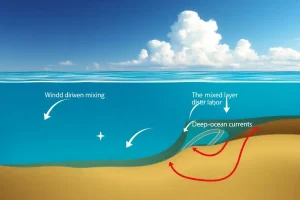
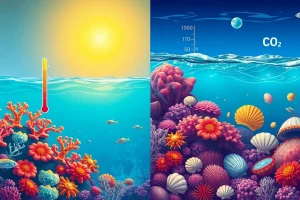
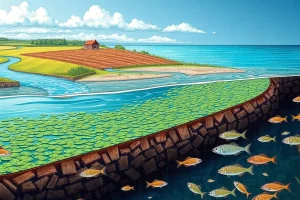
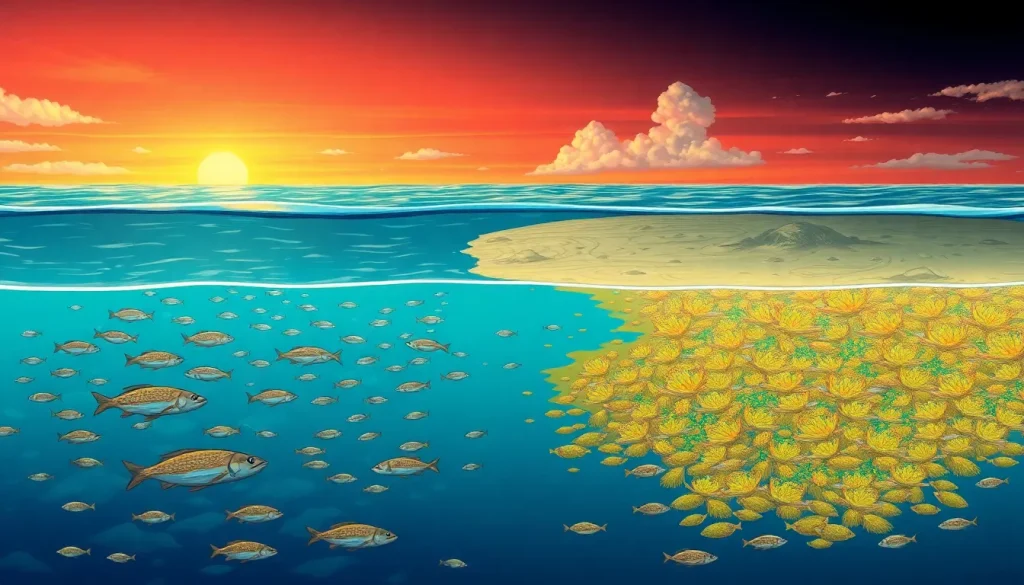
Once these nutrients enter coastal waters, they stimulate rapid growth of phytoplankton, particularly algae. This process, called eutrophication, leads to dense algal blooms. When the algae die, they sink to the bottom and are decomposed by bacteria, a process that consumes large amounts of dissolved oxygen. In stratified waters—where a warm, less-dense surface layer sits atop a cooler, denser bottom layer—the oxygen-depleted bottom water cannot mix with oxygen-rich surface water, creating a persistent dead zone. Climate change exacerbates the problem by increasing water temperatures (which hold less oxygen) and intensifying stratification.
Environmental and Human Impacts
Dead zones have profound ecological consequences. The immediate effect is mass mortality of bottom-dwelling organisms such as worms, clams, and crustaceans, which cannot escape the low-oxygen conditions. This disrupts the benthic food web, affecting species that rely on these organisms for food. Fish and mobile invertebrates may flee the area, but this forced migration can lead to crowding in other habitats, increased predation, and reduced growth and reproduction. In severe cases, fish kills occur when oxygen levels drop too quickly for escape. Over time, repeated hypoxia can cause permanent shifts in species composition, favoring hypoxia-tolerant organisms and reducing biodiversity.
The human impacts are equally significant. Coastal fisheries suffer as commercially important species like shrimp, crab, and finfish decline or move away, leading to economic losses for fishing communities. Tourism and recreation can be harmed by foul odors, unsightly algal blooms, and fish kills. There are also public health risks: some algal blooms produce toxins that contaminate shellfish, causing illness in humans who consume them. The economic cost of dead zones is substantial, with estimates for the Gulf of Mexico alone reaching tens of billions of dollars in lost fisheries and ecosystem services over recent decades.
Regional Differences
Dead zones occur in many coastal regions worldwide, but their size, persistence, and primary causes vary. The Gulf of Mexico dead zone, fueled largely by nutrient runoff from the Mississippi River Basin, is one of the largest, covering an area that can exceed 20,000 square kilometers in summer. The Baltic Sea hosts the world’s largest human-induced dead zone, a permanent hypoxic area driven by agricultural runoff and wastewater from surrounding countries. In contrast, the Chesapeake Bay dead zone is seasonal, peaking in summer when stratification is strongest. Other notable dead zones exist in the Black Sea, Lake Erie, and coastal waters off Oregon and Washington, where upwelling of naturally nutrient-rich but oxygen-poor water can also create hypoxic conditions. While some dead zones are natural, the vast majority are linked to human activities, and their number and size have increased dramatically since the 1960s.
Solutions
Addressing ocean dead zones requires reducing nutrient inputs at their sources. Key strategies include:
- Improved agricultural practices: Precision farming to apply fertilizers more efficiently, planting cover crops to absorb excess nutrients, and creating buffer zones of vegetation along waterways to filter runoff.
- Upgraded wastewater treatment: Installing advanced treatment technologies to remove nitrogen and phosphorus from sewage before discharge.
- Reducing fossil fuel emissions: Cutting nitrogen oxide emissions through cleaner energy sources and stricter air quality regulations.
- Wetland restoration: Rebuilding coastal wetlands that naturally filter nutrients and provide habitat.
- Policy and regulation: Setting nutrient limits for water bodies, enforcing agricultural best practices, and establishing international agreements for shared water basins.
In some cases, direct intervention can help, such as aerating water to increase oxygen levels, but these are temporary and costly. Long-term success depends on sustained nutrient reductions. For example, the Black Sea dead zone shrank significantly in the 1990s after the collapse of the Soviet Union led to reduced fertilizer use, demonstrating that recovery is possible when nutrient inputs decline.
Common Misconceptions
One common misconception is that dead zones are completely devoid of life. While they are hypoxic, some specialized bacteria and a few resilient organisms can survive in low-oxygen conditions. Another misunderstanding is that dead zones are permanent; many are seasonal and can recover if nutrient pollution is reduced. Some people believe that dead zones are only a problem in faraway oceans, but they occur in lakes and estuaries as well, affecting local water supplies and recreation. Finally, there is a misconception that dead zones are caused solely by industrial pollution; in reality, agricultural runoff is the dominant source of nutrients in most large dead zones.
What Individuals Can Do
Individual actions can collectively reduce nutrient pollution. Homeowners can minimize fertilizer use on lawns and gardens, opting for slow-release or organic fertilizers and avoiding application before rain. Properly maintaining septic systems prevents nutrient leakage. Reducing meat consumption, particularly from factory farms, can lower the demand for intensive agriculture that produces large amounts of manure runoff. Supporting local and sustainable agriculture, and advocating for stronger environmental policies, also contributes. Even small steps like picking up pet waste and properly disposing of household chemicals help keep nutrients out of waterways.
FAQ
What is an ocean dead zone?
An ocean dead zone is a region of water with extremely low dissolved oxygen (hypoxia), making it uninhabitable for most marine life. These zones are often caused by nutrient pollution.
How do dead zones form?
Dead zones form when excess nutrients, mainly nitrogen and phosphorus, enter water bodies and fuel algal blooms. When the algae die and decompose, bacteria consume oxygen, creating hypoxic conditions.
Why are dead zones a problem?
Dead zones kill marine organisms, disrupt food webs, reduce biodiversity, harm fisheries and tourism, and can have long-lasting ecological and economic impacts.
References
- National Oceanic and Atmospheric Administration (NOAA) – Hypoxia in the Gulf of Mexico
- Diaz, R. J., & Rosenberg, R. (2008). Spreading dead zones and consequences for marine ecosystems. Science, 321(5891), 926-929.
- United Nations Environment Programme (UNEP) – Global Environment Outlook: Eutrophication and Hypoxia