In brief
At a glance
Quick Facts
- Journal / venue
- The Lancet Planetary Health
- Authors
- Helldén D, Andersson C, Nilsson M, Ebi KL, Friberg P, Alfvén T
- Publication date
- March 2021
- Study type
- Scoping review
- Peer-reviewed
- Yes
- DOI / link
- 10.1016/S2542-5196(20)30274-6
Study in one sentence
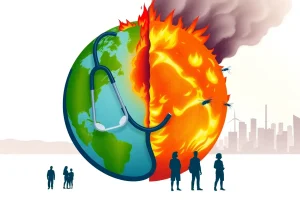
This scoping review maps the existing evidence on the diverse ways climate change affects child health, finding that children face heightened risks from heat-related illness, air pollution, infectious diseases, food and water insecurity, and mental health challenges.
Publication and date
The study, titled “Climate change and child health: a scoping review and an expanded conceptual framework,” was published in The Lancet Planetary Health in March 2021. The authors are Daniel Helldén, Camilla Andersson, Maria Nilsson, Kristie L. Ebi, Peter Friberg, and Tobias Alfvén. The journal is a peer-reviewed, open-access publication.
Research question
The review aimed to answer: What is the current scope and nature of scientific evidence on the impacts of climate change on child health, and how can these impacts be organized into a comprehensive conceptual framework?

Method
The researchers conducted a scoping review, systematically searching three databases (PubMed, Web of Science, and Scopus) for peer-reviewed articles published up to January 2020. They included original research, reviews, and commentaries that addressed climate change and health outcomes in children aged 0–18 years. After screening, 163 studies were included. Data were extracted on climate hazards, health outcomes, and pathways, and a narrative synthesis was performed. The team then developed an expanded conceptual framework linking climate change drivers to child health impacts through environmental, social, and health-system mediators.
Main findings
The review identified five major pathways through which climate change harms child health:
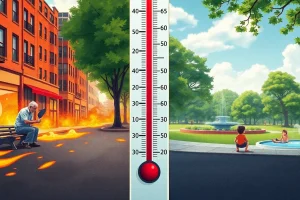
- Heat-related illness: Studies reported increased emergency department visits and mortality among children during heatwaves, with infants especially vulnerable to dehydration and heat stroke.
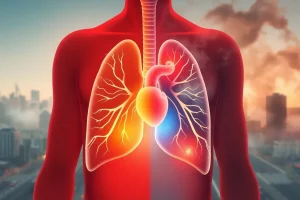
- Air pollution: Climate change worsens air quality, leading to higher rates of asthma exacerbations, respiratory infections, and adverse birth outcomes. Several studies quantified associations, such as a 10 µg/m³ increase in PM2.5 linked to a 5–10% rise in childhood asthma hospitalizations.
- Infectious diseases: Warmer temperatures and altered rainfall expand the range of vector-borne diseases (e.g., malaria, dengue) and waterborne diseases (e.g., diarrheal diseases), with children under five bearing the greatest burden.
- Food and water insecurity: Climate-related droughts and floods reduce crop yields and contaminate water supplies, contributing to malnutrition and stunting. The review cited projections that climate change could increase child stunting by 30–50% in some regions by 2050.
- Mental health: Emerging evidence links climate-related disasters to post-traumatic stress, anxiety, and depression in children, though this area remains understudied.
The review also highlighted that children in low- and middle-income countries are disproportionately affected, and that the health impacts are mediated by social determinants such as poverty, housing, and access to healthcare.
What the findings do not prove
This scoping review does not establish causal relationships between specific climate hazards and health outcomes. It maps existing evidence but does not quantify the magnitude of effects through meta-analysis. The findings should not be interpreted as a comprehensive risk assessment or as a prediction of future health burdens; rather, they describe the range of documented associations and highlight research gaps.
Limitations
The review has several limitations. The search was restricted to English-language articles and three databases, potentially missing relevant studies in other languages or grey literature. The included studies varied widely in design, quality, and geographic focus, making direct comparisons difficult. Most evidence came from high-income countries, limiting generalizability to the most vulnerable populations. The review also did not assess the strength of evidence for each pathway, and the conceptual framework is a descriptive tool rather than a quantitative model.
How it compares with previous research
This review builds on earlier work, such as the 2015 Lancet Commission on Health and Climate Change, which identified children as a vulnerable group. It extends previous reviews by providing a more granular mapping of child-specific outcomes and by proposing an expanded conceptual framework that incorporates social and health-system mediators. The findings align with the broader literature emphasizing that climate change acts as a threat multiplier, exacerbating existing health inequities for children.
Why it matters
By systematically mapping the evidence, this review underscores the urgent need to integrate child health into climate change adaptation and mitigation policies. It highlights research gaps, particularly in mental health and in low-income settings, and provides a framework to guide future studies. For policymakers and healthcare providers, the review makes clear that protecting children from climate change requires cross-sectoral action on housing, nutrition, infectious disease control, and disaster preparedness.
Link to the primary paper
Helldén D, Andersson C, Nilsson M, Ebi KL, Friberg P, Alfvén T. Climate change and child health: a scoping review and an expanded conceptual framework. The Lancet Planetary Health. 2021;5(3):e164–e175. DOI: 10.1016/S2542-5196(20)30274-6.
FAQ
What is a scoping review?
A scoping review is a type of research synthesis that maps the existing literature on a topic, identifying key concepts, sources, and gaps. Unlike a systematic review, it does not typically assess the quality of included studies or pool results statistically; instead, it provides a broad overview of the evidence landscape.
Why are children more vulnerable to climate change?
Children are more vulnerable due to physiological factors (e.g., developing immune systems, higher breathing rates, less ability to regulate body temperature), behavioral factors (e.g., more time outdoors, dependence on caregivers), and social factors (e.g., poverty, limited access to healthcare). They also have a longer lifetime exposure to cumulative climate impacts.
Does this review prove that climate change causes specific childhood diseases?
No. The review maps associations reported in the literature, but most included studies are observational and cannot prove causation. The review highlights plausible pathways and consistent patterns, but it does not establish direct cause-and-effect relationships for individual health outcomes.
References
- Helldén D, Andersson C, Nilsson M, Ebi KL, Friberg P, Alfvén T. Climate change and child health: a scoping review and an expanded conceptual framework. Lancet Planet Health. 2021;5(3):e164-e175.
- Watts N, Adger WN, Agnolucci P, et al. Health and climate change: policy responses to protect public health. Lancet. 2015;386(10006):1861-1914.
- Perera FP. Multiple threats to child health from fossil fuel combustion: impacts of air pollution and climate change. Environ Health Perspect. 2017;125(2):141-148.
- Stanberry LR, Thomson MC, James W. Prioritizing the needs of children in a changing climate. PLoS Med. 2018;15(7):e1002627.
- Ebi KL, Hess JJ. Health risks due to climate change: inequity in causes and consequences. Health Aff (Millwood). 2020;39(12):2056-2062.