In brief
At a glance
Quick Facts
- Definition
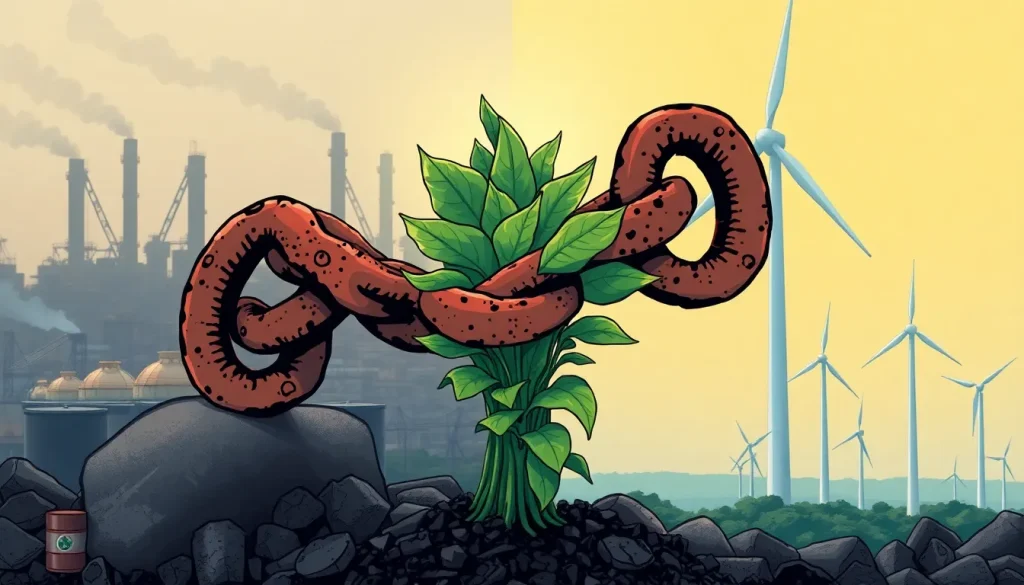
- Carbon lock-in is the self-reinforcing inertia that perpetuates fossil fuel-based systems and resists the shift to low-carbon alternatives.
- Key mechanism
- It arises from the co-evolution of technologies, institutions, and behaviors that create path dependency.
- First articulated
- The term was systematically described by Gregory Unruh in the early 2000s.
- Infrastructure lifespan
- Coal power plants and other fossil fuel assets often operate for 30–50 years, locking in emissions for decades.
- Global emissions share
- Energy-related CO2 emissions account for the majority of anthropogenic greenhouse gas emissions.
- Stranded assets risk
- Carbon lock-in increases the risk that fossil fuel reserves and infrastructure become economically unviable as climate policies tighten.
- Policy challenge
- Overcoming lock-in requires coordinated interventions across technology, policy, and behavior simultaneously.
Key Takeaways
- Carbon lock-in is the self-perpetuating inertia of fossil fuel-based systems that makes shifting to low-carbon alternatives exceptionally difficult.
- It arises from the co-evolution of technologies, institutions, infrastructure, and behaviors that reinforce dependence on carbon-intensive energy.
- Lock-in creates significant barriers to climate change mitigation, as existing investments, regulations, and social norms resist change.
- Understanding and addressing carbon lock-in is essential for designing effective policies to accelerate a sustainable energy transition.
What Is Carbon Lock-In?
Carbon lock-in refers to the tendency for carbon-intensive systems—such as those based on coal, oil, and natural gas—to persist and resist change, even when cleaner alternatives are available and economically viable. The term describes a state of systemic inertia where technological, institutional, and behavioral factors combine to perpetuate high-carbon pathways, making the transition to low-carbon energy sources slow and difficult. This concept is central to understanding why global greenhouse gas emissions continue to rise despite decades of climate warnings and the rapid advancement of renewable energy technologies.
First systematically articulated by researcher Gregory Unruh in the early 2000s, carbon lock-in is not simply a matter of technology choice but a deeply embedded condition arising from the co-evolution of physical infrastructure, market structures, government policies, and social practices. For example, a coal-fired power plant represents a multi-decade commitment to burning coal, supported by mines, railways, and an electricity grid designed around centralized generation. Surrounding this are regulations, subsidies, and workforce skills that reinforce the status quo. Breaking this lock-in requires more than just inventing a better solar panel; it demands coordinated changes across multiple systems simultaneously.
Overview
The concept of carbon lock-in emerged from broader theories of technological lock-in and path dependency, which explain how certain technologies become dominant and persist even when superior alternatives exist. In the energy sector, carbon lock-in is particularly pronounced because of the massive scale and long lifespan of infrastructure, the central role of energy in economic activity, and the powerful interests vested in the fossil fuel industry. Once a society builds its transportation systems, power grids, and industrial processes around fossil fuels, shifting to a low-carbon pathway becomes not just a technological challenge but an economic, political, and cultural one.
Carbon lock-in operates at multiple levels: individual technologies (e.g., internal combustion engines), organizational routines (e.g., corporate strategies based on cheap oil), institutional frameworks (e.g., building codes that assume gas heating), and societal norms (e.g., expectations of private car ownership). These levels reinforce each other, creating a self-stabilizing system that resists change. The result is a global economy that remains heavily dependent on fossil fuels, with energy-related carbon dioxide emissions accounting for the majority of anthropogenic greenhouse gas emissions.
How It Works
Carbon lock-in works through a combination of reinforcing mechanisms that make high-carbon systems difficult to dislodge. These mechanisms can be grouped into technological, institutional, and behavioral categories, all of which interact to create a powerful inertia.
- Technological lock-in: Energy systems involve long-lived capital assets such as power plants, pipelines, and refineries that can operate for 30–50 years or more. Once built, these assets create sunk costs that incentivize continued use to recover investments. Additionally, technologies develop in clusters with complementary infrastructure—for instance, gasoline cars require a network of fueling stations, which in turn reinforces demand for oil refining.
- Institutional lock-in: Laws, regulations, and standards often favor incumbent technologies. Fossil fuel subsidies, zoning laws that permit gas stations, and building codes designed for conventional heating systems all embed carbon-intensive choices into the legal and regulatory fabric. Over time, government agencies and industry associations develop expertise and routines centered on existing technologies, making it harder to shift direction.
- Behavioral lock-in: Individuals and organizations develop habits, preferences, and expectations based on the available infrastructure. People accustomed to driving cars may resist public transit, and businesses may be reluctant to adopt new energy technologies without clear market signals. Social norms and cultural values can also reinforce high-carbon lifestyles.
These mechanisms are mutually reinforcing. For example, the dominance of gasoline vehicles leads to extensive road networks and suburban development patterns, which in turn make car ownership more necessary and public transit less viable. Breaking this cycle requires simultaneous interventions across multiple domains.
Main Causes or Drivers
Several key factors drive carbon lock-in, often rooted in the historical development of industrial economies. Understanding these drivers is essential for crafting effective solutions.
- Sunk costs and infrastructure longevity: Trillions of dollars are invested in fossil fuel extraction, processing, and distribution infrastructure worldwide. These investments create powerful economic incentives to continue using the assets to avoid financial losses.
- Economies of scale and learning effects: Over decades, fossil fuel technologies have achieved massive scale and cost reductions through learning-by-doing. Incumbent industries benefit from established supply chains, skilled workforces, and incremental innovation that keep costs low, making it hard for new technologies to compete without support.
- Political and economic power of incumbents: The fossil fuel industry wields significant influence over policy through lobbying, campaign contributions, and control over energy markets. This can lead to continued subsidies, weak carbon pricing, and regulatory barriers that protect high-carbon interests.
- Market and coordination failures: Carbon lock-in persists partly because the environmental costs of emissions are not priced into fossil fuels. Additionally, the transition to low-carbon systems requires coordinated investments in complementary infrastructure (e.g., electric vehicles and charging networks), which markets alone may not provide efficiently.
- Path dependency: Historical choices, such as the early adoption of the internal combustion engine over electric vehicles, set trajectories that are difficult to reverse. Once a path is chosen, increasing returns and network effects reinforce it, even if the initial choice was suboptimal.
Why It Matters
Carbon lock-in is a critical barrier to addressing climate change. The longer high-carbon systems remain in place, the more cumulative greenhouse gas emissions accumulate in the atmosphere, increasing the risk of severe and irreversible climate impacts. Delaying the transition to low-carbon energy not only makes climate goals harder to achieve but also raises the eventual cost of mitigation, as more drastic and rapid changes become necessary later.
Moreover, carbon lock-in creates the risk of “stranded assets”—fossil fuel reserves and infrastructure that become economically unviable as climate policies tighten and clean energy becomes cheaper. This can lead to financial instability and economic disruption, particularly in regions heavily dependent on fossil fuel production. Conversely, breaking carbon lock-in can unlock significant co-benefits, including improved air quality, energy security, and new economic opportunities in clean energy sectors.
Solutions
Addressing carbon lock-in requires a systemic approach that targets the multiple reinforcing mechanisms simultaneously. No single policy is sufficient; instead, a portfolio of interventions is needed.
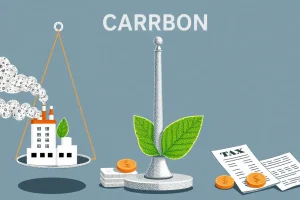
- Carbon pricing: Implementing a meaningful price on carbon emissions through taxes or cap-and-trade systems can help level the playing field by internalizing the environmental costs of fossil fuels, making low-carbon alternatives more competitive.
- Phasing out fossil fuel subsidies: Redirecting government support from fossil fuels to clean energy research, development, and deployment can accelerate the transition.
- Infrastructure and technology policy: Public investment in low-carbon infrastructure (e.g., electric grids, public transit, charging networks) and support for innovation can help overcome technological lock-in. Regulations such as zero-emission vehicle mandates or building codes that require electrification can shift markets.
- Institutional reform: Reforming regulatory frameworks to remove biases toward fossil fuels and creating new institutions focused on low-carbon transitions can break institutional lock-in. This includes updating grid governance, land-use planning, and financial regulations.
- Just transition measures: Policies that support workers and communities affected by the decline of fossil fuel industries are essential to build political support and ensure an equitable transition.
Benefits, Limitations and Trade-offs
Breaking carbon lock-in offers substantial benefits, including reduced greenhouse gas emissions, improved public health from cleaner air, enhanced energy security, and the creation of new industries and jobs. However, the transition also involves significant challenges and trade-offs.
Benefits: A successful shift away from carbon lock-in can mitigate climate risks, reduce dependence on volatile fossil fuel markets, and spur technological innovation. It can also lead to more resilient and decentralized energy systems.
Limitations: The scale and complexity of the transition mean that progress may be slow and uneven. Political opposition from vested interests, high upfront costs, and the need for international coordination can hinder efforts. Some low-carbon technologies also have their own environmental and social impacts, such as mining for battery minerals.
Trade-offs: In the short term, phasing out fossil fuels may lead to job losses in certain sectors and regions, requiring careful management. There may also be tensions between rapid decarbonization and other goals, such as energy affordability and reliability. Balancing these trade-offs is a central challenge for policymakers.
FAQ
What is carbon lock-in?
Carbon lock-in is the persistent, self-reinforcing dependence on fossil fuel-based systems due to technological, institutional, and behavioral factors that make it difficult to transition to low-carbon alternatives.
How does carbon lock-in occur?
It occurs through mechanisms like long-lived infrastructure, sunk costs, supportive regulations, subsidies, established supply chains, and social habits that all favor continued use of high-carbon energy.
Why does carbon lock-in matter?
It matters because it is a major barrier to reducing greenhouse gas emissions and mitigating climate change. It also creates economic risks such as stranded assets and delays the benefits of clean energy.
References
- Unruh, G.C. (2000). Understanding carbon lock-in. Energy Policy, 28(12), 817-830.
- IPCC. (2014). Climate Change 2014: Mitigation of Climate Change. Contribution of Working Group III to the Fifth Assessment Report.
- Seto, K.C. et al. (2016). Carbon lock-in: types, causes, and policy implications. Annual Review of Environment and Resources, 41, 425-452.