In brief
At a glance
Quick Facts
- Journal / venue
- Environmental Health Perspectives
- Authors
- Lake et al.
- Publication date
- November 2012
- Study type
- Literature review
- Peer-reviewed
- Yes
- DOI / link
- 10.1289/ehp.1104656
Study in one sentence
This review of existing research found that climate change is expected to increase the incidence of foodborne illness through multiple pathways, including elevated ambient temperatures, more frequent extreme weather events, and changes in food production and consumption patterns.
Publication and date
The review, titled “Climate Change and Foodborne Diseases: A Review of the Evidence,” was published in the peer-reviewed journal Environmental Health Perspectives in 2012. The authors are I.R. Lake, G. Hooper, A. Abdelhamid, G. Bentham, A.B.A. Boxall, A. Draper, S. Fairweather-Tait, M. Hulme, P.R. Hunter, G. Nichols, and K.W. Waldron.
Research question
The review aimed to synthesize existing evidence on the relationship between climate change and foodborne illness, addressing the question: How might climate change influence the risks of foodborne diseases through various environmental and social pathways?
Method
The authors conducted a systematic literature review, gathering and analyzing published studies, reports, and data on climate variables and foodborne pathogens. They examined observational studies linking temperature, precipitation, and extreme weather events to the incidence of foodborne diseases, as well as modeling studies that projected future risks under different climate scenarios. The review covered bacterial, viral, and parasitic pathogens, and considered both developed and developing country contexts.
Main findings
The review identified several key mechanisms by which climate change can affect foodborne illness:
- Temperature effects: Higher ambient temperatures can increase the replication rates of many foodborne pathogens, such as Salmonella and Campylobacter, particularly in foods that are not properly refrigerated. The review noted that a 1°C rise in weekly temperature was associated with a 5–10% increase in reported salmonellosis cases in several European studies.
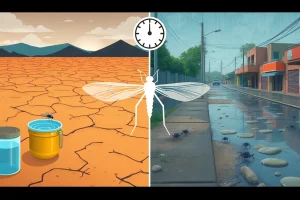
- Extreme weather events: Heavy rainfall and flooding can contaminate crops and water supplies with fecal pathogens, leading to outbreaks of diseases like E. coli O157 and cryptosporidiosis. Conversely, drought can concentrate pathogens in water sources and stress agricultural systems.
- Changes in food production and consumption: Warmer conditions may alter farming practices, increase pesticide use, and change food storage and transport patterns, potentially introducing new risks. Additionally, climate-driven changes in human behavior, such as increased outdoor cooking and consumption of raw foods during heatwaves, can elevate exposure.
- Pathogen-specific sensitivities: The review highlighted that Vibrio species, which cause seafood-borne illness, are particularly sensitive to rising sea surface temperatures, with reported infections increasing in regions experiencing warming coastal waters.
What the findings do not prove
The review does not establish a direct causal link between climate change and any specific foodborne disease outbreak. It synthesizes evidence of associations and plausible mechanisms, but cannot attribute individual events to climate change. The findings do not provide precise quantitative predictions for future disease burdens, as these depend on complex interactions between climate, socioeconomic factors, and public health interventions. The review also does not claim that climate change is the sole or primary driver of foodborne illness trends; other factors such as food safety practices, surveillance, and global trade play significant roles.
Limitations
The review’s conclusions are limited by the quality and scope of the available literature. Many studies were from high-income countries, leaving gaps in understanding impacts in low- and middle-income regions where foodborne illness is already a major burden. The review relied on observational studies that may be confounded by other variables, and modeling studies that depend on assumptions about future climate and societal conditions. Additionally, the review did not quantitatively synthesize data across studies, so the strength of associations could not be statistically pooled.
How it compares with previous research
The findings align with earlier assessments by the Intergovernmental Panel on Climate Change (IPCC) and the World Health Organization (WHO), which have identified foodborne diseases as a climate-sensitive health outcome. The review extends previous work by providing a more detailed examination of the specific pathways and pathogens involved, and by highlighting the need for improved surveillance and adaptation strategies. Subsequent research has continued to support these conclusions, with more recent studies documenting climate-driven changes in the seasonality and geographic distribution of foodborne pathogens.
Why it matters
Understanding the links between climate change and foodborne illness is critical for public health planning. As global temperatures rise, the burden of foodborne diseases may increase, particularly in vulnerable populations. This review underscores the importance of strengthening food safety systems, enhancing disease surveillance, and developing early warning systems that integrate climate data. It also highlights the need for further research to quantify risks and evaluate adaptation measures, ensuring that health systems are prepared for the challenges of a changing climate.
Link to the primary paper
The full review is available at: Lake IR, Hooper L, Abdelhamid A, Bentham G, Boxall ABA, Draper A, Fairweather-Tait S, Hulme M, Hunter PR, Nichols G, Waldron KW. Climate Change and Foodborne Diseases: A Review of the Evidence. Environmental Health Perspectives. 2012;120(11):1520-1526. DOI: 10.1289/ehp.1104656.
FAQ
How does climate change increase the risk of foodborne illness?
Climate change can increase foodborne illness risk through several pathways: higher temperatures promote the growth of pathogens like Salmonella and Campylobacter in food; extreme weather events such as floods can contaminate crops and water supplies; and changes in food production and consumption patterns may introduce new hazards. Additionally, warming oceans can increase the prevalence of Vibrio bacteria in seafood.
Which foodborne pathogens are most sensitive to climate change?
Pathogens that are particularly sensitive to temperature and precipitation include Salmonella, Campylobacter, pathogenic E. coli, and Vibrio species. For example, studies have shown a strong correlation between ambient temperature and reported cases of salmonellosis and campylobacteriosis. Vibrio infections are closely linked to rising sea surface temperatures.
What can be done to reduce the impact of climate change on foodborne diseases?
Adaptation strategies include strengthening food safety surveillance systems, improving cold chain infrastructure, developing early warning systems that integrate climate and health data, promoting good agricultural and hygiene practices, and educating the public about safe food handling during extreme weather events. Mitigation of climate change itself is also crucial to limit long-term risks.
References
- Lake IR, Hooper L, Abdelhamid A, et al. Climate Change and Foodborne Diseases: A Review of the Evidence. Environ Health Perspect. 2012;120(11):1520-1526. doi:10.1289/ehp.1104656
- IPCC, 2022: Climate Change 2022: Impacts, Adaptation and Vulnerability. Contribution of Working Group II to the Sixth Assessment Report of the Intergovernmental Panel on Climate Change. Cambridge University Press.
- World Health Organization. (2018). Climate change and health. Fact sheet. Geneva: WHO.
- Semenza JC, Menne B. Climate change and infectious diseases in Europe. Lancet Infect Dis. 2009;9(6):365-375. doi:10.1016/S1473-3099(09)70104-5
- Tirado MC, Clarke R, Jaykus LA, McQuatters-Gollop A, Frank JM. Climate change and food safety: A review. Food Res Int. 2010;43(7):1745-1765. doi:10.1016/j.foodres.2010.07.003