In brief
At a glance
Quick Facts
- Primary nutrients involved
- Nitrogen and phosphorus from synthetic fertilizers, manure, and sewage are the main culprits.
- Oxygen threshold for hypoxia
- Dissolved oxygen below 2 milligrams per liter is considered hypoxic, causing most marine life to flee or die.
- Largest dead zone
- The Gulf of Mexico dead zone can cover over 6,000 square miles, roughly the size of Connecticut.
- Global prevalence
- Over 400 dead zones have been documented worldwide, and the number has doubled each decade since the 1960s.
- Economic impact
- Nutrient pollution and dead zones cost the U.S. seafood and tourism industries an estimated billions of dollars annually.
- Agricultural contribution
- Agriculture is responsible for about 70% of the nitrogen and phosphorus delivered to the Gulf of Mexico.
- Seasonal pattern
- Dead zones typically peak in summer when warmer temperatures accelerate algal growth and water stratification.
- Legacy nutrients
- Excess nutrients can accumulate in soil and groundwater, continuing to pollute waterways for decades even after inputs are reduced.
Key Takeaways
- Fertilizer runoff introduces excess nitrogen and phosphorus into water bodies, setting off a chain reaction that leads to oxygen-depleted dead zones.
- The process, known as eutrophication, involves rapid algal growth, decomposition, and microbial respiration that consumes dissolved oxygen faster than it can be replenished.
- Dead zones harm marine life, disrupt food webs, damage commercial fisheries, and can release toxins that affect human health.
- Reducing nutrient pollution through better agricultural practices, wetland restoration, and policy measures is essential to mitigating dead zones and protecting aquatic ecosystems.
What Is Why Fertilizer Runoff Causes Dead Zones?
Fertilizer runoff causing dead zones refers to the environmental process by which nutrients—primarily nitrogen and phosphorus—from agricultural fields, lawns, and urban landscapes wash into rivers, lakes, and coastal waters, triggering a cascade of ecological events that culminate in hypoxic (low-oxygen) or anoxic (no-oxygen) areas where most marine organisms cannot survive. These dead zones are a direct consequence of human activities that overload natural water systems with nutrients, disrupting the delicate balance of aquatic ecosystems. The phenomenon is a classic example of nonpoint source pollution, where the contaminants come from diffuse sources rather than a single discharge pipe, making it challenging to regulate and manage.
At its core, the problem is one of nutrient over-enrichment. While nitrogen and phosphorus are essential for plant growth, their excessive presence in water acts as a super-fertilizer for algae and phytoplankton. The resulting explosive growth, or algal bloom, eventually collapses, and the decomposition process consumes vast amounts of dissolved oxygen. This creates a hypoxic zone—often called a dead zone—where oxygen levels are too low to support most aquatic life. The term “dead zone” is somewhat misleading, as these areas are not completely lifeless; some bacteria and hardy organisms may persist, but the majority of fish, crustaceans, and other marine animals either flee or die. The process is a stark illustration of how land-based activities can profoundly affect distant water bodies, linking agricultural practices to the health of oceans and lakes.
How It Works
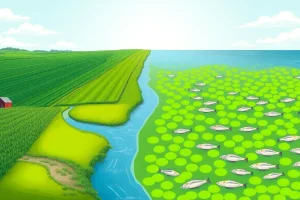
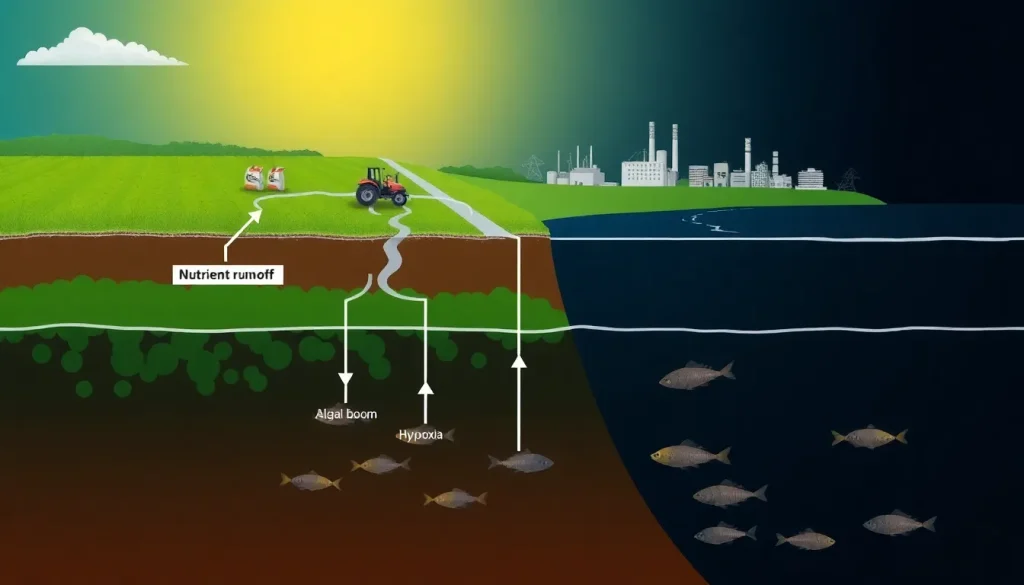
The transformation of fertilizer runoff into a dead zone follows a well-understood sequence of biological and chemical steps. It begins when rain or irrigation water flows over fertilized land, carrying dissolved nitrogen and phosphorus into streams, rivers, and eventually into larger water bodies such as lakes or coastal seas. These nutrients, particularly in forms like nitrate and phosphate, are the building blocks of life, and their sudden abundance in an aquatic environment triggers a rapid increase in the population of phytoplankton and algae—a phenomenon known as an algal bloom. In some cases, the bloom is so dense that it turns the water green, red, or brown, and can even be visible from space.
As the bloom progresses, the algae and phytoplankton have a limited lifespan. When they die, they sink to the bottom, where they are decomposed by bacteria and other microorganisms. This decomposition process is oxygen-intensive; the bacteria consume dissolved oxygen in the water at a much faster rate than it can be replenished from the atmosphere or through photosynthesis by remaining aquatic plants. In stratified water bodies—where a warm, less dense surface layer sits atop a cooler, denser bottom layer—the oxygen-depleted bottom water becomes isolated, preventing mixing that would otherwise re-oxygenate it. The result is a hypoxic layer where dissolved oxygen levels fall below 2 milligrams per liter, a threshold at which most fish and mobile organisms flee, and immobile or slow-moving creatures like clams, worms, and crustaceans suffocate. If oxygen levels drop to zero (anoxia), the sediment can release toxic hydrogen sulfide, further poisoning the environment.
The size and duration of a dead zone depend on several factors: the amount of nutrient loading, water temperature, circulation patterns, and the shape of the water body. Warmer waters hold less dissolved oxygen and accelerate both algal growth and bacterial respiration, so dead zones often peak in summer and shrink or disappear in cooler months. In some systems, like the Gulf of Mexico, the dead zone is a seasonal feature that reforms each year, driven by nutrient-laden freshwater from the Mississippi River flowing into the saltwater of the Gulf, creating a stratified water column that traps the hypoxic bottom layer.
Main Causes or Drivers
The primary driver of fertilizer-induced dead zones is the massive increase in nutrient inputs to watersheds from human activities, particularly modern agriculture. The invention of the Haber-Bosch process in the early 20th century allowed for the industrial synthesis of nitrogen fertilizers, dramatically boosting crop yields but also doubling the global flux of reactive nitrogen into the environment. Today, synthetic fertilizers and manure applied to croplands are the largest sources of nitrogen and phosphorus pollution in many regions. When farmers apply more fertilizer than crops can absorb—often to maximize yields or due to imprecise application methods—the surplus nutrients remain in the soil, vulnerable to being washed away by rain or irrigation.
Other significant contributors include:
- Livestock operations: Concentrated animal feeding operations (CAFOs) generate vast quantities of manure rich in nitrogen and phosphorus. When not properly managed, runoff from these facilities can enter waterways.
- Urban and suburban runoff: Lawn fertilizers, pet waste, and detergents contribute nutrients. Impervious surfaces like roads and sidewalks accelerate runoff, carrying these pollutants directly into storm drains and streams.
- Atmospheric deposition: Nitrogen compounds from fossil fuel combustion and agricultural emissions can settle onto land and water, adding to the nutrient load.
- Wastewater treatment plants: Although point sources, some plants discharge effluent containing nitrogen and phosphorus, especially if they lack advanced nutrient removal technologies.
Land-use changes also play a role. Deforestation and the draining of wetlands remove natural buffers that would otherwise filter nutrients. Wetlands act as sponges, trapping sediments and absorbing nutrients before they reach open water. Their loss exacerbates the problem. Additionally, climate change can intensify dead zones by increasing water temperatures, altering precipitation patterns (leading to more intense runoff events), and extending the stratification period in coastal waters.
Environmental and Human Impacts
Dead zones have profound ecological consequences. The most immediate impact is the mass mortality or displacement of fish, shellfish, and other aquatic organisms. Mobile species like fish and shrimp may flee the hypoxic area, but this forced migration can disrupt feeding and breeding patterns, reduce growth rates, and increase vulnerability to predators. Sessile organisms such as oysters, mussels, and many bottom-dwelling invertebrates cannot escape and die, leading to a collapse of benthic communities. The loss of these organisms ripples through the food web, affecting species that depend on them for food, including commercially important fish and marine mammals.
Beyond direct mortality, dead zones can alter ecosystem structure and function. The decomposition of massive algal blooms can release toxins and create foul-smelling, unsightly conditions that deter tourism and recreation. Some algal blooms, particularly those of cyanobacteria (blue-green algae), produce potent toxins that can contaminate drinking water supplies, poison livestock and pets, and cause skin rashes or respiratory issues in humans. Harmful algal blooms (HABs) are a growing concern worldwide, linked to nutrient pollution and warming waters.
The economic toll is substantial. Commercial fisheries suffer reduced catches of shrimp, fish, and shellfish, leading to lost income for fishers and higher prices for consumers. The Gulf of Mexico dead zone, for example, has been associated with declines in brown shrimp harvests. Recreational fishing and tourism industries also take a hit when beaches are closed due to algal blooms or when fish populations dwindle. Property values near affected water bodies can decline. The cost of treating drinking water to remove algal toxins or excess nutrients adds a financial burden on municipalities. While precise global figures are difficult to calculate, the economic damage from nutrient pollution and dead zones runs into billions of dollars annually.
Solutions
Addressing fertilizer runoff and dead zones requires a multi-pronged approach that targets nutrient sources, transport pathways, and the resilience of receiving waters. Because the problem is diffuse, solutions must be implemented across entire watersheds, involving farmers, urban planners, policymakers, and individuals.
Key strategies include:
- Improved agricultural practices: Precision agriculture uses soil testing, GPS-guided equipment, and variable-rate application to apply fertilizer only where and when needed, reducing excess. Cover crops, such as clover or rye, planted during off-seasons absorb residual nutrients and prevent soil erosion. Conservation tillage minimizes soil disturbance, keeping nutrients in place. Buffer strips of grass or trees along waterways filter runoff before it enters streams.
- Manure management: Proper storage, treatment, and application of animal manure can prevent nutrient losses. Technologies like anaerobic digesters can capture methane while reducing nutrient content.
- Wetland restoration and constructed wetlands: Restoring natural wetlands or building artificial ones can intercept nutrient-laden runoff, allowing plants and microbes to remove nitrogen and phosphorus before they reach larger water bodies.
- Urban stormwater management: Green infrastructure such as rain gardens, permeable pavements, and green roofs reduces runoff volume and filters pollutants. Upgrading stormwater systems to capture and treat runoff can also help.
- Wastewater treatment upgrades: Advanced treatment plants can remove nitrogen and phosphorus from effluent, though this is costly and not universally implemented.
- Policy and regulation: Governments can set nutrient limits for water bodies (Total Maximum Daily Loads), regulate fertilizer application, and provide incentives for conservation practices. The European Union’s Nitrates Directive and the U.S. Clean Water Act are examples of regulatory frameworks, though enforcement and effectiveness vary.
- Consumer choices: Reducing meat consumption can lower the demand for fertilizer-intensive feed crops. Using phosphorus-free detergents and minimizing lawn fertilizer use also helps.
No single solution is sufficient; an integrated approach that combines source reduction, interception, and ecosystem restoration offers the best chance of shrinking existing dead zones and preventing new ones. Success stories, such as the recovery of the Black Sea dead zone in the 1990s following reduced fertilizer use after the collapse of the Soviet Union, demonstrate that ecosystems can rebound when nutrient loads are curtailed.
Common Misconceptions
Several misunderstandings surround the topic of fertilizer runoff and dead zones. One common misconception is that dead zones are completely lifeless. In reality, they are hypoxic or anoxic, meaning oxygen levels are too low to support most aerobic life, but anaerobic bacteria and some specialized organisms can still survive. The term “dead zone” is a simplification that captures the dramatic loss of typical marine life.
Another misconception is that dead zones are a natural phenomenon. While some natural hypoxic zones exist (such as in deep ocean basins or fjords with limited circulation), the vast majority of coastal dead zones documented since the mid-20th century are directly linked to human nutrient inputs. The rapid increase in the number and size of dead zones worldwide correlates strongly with the intensification of agriculture and fossil fuel use.
Some believe that simply reducing fertilizer use will immediately solve the problem. However, nutrients can accumulate in soils and groundwater for years or even decades, creating a legacy effect. Even if fertilizer application were halted today, stored nutrients would continue to leach into waterways for a long time. This time lag means that sustained, long-term efforts are necessary to see significant improvements.
Finally, there is a misconception that dead zones only affect faraway oceans. In fact, dead zones can occur in lakes, reservoirs, and even large rivers. Lake Erie, for instance, has experienced severe hypoxic events due to agricultural runoff. The issue is not confined to coastal areas; it is a widespread freshwater and marine problem.
FAQ
What is a dead zone?
A dead zone is an area in a water body where oxygen levels are so low (hypoxic) that most marine life cannot survive. They are caused by excessive nutrient pollution, primarily from fertilizer runoff, which fuels algal blooms that deplete oxygen when they decompose.
How does fertilizer runoff cause dead zones?
Fertilizer runoff carries nitrogen and phosphorus into waterways. These nutrients cause rapid algae growth. When the algae die and sink, bacteria decompose them, consuming dissolved oxygen. In stratified waters, this creates a bottom layer with little to no oxygen, forming a dead zone.
Why do dead zones matter?
Dead zones disrupt ecosystems, kill fish and shellfish, harm commercial fisheries, reduce tourism, and can produce toxins that threaten human health. They also indicate broader water quality problems and can have long-lasting economic and environmental consequences.
References
- National Oceanic and Atmospheric Administration (NOAA). "What is a dead zone?" National Ocean Service.
- Diaz, R. J., & Rosenberg, R. (2008). Spreading dead zones and consequences for marine ecosystems. Science, 321(5891), 926-929.
- U.S. Environmental Protection Agency. "Nutrient Pollution: The Problem." EPA.gov.