In brief
At a glance
Quick Facts
- Primary Energy Source
- Flowing or falling water
- Global Share of Electricity
- Around 16% of world's electricity generation
- Carbon Footprint
- Among the lowest of all energy sources, comparable to wind and nuclear
- Largest Hydropower Plant
- Three Gorges Dam in China, with 22.5 GW capacity
- Common Social Impact
- Displacement of communities and loss of agricultural land
- Methane Emissions
- Reservoirs can emit methane from decomposing organic matter
- Fish Migration Barrier
- Dams can block migratory routes for fish like salmon
- Operational Lifespan
- Dams can operate for 50–100 years or more
Key Takeaways
- Hydropower is a mature, low-carbon renewable energy technology that provides about 16% of the world’s electricity, but its dams and reservoirs can cause significant environmental and social disruptions.
- While hydropower plants emit negligible greenhouse gases during operation, the creation of reservoirs can lead to methane emissions from decomposing organic matter, and dams alter river ecosystems, block fish migration, and displace communities.
- Hydropower offers reliable, flexible baseload power and can support grid stability, but its benefits must be weighed against irreversible ecological changes and the loss of free-flowing rivers.
- Modern approaches like run-of-river systems, fish ladders, and improved dam planning aim to reduce impacts, but no hydropower project is entirely without environmental or social cost.
What Is Hydropower: Low Carbon but Not Impact-Free?
Hydropower is the generation of electricity using the energy of moving water, typically by channeling water through turbines in a dam or a run-of-river system. It is classified as a renewable energy source because it relies on the water cycle, which is continuously replenished by the sun. As a low-carbon technology, hydropower produces minimal direct greenhouse gas emissions during operation, making it a key component of many national strategies to reduce reliance on fossil fuels and mitigate climate change.
However, the phrase “low carbon but not impact-free” underscores a critical nuance: while hydropower avoids the carbon dioxide emissions associated with burning coal or natural gas, its infrastructure—particularly large dams and reservoirs—can have profound and lasting effects on river ecosystems, local communities, and land use. These impacts include habitat destruction, altered water quality, blocked fish migration, and the displacement of people. Thus, hydropower sits at a complex intersection of renewable energy benefits and significant environmental and social costs.
How It Works
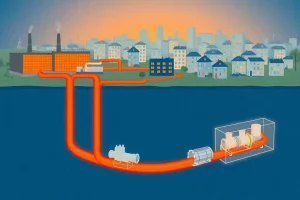
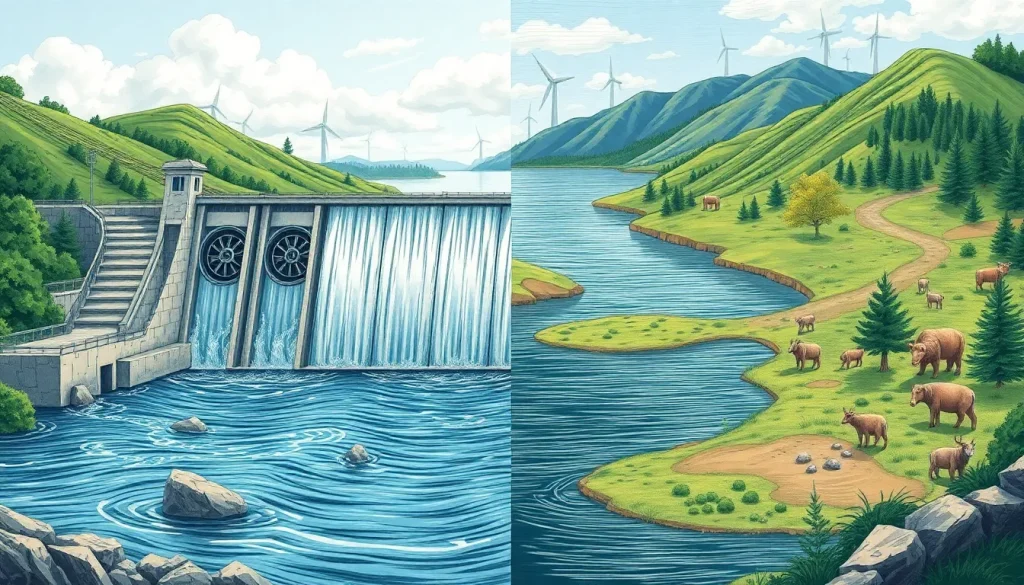
Hydropower plants convert the potential or kinetic energy of water into mechanical energy and then into electricity. The most common type is the impoundment facility, which uses a dam to store river water in a reservoir. Water released from the reservoir flows through a penstock, spins a turbine, and drives a generator to produce electricity. The amount of power generated depends on the volume of water and the height from which it falls (the “head”).
Other designs include run-of-river systems, which divert a portion of a river’s flow through a canal or penstock without the need for a large reservoir, and pumped-storage plants, which act like giant batteries. Pumped-storage facilities pump water from a lower reservoir to an upper reservoir during periods of low electricity demand, then release it to generate power when demand is high. All these systems share the same basic principle: converting the kinetic energy of moving water into electrical energy with minimal direct emissions.
Overview
Hydropower is the largest source of renewable electricity globally, accounting for roughly 16% of total generation. It is a mature technology, with the first hydroelectric plants built in the late 19th century. Today, China, Brazil, Canada, the United States, and Russia are among the top producers. Hydropower’s share of electricity generation varies widely by region; some countries like Norway and Brazil rely on it for the majority of their power.
The scale of hydropower projects ranges from massive dams like the Three Gorges in China (22.5 GW) to small, local installations that power a single community. While large dams have historically dominated, there is growing interest in small-scale and low-impact hydropower as a way to expand renewable energy with fewer negative consequences. Despite its long history, hydropower continues to evolve with new turbine designs, fish-friendly technologies, and more rigorous environmental assessments.
Environmental and Human Impacts
The construction of dams and reservoirs fundamentally alters river ecosystems. Dams block the natural flow of water, sediment, and nutrients, which can degrade downstream habitats, erode riverbanks, and disrupt the life cycles of aquatic species. Fish migration is particularly affected; many species, such as salmon, rely on free-flowing rivers to reach spawning grounds. While fish ladders and other passage systems exist, they are often only partially effective.
Reservoirs also flood large areas of land, leading to the displacement of human communities and the loss of forests, wetlands, and agricultural land. The decomposition of submerged vegetation can produce methane, a potent greenhouse gas, partially offsetting the climate benefits of hydropower. In tropical regions, where decomposition rates are high, these emissions can be significant. Additionally, dams can alter local water temperatures and chemistry, affecting downstream water quality and aquatic life.
Benefits, Limitations and Trade-offs
Hydropower offers several clear benefits: it is a renewable, low-carbon energy source that provides reliable baseload power and can quickly adjust output to meet demand, supporting grid stability. It also has a long operational lifespan—often 50 to 100 years—and can provide ancillary services like flood control, irrigation, and water supply. In many regions, it is a cost-effective source of electricity once the initial construction is complete.
However, these benefits come with trade-offs. The upfront capital costs and construction times are high, and the environmental and social impacts can be irreversible. Large dams in particular have been criticized for displacing millions of people worldwide and causing the extinction of freshwater species. The decision to build a hydropower project often involves weighing the need for clean energy against the preservation of free-flowing rivers and the rights of affected communities. In some cases, the net greenhouse gas emissions from reservoir methane can rival those of fossil fuel plants over a 20-year period, though over the full lifecycle, hydropower generally remains far lower carbon.
Solutions
To reduce the negative impacts of hydropower, a range of technological and policy solutions have been developed. Fish ladders, elevators, and bypass systems help migratory species navigate around dams. Environmental flow releases can mimic natural river patterns to sustain downstream ecosystems. Advanced turbine designs, such as those with smaller gaps and slower rotation, reduce fish mortality. For new projects, strategic planning that avoids sensitive areas and incorporates cumulative impact assessments is essential.
At the policy level, certification schemes like the Hydropower Sustainability Standard provide frameworks for assessing and mitigating social and environmental risks. Decommissioning older, uneconomical, or highly damaging dams is also gaining traction as a way to restore river health. Run-of-river and small-scale hydropower projects, while not impact-free, generally have a smaller footprint and can be sited more carefully. Ultimately, a balanced approach that considers the full lifecycle impacts and engages local stakeholders is key to making hydropower as sustainable as possible.
FAQ
What is hydropower?
Hydropower is the generation of electricity using the energy of moving water, typically through dams or run-of-river systems that spin turbines connected to generators.
How does hydropower produce low-carbon electricity?
Hydropower plants do not burn fuel; they convert the kinetic energy of water into electricity, resulting in very low greenhouse gas emissions during operation compared to fossil fuel plants.
Why does hydropower matter?
Hydropower matters because it is the largest source of renewable electricity globally, providing reliable, low-carbon power that can help reduce dependence on fossil fuels, but its environmental and social impacts require careful management.
References
- International Energy Agency (IEA) – Hydropower
- U.S. Energy Information Administration (EIA) – Hydropower Explained
- World Commission on Dams – Dams and Development Report