In brief
At a glance
Quick Facts
- Journal / venue
- Proceedings of the National Academy of Sciences (PNAS)
- Authors
- Steven C. Sherwood and Matthew Huber
- Publication date
- May 3, 2010
- Study type
- Theoretical modeling combined with climate projections
- Peer-reviewed
- Yes
- DOI / link
- 10.1073/pnas.0913352107
Study in one sentence
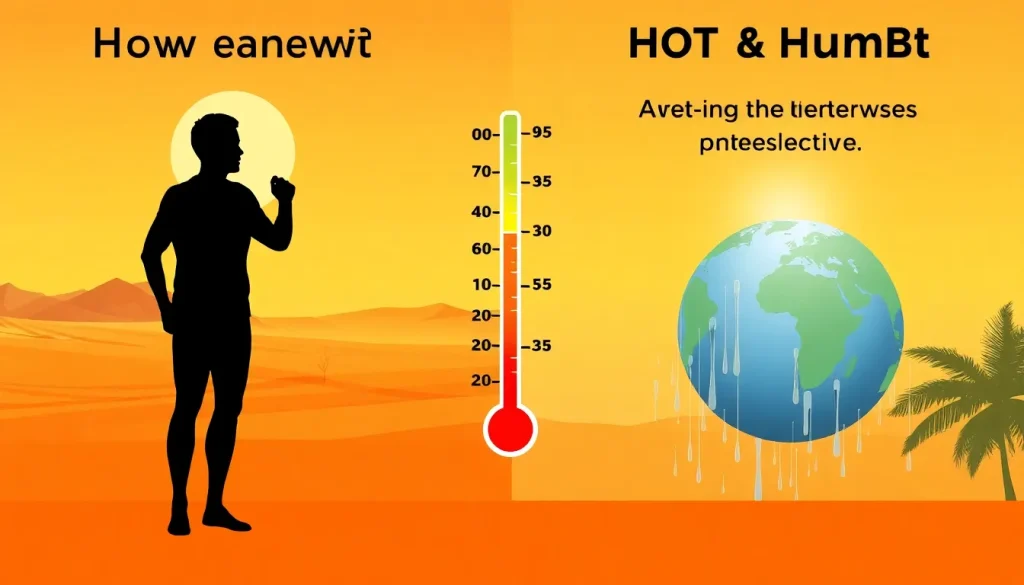
This study identifies a critical environmental threshold—a wet-bulb temperature of 35°C (95°F)—beyond which the human body can no longer cool itself through sweating, making prolonged exposure fatal even for healthy individuals in well-ventilated shade with unlimited water.
Publication and date
The study, titled “An adaptability limit to climate change due to heat stress,” was published in the peer-reviewed journal Proceedings of the National Academy of Sciences (PNAS) on May 3, 2010. The authors are Steven C. Sherwood (Climate Change Research Centre, University of New South Wales) and Matthew Huber (Department of Earth and Atmospheric Sciences, Purdue University).
Research question
The researchers set out to determine the maximum combination of heat and humidity that a human body can tolerate before core temperature rises uncontrollably. They asked: Is there a well-defined environmental limit to human heat adaptation, and how might future climate change push some regions past that limit?
Method
Sherwood and Huber used a theoretical model of human thermoregulation based on well-established principles of heat transfer. They assumed a healthy, acclimatized person at rest in the shade, with unlimited drinking water and fully sweat-wetted skin. The model calculated the maximum air temperature that the body could withstand at various humidity levels while maintaining a stable core temperature of 37°C (98.6°F). The key variable was the wet-bulb temperature (TW), which is measured by a thermometer wrapped in a wet cloth and reflects the combined effect of heat and humidity. The researchers then examined global climate model projections to see where and when such conditions might occur under different warming scenarios.
Main findings
The study found that the human body’s ability to dissipate heat through sweating becomes impossible when the wet-bulb temperature reaches 35°C (95°F). At this threshold, even a perfectly healthy person resting in the shade with unlimited water would experience a continuous rise in core body temperature, leading to fatal hyperthermia within hours. The limit is equivalent to an air temperature of 35°C at 100% relative humidity, or about 46°C (115°F) at 50% humidity. The researchers also showed that while most of the world currently stays well below this threshold, climate model projections indicate that some regions—particularly in South Asia, the Middle East, and parts of China—could occasionally exceed it by the end of the century under high-emission scenarios.
What the findings do not prove
The study does not predict that large populations will suddenly die at exactly 35°C wet-bulb. The threshold is for a healthy, resting, acclimatized person in ideal conditions; in reality, many people are more vulnerable (the elderly, children, those with pre-existing conditions, outdoor workers) and would suffer harm at much lower wet-bulb temperatures. The findings also do not prove that such conditions will definitely occur—they depend on future greenhouse gas emissions and the accuracy of climate models. The study does not account for behavioral adaptations like air conditioning or migration, which could reduce exposure.
Limitations
The model assumes a perfectly acclimatized, healthy individual with fully wetted skin, which may overestimate tolerance for some populations. It does not consider the effects of clothing, direct sunlight, physical activity, or wind, all of which alter heat stress. The climate projections used are from older models (CMIP3) and may not capture the most recent understanding of regional humidity changes. The study also does not quantify the health impacts of sub-lethal heat stress, which can cause widespread illness and death at wet-bulb temperatures well below 35°C.
How it compares with previous research
Earlier studies had proposed similar limits based on physiological experiments, but Sherwood and Huber’s work provided a clear, physically based threshold and connected it to climate model projections. Subsequent research has largely confirmed the 35°C wet-bulb limit, while also showing that dangerous heat stress occurs at much lower values—for example, a wet-bulb temperature of 32°C (90°F) is considered extremely hazardous for outdoor labor. More recent studies have documented that parts of South Asia and the Persian Gulf are already experiencing wet-bulb temperatures approaching 35°C for short periods, and that with continued warming, these extremes will become more frequent and intense.
Why it matters
This study provides a clear physiological basis for why humid heat is so dangerous: high humidity prevents sweat evaporation, the body’s primary cooling mechanism. It translates a complex biophysical limit into a simple metric—35°C wet-bulb—that can be used to assess climate risks. The findings underscore that as global temperatures rise, the combination of heat and humidity will make some regions increasingly uninhabitable without artificial cooling, threatening human health, labor productivity, and potentially triggering migration. The work has become a cornerstone for heat-stress research and public health planning.
Link to the primary paper
Sherwood, S. C., & Huber, M. (2010). An adaptability limit to climate change due to heat stress. Proceedings of the National Academy of Sciences, 107(21), 9552–9555. https://doi.org/10.1073/pnas.0913352107
FAQ
What is the difference between heat index and wet-bulb temperature?
The heat index is a measure of how hot it feels to the human body when humidity is factored in with the actual air temperature, and it assumes a person in the shade. Wet-bulb temperature is a direct physical measurement of the cooling effect of evaporation; it represents the lowest temperature that can be achieved by evaporative cooling. A wet-bulb temperature of 35°C is the theoretical limit for human survival, while the heat index at that point would be off the charts (well above 54°C or 130°F).
Can humans adapt to higher wet-bulb temperatures?
Physiologically, the 35°C wet-bulb limit is a hard boundary because it is based on the laws of thermodynamics. No amount of acclimatization or fitness can overcome the fact that sweat cannot evaporate when the air is already saturated with moisture at that temperature. However, behavioral adaptations like air conditioning, reducing activity, and seeking cooler microclimates can protect people from exposure to such conditions.
Has any place on Earth already reached a wet-bulb temperature of 35°C?
As of the study’s publication, no reliable weather station had recorded a sustained wet-bulb temperature of 35°C. However, more recent research has documented brief, localized occurrences approaching this threshold in parts of the Persian Gulf and South Asia, particularly in coastal areas where extreme heat and high humidity combine.
References
- Sherwood, S. C., & Huber, M. (2010). An adaptability limit to climate change due to heat stress. Proceedings of the National Academy of Sciences, 107(21), 9552–9555.
- Raymond, C., Matthews, T., & Horton, R. M. (2020). The emergence of heat and humidity too severe for human tolerance. Science Advances, 6(19), eaaw1838.
- Mora, C., et al. (2017). Global risk of deadly heat. Nature Climate Change, 7(7), 501–506.
- Im, E. S., Pal, J. S., & Eltahir, E. A. B. (2017). Deadly heat waves projected in the densely populated agricultural regions of South Asia. Science Advances, 3(8), e1603322.
- Kjellstrom, T., et al. (2009). The direct impact of climate change on regional labor productivity. Global Environmental Change, 19(4), 520–529.