In brief
At a glance
Quick Facts
- Verdict
- Unproven and controversial
- Problem addressed
- Global warming
- Evidence strength
- Limited (modeling and natural analogs)
- Potential scale
- Global
- Relative cost
- Low to moderate (direct costs)
- Time to impact
- Immediate (months)
Quick verdict
Stratospheric aerosol injection (SAI) is a highly controversial, unproven climate intervention concept that could rapidly reduce global temperatures but carries severe environmental, political, and ethical risks. It is not a substitute for cutting greenhouse gas emissions and remains at an early research stage with no field deployments. Its potential as an emergency measure is debated, but the risks of unintended consequences and governance failure are profound.
Problem addressed
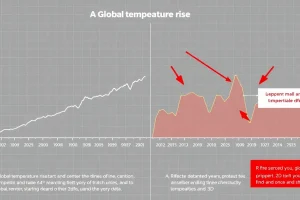
SAI aims to directly counteract global warming by reducing the amount of solar radiation reaching the Earth’s surface. The primary problem is the rapid rise in global average temperatures due to anthropogenic greenhouse gas emissions, which drives climate change impacts such as heatwaves, sea-level rise, ice melt, and extreme weather. SAI is proposed as a temporary method to lower temperatures while emissions reductions and carbon dioxide removal are scaled up.
How the solution works
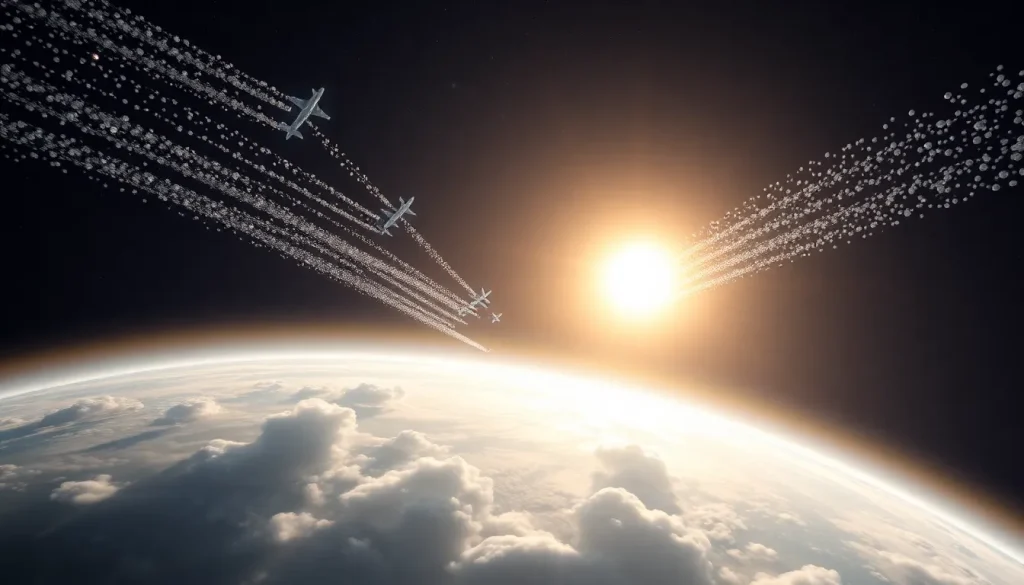
The concept mimics the cooling effect observed after large volcanic eruptions. When sulfur dioxide (SO₂) or other reflective particles are injected into the stratosphere (typically at altitudes of 15–25 km), they form sulfate aerosols that scatter a small fraction of incoming sunlight back into space. This reduces the net solar radiation reaching the Earth’s surface, thereby lowering global temperatures. The particles remain in the stratosphere for about one to two years before settling out, so continuous injection would be required to maintain a cooling effect. Proposed delivery methods include high-altitude aircraft, balloons, or artillery.
Evidence strength
Evidence for SAI’s cooling potential comes primarily from observations of volcanic eruptions and climate model simulations. The 1991 eruption of Mount Pinatubo injected approximately 20 million tonnes of SO₂ into the stratosphere, causing a global temperature decrease of about 0.5°C for roughly two years. Climate models generally reproduce this cooling and suggest that SAI could offset a significant portion of greenhouse warming. However, no field experiments at a scale relevant to climate intervention have been conducted. The evidence base is therefore limited to natural analogs and theoretical modeling, with large uncertainties regarding regional climate effects, microphysics, and ecological impacts. The strength of evidence is moderate for the basic cooling mechanism but weak for the full range of consequences.
Potential scale
SAI could, in theory, cool the entire planet. Model studies indicate that injecting 5–10 million tonnes of sulfur per year could offset the warming from a doubling of CO₂, reducing global average temperatures by about 1°C. The cooling would be rapid and could be adjusted by varying the injection rate. However, the cooling would not be uniform: some regions might cool more than others, and precipitation patterns could shift. SAI would not address other CO₂-related problems such as ocean acidification. The scale of deployment would require a sustained, global infrastructure and international coordination.
Cost considerations
Direct deployment costs for SAI are estimated to be relatively low compared to the economic damages of unmitigated climate change or the cost of deep emissions cuts. Studies suggest that delivering 5–10 million tonnes of SO₂ per year to the stratosphere could cost on the order of $1–10 billion annually, depending on the delivery method. This is orders of magnitude cheaper than global decarbonization. However, these estimates do not include the costs of potential side effects, monitoring, compensation for damages, or the geopolitical risks of unilateral deployment. The apparent low cost raises concerns about moral hazard and the potential for a single nation or even a wealthy individual to deploy SAI without global consent.
Implementation time
If a decision were made to deploy SAI, the technical capability could likely be developed within a decade, assuming existing aircraft or new purpose-built high-altitude platforms. Cooling would begin within months of the first injection and would reach a steady state after a few years of continuous operation. However, the governance, legal, and ethical frameworks required for responsible deployment are entirely absent and would take many years, if not decades, to establish. Research and small-scale field experiments are currently stalled due to public opposition and governance gaps.
Environmental benefits
The primary environmental benefit would be a rapid reduction in global temperatures, which could slow or halt ice sheet melting, reduce the frequency and intensity of heatwaves, and potentially stabilize some climate feedbacks (e.g., permafrost thaw). SAI could also reduce coral bleaching by lowering sea surface temperatures. These benefits are contingent on the assumption that SAI would be deployed in a controlled and sustained manner, and that the cooling would be sufficient to offset warming without causing unacceptable side effects.
Social and economic co-benefits
By reducing extreme heat, SAI could lower heat-related mortality and morbidity, decrease energy demand for cooling, and reduce agricultural losses from heat stress. It might also lessen the economic damages from sea-level rise and extreme weather events. However, these benefits would be unevenly distributed, and some regions could experience net harm due to altered precipitation patterns. The potential for SAI to reduce climate impacts in vulnerable regions is uncertain and depends on the specific deployment strategy.
Risks and unintended consequences
SAI carries numerous and severe risks. Stratospheric sulfate aerosols can enhance ozone depletion, potentially delaying the recovery of the ozone layer. Changes in precipitation patterns, including disruptions to the Asian and African monsoons, could threaten food and water security for billions. If SAI were suddenly stopped (e.g., due to war or technical failure), a rapid “termination shock” would cause temperatures to spike, with catastrophic ecological and social impacts. SAI also poses a moral hazard by potentially reducing the incentive to cut greenhouse gas emissions. Furthermore, it could be weaponized or used unilaterally, leading to international conflict. The full range of ecological and health impacts from increased stratospheric aerosol loading is unknown.
Where it works best
SAI would have a global effect, but its impacts would vary regionally. Some models suggest that a uniform global injection could over-cool the tropics and under-cool the poles, while a more targeted injection (e.g., at high latitudes) might be used to slow Arctic ice loss. However, the optimal deployment strategy is unknown and would depend on the desired climate outcomes. SAI might be most effective as a temporary measure to avoid climate tipping points while emissions are reduced, but this assumes a level of international cooperation and control that does not currently exist.
Where it may not work
SAI is not a solution for all climate problems. It does not address ocean acidification, which would continue as CO₂ accumulates. It could worsen drought in some regions, particularly those dependent on monsoon rainfall. SAI would also not reverse all impacts of warming, such as ecosystem shifts or species extinctions already underway. In regions with high vulnerability to precipitation changes, SAI could cause more harm than good. Additionally, if deployed without global consent, it could trigger geopolitical crises, making it unworkable in practice.
Comparison with alternatives
SAI is one of several proposed solar radiation management (SRM) techniques. Compared to marine cloud brightening (which aims to increase cloud reflectivity over oceans) or cirrus cloud thinning, SAI is considered more scalable and faster-acting. However, it also carries higher risks due to its global reach and potential for ozone depletion. Compared to carbon dioxide removal (CDR) methods like afforestation or direct air capture, SAI is much cheaper and faster but does not address the root cause of climate change. Emissions reduction remains the safest and most proven approach, but its pace is insufficient to meet climate targets. SAI is often framed as a potential supplement, not a replacement, for mitigation and adaptation.
Case studies
There are no real-world deployments of SAI. The closest natural analog is the 1991 Mount Pinatubo eruption, which injected ~20 Mt SO₂ into the stratosphere and caused a global cooling of ~0.5°C for about two years, along with observed ozone depletion and changes in precipitation. Small-scale field experiments have been proposed, such as the Stratospheric Controlled Perturbation Experiment (SCoPEx), which planned to release a small amount of calcium carbonate in the stratosphere to study aerosol microphysics. However, SCoPEx has faced significant public opposition and governance challenges and has not yet been conducted. These examples highlight both the potential cooling effect and the difficulties of researching SAI responsibly.
Final assessment
Stratospheric aerosol injection is a high-risk, high-reward concept that remains unproven and fraught with scientific, ethical, and governance challenges. While it could rapidly reduce global temperatures and buy time for mitigation, the risks of unintended consequences, termination shock, and moral hazard are severe. Current evidence is insufficient to justify deployment, and the lack of international governance frameworks makes responsible research difficult. SAI should not be viewed as a substitute for aggressive emissions reductions and adaptation. If it is to be considered at all, it must be as a temporary emergency measure under strict international oversight, with parallel efforts to phase out greenhouse gas emissions and scale up carbon removal. For now, the most prudent path is to invest in research while prioritizing mitigation and adaptation.
FAQ
Is stratospheric aerosol injection currently being used?
No. SAI has never been deployed at scale. Only small-scale, short-duration field experiments have been proposed, but none have been conducted due to governance and public concerns.
What are the main risks of SAI?
The main risks include ozone depletion, changes in precipitation patterns (potentially disrupting monsoons), termination shock if deployment stops abruptly, moral hazard reducing mitigation efforts, and geopolitical conflict over unilateral deployment.
How does SAI compare to reducing emissions?
Emissions reduction addresses the root cause of climate change and is proven, safe, and has many co-benefits. SAI only masks the symptoms, does not stop ocean acidification, and carries large risks. It is not a substitute but could theoretically be a temporary supplement in an emergency.
References
- IPCC, 2018: Global Warming of 1.5°C. An IPCC Special Report.
- National Academies of Sciences, Engineering, and Medicine. 2021. Reflecting Sunlight: Recommendations for Solar Geoengineering Research and Research Governance.
- Keith, D. W., et al. (2016). Stratospheric solar geoengineering without ozone loss. Proceedings of the National Academy of Sciences.
- Robock, A., et al. (2009). Benefits, risks, and costs of stratospheric geoengineering. Geophysical Research Letters.
- SCoPEx Advisory Committee. (2021). Stratospheric Controlled Perturbation Experiment: Project Overview.