In brief
At a glance
Quick Facts
- Chemical Class
- Neonicotinoids are synthetic compounds chemically similar to nicotine.
- Primary Use
- Systemic insecticides used in agriculture, horticulture, and domestic pest control.
- Target Pests
- Sucking insects like aphids, whiteflies, and some beetles.
- Mode of Action
- Bind to nicotinic acetylcholine receptors in insects, causing paralysis and death.
- Persistence
- Can remain in soil and water for months to years, depending on the compound.
- Pollinator Exposure
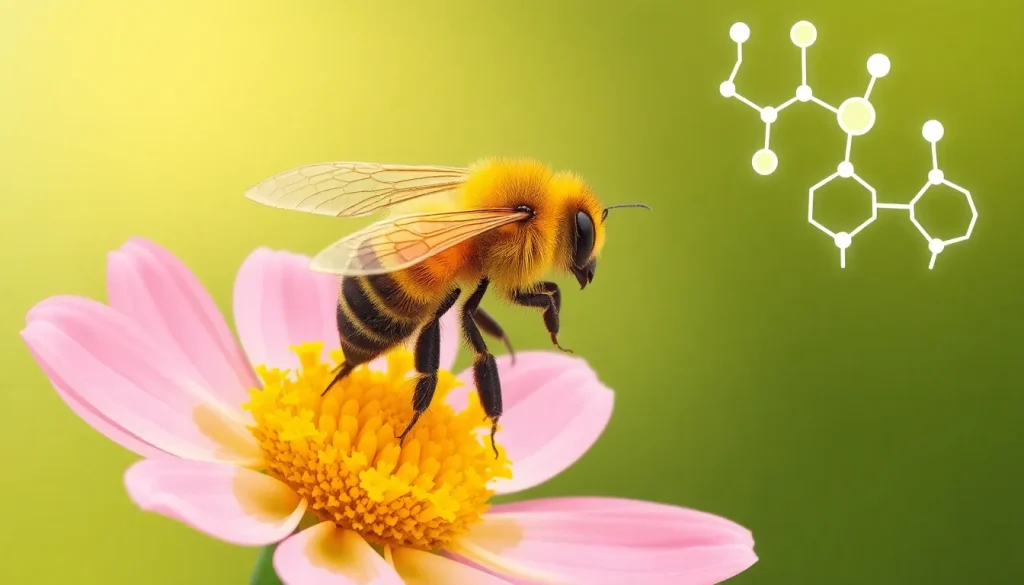
- Pollinators are exposed through contaminated pollen, nectar, and guttation droplets.
- Sublethal Effects
- Impair foraging, navigation, learning, and reproduction in bees.
- Regulatory Status
- The EU banned outdoor use of three major neonicotinoids in 2018; other regions have varying restrictions.
- Alternative Pest Control
- Integrated Pest Management (IPM) and biological controls are promoted as alternatives.
- Economic Importance
- Pollinators contribute to the production of about 75% of global food crops.
Key Takeaways
- Neonicotinoids are systemic insecticides that can contaminate pollen and nectar, exposing pollinators to potentially harmful doses.
- Scientific studies show that neonicotinoids can cause sublethal effects in bees, impairing navigation, foraging, and reproduction, which may contribute to colony declines.
- Regulatory responses vary globally; the European Union has banned outdoor use of three major neonicotinoids, while other regions maintain limited restrictions.
- Protecting pollinators requires integrated pest management, reduced reliance on prophylactic pesticide use, and further research into long-term, field-realistic impacts.
What Is Neonicotinoids and Pollinator Health?
Neonicotinoids are a class of neuro-active insecticides chemically similar to nicotine, designed to control a broad spectrum of insect pests in agriculture, horticulture, and domestic settings. They are systemic, meaning they are absorbed by the plant and transported throughout its tissues, including leaves, flowers, pollen, and nectar. This systemic action makes them effective against sucking and chewing insects but also creates a pathway for exposure to non-target organisms such as bees, butterflies, and other pollinators. Pollinator health encompasses the vitality and population stability of these animals, which are critical for the reproduction of many wild plants and the production of fruits, vegetables, and seeds that form a significant portion of the human diet.
The concern over neonicotinoids and pollinator health emerged in the mid-2000s when beekeepers reported unusually high colony losses, a phenomenon later termed colony collapse disorder (CCD). While multiple factors contribute to pollinator declines—including habitat loss, pathogens, and climate change—research increasingly pointed to neonicotinoids as a potential stressor. Unlike contact insecticides that remain on plant surfaces, neonicotinoids are absorbed and distributed systemically, meaning pollinators can ingest them through contaminated pollen and nectar even when applications are made correctly. This has sparked a global debate about the risks of these chemicals to beneficial insects and the need for regulatory action.
Overview
Neonicotinoids represent one of the most widely used classes of insecticides worldwide, accounting for a significant share of the global insecticide market. They are applied in various ways: as seed coatings, soil drenches, foliar sprays, and trunk injections. Seed treatments are particularly common in large-scale agriculture for crops like corn, soybeans, and oilseed rape (canola). Because the insecticide is taken up by the plant as it grows, it provides protection against pests during early growth stages. However, only a small fraction of the active ingredient applied as a seed coating is actually taken up by the plant; the rest remains in the soil or is lost to the environment, where it can persist for months to years and affect non-target organisms.
Pollinators, especially managed honey bees and wild bees, are essential for the production of many fruits, nuts, and vegetables. The economic value of pollination services is estimated in the hundreds of billions of dollars globally. The potential threat of neonicotinoids to these pollinators has therefore generated intense scientific scrutiny and public concern. While neonicotinoids are not the sole cause of pollinator declines, their widespread use and persistence in the environment make them a significant factor in the ongoing assessment of risks to pollinator health.
How It Works
Neonicotinoids act on the central nervous system of insects by binding to nicotinic acetylcholine receptors (nAChRs). These receptors are ion channels that mediate fast synaptic transmission; when neonicotinoids bind, they cause overstimulation of the nerve cells, leading to paralysis and death. Because neonicotinoids bind more strongly to insect nAChRs than to mammalian receptors, they are selectively toxic to insects. However, this selectivity does not extend to beneficial insects like bees, which are highly sensitive to these compounds.
In plants, neonicotinoids are taken up through the roots or leaves and distributed systemically. This means that even if the insecticide is applied only to the soil or as a seed coating, it can eventually reach the pollen and nectar. Pollinators are exposed primarily through ingestion of contaminated nectar and pollen, but also through contact with treated plant surfaces, guttation droplets (xylem sap exuded at leaf edges), and contaminated water. The exposure can be chronic, as residues may persist in the plant and soil for extended periods. Sublethal doses—amounts too low to cause immediate death—can still impair critical behaviors such as learning, memory, navigation, and foraging efficiency, which are vital for colony survival.
What the Evidence Shows
A large body of scientific research has investigated the effects of neonicotinoids on pollinators, using laboratory, semi-field, and field studies. Laboratory studies consistently demonstrate that neonicotinoids can cause mortality and sublethal effects in honey bees and bumblebees at concentrations found in treated crops. Sublethal effects include impaired olfactory learning and memory, reduced foraging activity, disorientation (making it harder for bees to return to the hive), and decreased queen production in bumblebee colonies. These effects can weaken colonies over time, making them more vulnerable to other stressors such as disease and food scarcity.
Field studies have produced more variable results, partly due to the complexity of real-world environments where bees may encounter multiple pesticides, variable food sources, and other stressors. Some large-scale field trials have found negative impacts on bee colony health and reproduction at neonicotinoid exposure levels typical of agricultural landscapes, while others have found no significant effects. Meta-analyses that combine data from multiple studies generally conclude that neonicotinoids can harm pollinators under field-realistic conditions, but the magnitude of the effect depends on factors such as crop type, bee species, and local environment. The weight of evidence has led many scientific bodies and regulatory agencies to acknowledge that neonicotinoids pose a risk to bees, though uncertainty remains about the precise contribution to long-term population declines.
Importance and Impact
Pollinators are indispensable to global food security and ecosystem health. Approximately 75% of the world’s flowering plants and about 35% of global food crops depend on animal pollinators to some extent. The decline of pollinator populations threatens agricultural yields, biodiversity, and the stability of natural ecosystems. Neonicotinoids, by potentially contributing to these declines, have far-reaching implications for food production, rural livelihoods, and the environment.
The economic impact of pollinator losses is substantial. In the United States alone, honey bees contribute an estimated $15–20 billion annually to crop production through pollination services. Wild bees and other pollinators provide additional, often undervalued, benefits. If neonicotinoid use continues to harm pollinator health, the costs could include reduced crop quality and quantity, increased reliance on managed pollination services, and higher food prices. Conversely, restrictions on neonicotinoids can also have economic consequences for farmers who rely on them for pest control, highlighting the need for balanced solutions.
Solutions
Addressing the risks of neonicotinoids to pollinators involves a combination of regulatory measures, agricultural practices, and research. Regulatory approaches vary by region. The European Union, based on risk assessments by the European Food Safety Authority (EFSA), imposed a near-total ban on the outdoor use of three neonicotinoids—clothianidin, imidacloprid, and thiamethoxam—in 2018, with limited exceptions for permanent greenhouses. Other countries, such as Canada and the United States, have implemented partial restrictions, including label changes, reduced application rates, and pollinator protection requirements, but have not enacted outright bans.
Integrated Pest Management (IPM) is a key strategy for reducing reliance on neonicotinoids. IPM emphasizes monitoring pest populations, using economic thresholds to determine when treatment is necessary, and employing a combination of biological, cultural, and chemical controls. Alternatives to neonicotinoids include selective insecticides with lower bee toxicity, biopesticides, crop rotation, resistant plant varieties, and habitat management to encourage natural enemies of pests. Additionally, planting pollinator-friendly strips and reducing prophylactic seed treatments can lower pollinator exposure. Ongoing research into new pest control technologies, such as RNA interference and precision agriculture, may offer future solutions that minimize harm to beneficial insects.
Benefits, Limitations and Trade-offs
Neonicotinoids offer significant agricultural benefits. They are highly effective against a range of difficult-to-control pests, can reduce the number of insecticide applications needed, and have lower acute mammalian toxicity compared to older insecticide classes. Their systemic action and long-lasting protection make them convenient for farmers, particularly in large-scale monocultures. Seed treatments can also reduce the need for foliar sprays, potentially lowering risks to applicators and non-target organisms from spray drift.
However, these benefits come with notable limitations and trade-offs. The persistence of neonicotinoids in soil and water can lead to long-term environmental contamination and effects on non-target organisms beyond pollinators, including aquatic insects and birds. The prophylactic use of seed treatments—applied without confirming pest pressure—can result in unnecessary exposure. Moreover, the development of pest resistance to neonicotinoids has been documented, potentially reducing their long-term efficacy. Balancing the agricultural advantages against the environmental risks requires careful risk assessment, targeted use, and investment in alternative pest management strategies that safeguard pollinator health while maintaining crop productivity.
FAQ
What are neonicotinoids?
Neonicotinoids are a class of synthetic insecticides that act on the nervous system of insects. They are systemic, meaning they are absorbed by plants and can be found in all plant tissues, including pollen and nectar.
How do neonicotinoids affect bees?
Bees can be exposed to neonicotinoids through contaminated pollen and nectar. Even at low, sublethal doses, these chemicals can impair a bee's ability to navigate, forage, and learn, and can reduce colony growth and queen production.
Why are neonicotinoids controversial?
They are controversial because while they are effective at protecting crops from pests, their widespread use has been linked to negative effects on pollinators and other beneficial insects. The debate centers on whether the agricultural benefits outweigh the environmental risks, and how to regulate their use appropriately.
References
- European Food Safety Authority (EFSA) – Neonicotinoids: risks to bees confirmed
- U.S. Environmental Protection Agency (EPA) – Pollinator Risk Assessment for Neonicotinoids
- Godfray, H.C.J. et al. (2014) 'A restatement of the natural science evidence base concerning neonicotinoid insecticides and insect pollinators' Proceedings of the Royal Society B