In brief
At a glance
Quick Facts
- Number of chemicals in commerce
- Over 350,000 chemicals and mixtures are registered for production and use worldwide.
- Single-substance focus
- Most chemical safety laws, such as TSCA and REACH, evaluate risks on a chemical-by-chemical basis.
- Mixture toxicity principle
- Chemicals with similar modes of action can have additive effects, meaning the combined risk is greater than any single exposure.
- Data gaps
- For the majority of chemicals in use, there is little or no publicly available toxicity data.
- Regulatory shift
- The EU’s Chemicals Strategy for Sustainability (2020) explicitly calls for addressing combination effects in risk assessments.
- Environmental justice
- Low-income and minority communities often face higher mixture exposures due to proximity to multiple pollution sources.
- Testing limitations
- It is practically impossible to test all possible chemical combinations; a mixture of just 25 chemicals has over 33 million possible combinations.
Key Takeaways
- Regulatory frameworks worldwide are built around assessing the safety of individual chemicals, not the complex mixtures people and ecosystems actually encounter.
- The number of possible chemical combinations is astronomically large, making it impossible to test every mixture for toxicity.
- Chemicals in a mixture can interact in unpredictable ways—additive, synergistic, or antagonistic—complicating risk assessment.
- Addressing mixture toxicity requires new scientific methods, legal reforms, and a shift toward grouping chemicals and assessing cumulative risk.
What Is Why Chemical Mixtures Are Difficult to Regulate?
“Why chemical mixtures are difficult to regulate” refers to the scientific, legal, and practical obstacles that prevent governments from effectively controlling the combined effects of multiple chemicals. While most environmental and public health laws are designed to evaluate and manage the risks of single substances, humans and wildlife are continuously exposed to complex blends of chemicals from air, water, food, consumer products, and occupational settings. The difficulty lies in the mismatch between this real-world exposure scenario and a regulatory system that typically treats chemicals in isolation.
This challenge spans multiple domains, including pesticide residues on food, industrial pollutants in drinking water, and the cocktail of additives in cosmetics or plastics. Because the toxicity of a mixture cannot be reliably predicted from the toxicity of its individual components alone, regulators face a fundamental problem: how to protect health and the environment when the science of combined exposures is still evolving and the legal tools are often inadequate. The issue is not that mixtures are inherently unregulatable, but that the current paradigm—testing one chemical at a time—leaves significant gaps in safety assessment.
Overview
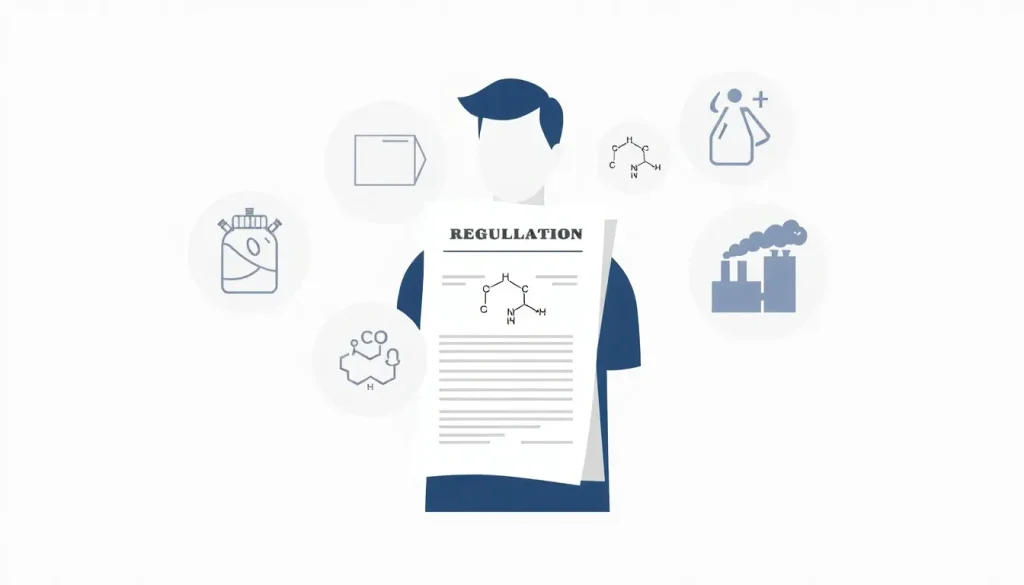
Chemical regulation has historically developed substance by substance. Landmark laws such as the U.S. Toxic Substances Control Act (TSCA) and the European Union’s REACH regulation focus on evaluating and managing individual chemicals. Under these frameworks, manufacturers must provide data on a chemical’s properties, hazards, and uses, and regulators set limits or restrictions based on that single substance’s risk. However, people and the environment are never exposed to just one chemical at a time. Air pollution contains hundreds of compounds, drinking water may carry disinfection byproducts and industrial contaminants, and a typical diet includes residues of multiple pesticides. The combined effect of these mixtures is rarely considered in regulatory decisions.
The difficulty is compounded by the fact that many chemicals share common mechanisms of toxicity. For example, several organophosphate pesticides act by inhibiting the same enzyme, acetylcholinesterase, meaning their effects can add up even when each is present at a level considered safe individually. Other chemicals may interact in ways that amplify or reduce toxicity, making risk assessment highly uncertain. Regulators acknowledge the problem, but moving from single-chemical risk assessment to mixture assessment requires new scientific methods, massive data collection, and changes to legal mandates—all of which are slow and contentious.
How It Works
To understand why mixtures are difficult to regulate, it helps to examine how chemical risk assessment typically works. The standard process involves hazard identification (what harm a chemical can cause), dose-response assessment (the relationship between dose and effect), exposure assessment (how much of the chemical people or ecosystems encounter), and risk characterization (the overall likelihood of harm). This framework is designed for single substances. When applied to mixtures, each step becomes far more complex.
For a mixture, hazard identification must consider not only the toxicity of each component but also their potential interactions. Dose-response assessment for mixtures is rarely straightforward because the combined effect may not equal the sum of individual effects. Exposure assessment must account for multiple sources and pathways, often with limited monitoring data. Finally, risk characterization must integrate all this uncertainty, which often leads to conclusions that are too vague to support regulatory action. Even when regulators want to address mixtures, they may lack the legal authority to require mixture-specific testing or to set limits for combined exposures.
Main Causes or Drivers
Several factors make chemical mixtures particularly challenging to regulate. First, the sheer number of possible combinations is overwhelming. Tens of thousands of chemicals are in commerce, and the potential mixtures are virtually infinite. Testing every combination is impossible, so regulators must rely on predictive models and grouping strategies that are still under development.
Second, chemical interactions are unpredictable. Mixtures can produce additive effects (the total toxicity equals the sum of individual toxicities), synergistic effects (greater than additive), or antagonistic effects (less than additive). Without testing the specific mixture, it is often impossible to know which will occur. Third, data gaps are pervasive. For many chemicals, even basic toxicity information is lacking, let alone data on how they behave in combination. Fourth, legal frameworks are fragmented. Different laws cover different types of products (pesticides, cosmetics, industrial chemicals) and different media (air, water, soil), making it hard to address cumulative exposure across sources. Finally, economic and political factors play a role: industry often resists mixture regulation because it could require costly reformulations or restrictions, and regulatory agencies may lack the resources or mandate to tackle such a complex issue.
Environmental and Human Impacts
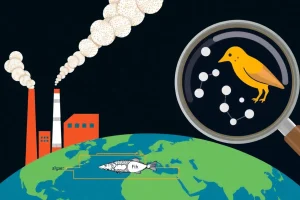
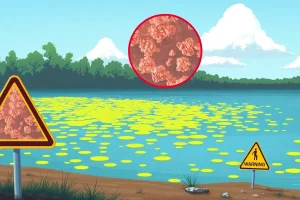
The failure to regulate chemical mixtures has tangible consequences. In the environment, mixtures of pesticides, pharmaceuticals, and industrial chemicals have been linked to declines in pollinator populations, fish kills, and disrupted ecosystems. For example, studies in aquatic environments show that even when individual chemicals are below their no-effect concentrations, the mixture can still be toxic to algae, invertebrates, or fish. This phenomenon, known as “something from nothing,” challenges the assumption that low-level exposures are safe.
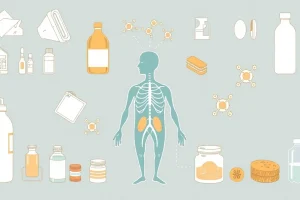
For human health, the concern is that chronic exposure to low doses of multiple chemicals may contribute to diseases like cancer, reproductive disorders, and neurodevelopmental problems. Endocrine-disrupting chemicals, for instance, can have additive effects even at very low levels, and the combined impact of multiple disruptors may be significant. Vulnerable populations such as children, pregnant women, and communities near industrial sites often face higher mixture exposures, raising environmental justice concerns. Without regulatory frameworks that account for these combined effects, public health protections may be insufficient.
Solutions
Addressing the challenge of chemical mixtures requires a multi-pronged approach. One key strategy is cumulative risk assessment, which evaluates the combined risk from multiple chemicals that share a common mechanism of toxicity. This approach has been used for some pesticide groups, such as organophosphates, but expanding it to other chemical classes and exposure pathways remains a scientific and regulatory challenge.
Another solution is mixture toxicity testing using high-throughput in vitro methods and computational models. These new approach methodologies (NAMs) can screen thousands of chemicals for biological activity and help predict mixture effects without animal testing. Regulators are also exploring grouping and read-across, where chemicals with similar structures or modes of action are assessed together. On the legal side, some jurisdictions are beginning to require mixture assessments. For example, the EU’s Chemicals Strategy for Sustainability aims to strengthen the consideration of combination effects in all relevant legislation. Ultimately, a shift toward precautionary and preventive policies—such as banning entire classes of harmful chemicals rather than regulating them one by one—could reduce the mixture problem at its source.
Data Limitations and Uncertainties
A major obstacle to regulating mixtures is the lack of comprehensive data. For many chemicals in use, there is little or no publicly available information on their toxicity, environmental fate, or human exposure levels. Even when data exist, they are often generated under different testing protocols, making it difficult to compare or combine results. Mixture toxicity studies are rare and typically focus on only a few components, leaving vast knowledge gaps.
Uncertainty also arises from the variability in human susceptibility and real-world exposure scenarios. People differ in age, genetics, health status, and lifestyle, all of which can influence how they respond to chemical mixtures. Exposure patterns vary geographically and over time, and many chemicals degrade or transform in the environment, creating new compounds that may be more or less toxic. These uncertainties make it hard to set protective limits, and regulators often default to assuming that mixture effects are additive—a conservative but not always accurate approach. Improving data collection, sharing, and modeling is essential to reduce these uncertainties and enable more robust mixture risk assessments.
FAQ
What is a chemical mixture?
A chemical mixture is a combination of two or more chemical substances that are physically combined but not chemically bonded. Examples include air pollution, pesticide residues on food, and the combination of ingredients in a cleaning product.
How does mixture toxicity differ from single chemical toxicity?
Mixture toxicity can be additive (the total effect equals the sum of individual effects), synergistic (greater than additive), or antagonistic (less than additive). Single chemical toxicity only considers the effect of one substance, which may underestimate real-world risks.
Why does regulating mixtures matter for public health?
Because people are exposed to multiple chemicals simultaneously from various sources, regulating only individual substances can leave significant health risks unaddressed. Mixture effects may contribute to chronic diseases, developmental disorders, and environmental harm that single-chemical limits fail to prevent.
References
- European Environment Agency, "Late lessons from early warnings: science, precaution, innovation," 2013.
- National Research Council, "Phthalates and Cumulative Risk Assessment: The Tasks Ahead," 2008.
- World Health Organization, "Chemical Mixtures in Source Water and Drinking-Water," 2017.