In brief
At a glance
Quick Facts
- Definition of Durability
- The ability of a product to withstand wear, pressure, or damage, extending its useful life and reducing the need for replacement.
- Definition of Recyclability
- The capacity of a material to be collected, processed, and remanufactured into new products after its original use.
- Key Assessment Tool
- Lifecycle assessment (LCA) is used to compare the total environmental impact of durable versus recyclable product designs.
- Durability Benefit
- Longer-lasting products reduce the frequency of replacement, conserving resources and energy used in manufacturing.
- Recyclability Benefit
- Recycling diverts waste from landfills and reduces the need for virgin material extraction, often saving significant energy.
- Energy Savings Example
- Recycling aluminum saves up to 95% of the energy required to produce new aluminum from raw ore.
- Product Lifespan Rule of Thumb
- For long-lived products (e.g., buildings, vehicles), durability is often more critical; for short-lived items (e.g., packaging), recyclability is key.
- Circular Economy Role
- Both durability and recyclability are essential components of a circular economy, aiming to minimize waste and keep resources in use.
Key Takeaways
- Durability and recyclability are complementary, not competing, strategies in sustainable product design; the optimal choice depends on the product’s intended lifespan and use phase.
- For long-lived products like buildings or vehicles, durability often yields greater environmental benefits by reducing the frequency of manufacturing new items.
- For short-lived products like packaging, recyclability is typically more important because the material can be reprocessed multiple times, offsetting the need for virgin resources.
- Lifecycle assessment (LCA) is the most reliable tool for comparing the environmental impacts of durability versus recyclability for a specific product.
What Is Durability vs Recyclability: Which Matters More?
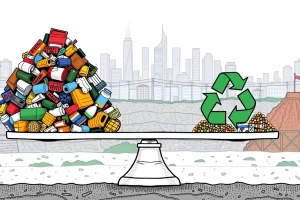
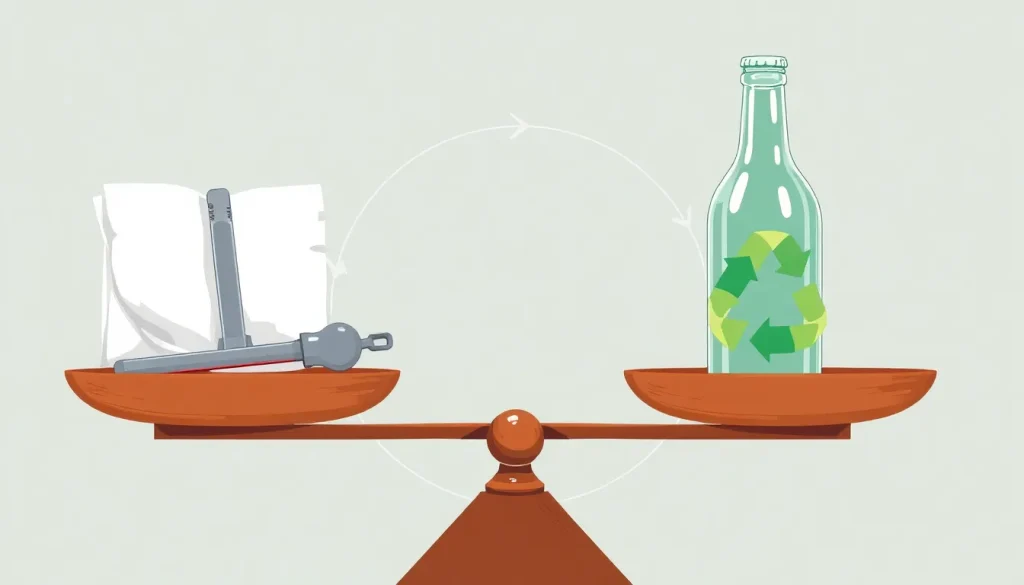
Durability vs recyclability: which matters more? is a central question in sustainable product design and materials management. It asks whether it is more environmentally beneficial to create products that last a long time (durability) or to design them so that their materials can be easily recovered and reused after disposal (recyclability). The answer is not universal; it depends on the product category, the energy and resources required for manufacturing, the expected lifespan, and the efficiency of available recycling infrastructure.
Durability refers to a product’s ability to resist wear, damage, and obsolescence, thereby extending its useful life. A durable product reduces the need for frequent replacements, which in turn lowers the consumption of raw materials, energy, and water associated with manufacturing. Recyclability, on the other hand, is the capacity of a material to be collected, processed, and remanufactured into new products after its original use. Effective recycling diverts waste from landfills and reduces the demand for virgin resources. The debate arises because optimizing for one attribute can sometimes compromise the other—for example, making a product more durable might involve using composite materials that are difficult to recycle, while designing for recyclability might lead to lighter, less robust constructions. Understanding the trade-offs is essential for making informed decisions in product design, consumer choice, and waste management policy.
Overview
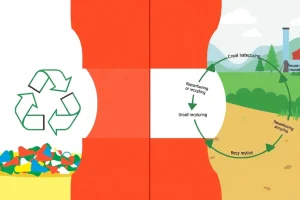
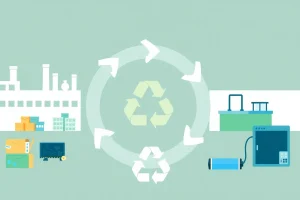
In the broader context of environmental sustainability, both durability and recyclability are strategies to minimize the ecological footprint of products. They are often discussed within the framework of the circular economy, which aims to keep materials in use for as long as possible and eliminate waste. Durability addresses the “use” phase by prolonging product life, while recyclability focuses on the “end-of-life” phase by enabling material recovery. Neither strategy alone is sufficient; a truly sustainable system requires a combination of approaches, including reduction of material use, reuse, repair, and remanufacturing.
The relative importance of durability versus recyclability has been a subject of lifecycle assessment (LCA) studies. These studies quantify environmental impacts—such as carbon footprint, water use, and resource depletion—across a product’s entire lifecycle, from raw material extraction to disposal. The findings often reveal that for energy-intensive products (e.g., electronics, appliances), extending lifespan through durability can significantly reduce overall impact because the manufacturing phase dominates. Conversely, for products with high material turnover (e.g., beverage containers), recyclability that enables closed-loop material flows can be more impactful. Thus, the question is not which matters more in absolute terms, but rather which matters more for a given product system.
How It Works
Durability is achieved through material selection, design, and manufacturing processes that enhance a product’s resistance to physical wear, corrosion, fatigue, and functional obsolescence. For example, using thicker steel, reinforced joints, or modular components that can be repaired or upgraded extends product life. Durable design also considers emotional durability—creating products that users want to keep longer because of aesthetic or sentimental value. The environmental benefit of durability is primarily the avoided impact of producing a replacement product, which includes raw material extraction, processing, transportation, and assembly.
Recyclability, on the other hand, depends on the material composition and the existence of collection and processing infrastructure. Materials like aluminum, glass, and certain plastics (e.g., PET, HDPE) are widely recycled because they can be reprocessed with relatively low energy input and without significant degradation. Design for recyclability involves using mono-materials, avoiding toxic additives, and ensuring easy disassembly. The environmental benefit of recycling is the displacement of virgin material production, which often carries a high environmental burden. However, recycling processes themselves consume energy and may generate emissions, so the net benefit depends on the efficiency of the recycling system and the material’s properties.
Environmental and Human Impacts
The environmental impacts of durability and recyclability are measured across multiple indicators. Durable products reduce the extraction of raw materials, which can preserve ecosystems, reduce water pollution from mining, and lower greenhouse gas emissions from manufacturing. For instance, extending the life of a smartphone by two years can cut its annual carbon footprint by nearly half, because the production phase accounts for the majority of its lifecycle emissions. However, durable products may contain hazardous substances that, if not managed properly at end-of-life, can leach into the environment. Additionally, if a durable product is energy-inefficient (e.g., an old refrigerator), its prolonged use might increase operational emissions, offsetting the manufacturing savings.
Recycling reduces the need for virgin material extraction, thereby lessening habitat destruction, energy use, and pollution. For example, recycling aluminum saves up to 95% of the energy required to produce new aluminum from bauxite ore. Recycling also diverts waste from landfills and incinerators, reducing methane emissions and air pollutants. However, recycling processes can have their own environmental footprint, including water and energy use, and may produce toxic byproducts if not properly controlled. The human health impacts of both strategies are linked to reduced pollution from manufacturing and waste disposal, but informal recycling sectors in some regions can expose workers to hazardous materials without adequate protection.
Benefits, Limitations and Trade-offs
The primary benefit of durability is resource conservation through extended product life. It also offers economic advantages to consumers who replace items less frequently. However, durability can lead to “locked-in” environmental impacts if a product becomes obsolete due to technological advances (e.g., energy efficiency improvements) before it physically wears out. There is also a risk that durable products may be discarded prematurely due to changing consumer preferences, negating the intended benefits.
Recyclability’s main benefit is closing material loops, reducing reliance on finite resources. It supports a circular economy and can create jobs in collection and processing. Limitations include contamination of recyclable streams, downcycling (where material quality degrades), and the fact that not all materials are economically or technically recyclable. A key trade-off is that designing for recyclability may require using lighter, less durable materials, potentially shortening product life. Conversely, making a product extremely durable might involve complex composites that are impossible to recycle. The optimal balance often involves designing products that are both durable and recyclable, but where conflicts arise, lifecycle thinking is necessary to determine the priority.
Common Misconceptions
Misconception: Recycling is always the best environmental option. While recycling is beneficial for many materials, it is not a panacea. For products with high manufacturing impacts, extending life through durability can save more energy and emissions than recycling the materials at end-of-life. Recycling also requires energy and infrastructure, and if collection and processing are inefficient, the net benefit may be small.
Misconception: Durable products are automatically more sustainable. Durability only yields environmental benefits if the product is actually used for its full extended lifespan. If a durable product is discarded early, the extra materials and energy invested in its robustness are wasted. Additionally, durable products that consume energy or resources during use (e.g., vehicles, appliances) may have higher lifetime impacts if they are less efficient than newer models.
Misconception: Recyclability and durability are mutually exclusive. Many products can be designed to be both durable and recyclable. For example, a stainless steel water bottle is highly durable and fully recyclable at end-of-life. The challenge lies in complex multi-material products, but advances in design for disassembly and material innovation are increasingly enabling both attributes.
FAQ
What is the difference between durability and recyclability?
Durability refers to how long a product lasts before it needs to be replaced, while recyclability refers to whether its materials can be reprocessed into new products after disposal. Durability reduces the need for new products, while recyclability reduces the need for virgin materials.
How do I know whether to prioritize durability or recyclability when buying a product?
Consider the product's expected lifespan and how you will use it. For items you plan to keep for many years (e.g., furniture, tools), prioritize durability. For disposable or short-lived items (e.g., packaging, single-use containers), choose recyclable options. Also, look for products that combine both attributes.
Why does the debate between durability and recyclability matter?
It matters because both strategies aim to reduce environmental impact, but they can conflict. Understanding the trade-offs helps consumers, designers, and policymakers make informed decisions that minimize resource use, energy consumption, and waste over a product's entire lifecycle.
References
- U.S. Environmental Protection Agency (EPA) – Sustainable Materials Management: The Road Ahead
- Ellen MacArthur Foundation – Circular Economy Principles and Case Studies
- Journal of Industrial Ecology – Lifecycle Assessment Studies on Product Durability and Recycling