In brief
At a glance
Quick Facts
- Verdict
- Promising but unproven
- Problem addressed
- Atmospheric CO2 removal and ocean acidification mitigation
- Evidence strength
- Limited
- Potential scale
- Global
- Relative cost
- Moderate to High
- Time to impact
- Decades
Quick verdict
Ocean alkalinity enhancement is a promising but largely unproven carbon dioxide removal approach that aims to accelerate the Earth’s natural weathering process. By adding alkaline substances to seawater, it could potentially sequester billions of tonnes of CO₂ while counteracting ocean acidification. However, the technique remains in early research stages, with significant uncertainties about its effectiveness, cost, and ecological side effects. It is not yet ready for deployment at scale.
Problem addressed
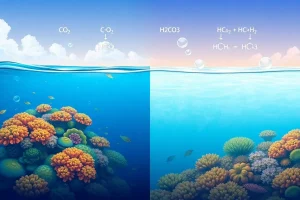
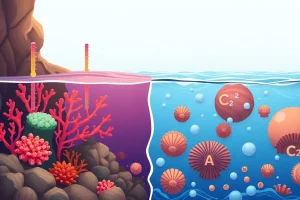
Ocean alkalinity enhancement (OAE) targets two interconnected problems: the accumulation of anthropogenic carbon dioxide (CO₂) in the atmosphere and the resulting ocean acidification. The ocean naturally absorbs about a quarter of human CO₂ emissions, but this leads to a decrease in seawater pH, harming marine life such as corals, shellfish, and plankton. OAE aims to increase the ocean’s alkalinity, which chemically enhances the ocean’s capacity to absorb and store CO₂ as bicarbonate and carbonate ions, while also raising pH and thus mitigating acidification. It is proposed as a method to help meet climate goals by removing legacy CO₂ from the atmosphere.
How the solution works
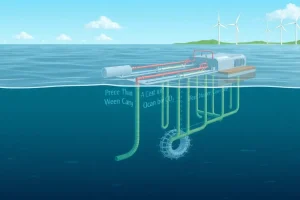
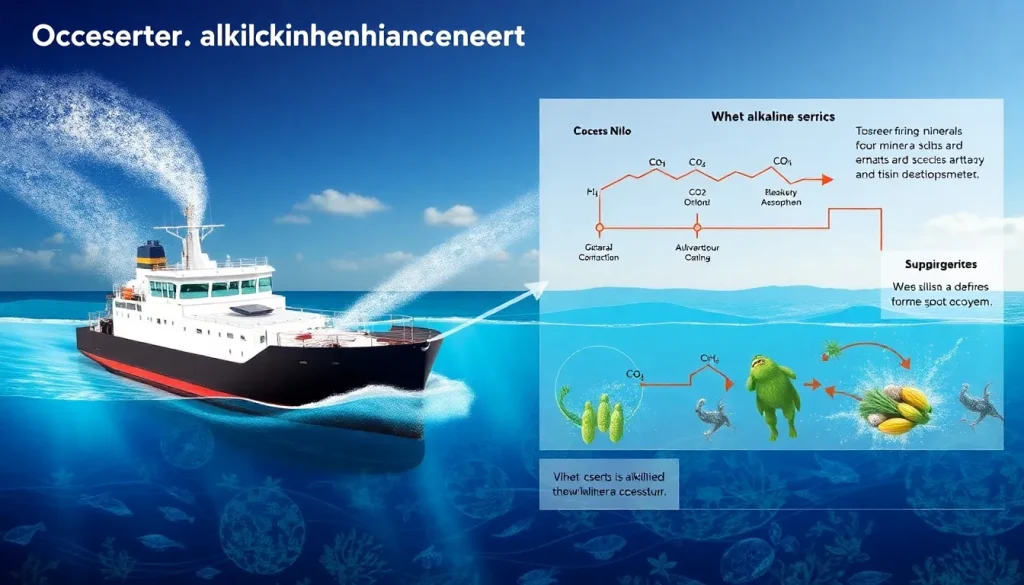
OAE involves adding alkaline materials—such as crushed silicate rocks (e.g., olivine, basalt), lime (calcium oxide), or processed minerals—to the ocean or coastal waters. These materials dissolve and release ions like calcium, magnesium, and carbonate, which increase the alkalinity of seawater. The added alkalinity shifts the carbonate equilibrium, converting dissolved CO₂ into bicarbonate and carbonate ions. This reduces the partial pressure of CO₂ in surface water, driving additional uptake of atmospheric CO₂. The captured carbon is stored in the ocean for centuries to millennia, primarily as bicarbonate. Some approaches also involve electrochemical processes that remove acid from seawater or directly produce alkalinity. The overall reaction mimics the natural weathering of rocks, but at an accelerated pace.
Evidence strength
The fundamental chemistry of OAE is well understood and supported by laboratory experiments and geochemical models. However, evidence for its effectiveness and safety at scale is limited. Most studies rely on modeling, mesocosm experiments, and small-scale field trials. For example, a 2022 mesocosm study in the Canary Islands tested olivine addition and found increased alkalinity and CO₂ drawdown, but also observed changes in phytoplankton communities. Long-term, large-scale field data are absent. The potential for unintended ecological consequences, such as trace metal release or altered nutrient dynamics, remains poorly constrained. The technique is considered to have high theoretical potential but low technological readiness.
Potential scale
Theoretical estimates suggest OAE could sequester billions of tonnes of CO₂ per year, potentially exceeding the scale of many other carbon removal methods. The ocean’s vast size and natural buffering capacity mean that, in principle, it could store enormous amounts of carbon without saturation for millennia. However, practical limits arise from the availability and mining of suitable minerals, the energy required for extraction and transport, and the rate at which alkalinity can be added without causing harmful local pH spikes or ecological damage. Some studies suggest a maximum global potential of 10–100 GtCO₂ per year, but these figures are highly uncertain and depend on the method and deployment strategy.
Cost considerations
Cost estimates for OAE vary widely depending on the method. Enhanced weathering using finely ground olivine spread on beaches or in coastal waters is estimated at $50–$200 per tonne of CO₂ removed, but these figures are preliminary and do not include full monitoring or ecological impact costs. Electrochemical methods are generally more expensive, with estimates ranging from $100 to over $1,000 per tonne. By comparison, direct air capture costs are around $250–$600 per tonne. OAE could be cost-competitive if low-cost mineral sources and co-benefits (e.g., reduced acidification) are realized, but current estimates are speculative and lack real-world validation.
Environmental benefits
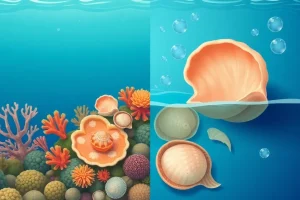
The primary environmental benefit of OAE is the potential to remove large amounts of atmospheric CO₂, thereby helping to mitigate climate change. Additionally, increasing ocean alkalinity directly counteracts ocean acidification, which threatens calcifying organisms like corals, mollusks, and some plankton. This dual benefit is unique among carbon removal methods. If deployed carefully, OAE could help restore pH levels in vulnerable marine ecosystems, supporting biodiversity and fisheries. Some approaches, like coastal enhanced weathering, might also supply nutrients that could boost local productivity, though this is a double-edged sword.
Social and economic co-benefits
OAE could create economic opportunities in mining, mineral processing, and marine operations. Coastal communities might benefit from reduced acidification impacts on fisheries and aquaculture. If linked to carbon markets, OAE could generate revenue for developing countries with suitable mineral resources or coastlines. Enhanced weathering of silicate rocks on land could also improve soil quality and crop yields, though that is a separate but related approach. However, these co-benefits are speculative and depend on the specific method and scale.
Risks and unintended consequences
The risks of OAE are substantial and not fully understood. Adding minerals could release heavy metals (e.g., nickel, chromium) from olivine, potentially toxic to marine life. Rapid pH changes near deployment sites could harm organisms adapted to stable conditions. Increased alkalinity might alter nutrient availability, leading to shifts in phytoplankton communities and possibly harmful algal blooms. Large-scale mining and transport of minerals would have land-use and carbon footprint implications. Changes in ocean chemistry could affect the marine food web in unpredictable ways. There are also governance challenges: who decides where and how to deploy OAE, and how to monitor and attribute effects? Unilateral deployment could have transboundary impacts. The permanence of carbon storage is high, but if alkalinity addition stops, the ocean would slowly re-equilibrate, releasing some CO₂ back to the atmosphere over centuries.
Where it works best
OAE is theoretically most effective in regions with high CO₂ uptake potential, such as upwelling zones or areas where deep water formation occurs, as alkalized surface water can be transported to depth, locking away carbon for longer. Coastal areas with high biological productivity might benefit from reduced acidification. Some proposals focus on adding alkalinity to the wake of ships to disperse it widely. Regions with abundant alkaline mineral resources (e.g., olivine-rich beaches in tropical areas) could be suitable for local enhanced weathering. However, optimal deployment strategies are still under research.
Where it may not work
OAE may be less effective or riskier in enclosed seas, areas with low water exchange, or regions with sensitive ecosystems like coral reefs, where rapid pH changes could cause harm. In polar regions, cold temperatures slow mineral dissolution, reducing efficiency. Areas with high biological productivity might experience negative ecological shifts. If alkalinity is added to surface waters that do not mix into the deep ocean, the CO₂ uptake may be temporary and could lead to outgassing later. The method is not suitable as a substitute for rapid emission reductions, as it cannot offset ongoing acidification from current CO₂ emissions quickly enough.
Comparison with alternatives
Compared to other carbon removal methods, OAE has the advantage of also addressing ocean acidification. It is less land-intensive than afforestation or bioenergy with carbon capture and storage (BECCS), and it does not compete for freshwater. Unlike direct air capture, it does not require concentrated CO₂ storage. However, OAE is less technologically mature than many alternatives, with higher ecological uncertainties. Ocean iron fertilization, another marine CDR method, has been largely discredited due to ecosystem risks and limited effectiveness. OAE is considered more controllable and verifiable than iron fertilization, but still faces major unknowns. Overall, OAE is one of several ocean-based CDR approaches, each with trade-offs.
Case studies
As of 2025, there are no commercial-scale OAE projects. Notable research efforts include: (1) The 2022 mesocosm experiment off Gran Canaria, Spain, which added olivine to large enclosed water columns and observed increased alkalinity and CO₂ drawdown, but also changes in plankton communities. (2) The Vesta project, which planned to spread olivine sand on a beach in the Caribbean, but faced regulatory and public opposition; it has since shifted to lab and modeling work. (3) The Ocean Alkalinity Enhancement R&D Program, a multi-institution initiative funded by the U.S. Department of Energy, conducting lab and field studies. (4) Small-scale trials by companies like Planetary Technologies adding magnesium hydroxide to seawater, with ongoing monitoring. These cases highlight the early stage of development and the need for more research.
Final assessment
Ocean alkalinity enhancement holds theoretical promise as a large-scale carbon removal method with co-benefits for ocean acidification. However, it remains unproven at scale, with significant uncertainties regarding ecological impacts, cost, and governance. Current evidence is insufficient to support deployment beyond controlled research settings. Prioritizing further research, including small-scale field trials with robust monitoring, is essential to determine whether OAE can be a safe and effective climate solution. In the meantime, rapid emission reductions remain the most critical action for climate and ocean health.
FAQ
What is ocean alkalinity enhancement?
It is a carbon dioxide removal method that involves adding alkaline substances to the ocean to increase its ability to absorb and store atmospheric CO2, while also reducing ocean acidification.
Is ocean alkalinity enhancement safe?
The safety of large-scale OAE is uncertain. Potential risks include toxic metal release, ecosystem disruption, and unknown biogeochemical effects. More research is needed to assess and minimize these risks.
How much CO2 can ocean alkalinity enhancement remove?
Theoretical estimates suggest it could remove billions of tonnes of CO2 per year, but practical limits and real-world effectiveness are still unknown.
References
- National Academies of Sciences, Engineering, and Medicine. 2022. A Research Strategy for Ocean-based Carbon Dioxide Removal and Sequestration.
- IPCC Special Report on the Ocean and Cryosphere in a Changing Climate, 2019.
- GESAMP (2019). High Level Review of a Wide Range of Proposed Marine Geoengineering Techniques.
- Bach, L. T., et al. (2023). 'Ocean alkalinity enhancement – a review of potential impacts on marine ecosystems.' Biogeosciences.
- Renforth, P., & Henderson, G. (2017). 'Assessing ocean alkalinity for carbon sequestration.' Reviews of Geophysics.