In brief
At a glance
Quick Facts
- Crops dependent on animal pollination
- Over 75% of global food crops benefit from animal pollination to some degree.
- Key pollinator groups
- Bees (including honey bees, bumblebees, and solitary bees), butterflies, moths, flies, beetles, birds, and bats.
- Economic value of pollination
- Estimated in the hundreds of billions of U.S. dollars annually worldwide.
- Nutrients from pollinator-dependent crops
- Provide the majority of dietary vitamin A, vitamin C, and folic acid.
- Primary threats to pollinators
- Habitat loss, pesticide use, climate change, diseases, and invasive species.
- Crops that do not require animal pollination
- Staple grains like wheat, rice, and maize are wind-pollinated or self-pollinating.
- Number of bee species
- Over 20,000 known species globally, most of which are solitary.
- Pollinator decline impact on yields
- Can reduce fruit set, seed production, and crop quality, leading to lower harvests.
Key Takeaways
- Animal pollinators are essential for the reproduction of over 75% of global food crops, directly influencing food availability and diversity.
- The decline of pollinator populations threatens the stability of food systems, potentially leading to reduced crop yields, higher food prices, and nutritional deficiencies.
- Pollination services, largely provided by insects like bees and butterflies, underpin the production of fruits, vegetables, nuts, and seeds that are vital for human health.
- Protecting pollinators through habitat conservation, reduced pesticide use, and sustainable agricultural practices is critical for long-term food security.
What Is Why Pollinators Matter to Food Security?
Why Pollinators Matter to Food Security is the concept that the health and abundance of pollinating animals are directly linked to the availability, access, utilization, and stability of food supplies. Pollinators—including bees, butterflies, moths, beetles, flies, birds, and bats—transfer pollen between flowers, enabling fertilization and the production of seeds and fruits. Without this ecological service, many plants would fail to reproduce, leading to cascading effects on the quantity and quality of food available for human consumption.
This relationship is a cornerstone of agricultural productivity and ecosystem resilience. While staple crops like wheat, rice, and maize are wind-pollinated and do not depend on animals, a large proportion of the crops that provide essential nutrients—such as vitamins A and C, antioxidants, and minerals—rely on animal pollination. The concept encompasses not only the direct role of pollinators in crop yields but also their contribution to dietary diversity, economic stability for farming communities, and the maintenance of wild plant populations that support broader ecosystem services. Understanding why pollinators matter to food security is fundamental to addressing the challenges of feeding a growing global population sustainably.
How It Works
Pollination is the transfer of pollen grains from the male anther of a flower to the female stigma. This process is necessary for fertilization and the subsequent production of seeds and fruit. While some plants are self-pollinating or rely on wind and water, many flowering plants—including a significant number of food crops—depend on animals to carry pollen between flowers. Animal pollinators visit flowers to feed on nectar or pollen, and in doing so, they inadvertently pick up pollen on their bodies and transfer it to other flowers, facilitating cross-pollination.
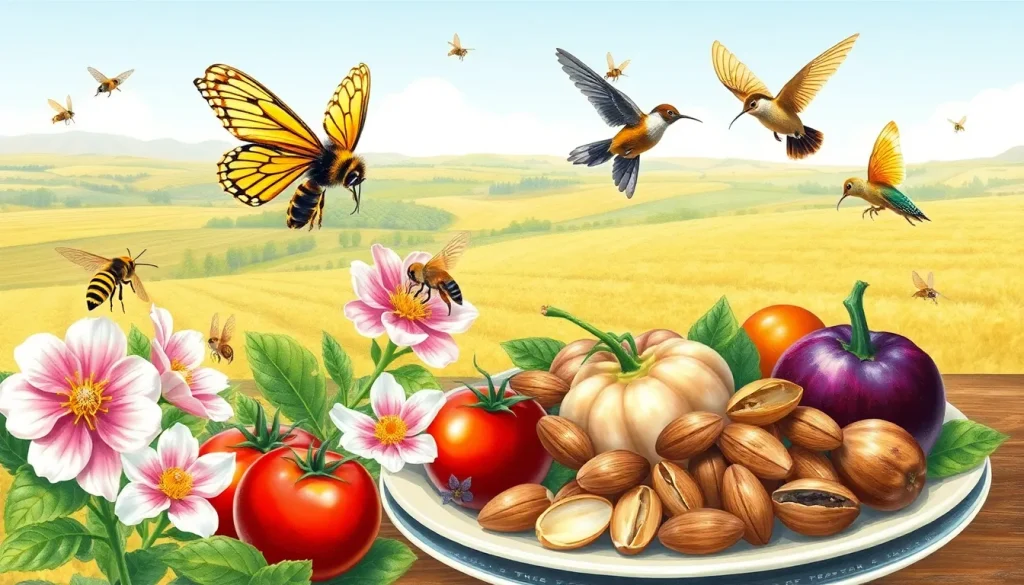
The effectiveness of pollination depends on the behavior, abundance, and diversity of pollinators. Different crops have evolved with specific pollinator groups; for example, bumblebees are particularly effective at pollinating tomatoes and blueberries through a technique called buzz pollination, where they vibrate their flight muscles to release pollen. Honey bees, being generalist foragers, pollinate a wide variety of crops, while solitary bees, butterflies, moths, and even some vertebrates like hummingbirds and bats, provide specialized services. The process ensures genetic diversity within plant populations, leading to healthier and more resilient crops. When pollinator populations decline, the quantity and quality of fruits and seeds diminish, directly impacting food production.
Importance and Impact
Pollinators are fundamental to global food production and nutritional security. It is estimated that animal pollinators contribute to the production of over 75% of the world’s leading food crops, including fruits, vegetables, nuts, and oilseeds. These crops are not only important for dietary energy but are also primary sources of essential micronutrients. For instance, pollinator-dependent crops provide the majority of vitamin A, vitamin C, and folic acid in the human diet. A decline in pollinator populations could lead to increased deficiencies in these nutrients, exacerbating global health problems such as malnutrition and non-communicable diseases.
The economic impact of pollination services is substantial. The global economic value of crop pollination has been estimated in the hundreds of billions of dollars annually. This value is not limited to direct crop yields; it also includes the stability of food supplies and the livelihoods of millions of smallholder farmers who depend on pollinator-dependent crops for income. In regions where agriculture is a primary source of employment and GDP, the loss of pollinators could trigger economic instability, increased poverty, and greater reliance on food imports. Furthermore, pollinators support the production of seeds and fruits that are essential for plant breeding and the maintenance of genetic diversity in agricultural systems.
Main Causes or Drivers of Pollinator Decline
Multiple, interacting factors are driving the decline of pollinator populations worldwide. Habitat loss and fragmentation are among the most significant threats. The conversion of natural and semi-natural habitats into agricultural land, urban areas, and infrastructure reduces the availability of nesting sites and floral resources that pollinators depend on for food and reproduction. Monoculture farming practices, which involve vast expanses of a single crop, create food deserts for pollinators that require diverse pollen and nectar sources throughout their life cycles.
Pesticide use, particularly neonicotinoids and other systemic insecticides, has been linked to adverse effects on pollinator health. These chemicals can be lethal or sublethal, impairing navigation, foraging behavior, and reproduction. Climate change further exacerbates these pressures by altering the distribution of plant and pollinator species, disrupting the synchrony between flowering times and pollinator activity periods. Additionally, the spread of pathogens and parasites, such as the Varroa mite in honey bees, and the introduction of invasive species, contribute to pollinator losses. The combined effect of these stressors often exceeds the impact of any single factor, leading to widespread declines in both managed and wild pollinator populations.
Solutions
Addressing pollinator decline requires a multifaceted approach that integrates conservation, agricultural policy, and public engagement. One key solution is the creation and restoration of pollinator-friendly habitats. This includes planting diverse native flowering plants in gardens, parks, roadsides, and agricultural landscapes to provide continuous forage and nesting sites. Agroecological practices, such as crop rotation, intercropping, and the maintenance of hedgerows and field margins, can enhance pollinator diversity and abundance within farming systems.
Reducing the use of pesticides, especially during flowering periods, and adopting integrated pest management (IPM) strategies can minimize harm to pollinators. Policy measures, such as restricting the use of the most harmful pesticides and providing incentives for pollinator-friendly farming, are also critical. Supporting organic agriculture and local food systems can further reduce the pressure on pollinators. Research and monitoring programs are essential to track pollinator populations and understand the effectiveness of conservation efforts. International cooperation, as seen through initiatives like the International Pollinator Initiative, helps coordinate actions across borders.
Common Misconceptions
One common misconception is that all bees are honey bees and that honey bees alone are sufficient for crop pollination. In reality, there are over 20,000 species of bees worldwide, and many wild bees are more efficient pollinators for certain crops than managed honey bees. Relying solely on honey bees ignores the critical role of diverse wild pollinator communities, which provide resilience and insurance against honey bee colony losses.
Another misconception is that pollinator decline only affects honey production or the availability of a few luxury foods. In fact, the loss of pollinators would have far-reaching consequences for the production of staple nutrient-rich foods, including many fruits, vegetables, and nuts that form the basis of a healthy diet. Some also believe that hand-pollination can easily replace natural pollination, but this is economically unfeasible on a large scale and would dramatically increase food costs. Finally, there is a misconception that all pesticides are equally harmful; while some are more toxic to pollinators than others, even low-level exposure can have sublethal effects that impair pollinator health over time.
What Individuals Can Do
Individuals can play a significant role in supporting pollinators and contributing to food security. Planting a diverse array of native flowering plants that bloom at different times of the year provides essential forage for bees, butterflies, and other pollinators. Even small spaces like balconies, window boxes, and community gardens can serve as valuable pollinator habitats. Avoiding the use of pesticides in home gardens and opting for organic or natural pest control methods reduces chemical exposure.
Providing nesting sites, such as leaving patches of bare soil for ground-nesting bees, installing bee hotels, or retaining dead wood and leaf litter, can support pollinator reproduction. Supporting local beekeepers and purchasing pollinator-friendly products, such as sustainably produced honey and organic produce, encourages agricultural practices that benefit pollinators. Educating others about the importance of pollinators and advocating for pollinator-friendly policies in local communities can amplify individual efforts. Participating in citizen science projects that monitor pollinator populations helps gather valuable data for conservation research.
FAQ
What is the role of pollinators in food security?
Pollinators enable the reproduction of many flowering plants, including a large share of food crops. They directly influence the yield, quality, and stability of fruits, vegetables, nuts, and seeds, which are essential for a nutritious diet and agricultural livelihoods.
How does pollinator decline affect crop production?
A decline in pollinators can lead to reduced fruit set, smaller and misshapen produce, lower seed viability, and overall decreased crop yields. This can increase food prices, reduce farmer incomes, and limit the availability of nutrient-rich foods.
Why are pollinator populations declining?
Pollinator declines are driven by multiple factors, including habitat loss and fragmentation, intensive agricultural practices, pesticide use, climate change, the spread of pests and diseases, and competition from invasive species. These stressors often interact, amplifying their effects.
References
- Food and Agriculture Organization of the United Nations (FAO). 'Pollinators Vital to Our Food Supply Under Threat.'
- Intergovernmental Science-Policy Platform on Biodiversity and Ecosystem Services (IPBES). 'The Assessment Report on Pollinators, Pollination and Food Production.'
- Potts, S.G., et al. 'Global pollinator declines: trends, impacts and drivers.' Trends in Ecology & Evolution, 2010.