In brief
At a glance
Quick Facts
- Core Principle
- Regenerative agriculture aims to restore soil health, increase biodiversity, and enhance ecosystem services while producing food.
- Key Practices
- No-till farming, cover cropping, crop rotation, composting, and managed grazing are common regenerative techniques.
- Carbon Sequestration
- Healthy soils can sequester significant amounts of atmospheric carbon, helping to mitigate climate change.
- Water Retention
- Increasing soil organic matter by 1% can increase water holding capacity by up to 20,000 gallons per acre.
- Biodiversity
- Regenerative systems support greater diversity of soil microbes, insects, birds, and plants compared to conventional monocultures.
- Economic Resilience
- Farmers often see reduced input costs and improved yields over time, though transition periods may require investment.
- Global Potential
- Some studies suggest that widespread adoption of regenerative practices could sequester a substantial portion of annual global CO2 emissions.
- No Official Standard
- Unlike organic certification, there is no single universally accepted definition or certification for regenerative agriculture, though several programs exist.
Key Takeaways
- Regenerative agriculture is a system of farming and grazing practices that rebuild soil organic matter, restore degraded soil biodiversity, and improve the water cycle.
- It focuses on outcomes such as carbon sequestration, increased water retention, and enhanced ecosystem health rather than prescribing a single set of techniques.
- Core practices include minimizing soil disturbance, maintaining living roots year-round, integrating livestock, and increasing plant diversity.
- By improving soil health, regenerative agriculture can increase farm profitability, reduce reliance on synthetic inputs, and mitigate climate change.
What Is Regenerative Agriculture?
Regenerative agriculture is a system of farming and grazing practices that aims to reverse climate change by rebuilding soil organic matter and restoring degraded soil biodiversity. Unlike conventional agriculture, which often depletes soil carbon and relies heavily on external inputs, regenerative methods work with natural processes to enhance the entire ecosystem of the farm. The term encompasses a wide range of techniques, but all share a common goal: to leave the land in better condition than it was found, improving soil health, water retention, and biodiversity over time.
At its core, regenerative agriculture is not a single prescribed set of steps but rather a philosophy and a set of principles tailored to local conditions. It draws on traditional knowledge, agroecology, and modern soil science. The approach is often contrasted with industrial agriculture, which tends to simplify ecosystems and rely on monocultures, tillage, and chemical inputs. Regenerative practices seek to mimic natural systems, creating self-sustaining cycles that reduce the need for external fertilizers and pesticides while increasing resilience to drought, pests, and market fluctuations.
Overview
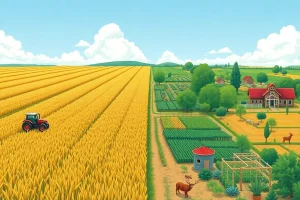
Regenerative agriculture is a conservation and rehabilitation approach to food and farming systems. It focuses on topsoil regeneration, increasing biodiversity, improving the water cycle, enhancing ecosystem services, supporting biosequestration, increasing resilience to climate change, and strengthening the health and vitality of farm soil. Practices include recycling as much farm waste as possible and adding composted material from non-farm sources. Regenerative agriculture on small farms and gardens is often based on philosophies like permaculture, agroecology, agroforestry, restoration ecology, keyline design, and holistic management. Large farms are also increasingly adopting such techniques, and the approach is gaining traction among researchers, corporations, and policymakers as a way to address climate change and food security.
How It Works
Regenerative agriculture works by applying a set of principles that enhance natural ecosystem functions. The specific practices vary by climate, soil type, and crop, but they generally include:
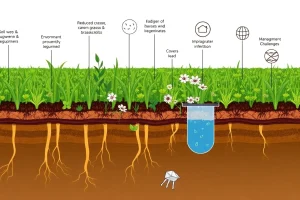
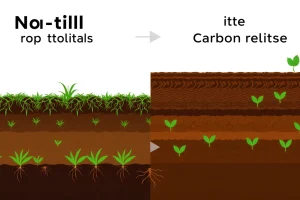
- Minimizing soil disturbance: No-till or reduced-till farming avoids breaking up soil structure, which preserves soil organic matter, reduces erosion, and maintains habitat for beneficial microorganisms.
- Keeping soil covered: Using cover crops, crop residues, or mulch protects the soil from erosion, suppresses weeds, and moderates soil temperature and moisture.
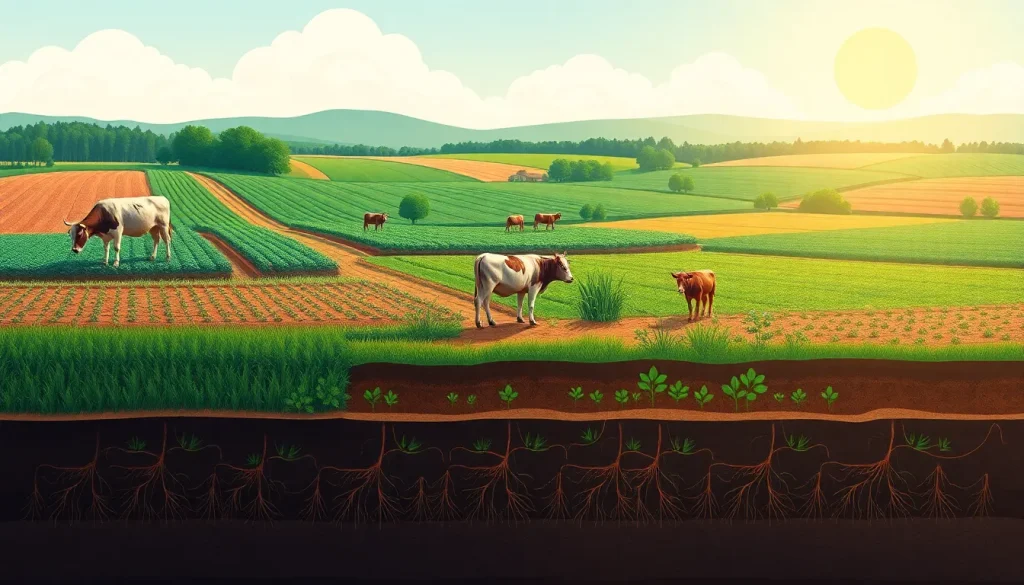
- Maintaining living roots year-round: Continuous plant cover feeds soil microbes through root exudates, building soil organic matter and improving nutrient cycling.
- Increasing plant diversity: Rotating crops, intercropping, and planting diverse cover crop mixes supports a wider range of soil organisms and breaks pest and disease cycles.
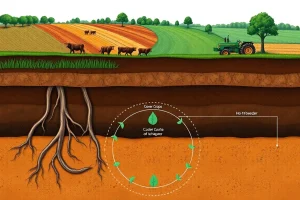
- Integrating livestock: Managed grazing mimics natural herd movements, with animals depositing manure and urine that fertilize the soil and stimulate plant growth, while their hooves help incorporate organic matter.
These practices work synergistically. For example, no-till farming combined with cover crops can significantly increase soil organic carbon, which improves soil structure and water infiltration. The increased biological activity and root systems create a positive feedback loop, enhancing nutrient availability and reducing the need for synthetic fertilizers.
History
The term “regenerative agriculture” was coined in the 1980s by the Rodale Institute, but the underlying principles are rooted in ancient and indigenous farming systems that worked in harmony with nature. Many traditional societies practiced forms of regenerative land management, such as the milpa system in Mesoamerica, which rotated maize, beans, and squash, or the use of biochar in the Amazon to create terra preta soils. In the 20th century, pioneers like Sir Albert Howard, J.I. Rodale, and Lady Eve Balfour promoted organic and soil-building methods. The modern regenerative movement gained momentum in the 2010s as a response to soil degradation, climate change, and the limitations of the organic and sustainable agriculture labels. It has since been embraced by a diverse coalition of farmers, scientists, environmentalists, and businesses.
Importance and Impact
Regenerative agriculture is increasingly recognized for its potential to address multiple global challenges simultaneously. By rebuilding soil organic matter, it can sequester significant amounts of atmospheric carbon dioxide, helping to mitigate climate change. Healthy soils also hold more water, reducing both flooding and drought impacts, and require fewer synthetic inputs, which lowers production costs and pollution. Furthermore, regenerative practices can increase biodiversity above and below ground, improve nutrient density in food, and enhance the resilience of farming communities. While the scale of impact depends on adoption rates, many scientists and policymakers view regenerative agriculture as a key strategy for achieving food system sustainability and climate goals.
Benefits, Limitations and Trade-offs
Benefits: Regenerative agriculture can improve soil fertility and structure, leading to higher yields over time, especially in degraded soils. It reduces erosion, enhances water infiltration and retention, and increases carbon sequestration. Farmers often report lower input costs and greater resilience to extreme weather. Biodiversity gains support pollinators and natural pest control. The approach can also improve rural livelihoods and food security.
Limitations and trade-offs: Transitioning to regenerative practices can involve a period of reduced yields and increased labor or management complexity. Access to knowledge, equipment, and markets for regenerative products may be limited. Some practices, like no-till, can initially require more herbicides for weed control unless combined with other methods. The carbon sequestration potential varies by soil type, climate, and management, and permanence of stored carbon is not guaranteed. Additionally, scaling regenerative agriculture to meet global food demand while maintaining profitability remains a subject of research and debate.
Common Misconceptions
One common misconception is that regenerative agriculture is simply organic farming by another name. While they share some principles, regenerative agriculture places a stronger emphasis on outcomes like soil carbon sequestration and ecosystem restoration, and it does not necessarily prohibit synthetic inputs if they are used judiciously to support the transition. Another misunderstanding is that it is only suitable for small-scale or alternative farms; in reality, large-scale commodity crop and livestock operations are increasingly adopting regenerative practices. Some also believe it can reverse climate change on its own, but most experts see it as one important tool among many needed to address the climate crisis.
Connections to Other Systems
Regenerative agriculture is closely related to several other agricultural and environmental concepts. It overlaps with agroecology, which applies ecological principles to the design of sustainable food systems, and with permaculture, which emphasizes designing human settlements that mimic natural ecosystems. It also shares goals with carbon farming, which specifically focuses on practices that sequester carbon in soils and biomass. Additionally, regenerative agriculture is often discussed alongside holistic management, a decision-making framework that considers social, environmental, and economic factors together. These connections highlight the interdisciplinary nature of regenerative agriculture and its integration into broader sustainability efforts.
What Individuals Can Do
Individuals can support regenerative agriculture by purchasing food from farmers who use regenerative practices, such as those certified by programs like Regenerative Organic Certified or participating in local farmers’ markets. Consumers can also grow their own food using regenerative methods in home gardens, including composting, mulching, and avoiding synthetic chemicals. Advocacy for policies that support soil health and carbon farming, as well as education about the benefits of regenerative systems, can help drive broader adoption. Reducing food waste and choosing diverse, whole foods also aligns with regenerative principles.
FAQ
What is regenerative agriculture?
Regenerative agriculture is a system of farming and grazing practices that rebuilds soil organic matter, restores degraded soil biodiversity, and improves the water cycle, with a focus on carbon sequestration and ecosystem health.
How does regenerative agriculture work?
It works by applying principles such as minimizing soil disturbance, keeping soil covered, maintaining living roots, increasing plant diversity, and integrating livestock. These practices enhance soil biology, structure, and nutrient cycling.
Why does regenerative agriculture matter?
It matters because it can help mitigate climate change by sequestering carbon, improve food security by building resilient soils, reduce pollution from synthetic inputs, and support biodiversity and rural livelihoods.
References
- Rodale Institute. "Regenerative Organic Agriculture." rodaleinstitute.org
- Food and Agriculture Organization of the United Nations. "The 10 Elements of Agroecology." fao.org
- Lal, R. (2020). "Regenerative agriculture for food and climate." Journal of Soil and Water Conservation.