In brief
At a glance
Quick Facts
- Definition
- Cover crops are plants grown primarily to protect and improve soil between cash crop cycles, not for harvest.
- Erosion reduction
- Cover crops can reduce soil erosion by 40–90% compared to bare fallow.
- Nitrogen fixation
- Legume cover crops can fix 50–200 kg of nitrogen per hectare per year.
- Carbon sequestration potential
- Cover crops can increase soil organic carbon by 0.1–0.5 Mg C per hectare per year.
- Water quality
- Non-legume cover crops reduce nitrate leaching by an average of 70%.
- Adoption barrier
- Cost of seed and establishment is a primary barrier to cover crop adoption.
- Termination timing
- Improper termination can lead to yield reductions in the following cash crop.
Key Takeaways
- Cover crops are non-harvested plants grown between cash crop cycles to protect soil, manage nutrients, and enhance biodiversity.
- Their environmental benefits include reduced erosion, lower nutrient pollution, carbon sequestration, and weed suppression, but outcomes vary with species and management.
- Limitations such as water use, nitrogen immobilization, and establishment costs can challenge adoption, especially in water-limited or short-season regions.
- When integrated into sustainable farming systems, cover crops contribute to long-term soil health and climate resilience, but they are not a one-size-fits-all solution.
What Is Cover Crops: Environmental Benefits and Limitations?
Cover crops are plants grown primarily to provide ecological services rather than for harvest. They are typically sown during fallow periods—after a cash crop is harvested and before the next is planted—to keep the soil covered and biologically active. The term “environmental benefits and limitations” refers to the dual nature of their impact: while cover crops can significantly improve soil health, water quality, and biodiversity, they can also pose challenges such as water depletion, nitrogen tie-up, and added management costs. Understanding this balance is essential for farmers, policymakers, and conservationists seeking to use cover crops effectively.
Cover crops belong to the broader category of sustainable agricultural practices, often used in conservation agriculture, organic farming, and integrated crop-livestock systems. Common species include legumes (e.g., clover, vetch), grasses (e.g., cereal rye, oats), and brassicas (e.g., radish, mustard), each offering different benefits and trade-offs. The environmental outcomes depend heavily on local climate, soil type, and how the cover crop is managed—from planting to termination. This article provides a factual, balanced overview of what cover crops are, how they work, and the evidence behind their environmental effects.
Overview
Cover crops are an ancient practice that has gained renewed attention as a tool for addressing modern environmental challenges in agriculture. Unlike cash crops, they are not sold; instead, they are grown for their ability to protect and enhance the soil. When fields are left bare between cropping seasons, they are vulnerable to erosion, nutrient loss, and weed invasion. Cover crops fill this gap, providing a living cover that maintains soil structure and ecological function.
The choice of cover crop species and mixtures is critical. Legumes fix atmospheric nitrogen, reducing the need for synthetic fertilizers. Grasses produce abundant biomass that builds soil organic matter and suppresses weeds. Brassicas have deep taproots that break up compacted soil layers and scavenge nutrients from depth. Farmers often use mixtures to combine these benefits, but the optimal mix depends on the specific goals and constraints of the farming system. While the environmental benefits are well-documented, cover crops are not universally applicable; their success requires careful planning and adaptation to local conditions.
How It Works
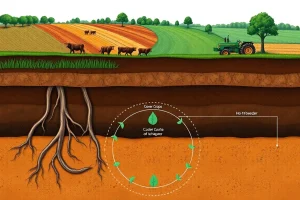
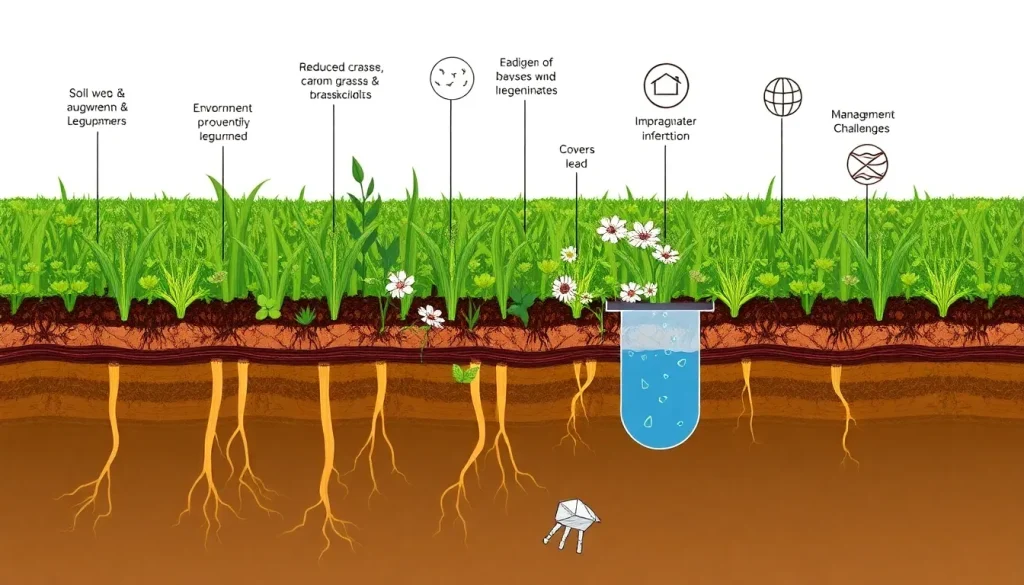
Cover crops influence the environment through several interconnected mechanisms. Their roots bind soil particles together, reducing erosion by wind and water. The aboveground canopy intercepts raindrops, preventing surface sealing and runoff. As the plants grow, they take up residual nutrients—especially nitrogen—left in the soil after the cash crop, storing them in plant tissues. This nutrient scavenging prevents leaching into groundwater or runoff into surface waters, thereby protecting water quality.
Leguminous cover crops form symbiotic relationships with rhizobia bacteria to convert atmospheric nitrogen into plant-available forms, a process called biological nitrogen fixation. When the cover crop is terminated, its residues decompose and release nutrients slowly, improving soil fertility for the next crop. The added organic matter enhances soil structure, water infiltration, and microbial activity. However, the timing of termination is crucial: if the cover crop is killed too early, nutrients may be released before the next crop can use them; if too late, the decomposing residues may temporarily immobilize nitrogen or compete for water, potentially reducing cash crop yields.
Environmental Benefits
Cover crops provide a range of environmental benefits that contribute to sustainable agriculture and ecosystem health:
- Soil erosion control: By covering the soil surface and anchoring it with roots, cover crops can reduce erosion by 40–90% compared to bare fallow, preserving topsoil and preventing sedimentation in waterways.
- Nutrient management: They capture residual nitrogen and phosphorus, reducing nutrient leaching and runoff. Non-legume cover crops have been shown to reduce nitrate leaching by an average of 70%, helping to prevent eutrophication of lakes and coastal waters.
- Carbon sequestration: Cover crops increase soil organic carbon by adding biomass both above and below ground. This improves soil health and mitigates climate change by storing carbon that would otherwise be in the atmosphere.
- Weed suppression: Dense cover crop stands outcompete weeds for light, water, and nutrients, reducing reliance on herbicides. Some species, like cereal rye, release allelopathic chemicals that inhibit weed germination.
- Biodiversity enhancement: Cover crops provide habitat and food for beneficial insects, pollinators, and soil organisms, supporting overall farm biodiversity.
- Water management: Improved soil structure from cover crops enhances water infiltration and reduces surface runoff, which can mitigate flooding and recharge groundwater.
Limitations and Trade-offs
Despite their benefits, cover crops can present challenges that limit their adoption or effectiveness:
- Water use: In semi-arid or drought-prone regions, cover crops may deplete soil moisture needed by the subsequent cash crop, potentially reducing yields. Careful species selection and early termination can mitigate this risk.
- Nitrogen immobilization: High-carbon residues (e.g., mature cereal rye) can temporarily tie up soil nitrogen during decomposition, causing early-season nitrogen deficiency in the following crop unless supplemental fertilizer is applied.
- Cost and labor: Establishing and terminating cover crops requires additional seed, equipment, and labor. These upfront costs may not be immediately offset by yield increases or input savings, creating a financial barrier for some farmers.
- Pest and disease risks: Certain cover crops can harbor pests or pathogens that affect subsequent cash crops. For example, some brassica cover crops may increase the risk of clubroot in canola. Proper species selection and rotation are necessary to avoid these issues.
- Allelopathy: Some cover crops release chemicals that inhibit the growth of other plants, including cash crops. While this can aid weed control, it may also harm crop seedlings if the interval between termination and planting is too short.
- Climate and regional constraints: In cold climates, short growing windows may limit the ability to establish cover crops after harvest. In wet regions, excessive cover crop residue can delay soil warming and drying in spring, potentially delaying planting.
What the Evidence Shows
Research on cover crops has grown substantially, providing a clearer picture of their impacts. Meta-analyses and long-term field studies consistently show that cover crops reduce nitrate leaching and soil erosion. For example, a synthesis of studies in temperate regions found that non-legume cover crops reduced nitrate leaching by an average of 70% compared to bare fallow. Similarly, cover crops increased soil organic carbon by 0.1–0.5 Mg C ha−1 yr−1, depending on species and climate.
However, effects on cash crop yields are more variable. In some cases, cover crops—especially legumes—can increase subsequent crop yields by providing nitrogen and improving soil conditions. In other cases, yields may be reduced due to water competition or nitrogen immobilization. The net effect depends on management, climate, and soil type. Overall, the evidence supports the use of cover crops as a beneficial practice when tailored to local conditions, but it also highlights the need for adaptive management to maximize benefits and minimize trade-offs.
Connections to Other Systems
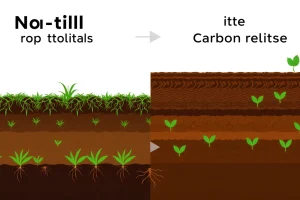
Cover crops are a key component of several sustainable agricultural systems. In conservation agriculture, they are used alongside no-till or reduced tillage and crop rotation to maintain soil cover, enhance biodiversity, and improve soil health. In organic farming, cover crops are essential for nutrient management, weed suppression, and breaking pest cycles without synthetic inputs. They also play a role in integrated crop-livestock systems, where cover crops can provide forage for animals while improving soil fertility through manure deposition.
At a landscape scale, widespread cover crop adoption can contribute to watershed health by reducing non-point source pollution and mitigating flood risks. Government programs, such as the USDA’s Environmental Quality Incentives Program (EQIP), often provide financial and technical assistance to encourage cover crop use, recognizing their public environmental benefits. However, the effectiveness of such policies depends on appropriate targeting and farmer participation, as the positive externalities of cover crops are not always captured in market prices.
FAQ
What are cover crops?
Cover crops are plants grown primarily to protect and improve soil during periods when the land would otherwise be bare, such as between cash crop cycles. They are not harvested for sale but provide environmental benefits like erosion control, nutrient management, and soil health improvement.
How do cover crops benefit the environment?
Cover crops reduce soil erosion, capture excess nutrients to prevent water pollution, sequester carbon in the soil, suppress weeds, and enhance biodiversity. They also improve soil structure and water infiltration, contributing to overall ecosystem health.
What are the limitations of cover crops?
Limitations include potential water use that may reduce yields in dry regions, nitrogen immobilization that can temporarily starve subsequent crops, added costs for seed and labor, and possible pest or disease carryover. Their effectiveness depends on proper species selection and management.
References
- USDA Natural Resources Conservation Service. (n.d.). Cover Crops and Soil Health. Retrieved from https://www.nrcs.usda.gov/wps/portal/nrcs/main/national/soils/health/
- Food and Agriculture Organization of the United Nations. (n.d.). Conservation Agriculture. Retrieved from http://www.fao.org/conservation-agriculture/en/
- Blanco-Canqui, H., Shaver, T. M., Lindquist, J. L., Shapiro, C. A., Elmore, R. W., Francis, C. A., & Hergert, G. W. (2015). Cover crops and ecosystem services: Insights from studies in temperate soils. Agronomy Journal, 107(6), 2449-2474.