In brief
At a glance
Quick Facts
- Definition
- Abrupt climate change is a large-scale shift in the climate system that occurs over a few decades or less, persists for decades or longer, and causes substantial disruptions in human and natural systems.
- Tipping Points
- Critical thresholds where a small change can trigger a large, often irreversible response in the climate system, such as the collapse of an ice sheet or a shift in ocean circulation.
- Past Event
- The Younger Dryas, about 12,900 years ago, saw a rapid return to glacial conditions in the Northern Hemisphere within a decade, likely due to freshwater disruption of ocean currents.
- Ocean Circulation
- The Atlantic Meridional Overturning Circulation (AMOC) is a key component that could slow down or collapse abruptly, altering global weather patterns and marine ecosystems.
- Ice Sheet Collapse
- The West Antarctic Ice Sheet contains enough ice to raise sea levels by 3–4 meters; its collapse could occur over centuries, but abrupt changes could accelerate the process.
- Permafrost Thaw
- Thawing permafrost releases methane and CO₂, creating a feedback loop that accelerates warming and could become a major source of greenhouse gases.
- Detection
- Abrupt changes are often detected in paleoclimate records like ice cores and ocean sediments, which show rapid shifts in temperature, greenhouse gases, and other indicators.
- Human Influence
- Current greenhouse gas emissions are increasing the risk of triggering abrupt climate changes by pushing the climate system closer to critical thresholds.
Key Takeaways
- Abrupt climate change is a large-scale shift in the climate system that occurs over a few decades or less, much faster than typical climate variations.
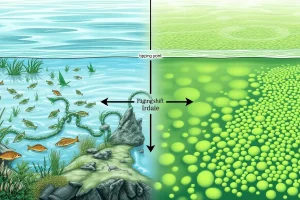
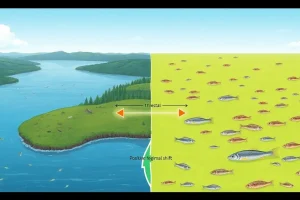
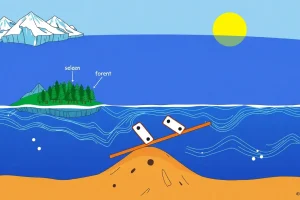
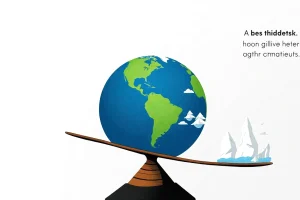
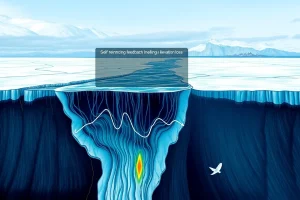
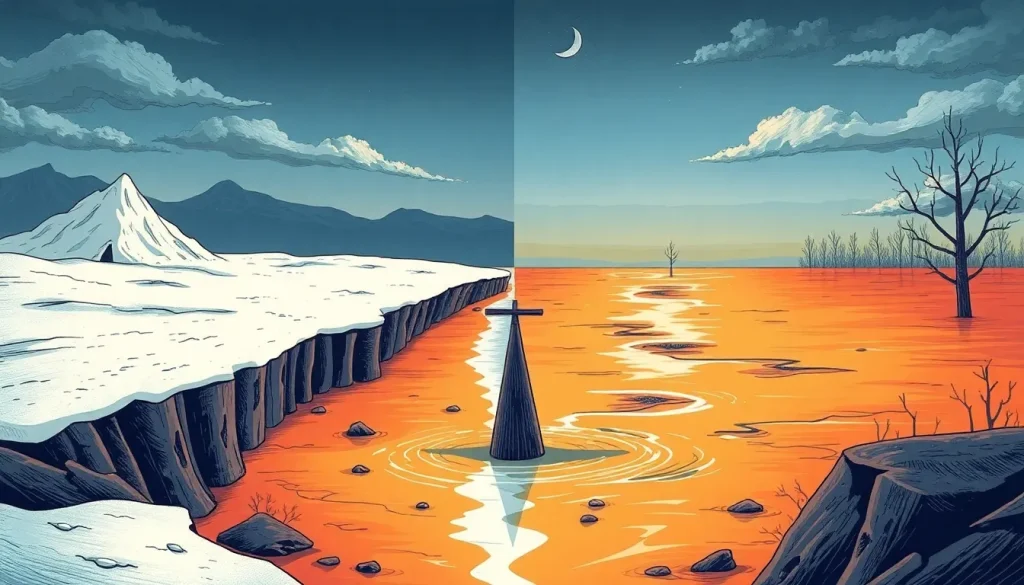
- It often involves crossing a critical threshold, or “tipping point,” where a small change triggers a self-reinforcing feedback loop, leading to rapid and potentially irreversible change.
- Past abrupt changes, such as the Younger Dryas event, demonstrate that Earth’s climate can switch states in as little as a decade, with global consequences.
- Human-induced warming is increasing the risk of triggering abrupt changes in key systems like ocean circulation, ice sheets, and permafrost, with severe implications for ecosystems and societies.
What Is Abrupt Climate Change?
Abrupt climate change is a large-scale, rapid shift in the climate system that occurs over a few decades or less, persists for decades or longer, and causes substantial disruptions in natural and human systems. Unlike the gradual warming typically associated with climate change, abrupt changes involve sudden transitions between different climate states, often when a critical threshold—or tipping point—is crossed. These events can unfold so quickly that ecosystems and societies have little time to adapt, leading to severe consequences.
The concept of abrupt climate change emerged from paleoclimate research, which revealed that Earth’s climate has not always changed smoothly. Instead, it has occasionally undergone dramatic shifts, such as the rapid cooling of the Younger Dryas period or the sudden warming at the end of the last ice age. Today, scientists are concerned that human activities—particularly greenhouse gas emissions—could trigger similar abrupt changes in the modern climate system, with potentially catastrophic effects on sea level, weather patterns, and global ecosystems.
How It Works
Abrupt climate change is driven by feedback mechanisms and threshold behavior within the climate system. A feedback loop occurs when a change in one component of the system amplifies or dampens the initial change. In the case of abrupt change, positive feedbacks can accelerate warming or cooling, pushing the system past a tipping point into a new state. Once crossed, the change may become self-sustaining and difficult or impossible to reverse on human timescales.

Key mechanisms include:
- Ice-albedo feedback: As ice melts, darker ocean or land surfaces are exposed, absorbing more solar radiation and causing further warming, which melts more ice.
- Permafrost carbon feedback: Thawing permafrost releases methane and carbon dioxide, potent greenhouse gases that accelerate warming and lead to more thawing.
- Ocean circulation slowdown: Freshwater input from melting ice can disrupt the Atlantic Meridional Overturning Circulation (AMOC), altering heat distribution and weather patterns across the globe.
- Forest dieback: Drought and heat stress can cause widespread forest loss, releasing stored carbon and reducing the land’s ability to absorb CO₂, further intensifying warming.
History
Evidence of abrupt climate changes comes primarily from paleoclimate records, such as ice cores from Greenland and Antarctica, ocean sediments, and lake deposits. These archives reveal that Earth’s climate has experienced numerous abrupt shifts over the past 100,000 years. One of the most studied is the Younger Dryas event, which occurred about 12,900 years ago. During this period, the Northern Hemisphere abruptly returned to near-glacial conditions for over a millennium, with temperature drops of several degrees Celsius occurring within a decade. The event is thought to have been triggered by a massive influx of freshwater into the North Atlantic, disrupting ocean circulation.
Other notable abrupt events include Dansgaard-Oeschger cycles—rapid warming episodes during the last glacial period, with temperature increases of up to 8–15°C in Greenland over just a few decades—and Heinrich events, which involved massive iceberg discharges into the North Atlantic. These past events demonstrate that the climate system can switch between states rapidly and that such changes can have global repercussions, affecting monsoon patterns, sea levels, and ecosystems worldwide.
Main Causes or Drivers
Abrupt climate change can be triggered by both natural and human-induced factors. Natural drivers include variations in Earth’s orbit, solar output, volcanic activity, and internal dynamics of the climate system, such as changes in ocean circulation or ice sheet stability. However, the current concern centers on anthropogenic drivers—primarily the emission of greenhouse gases from burning fossil fuels, deforestation, and industrial processes—which are warming the planet at an unprecedented rate and increasing the likelihood of crossing tipping points.
Specific human activities that can trigger abrupt changes include:
- Greenhouse gas emissions: Rising CO₂ and methane levels enhance the greenhouse effect, warming the atmosphere and oceans.
- Land-use change: Deforestation and agriculture alter surface albedo and carbon storage, affecting regional and global climate.
- Freshwater forcing: Melting of the Greenland Ice Sheet and Arctic sea ice adds freshwater to the North Atlantic, potentially slowing the AMOC.
- Black carbon deposition: Soot from incomplete combustion darkens snow and ice, accelerating melting.
Environmental and Human Impacts
The consequences of abrupt climate change can be severe and far-reaching. Rapid sea level rise from the collapse of the West Antarctic or Greenland ice sheets would inundate coastal cities and displace millions of people. A slowdown or shutdown of the AMOC could drastically alter weather patterns, leading to colder winters in Europe, shifts in monsoon rainfall affecting food security for billions, and changes in marine ecosystems. Abrupt thawing of permafrost would release vast amounts of greenhouse gases, further accelerating global warming and undermining efforts to stabilize the climate.
Human systems are highly vulnerable to such rapid changes. Agriculture depends on predictable seasonal patterns; abrupt shifts in temperature and precipitation could lead to crop failures and food shortages. Water resources would be stressed by changing rainfall and glacier melt. Infrastructure, public health, and economies would face unprecedented challenges, with the potential for conflict and mass migration. The speed of these changes leaves little time for adaptation, making early mitigation and preparedness critical.
Why It Matters
Abrupt climate change matters because it challenges the assumption that climate change will be gradual and manageable. If tipping points are crossed, the resulting changes could be irreversible on human timescales, locking in centuries of disruption. The risk of abrupt change adds urgency to efforts to reduce greenhouse gas emissions and to develop adaptation strategies. It also highlights the interconnectedness of the climate system: a change in one region can cascade globally, making it a planetary-scale concern.
Understanding abrupt climate change is essential for policymakers, businesses, and individuals. It informs risk assessments, infrastructure planning, and international climate negotiations. By recognizing the potential for sudden, non-linear changes, society can better prepare for a range of possible futures and work to avoid the most dangerous outcomes.
Data Limitations and Uncertainties
Despite advances in climate science, predicting exactly when and how abrupt changes might occur remains challenging. Climate models are improving but still struggle to capture all the complex feedbacks and threshold behaviors. Paleoclimate data provide valuable insights, but they are often sparse and have limited temporal resolution. Tipping points are inherently difficult to forecast because they involve non-linear dynamics and can be influenced by multiple interacting factors.
Key uncertainties include the precise threshold for AMOC collapse, the rate at which ice sheets can disintegrate, and the magnitude of carbon release from permafrost. Scientists use a combination of observations, models, and paleo-records to estimate risks, but the potential for surprises remains. This uncertainty does not diminish the concern; rather, it underscores the need for precautionary measures and continued research to narrow the knowledge gaps.
FAQ
What is abrupt climate change?
Abrupt climate change is a large-scale, rapid shift in the climate system that occurs over a few decades or less, often when a critical threshold is crossed. It can lead to sudden and severe impacts, such as rapid sea level rise, shifts in weather patterns, or ecosystem collapse.
How does abrupt climate change differ from gradual climate change?
Gradual climate change unfolds over centuries or millennia, allowing time for adaptation. Abrupt climate change happens over decades or less, leaving little time for ecosystems and societies to adjust. It often involves non-linear feedbacks and can be irreversible on human timescales.
Why does abrupt climate change matter?
It matters because it poses a high risk of severe, widespread, and potentially irreversible impacts. If tipping points are crossed, the consequences—such as rapid sea level rise or disruption of food systems—could be catastrophic and extremely difficult to manage, making early mitigation and preparedness essential.
References
- National Research Council. 2002. Abrupt Climate Change: Inevitable Surprises. Washington, DC: The National Academies Press.
- IPCC Special Report on the Ocean and Cryosphere in a Changing Climate (2019).
- Alley, R. B. et al. (2003). Abrupt Climate Change. Science, 299(5615), 2005–2010.