In brief
At a glance
Quick Facts
- Definition
- Low-probability, high-impact climate risks are potential climate events with a small chance of occurring but with severe, often irreversible consequences.
- Key Examples
- Collapse of the Atlantic Meridional Overturning Circulation (AMOC), rapid disintegration of the West Antarctic Ice Sheet, and large-scale permafrost carbon release.
- Probability Range
- Often estimated below 10% or even 1% in current models, but exact likelihoods are deeply uncertain.
- Potential Impact
- Multi-meter sea-level rise, extreme weather shifts, ecosystem collapse, and global economic costs in the trillions of dollars.
- Tipping Points
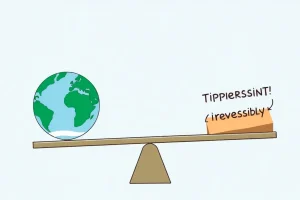
- Many are climate tipping points—thresholds beyond which a system reorganizes abruptly and often irreversibly.
- Risk Management Approach
- Standard cost-benefit analysis may undervalue these risks; the precautionary principle and robust decision-making are recommended.
- Uncertainty Challenge
- Deep uncertainty arises from complex feedbacks, model limitations, and the unprecedented nature of these events.
- Policy Link
- The Paris Agreement's 1.5°C target aims to reduce the likelihood of crossing such tipping points.
- Cascading Risks
- One tipping point could trigger others in a cascade, amplifying global risk.
- Timeframe
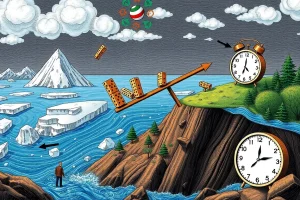
- Some could unfold over decades to centuries, but their initiation may be locked in within this century.
Key Takeaways
- Low-probability, high-impact climate risks are events with a small chance of occurring but with potentially catastrophic and irreversible consequences, making them essential to consider in climate policy.
- These risks often involve climate tipping points—critical thresholds beyond which a system reorganizes abruptly and often irreversibly, such as the collapse of ice sheets or major ocean currents.
- Standard risk assessments may underestimate these threats because they are difficult to quantify, lie outside historical experience, and involve deep uncertainty.
- Proactive mitigation, adaptation, and robust decision-making frameworks are necessary to reduce the likelihood of triggering these events and to build resilience against their impacts.
What Is Low-Probability, High-Impact Climate Risks?
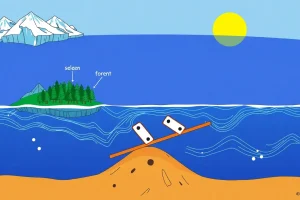
Low-probability, high-impact climate risks refer to potential climate-related events or outcomes that have a small chance of occurring but would result in severe, often catastrophic, consequences for natural and human systems. These risks are sometimes called “tail risks” because they sit in the far ends of probability distributions, or “climate surprises” because they involve abrupt, non-linear changes that are difficult to predict. Unlike the gradual, more predictable effects of climate change—such as steady sea-level rise or average temperature increases—these risks represent extreme scenarios that could fundamentally alter the Earth system within decades or even years.
These risks are a central concern in climate science and policy because their potential impacts are so large that they can dominate the overall risk profile, even if their probabilities are low. For example, a 1% chance of an event that causes trillions of dollars in damage and widespread human suffering may warrant more urgent action than a 90% chance of a manageable outcome. Low-probability, high-impact risks are often associated with tipping points in the climate system—thresholds beyond which a small additional perturbation triggers a self-reinforcing, often irreversible change. Understanding and managing these risks is critical for robust decision-making, as they challenge traditional cost-benefit analyses and require a precautionary approach.
How It Works
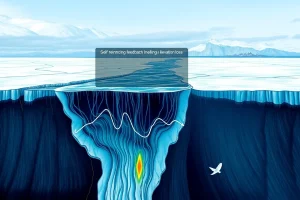
Low-probability, high-impact climate risks arise from the complex, non-linear nature of the Earth system. Many components of the climate system exhibit threshold behavior, where gradual forcing—such as rising greenhouse gas concentrations—can push a system past a tipping point. Once crossed, positive feedback loops amplify the change, driving the system toward a new state that may be irreversible on human timescales. For example, as Arctic sea ice melts, it exposes darker ocean water that absorbs more sunlight, accelerating warming and further ice loss. This self-reinforcing cycle can lead to a rapid and complete loss of summer sea ice, with cascading effects on weather patterns and ecosystems.
Key mechanisms behind these risks include:
- Ice-albedo feedback: Melting ice reduces the Earth’s reflectivity, causing more heat absorption and further melting.
- Permafrost carbon feedback: Thawing permafrost releases methane and carbon dioxide, potent greenhouse gases that accelerate warming.
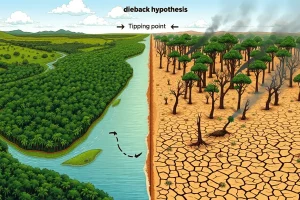
- Forest dieback: Drought and heat stress can cause widespread tree mortality, turning carbon sinks into carbon sources.
- Ocean circulation changes: Freshwater input from melting ice can disrupt major currents like the Atlantic Meridional Overturning Circulation (AMOC), altering global heat distribution.
These processes are often interconnected, meaning that crossing one tipping point could trigger others in a domino effect, leading to a cascade of abrupt changes. The exact thresholds are deeply uncertain, making it difficult to predict when or if they will be crossed, but the potential consequences are severe enough to warrant serious attention.
Examples
Several specific low-probability, high-impact climate risks have been identified by scientists. While their exact probabilities are uncertain, they are physically plausible and supported by evidence from past climate changes and current observations.
- Collapse of the Atlantic Meridional Overturning Circulation (AMOC): The AMOC is a major ocean current system that transports warm water northward, moderating Europe’s climate. A slowdown or collapse, triggered by freshwater influx from melting Greenland ice, could drastically alter weather patterns, reduce agricultural productivity, and shift monsoon systems. Paleoclimate records show abrupt AMOC changes in the past, and current observations indicate a weakening trend.
- Disintegration of the West Antarctic Ice Sheet: This marine-based ice sheet is vulnerable to rapid collapse due to warm ocean water melting its underside. Its complete disintegration could raise global sea levels by 3–4 meters over centuries, but the process could become irreversible within decades. Early warning signs, such as accelerating glacier retreat, are already observed.
- Amazon rainforest dieback: Combined effects of deforestation, drought, and fire could push the Amazon past a tipping point where it transitions from rainforest to savanna. This would release vast amounts of carbon, disrupt regional rainfall, and cause massive biodiversity loss.
- Large-scale permafrost carbon release: Permafrost soils contain nearly twice as much carbon as the atmosphere. Abrupt thaw could release a significant fraction as methane and CO₂, dramatically accelerating global warming and making climate goals harder to achieve.
- Coral reef ecosystem collapse: Ocean warming and acidification are already causing widespread coral bleaching. Beyond 1.5°C of warming, most tropical coral reefs are projected to decline severely, with cascading impacts on marine biodiversity and coastal livelihoods.
Importance and Impact
The importance of low-probability, high-impact climate risks lies in their potential to cause damages that are orders of magnitude greater than those from more likely, gradual changes. Even a small chance of triggering a multi-meter sea-level rise, a collapse of global food systems, or widespread ecosystem collapse can justify significant upfront investment in mitigation and adaptation. In economic terms, these risks can dominate the expected value of climate damages, making strong climate action a rational choice even under standard cost-benefit frameworks.
The impacts of such events would be far-reaching and potentially irreversible. They include:
- Sea-level rise: Rapid ice sheet loss could displace hundreds of millions of people in coastal areas, with trillions of dollars in infrastructure losses.
- Extreme weather: Altered ocean and atmospheric circulation could intensify storms, droughts, and floods, disrupting agriculture and water supplies.
- Ecosystem collapse: Loss of key ecosystems like coral reefs and rainforests would undermine biodiversity, fisheries, and carbon storage.
- Social and geopolitical instability: Resource scarcity and mass migration could increase conflict and humanitarian crises.
Because many of these changes are irreversible on human timescales, they pose an existential threat to future generations and challenge the ethical foundations of climate policy.
Data Limitations and Uncertainties
Assessing low-probability, high-impact climate risks is fraught with deep uncertainty. Climate models, while powerful, often struggle to capture the full complexity of tipping elements, non-linear feedbacks, and abrupt changes. Key challenges include:
- Threshold uncertainty: The exact level of warming or forcing that triggers a tipping point is poorly known, with wide ranges in estimates.
- Model limitations: Many models do not include dynamic ice sheets, permafrost feedbacks, or interactive vegetation, leading to potential underestimation of risks.
- Fat-tailed distributions: Climate sensitivity and impact distributions may have “fat tails,” meaning extreme outcomes are more likely than a normal distribution would suggest. This makes probability estimates highly sensitive to assumptions.
- Lack of historical analogues: The current rate of warming is unprecedented, so past events provide only partial guidance.
- Interconnections: Cascading tipping points are even harder to model, as they involve multiple interacting systems.
These uncertainties do not imply that the risks are negligible; rather, they underscore the need for precautionary approaches and continued research to narrow knowledge gaps.
Common Misconceptions
Solutions
Addressing low-probability, high-impact climate risks requires a multi-pronged strategy that combines mitigation, adaptation, and improved risk management.
- Mitigation: Rapidly reducing greenhouse gas emissions is the most effective way to lower the probability of crossing tipping points. The Paris Agreement’s goal of limiting warming to 1.5°C is designed in part to avoid many of these risks.
- Adaptation: Building resilience in infrastructure, agriculture, and coastal zones can reduce vulnerability to abrupt changes. However, adaptation has limits, especially for irreversible impacts.
- Robust decision-making: Instead of relying on precise probability estimates, policymakers can use approaches like scenario planning, stress-testing, and the precautionary principle to make decisions that perform well across a range of possible futures.
- Research and monitoring: Improved Earth system models, early warning indicators (e.g., critical slowing down), and sustained observations can help detect approaching tipping points and reduce uncertainty.
- Governance and international cooperation: Because these risks are global, coordinated action is essential. Mechanisms like climate risk disclosure, carbon pricing, and funding for vulnerable nations can help manage the threat.
Ultimately, confronting these risks requires acknowledging that the stakes are high, the uncertainties are deep, and the time to act is limited.
FAQ
What are low-probability, high-impact climate risks?
They are potential climate events or tipping points that have a small chance of occurring but would cause catastrophic and often irreversible damage, such as the collapse of major ice sheets or ocean currents.
How do these risks work?
They arise from non-linear processes and positive feedback loops in the climate system. Once a critical threshold is crossed, self-reinforcing changes can rapidly push the system into a new state, making the change abrupt and hard to reverse.
Why do low-probability, high-impact climate risks matter?
Even a small probability of a catastrophic outcome can justify significant preventive action, as the potential damages—such as multi-meter sea-level rise or global food system disruption—are so large that they dominate the overall risk profile.
References
- IPCC Special Report on Global Warming of 1.5°C (2018)
- Lenton, T. M., et al. 'Tipping elements in the Earth's climate system.' Proceedings of the National Academy of Sciences 105.6 (2008): 1786-1793.
- National Research Council. 'Abrupt Impacts of Climate Change: Anticipating Surprises.' The National Academies Press (2013).