What Is an Ecological Regime Shift? Definition, Causes, and Examples
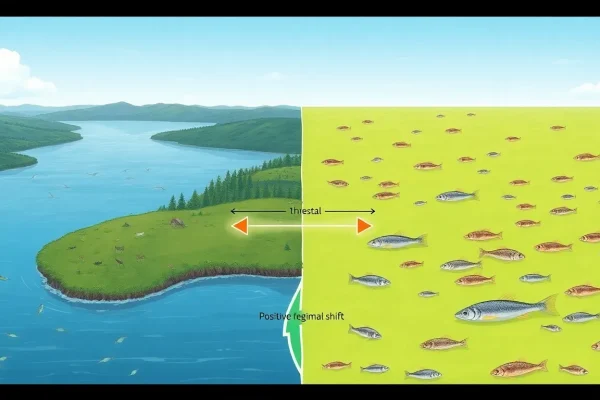
An ecological regime shift is a large, abrupt, and persistent change in the structure and function of an ecosystem, often triggered by gradual pressures…
Topic archive
Critical thresholds where small changes can trigger large, irreversible shifts.
An ecological regime shift is a large, abrupt, and persistent change in the structure and function of an ecosystem, often triggered by gradual pressures…
Ecosystems can shift abruptly from one stable state to another when internal feedbacks and external pressures push them past critical thresholds, often with lasting…
A tipping element is a large-scale component of the Earth system—such as an ice sheet, ocean current, or ecosystem—that can cross a critical threshold,…
Climate tipping points are critical thresholds where a small change can trigger a large, often self-perpetuating shift in Earth's systems. Whether they can be…
Low-probability, high-impact climate risks are potential climate events or tipping points with a small chance of occurring but catastrophic consequences if they do. Understanding…
The Greenland Ice Sheet tipping point refers to a critical temperature threshold beyond which the ice sheet’s melting becomes self-sustaining and irreversible, committing the…
Tipping-point timelines are difficult to predict because they involve complex, non-linear systems with multiple interacting feedback loops, incomplete data, and inherent uncertainties. Small changes…
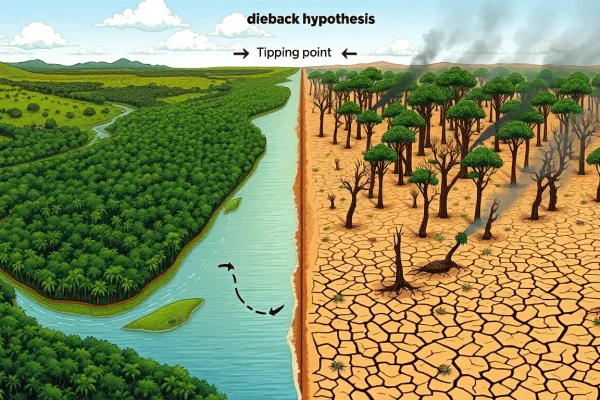
Amazon rainforest dieback refers to the hypothesis that a large-scale, self-reinforcing shift from rainforest to savanna or degraded forest could occur in the Amazon…
Learn what Earth system tipping points are, the strongest scientific evidence, major tipping elements, cascading risks, uncertainties, and why every fraction of warming matters.
A climate tipping point is a critical threshold beyond which a natural system undergoes a significant, often irreversible change, even if the driving forces…