In brief
At a glance
Quick Facts
- Primary Carbon Sources
- Fossil fuel combustion, deforestation, and volcanic eruptions are major sources of atmospheric carbon.
- Major Carbon Sinks
- Oceans, forests, and soils absorb more carbon than they release, acting as net sinks.
- Atmospheric CO2 Increase
- CO2 levels have risen from about 280 ppm before the Industrial Revolution to over 420 ppm.
- Ocean Absorption
- The ocean has absorbed roughly 25% of human-caused CO2 emissions since the Industrial Revolution.
- Fossil Fuel Emissions
- Burning fossil fuels releases approximately 9-10 gigatons of carbon into the atmosphere each year.
- Terrestrial Carbon Storage
- Soils contain more carbon than the atmosphere and all plant life combined, holding about 2,500 gigatons.
- Carbon Cycle Timescales
- The fast carbon cycle operates over days to centuries, while the slow geological cycle spans millions of years.
- Ocean Acidification
- Increased CO2 absorption has lowered ocean pH by about 0.1 since the Industrial Revolution, a 30% increase in acidity.
Key Takeaways
- The carbon cycle is the natural movement of carbon between the atmosphere, oceans, land, and living organisms, maintaining a balance that supports life and regulates climate.
- Carbon sources release carbon into the atmosphere (e.g., fossil fuel burning, respiration, volcanic activity), while carbon sinks absorb more carbon than they emit (e.g., oceans, forests, soil).
- Human activities, especially the burning of fossil fuels and deforestation, have disrupted the natural carbon cycle, leading to a rapid increase in atmospheric CO2 and global warming.
- Understanding carbon storage mechanisms—in biomass, soils, deep ocean, and geological formations—is critical for developing strategies to mitigate climate change.
What Is Carbon Cycle Explained: Sources, Sinks and Storage?
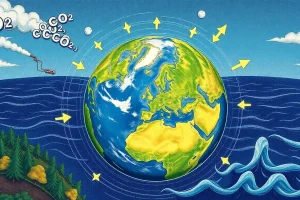
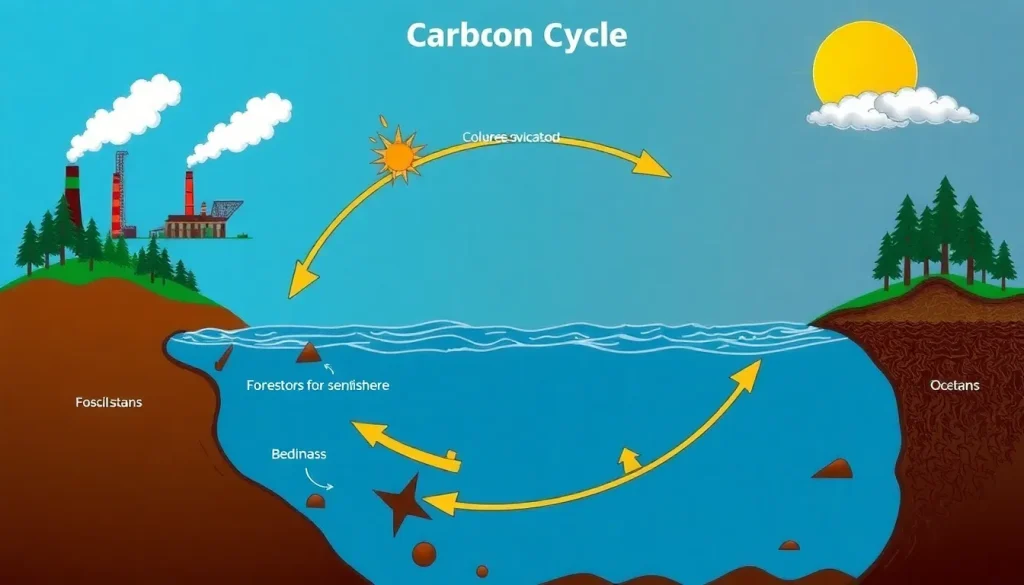
The carbon cycle is the biogeochemical process by which carbon atoms circulate through Earth’s atmosphere, hydrosphere, lithosphere, and biosphere. Carbon, a fundamental building block of life, exists in various forms—carbon dioxide (CO2) in the air, dissolved inorganic carbon in water, organic matter in living organisms and soils, and carbonate rocks and fossil fuels in the Earth’s crust. The cycle encompasses the exchange of carbon between these reservoirs, driven by both natural processes and human activities. A carbon source is any process or reservoir that releases more carbon into the atmosphere than it absorbs, while a carbon sink is a reservoir that takes in more carbon than it releases, effectively storing it for a period of time.
Carbon storage refers to the accumulation and retention of carbon in these sinks. The major natural sinks are the oceans, terrestrial ecosystems (especially forests and soils), and the atmosphere itself. Over geological timescales, carbon is also stored in sedimentary rocks and fossil fuel deposits. The balance between sources and sinks determines the concentration of CO2 in the atmosphere, which in turn influences Earth’s climate through the greenhouse effect. Since the Industrial Revolution, human activities have tipped this balance by adding vast amounts of carbon from long-term geological storage into the atmosphere, overwhelming the capacity of natural sinks to absorb it fully.
Overview
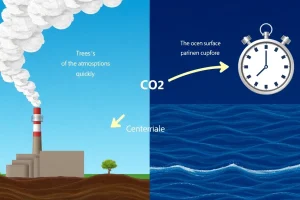
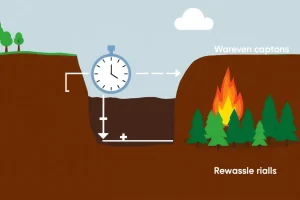
The carbon cycle operates on multiple timescales, from rapid exchanges between the atmosphere and living organisms to slow geological processes that span millions of years. The fast carbon cycle involves the movement of carbon through photosynthesis, respiration, and ocean-atmosphere gas exchange, cycling carbon on timescales of days to centuries. The slow carbon cycle involves the weathering of rocks, sedimentation, and the formation of fossil fuels, which lock carbon away for millions of years. Human intervention has accelerated the release of carbon from the slow cycle, primarily through the combustion of fossil fuels and land-use changes such as deforestation.
Key reservoirs in the carbon cycle include the atmosphere, which holds about 870 gigatons of carbon (GtC) as CO2; the oceans, which contain roughly 38,000 GtC mostly as dissolved inorganic carbon; the terrestrial biosphere (vegetation and soils), storing about 2,500 GtC; and the lithosphere (fossil fuels and carbonate rocks), which holds over 65,000,000 GtC. The annual fluxes between these reservoirs are substantial, but the net balance has been altered by human emissions of approximately 10 GtC per year, of which about half remains in the atmosphere, while the rest is taken up by land and ocean sinks.
How It Works
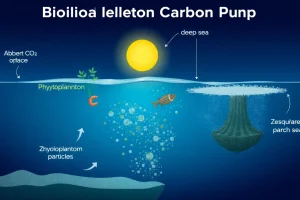
The carbon cycle is driven by a combination of biological, chemical, and physical processes. Photosynthesis by plants, algae, and cyanobacteria removes CO2 from the atmosphere and converts it into organic carbon, forming the base of the food web. Respiration by living organisms returns CO2 to the atmosphere. Decomposition of dead organic matter by microbes also releases CO2, while some carbon is stored in soils as humus. In the oceans, CO2 dissolves at the surface and is transported to deeper layers through circulation and the biological pump—where marine organisms sink after death, carrying carbon to the deep sea.
On geological timescales, carbon is removed from the atmosphere through the weathering of silicate rocks, which forms bicarbonate ions that are carried to the oceans and eventually precipitate as carbonate sediments. Over millions of years, these sediments can be subducted into the Earth’s mantle, and carbon is returned to the atmosphere through volcanic eruptions. Fossil fuels—coal, oil, and natural gas—formed from the remains of ancient organisms buried under sediment and subjected to heat and pressure over millions of years. Human extraction and burning of these fuels releases this stored carbon as CO2, bypassing the slow natural cycle.
Main Causes or Drivers
The carbon cycle is influenced by both natural drivers and human activities. Natural drivers include volcanic eruptions, which release CO2 and other gases from the Earth’s interior; changes in solar radiation that affect photosynthesis rates; and natural climate variations such as El Niño events, which can alter the balance between respiration and photosynthesis. However, the dominant driver of the current disruption is human activity, particularly since the Industrial Revolution.
The primary human drivers are:
- Fossil fuel combustion: Burning coal, oil, and natural gas for energy and transportation releases about 9-10 GtC annually.
- Deforestation and land-use change: Clearing forests for agriculture or urban development reduces the capacity of terrestrial sinks and releases carbon stored in biomass and soils, contributing roughly 1-2 GtC per year.
- Cement production: The chemical process of making cement releases CO2 from limestone, adding about 0.5 GtC annually.
- Agricultural practices: Soil disturbance, livestock methane emissions, and rice cultivation also contribute to greenhouse gas emissions, though methane is part of the carbon cycle.
These activities have increased atmospheric CO2 concentrations from about 280 parts per million (ppm) before the Industrial Revolution to over 420 ppm, a level not seen in at least 800,000 years.
Environmental and Human Impacts
The disruption of the carbon cycle has far-reaching consequences. The most direct impact is global warming, as increased CO2 enhances the greenhouse effect, trapping more heat in the atmosphere. This leads to rising average temperatures, melting ice caps and glaciers, and more frequent extreme weather events. The ocean, a major carbon sink, absorbs about 25% of human CO2 emissions, causing ocean acidification. As CO2 dissolves, it forms carbonic acid, lowering the pH of seawater and threatening marine life, particularly organisms with calcium carbonate shells and skeletons, such as corals, mollusks, and some plankton.
On land, changes in the carbon cycle affect ecosystem health and agricultural productivity. While higher CO2 can stimulate plant growth (the CO2 fertilization effect), this benefit is often offset by nutrient limitations, heat stress, and water scarcity. Shifts in climate zones can lead to habitat loss and biodiversity decline. For human societies, impacts include threats to food and water security, increased displacement due to sea-level rise, and economic costs from climate-related disasters. The imbalance in the carbon cycle thus poses a systemic risk to both natural and human systems.
Common Misconceptions
Several misunderstandings persist about the carbon cycle. One common misconception is that carbon sinks, such as oceans and forests, can absorb all excess CO2 indefinitely. In reality, sinks have finite capacities and can become saturated or even turn into sources under stress. For example, warming oceans may release dissolved CO2, and deforestation can transform a forest from a sink to a source. Another misconception is that the carbon cycle only involves CO2. While CO2 is the most important long-lived greenhouse gas, the cycle also includes methane (CH4), carbon monoxide (CO), and black carbon, each with different roles and lifetimes.
Some believe that planting trees alone can solve the carbon imbalance. While afforestation and reforestation are valuable, they cannot offset the massive emissions from fossil fuels. The carbon stored in trees is also vulnerable to release through wildfires, disease, or logging. Finally, there is confusion between the natural carbon cycle and the enhanced greenhouse effect. The natural cycle maintains a stable climate over millennia; the current problem is the rapid injection of ancient carbon from geological storage, which overwhelms the natural system.
Data Limitations and Uncertainties
Despite advances in monitoring, significant uncertainties remain in quantifying carbon sources and sinks. Measuring global carbon fluxes requires integrating data from atmospheric observations, satellite remote sensing, ocean buoys, and ecosystem models. The land sink, in particular, is highly variable and difficult to estimate because it depends on complex interactions between climate, CO2 fertilization, and land management. The ocean sink is better constrained but still subject to uncertainties in circulation patterns and biological activity.
Future projections of the carbon cycle depend on climate feedbacks that are not fully understood. For instance, thawing permafrost could release vast amounts of methane and CO2, but the timing and magnitude are uncertain. Similarly, the response of terrestrial ecosystems to higher CO2 and warming remains a key area of research. These uncertainties complicate efforts to set precise emission reduction targets and highlight the need for continued monitoring and improved models.
FAQ
What is the carbon cycle?
The carbon cycle is the continuous movement of carbon among the atmosphere, oceans, land, and living organisms through processes like photosynthesis, respiration, decomposition, and geological activity.
How do carbon sinks work?
Carbon sinks absorb more carbon than they release. For example, oceans dissolve CO2 from the air, and forests store carbon in biomass and soil through photosynthesis. These sinks help regulate atmospheric CO2 levels.
Why does the carbon cycle matter?
The carbon cycle regulates Earth's climate and supports life by providing the carbon needed for organic molecules. Disruptions to the cycle, such as excess emissions from human activities, lead to climate change and ocean acidification.
References
- IPCC (Intergovernmental Panel on Climate Change) Assessment Reports
- NASA Earth Observatory: The Carbon Cycle
- NOAA Global Monitoring Laboratory: Carbon Cycle Greenhouse Gases