In brief
At a glance
Quick Facts
- Origin of environmental justice movement
- United States, early 1980s, sparked by protests against a hazardous waste landfill in Warren County, North Carolina.
- Foundational document for environmental justice
- The 17 Principles of Environmental Justice, adopted at the 1991 First National People of Color Environmental Leadership Summit.
- Emergence of climate justice
- Gained prominence in the early 2000s, with the 2002 Bali Principles of Climate Justice articulating a rights-based approach.
- Key focus of environmental justice
- Fair distribution of environmental benefits and burdens, often addressing local pollution and systemic discrimination.
- Key focus of climate justice
- Ethical dimensions of climate change, including historical responsibility, intergenerational equity, and the rights of vulnerable populations.
- Common principle
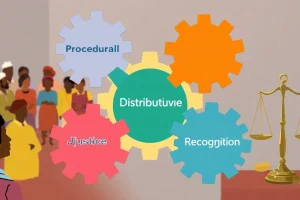
- Both emphasize procedural, distributive, and recognition justice, and center the voices of affected communities.
- Notable example of environmental injustice
- The Flint water crisis, where cost-cutting led to lead contamination in a predominantly Black, low-income city.
- Notable example of climate injustice
- Small Island Developing States face existential threats from sea-level rise despite contributing minimally to global emissions.
- International recognition
- The Paris Agreement acknowledges the importance of climate justice and the need for a just transition.
- Related concept
- Environmental racism, a term coined by Benjamin Chavis in 1982, describes the disproportionate siting of polluting facilities in communities of color.
Key Takeaways
- Environmental justice addresses the fair distribution of environmental benefits and burdens within societies, focusing on local pollution and systemic discrimination.
- Climate justice expands this framework to the global scale, emphasizing the ethical dimensions of climate change, including historical responsibility and intergenerational equity.
- Both movements recognize that marginalized communities—often low-income, indigenous, and people of color—disproportionately suffer from environmental harm and climate impacts.
- Understanding the distinction is crucial for designing policies that are both effective in addressing environmental crises and just in their social and economic outcomes.
What Is Climate Justice vs Environmental Justice?
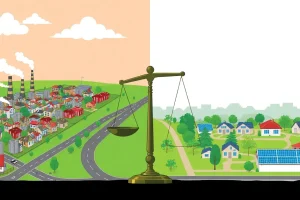
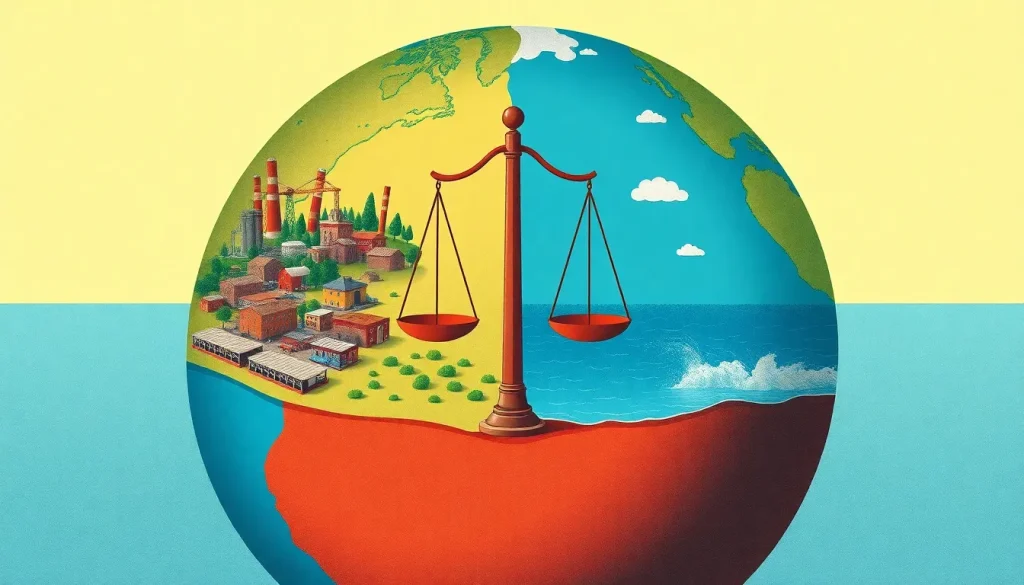
Climate justice and environmental justice are two distinct but overlapping concepts that examine the intersection of social equity and environmental issues. Environmental justice is a movement and field of study that emerged in the United States in the 1980s, focusing on the fair treatment and meaningful involvement of all people regardless of race, color, national origin, or income with respect to the development, implementation, and enforcement of environmental laws, regulations, and policies. It highlights how marginalized communities often bear a disproportionate burden of pollution, toxic waste, and environmental degradation, and it seeks to correct these injustices through community organizing, legal action, and policy reform.
Climate justice, on the other hand, broadens this lens to the global scale, addressing the ethical and human rights dimensions of climate change. It recognizes that those who have contributed least to greenhouse gas emissions—primarily low-income nations and marginalized groups—are often the most vulnerable to climate impacts such as extreme weather, sea-level rise, and food insecurity. Climate justice calls for solutions that not only reduce emissions and adapt to a changing climate but also rectify historical inequities, ensure the participation of affected communities in decision-making, and uphold the rights of future generations. While environmental justice often deals with localized issues, climate justice tackles the planetary crisis, yet both are deeply interconnected: climate change amplifies existing environmental injustices, and the same systemic forces drive both.
Overview
Environmental justice and climate justice are complementary frameworks that address the unequal distribution of environmental harms and benefits. Environmental justice primarily operates at the local, regional, and national levels, scrutinizing how policies and practices lead to environmental racism and classism. It emphasizes procedural justice (fair processes), distributive justice (equitable outcomes), and recognition justice (acknowledging the rights and experiences of affected communities). Climate justice extends these principles to the global climate crisis, incorporating concepts such as historical responsibility, common but differentiated responsibilities, and the rights of indigenous peoples and future generations. Both movements challenge the root causes of inequality, including colonialism, extractive capitalism, and systemic discrimination, and advocate for transformative change that centers the voices of those most impacted.
History
The environmental justice movement traces its roots to the United States in the late 1970s and early 1980s. A pivotal event was the 1982 protests in Warren County, North Carolina, where a predominantly African American community opposed the siting of a hazardous waste landfill for polychlorinated biphenyls (PCBs). This sparked national attention and led to studies documenting the correlation between race and the location of toxic facilities. In 1991, the First National People of Color Environmental Leadership Summit produced the 17 Principles of Environmental Justice, which became a foundational document for the movement. The U.S. Environmental Protection Agency established its Office of Environmental Justice in 1992, and the concept has since spread globally.
Climate justice emerged later, gaining prominence in the early 2000s as the disproportionate impacts of climate change on developing nations and marginalized communities became evident. The 2002 Bali Principles of Climate Justice, developed by a coalition of environmental and social justice groups, articulated a rights-based approach to climate action. The Durban Group for Climate Justice, formed in 2004, and the 2010 World People’s Conference on Climate Change and the Rights of Mother Earth in Cochabamba, Bolivia, further advanced the climate justice framework. These efforts emphasized that climate change is not only an environmental issue but also a moral and human rights crisis, rooted in historical and ongoing patterns of exploitation.
Importance and Impact
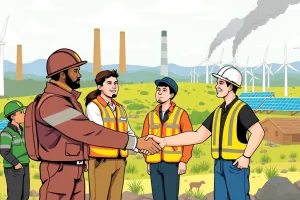
Distinguishing between climate justice and environmental justice is critical for effective policy and advocacy. Environmental justice ensures that local environmental regulations do not perpetuate inequality, while climate justice ensures that global climate policies do not exacerbate poverty or violate human rights. For example, a carbon pricing scheme that raises energy costs without compensating low-income households could be environmentally effective but socially unjust. Similarly, large-scale renewable energy projects that displace indigenous communities without consent can create new injustices. By integrating both frameworks, policymakers can design solutions that are both sustainable and equitable, such as just transition programs that provide economic opportunities for workers and communities affected by the shift away from fossil fuels.
The impact of these movements is seen in legal victories, policy changes, and increased public awareness. Environmental justice has led to stricter regulations on polluting industries in overburdened communities and greater community input in decision-making. Climate justice has influenced international negotiations, including the inclusion of loss and damage mechanisms in the Paris Agreement and the recognition of indigenous rights in climate action. Both movements have also inspired grassroots activism, youth-led climate strikes, and a growing demand for corporate accountability.
Connections to Other Systems
Climate justice and environmental justice are deeply connected to broader social, economic, and political systems. They intersect with human rights frameworks, as environmental degradation and climate change threaten the rights to life, health, food, water, and adequate housing. The concept of a “just transition” links these movements to labor rights and economic policy, advocating for the creation of decent work and social protection as economies shift toward sustainability. Both frameworks also challenge colonial legacies and global economic structures that concentrate wealth and power in the Global North while externalizing environmental costs to the Global South. Additionally, they align with the United Nations Sustainable Development Goals, particularly those related to poverty, inequality, clean energy, and climate action, highlighting the indivisibility of social and environmental progress.
Common Misconceptions
One common misconception is that climate justice and environmental justice are interchangeable terms. While they share core principles, environmental justice is primarily concerned with local and national environmental inequities, whereas climate justice specifically addresses the global and intergenerational dimensions of climate change. Another misconception is that climate justice only applies to developing countries; in reality, marginalized communities within wealthy nations also face disproportionate climate impacts and have limited resources to adapt. Some also mistakenly believe that environmental justice is solely about race, when it encompasses income, gender, age, and other factors. Finally, there is a misconception that climate justice ignores local environmental issues; in practice, many organizations work at the intersection of both, recognizing that climate action must be rooted in local struggles for environmental and social equity.
Examples
Environmental justice examples include the Flint water crisis in Michigan, where a predominantly Black and low-income city was exposed to lead-contaminated drinking water due to cost-cutting measures and institutional neglect. Another is “Cancer Alley” in Louisiana, an 85-mile stretch along the Mississippi River with a high concentration of petrochemical plants, where residents—mostly African American—suffer elevated rates of cancer and respiratory illnesses. Indigenous communities worldwide also face environmental injustices, such as the contamination of water sources from mining and oil extraction on their lands.
Climate justice examples include the plight of Small Island Developing States (SIDS) like Tuvalu and the Maldives, which contribute negligible greenhouse gas emissions yet face existential threats from sea-level rise. The concept of “climate refugees” highlights how climate-induced displacement disproportionately affects vulnerable populations. Youth-led climate lawsuits, such as those invoking the rights of future generations, and the demand for “loss and damage” compensation from wealthy nations to vulnerable countries are also key climate justice actions. These examples illustrate how both frameworks manifest in real-world struggles and the need for integrated solutions.
FAQ
What is climate justice?
Climate justice is a framework that addresses the ethical and human rights dimensions of climate change. It recognizes that those least responsible for greenhouse gas emissions—often low-income nations and marginalized groups—are the most vulnerable to climate impacts, and it calls for equitable solutions that rectify historical injustices and ensure participation in decision-making.
How does environmental justice differ from climate justice?
Environmental justice focuses on the fair treatment of all people with respect to environmental laws and policies, typically at local and national levels, addressing issues like pollution and toxic waste. Climate justice extends this to the global scale, specifically targeting the causes and consequences of climate change, and emphasizes historical responsibility and intergenerational equity.
Why does the distinction between climate justice and environmental justice matter?
The distinction matters because policies designed to address climate change can inadvertently create new environmental injustices if they do not consider local impacts and social equity. Recognizing both frameworks helps ensure that solutions are comprehensive, addressing both global climate goals and the needs of communities disproportionately affected by environmental harm.
References
- United States Environmental Protection Agency, 'Environmental Justice'
- Bali Principles of Climate Justice, 2002
- Schlosberg, D. (2007). Defining Environmental Justice: Theories, Movements, and Nature. Oxford University Press.
- IPCC, 'Climate Change 2022: Impacts, Adaptation and Vulnerability'
- First National People of Color Environmental Leadership Summit, 1991, 'Principles of Environmental Justice'