In brief
At a glance
Quick Facts
- Primary purpose
- To connect fragmented habitats and allow safe animal movement.
- Key benefit
- Maintains genetic diversity by enabling gene flow between populations.
- Common types
- Natural corridors (riverbanks, hedgerows) and artificial structures (wildlife overpasses, underpasses).
- Scale
- Can range from small tunnels for amphibians to continental-scale networks like the European Green Belt.
- Climate change role
- Allows species to shift their ranges in response to changing temperatures and conditions.
- Human safety benefit
- Reduces wildlife-vehicle collisions, saving animal and human lives.
- Economic value
- Corridors can lower costs from road accidents, support ecotourism, and maintain ecosystem services.
- Potential risk
- May inadvertently spread diseases or invasive species if not properly designed.
Key Takeaways
- Wildlife corridors are physical connections between isolated habitat patches that allow animals to move safely across landscapes.
- They counteract habitat fragmentation, a primary threat to biodiversity caused by roads, agriculture, and urban development.
- Corridors support genetic diversity, reduce wildlife-vehicle collisions, and help species adapt to climate change by enabling range shifts.
- Effective corridors can be natural (e.g., forest strips, riverbanks) or artificial (e.g., highway overpasses, underpasses) and require careful planning to maximize benefits and minimize risks.
What Is a Wildlife Corridor?
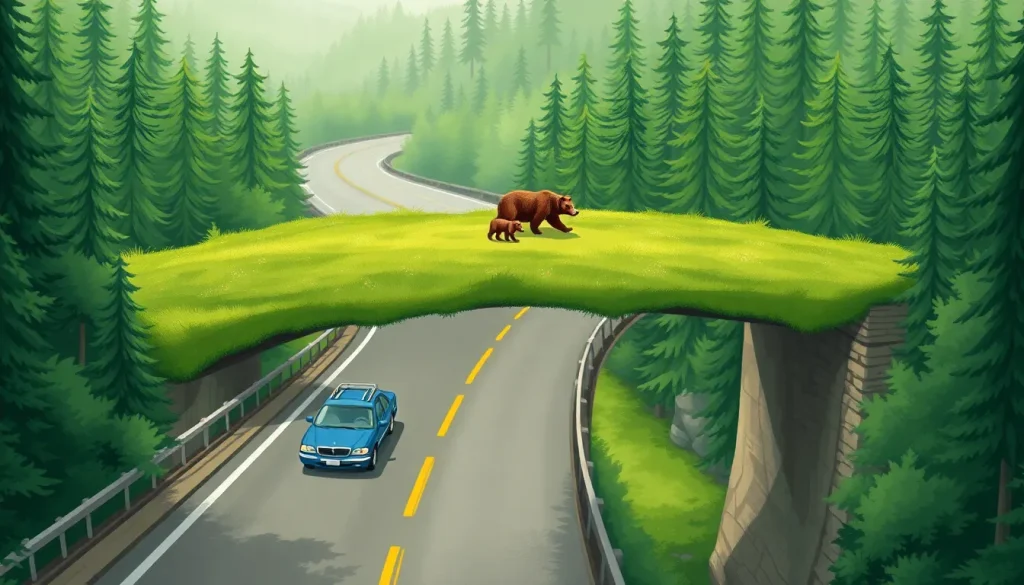
A wildlife corridor is a continuous or near-continuous strip of habitat that connects two or more larger habitat patches, allowing animals to move between them. These corridors can be natural features, such as riverine forests, hedgerows, or mountain ridges, or they can be human-made structures like green bridges, tunnels, and culverts designed specifically to facilitate safe animal passage across barriers like highways and canals.
The fundamental purpose of a wildlife corridor is to combat habitat fragmentation—the process by which large, continuous habitats are broken into smaller, isolated patches. Fragmentation is a leading cause of biodiversity loss worldwide, as it restricts animal movement, reduces access to food and mates, and increases the risk of local extinctions. By reconnecting these patches, corridors restore ecological connectivity, allowing animals to disperse, migrate, and maintain healthy populations. The concept is rooted in landscape ecology and conservation biology, and it has become a cornerstone of modern conservation planning.
How It Works
Wildlife corridors function by providing a safe, traversable route between habitat patches that would otherwise be isolated. The mechanism depends on the species and the landscape, but the core principle is the same: reducing the resistance animals face when moving across the landscape. In a fragmented environment, animals may need to cross roads, agricultural fields, or urban areas, which exposes them to dangers such as vehicle collisions, predation, or simply a lack of cover and food. A corridor mitigates these risks by offering a continuous or stepping-stone path of suitable habitat.
Corridors can be designed at different scales. At a local scale, a tunnel under a road might connect two patches of forest for small mammals and amphibians. At a regional scale, a network of protected areas linked by forested strips can allow large mammals like bears or wolves to roam across hundreds of kilometers. The effectiveness of a corridor depends on its width, length, vegetation structure, and how well it matches the needs of target species. For example, a corridor for butterflies might require specific host plants, while a corridor for deer might need sufficient cover to shield them from human disturbance. Connectivity can also be achieved through “stepping stones”—small habitat patches that serve as temporary resting and feeding sites for mobile species like birds.
Why It Matters
Wildlife corridors matter because they address one of the most pressing issues in conservation: the isolation of populations. When habitats are fragmented, animal populations become small and isolated, leading to inbreeding, loss of genetic diversity, and a higher risk of extinction from disease, natural disasters, or human pressures. Corridors facilitate gene flow by allowing individuals to move between populations, which maintains genetic health and increases resilience. This is critical for the long-term survival of many species, especially large mammals with extensive home ranges, such as elephants, tigers, and grizzly bears.
Beyond genetics, corridors support essential ecological processes. They enable seasonal migrations, allow recolonization of areas where local extinctions have occurred, and help species track suitable climates as conditions change. In an era of rapid climate change, corridors are increasingly seen as a vital adaptation tool, providing routes for species to shift their ranges toward cooler or more suitable habitats. Without such connectivity, many species would be trapped in deteriorating environments with no escape, leading to widespread declines and extinctions.
Importance and Impact
The importance of wildlife corridors extends beyond individual species to entire ecosystems and human communities. By maintaining biodiversity, corridors help preserve ecosystem services such as pollination, seed dispersal, pest control, and water purification. For example, corridors that connect forest patches can ensure that pollinating insects and seed-dispersing birds continue to move through agricultural landscapes, benefiting crop production and forest regeneration.
Corridors also reduce human-wildlife conflict. When animals are forced to cross roads, they are at risk of vehicle collisions, which can be dangerous for both wildlife and people. Well-designed crossing structures, such as wildlife overpasses and underpasses, have been shown to dramatically reduce roadkill and improve driver safety. In some regions, corridors have also helped mitigate conflicts between farmers and large herbivores by providing alternative routes that avoid croplands. The economic benefits of corridors—through reduced accident costs, enhanced ecotourism, and maintained ecosystem services—often outweigh the costs of their construction and maintenance.
Examples
One of the most famous examples of a wildlife corridor is the Banff Wildlife Crossings in Banff National Park, Canada. A series of overpasses and underpasses along the Trans-Canada Highway have significantly reduced wildlife-vehicle collisions and allowed species such as grizzly bears, wolves, elk, and cougars to move safely across the landscape. Monitoring has shown that these structures are used by a wide variety of animals, with some overpasses recording thousands of crossings per year.
In India, the Kanha-Pench corridor connects two tiger reserves, allowing tigers and other wildlife to disperse between protected areas. This corridor is essential for maintaining genetic diversity in the tiger population and preventing inbreeding. In Central America, the Mesoamerican Biological Corridor aims to link protected areas from Mexico to Panama, facilitating the movement of jaguars, tapirs, and countless other species. In Europe, the European Green Belt follows the former Iron Curtain, creating a network of habitats that stretch from the Barents Sea to the Black Sea. These examples illustrate how corridors can operate at different scales and in diverse ecological and political contexts.
Benefits, Limitations and Trade-offs
The primary benefit of wildlife corridors is the restoration of ecological connectivity, which supports biodiversity and ecosystem function. Corridors can also provide recreational and educational opportunities for people, as many are integrated into greenways and trail systems. However, corridors are not a panacea. Poorly designed corridors can become “ecological traps,” exposing animals to predators, poachers, or roads. They may also facilitate the spread of invasive species, diseases, or fire. For example, a corridor that connects two forest patches might also allow a pathogen to move between them, potentially harming wildlife populations.
There are also trade-offs in land use. Establishing corridors often requires setting aside land that could be used for agriculture, development, or other human activities. This can lead to conflicts with landowners and local communities. Effective corridor planning must therefore balance conservation goals with social and economic considerations, often through collaborative approaches that involve multiple stakeholders. Additionally, corridors are not a substitute for protecting large, intact habitats; they are a complementary strategy that works best when embedded in a broader landscape conservation plan.
What Individuals Can Do
Individuals can support wildlife corridors in several ways. On private property, landowners can create or maintain natural corridors by planting native vegetation, preserving hedgerows, and leaving buffer zones along streams and rivers. Even small-scale actions, like building a brush pile or leaving a strip of unmowed grass, can provide connectivity for insects, birds, and small mammals. Homeowners can also install wildlife-friendly fencing that allows animals to pass through, rather than solid barriers that block movement.
Beyond their own land, people can advocate for corridor projects in their communities by supporting local conservation organizations, participating in public planning processes, and voting for policies that fund habitat connectivity. Citizen science programs often monitor wildlife movement and roadkill, providing valuable data for corridor planning. Additionally, drivers can reduce wildlife-vehicle collisions by being alert in signed crossing zones and supporting measures like wildlife underpasses and overpasses. Education and awareness are also powerful tools: sharing information about the importance of corridors can build public support for these critical conservation strategies.
FAQ
What is a wildlife corridor?
A wildlife corridor is a strip of natural or artificial habitat that connects larger habitat patches, allowing animals to move safely between them. It helps counteract habitat fragmentation.
How do wildlife corridors work?
They provide a continuous or stepping-stone path of suitable habitat that reduces the risks animals face when crossing developed areas. This can be a forested strip, a riverbank, or a tunnel under a road.
Why do wildlife corridors matter?
They matter because they maintain genetic diversity, enable migration, reduce wildlife-vehicle collisions, and help species adapt to climate change. Without them, many populations would become isolated and face higher extinction risk.
References
- Hilty, J. A., Lidicker, W. Z., & Merenlender, A. M. (2006). Corridor Ecology: The Science and Practice of Linking Landscapes for Biodiversity Conservation. Island Press.
- International Union for Conservation of Nature (IUCN) guidelines on ecological corridors and connectivity conservation.
- Bennett, A. F. (2003). Linkages in the Landscape: The Role of Corridors and Connectivity in Wildlife Conservation. IUCN.