In brief
At a glance
Quick Facts
- Core principle
- Recycles nutrients from organic waste back into agriculture to close the loop.
- Key nutrients
- Nitrogen, phosphorus, and potassium are the primary focus.
- Phosphorus reserves
- Phosphate rock is a finite resource, with major reserves in Morocco and Western Sahara.
- Eutrophication cause
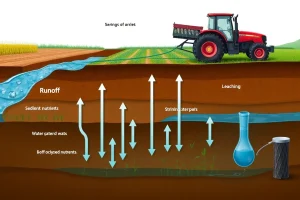
- Excess nutrients from agriculture and sewage cause algal blooms and dead zones in water bodies.
- Common methods
- Composting, anaerobic digestion, and struvite precipitation are widely used.
- Climate benefit
- Recycling nitrogen avoids the high energy use and emissions of synthetic fertilizer production.
- Food waste impact
- Globally, about one-third of food produced is lost or wasted, representing a major loss of nutrients.
- Policy support
- Circular nutrient management aligns with UN Sustainable Development Goals, especially SDG 12 (Responsible Consumption and Production) and SDG 14 (Life Below Water).
Key Takeaways
- Circular nutrient management recycles nutrients from organic waste back into agriculture, closing the loop and reducing waste.
- It contrasts with the linear “take-make-dispose” model by mimicking natural nutrient cycles.
- Key practices include composting, anaerobic digestion, and precision nutrient application.
- It addresses critical issues like finite phosphorus reserves, water pollution from nutrient runoff, and greenhouse gas emissions from synthetic fertilizer production.
What Is Circular Nutrient Management Explained?
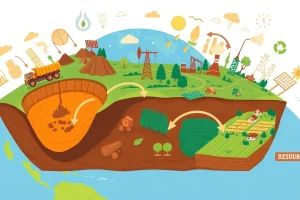
Circular nutrient management is an approach to handling nutrients—primarily nitrogen, phosphorus, and potassium—that aims to keep them in productive use for as long as possible, minimizing waste and environmental harm. It applies the principles of a circular economy to the flow of nutrients through food systems, agriculture, and waste management. In a linear system, nutrients are extracted (as synthetic fertilizers or mined minerals), used once to grow crops, consumed, and then discarded as waste, often ending up in landfills or water bodies where they cause pollution. Circular nutrient management, by contrast, seeks to recover these nutrients from organic waste streams—such as food scraps, animal manure, and wastewater—and return them to agricultural soils, thereby closing the loop.
This concept is grounded in the recognition that nutrients are finite and essential for life. Phosphorus, for example, is a non-renewable resource mined from phosphate rock, with global reserves concentrated in a few countries, raising concerns about long-term supply security. Nitrogen, while abundant in the atmosphere, requires energy-intensive industrial processes to convert into plant-available forms, contributing to greenhouse gas emissions. By recycling nutrients, circular systems reduce dependence on these inputs, lower environmental impacts, and promote more resilient food production. Circular nutrient management is a cornerstone of sustainable agriculture, waste management, and climate mitigation strategies.
Overview
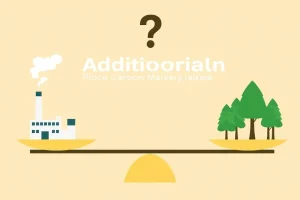
Circular nutrient management is a systemic approach that integrates agriculture, waste management, and sanitation to create closed-loop nutrient cycles. It draws inspiration from natural ecosystems, where nutrients are continuously recycled through processes like decomposition and plant uptake. In modern industrial systems, however, nutrient flows have become linear: crops are grown with synthetic fertilizers, harvested, transported to cities, consumed, and the resulting waste is often landfilled or incinerated, breaking the cycle. This linear model leads to resource depletion, environmental pollution, and economic inefficiencies.
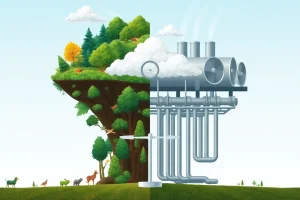
The concept has gained traction as part of the broader circular economy movement, which seeks to design out waste and keep materials in use. Circular nutrient management specifically targets the biogeochemical flows of nitrogen, phosphorus, and potassium, which are critical for food production. It encompasses a range of practices and technologies, from low-tech composting to advanced nutrient recovery from wastewater. The goal is to create a more sustainable and resilient food system that minimizes external inputs and environmental harm while maintaining soil fertility and productivity.
How It Works
Circular nutrient management operates through a series of interconnected steps that capture, treat, and reuse nutrients from organic waste. The process typically begins with the separation and collection of nutrient-rich waste streams, such as food scraps, animal manure, and human sewage. These materials are then processed using various technologies to stabilize the nutrients and make them safe and effective for agricultural use. Finally, the recovered nutrients are applied to croplands in a targeted manner to meet plant needs without excess.
Key methods include:
- Composting: Organic waste is decomposed aerobically to produce a stable, nutrient-rich soil amendment. This process reduces pathogens and odor while creating a product that improves soil structure and fertility.
- Anaerobic digestion: Microorganisms break down organic matter in the absence of oxygen, producing biogas (a renewable energy source) and digestate, a nutrient-rich residue that can be used as fertilizer.
- Struvite precipitation: Phosphorus and nitrogen are recovered from wastewater as struvite (magnesium ammonium phosphate), a slow-release fertilizer.
- Precision agriculture: Technologies like GPS-guided equipment and soil sensors enable farmers to apply nutrients only where and when needed, reducing runoff and waste.
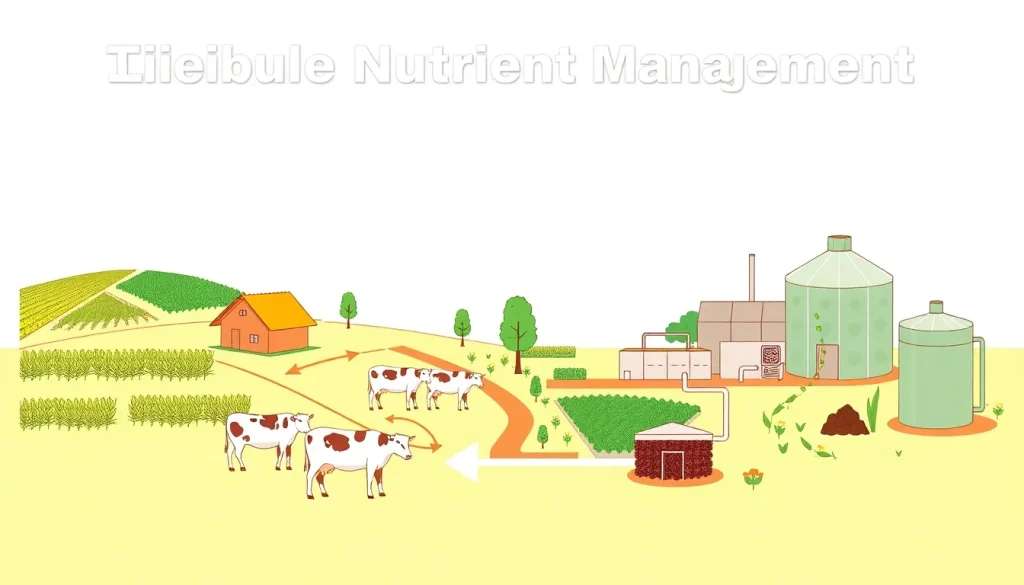
- Integrated crop-livestock systems: Manure from livestock is directly returned to croplands, creating a local nutrient loop.
These methods are often combined in a cascading approach, where waste from one process becomes input for another, maximizing resource efficiency.
Why It Matters
Circular nutrient management is critical for addressing several pressing global challenges. First, it helps conserve finite resources. Phosphorus, a key plant nutrient, is mined from phosphate rock, with economically viable reserves expected to last several decades at current consumption rates. Recycling phosphorus from waste reduces dependence on these limited deposits and insulates food systems from geopolitical supply risks. Second, it mitigates water pollution. Excess nutrients from agricultural runoff and untreated sewage cause eutrophication in water bodies, leading to algal blooms, dead zones, and biodiversity loss. By closing nutrient loops, circular systems prevent these pollutants from entering waterways.
Third, it contributes to climate change mitigation. The production of synthetic nitrogen fertilizers is energy-intensive and relies heavily on fossil fuels, releasing significant greenhouse gases. Recycling nitrogen from organic waste avoids these emissions. Additionally, practices like composting and anaerobic digestion can reduce methane emissions from landfills. Finally, circular nutrient management supports food security by maintaining soil fertility in a sustainable way, reducing the need for costly synthetic inputs, and building resilience against supply chain disruptions.
Benefits, Limitations and Trade-offs
Benefits:
- Environmental protection: Reduces nutrient pollution in water and air, lowers greenhouse gas emissions, and conserves finite resources.
- Economic savings: Farmers can reduce expenditures on synthetic fertilizers, and waste management costs can be offset by selling recovered nutrients or energy.
- Soil health: Organic nutrient sources improve soil organic matter, water retention, and microbial activity, enhancing long-term productivity.
- Resilience: Diversifying nutrient sources makes food systems less vulnerable to price shocks and supply disruptions.
Limitations and Trade-offs:
- Contamination risks: Organic waste may contain heavy metals, pathogens, or pharmaceuticals, requiring careful treatment and monitoring to ensure safety.
- Logistical challenges: Collecting, transporting, and processing dispersed organic waste can be complex and costly, especially in urban areas.
- Nutrient imbalances: Recycled nutrients may not match crop needs exactly, potentially leading to over- or under-application of certain elements.
- Social acceptance: There can be cultural or perceptual barriers to using human waste-derived fertilizers, requiring public education and trust-building.
- Energy use: Some recovery technologies, like struvite precipitation, require energy inputs, though often less than virgin fertilizer production.
Examples
Circular nutrient management is implemented at various scales around the world. In agriculture, integrated crop-livestock systems are a traditional example: manure from animals fertilizes crops, and crop residues feed animals, creating a local loop. Modern versions include large-scale anaerobic digesters on dairy farms that produce biogas and nutrient-rich digestate for fields.
In urban settings, community composting programs collect food scraps from households and businesses, turning them into compost for local gardens and farms. Some cities have invested in advanced wastewater treatment plants that recover phosphorus as struvite, which is then sold as fertilizer. For instance, several European and North American facilities now operate nutrient recovery systems that reduce maintenance costs (by preventing pipe scaling) and generate a revenue stream. On a smaller scale, home composting and the use of human urine as a fertilizer (after proper treatment) are gaining attention as decentralized solutions.
FAQ
What is circular nutrient management?
Circular nutrient management is a sustainable approach that recycles nutrients from organic waste back into agricultural production, reducing waste and pollution while conserving finite resources.
How does circular nutrient management work?
It works by collecting organic waste (food scraps, manure, wastewater), processing it through methods like composting or anaerobic digestion to recover nutrients, and then applying those nutrients to croplands in a targeted way.
Why does circular nutrient management matter?
It matters because it addresses resource scarcity (especially phosphorus), reduces water pollution from nutrient runoff, lowers greenhouse gas emissions from fertilizer production, and builds more resilient food systems.
References
- FAO. (2019). The State of Food and Agriculture: Moving Forward on Food Loss and Waste Reduction.
- European Commission. (2020). Circular Economy Action Plan: For a Cleaner and More Competitive Europe.
- Smil, V. (2000). Phosphorus in the Environment: Natural Flows and Human Interferences. Annual Review of Energy and the Environment, 25, 53-88.