In brief
At a glance
Quick Facts
- Definition
- Microplastics are plastic particles smaller than 5 mm, often invisible to the naked eye.
- Primary entry point
- Zooplankton and filter feeders ingest microplastics, introducing them to the food web.
- Trophic transfer
- Microplastics move from prey to predator, but biomagnification of particles is not consistently observed.
- Chemical vectors
- Microplastics can carry toxic chemicals like PCBs and BPA, which may biomagnify.
- Human exposure
- Seafood, drinking water, and even air are sources of microplastic ingestion for humans.
- Global distribution
- Microplastics have been found in remote areas, including Arctic ice and deep-sea sediments.
- Persistence
- Most plastics do not biodegrade; they fragment into smaller particles over centuries.
- Research gaps
- Effects of nanoplastics and long-term health impacts are still poorly understood.
Key Takeaways
- Microplastics enter food webs primarily through ingestion by small organisms like zooplankton, which mistake them for food.
- Trophic transfer occurs when predators consume prey containing microplastics, allowing particles to move up the food chain.
- Microplastics can carry toxic chemicals and pathogens, potentially causing physical and chemical harm to organisms at all levels.
- Evidence of microplastic contamination has been found in a wide range of species, including seafood consumed by humans.
- Reducing plastic pollution at its source is the most effective way to limit microplastic movement through food webs.
What Is How Microplastics Move Through Food Webs?
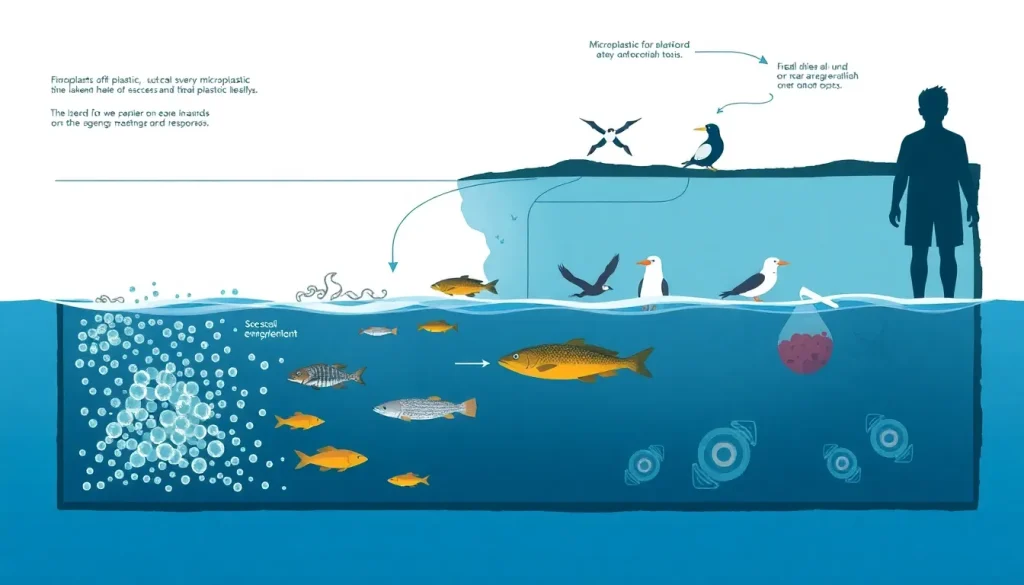
How microplastics move through food webs refers to the pathways and mechanisms by which tiny plastic particles, typically smaller than 5 millimeters, are transferred from one organism to another within an ecosystem. This movement is not a single event but a dynamic process that begins when microplastics are ingested by primary consumers—such as zooplankton, filter feeders, or detritivores—and continues as these organisms are eaten by predators, carrying the plastics upward through successive trophic levels. The concept encompasses both direct ingestion and indirect transfer, including the role of microplastics as vectors for other pollutants.
Understanding this movement is essential because it reveals how plastic pollution permeates entire ecosystems, not just isolated species. Microplastics are ubiquitous in marine, freshwater, and terrestrial environments, and their small size allows them to be mistaken for food or passively consumed. Once inside an organism, they can remain in the gut, be excreted, or translocate into tissues, potentially causing physical damage or releasing harmful additives. The study of microplastic movement through food webs integrates ecology, toxicology, and environmental science to assess risks to biodiversity and human health.
Overview
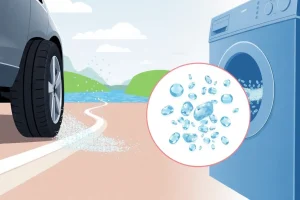
Microplastics originate from the breakdown of larger plastic debris, synthetic textiles, tire wear, and personal care products. They are found in oceans, rivers, soil, and even the atmosphere. In aquatic systems, microplastics are often similar in size and shape to natural food particles, making them readily available to a wide range of organisms. The movement through food webs is not linear; it involves complex interactions, including bioaccumulation (increase in concentration within an organism over time) and biomagnification (increase in concentration at higher trophic levels), though the evidence for biomagnification of microplastics themselves is mixed. Instead, the primary concern often centers on the chemicals that adhere to microplastics, which can biomagnify.
The process begins with primary producers and consumers. For example, phytoplankton can adsorb nanoplastics, and zooplankton ingest microplastics while filter-feeding. From there, microplastics are transferred to small fish, then to larger predatory fish, seabirds, marine mammals, and eventually humans. In terrestrial food webs, microplastics in soil can be ingested by earthworms, then by birds or small mammals, and so on. The movement is influenced by particle size, shape, polymer type, and the feeding ecology of organisms. Research continues to uncover the extent and consequences of this pervasive contamination.
How It Works
The movement of microplastics through food webs involves several key steps: entry, ingestion, retention or excretion, and trophic transfer. Entry occurs when microplastics are introduced into an environment—via runoff, wastewater, atmospheric deposition, or direct littering. Once present, they become part of the ambient particulate matter. Ingestion happens when organisms consume microplastics either intentionally (mistaking them for food) or unintentionally (while feeding on other materials). For instance, zooplankton use chemoreceptors and mechanoreceptors to detect food, but microplastics can mimic the size and texture of algae, leading to accidental ingestion.
After ingestion, microplastics may pass through the digestive system and be excreted, or they may be retained in the gut or translocated into tissues. Translocation—the movement of particles from the gut into the circulatory system or organs—has been observed in some species, particularly for smaller particles (nanoplastics). Retention can lead to physical effects like blockages or false satiation, while chemical effects arise from additives in the plastic or pollutants adsorbed from the environment. Trophic transfer occurs when a predator consumes prey containing microplastics. This can result in the accumulation of particles in the predator’s gut, though many are egested. The process repeats at each trophic level, potentially concentrating associated toxins in top predators.
Environmental and Human Impacts
Microplastics in food webs pose risks to both ecosystems and human health. In wildlife, ingested microplastics can cause physical damage, such as abrasion of digestive tissues, and lead to reduced feeding, energy depletion, and impaired reproduction. They can also act as vectors for persistent organic pollutants (POPs), heavy metals, and pathogens, which may desorb inside organisms and cause toxic effects. Studies have documented microplastic ingestion in hundreds of marine species, including fish, seabirds, turtles, and marine mammals, with some showing population-level consequences.
For humans, the primary exposure route is through the consumption of seafood, but microplastics have also been found in drinking water, salt, honey, and even air. While the direct health effects of ingesting microplastics are still under investigation, concerns include physical irritation, inflammation, and the potential for chemical transfer. Microplastics can carry hazardous substances like bisphenol A (BPA), phthalates, and flame retardants, which are known endocrine disruptors. The long-term impacts of chronic exposure remain uncertain, but the precautionary principle suggests minimizing intake is prudent.
What the Evidence Shows
Scientific research has confirmed the presence of microplastics in organisms across all trophic levels. In marine environments, studies have found microplastics in zooplankton, bivalves (mussels, oysters), crustaceans, fish, seabirds, and marine mammals. For example, a landmark study in the North Pacific showed that 35% of lanternfish—a key prey species—contained microplastics, which were then found in the stomachs of larger predatory fish. In terrestrial systems, microplastics have been detected in earthworms, chickens, and even in the feces of livestock fed with contaminated feed.
Laboratory experiments have demonstrated trophic transfer: when fish are fed microplastic-laden prey, the particles appear in their tissues. However, field evidence for biomagnification of plastic particles is inconsistent. While some studies report higher concentrations in predators, others find that microplastics are mostly egested and do not accumulate up the food chain. Instead, the focus has shifted to the transfer of associated chemicals, which can biomagnify. For instance, polychlorinated biphenyls (PCBs) adsorbed onto microplastics can accumulate in fatty tissues of top predators, including marine mammals and humans.
Solutions
Addressing the movement of microplastics through food webs requires a multi-pronged approach that targets the entire lifecycle of plastics. Source reduction is the most effective strategy: minimizing the production and use of single-use plastics, improving waste management infrastructure, and promoting circular economy models. Technologies such as advanced filtration in washing machines can capture synthetic fibers, while better tire design can reduce road wear particles. Policy measures like bans on microbeads in cosmetics have already shown success in reducing primary microplastic pollution.
At the ecosystem level, solutions include improving wastewater treatment to capture microplastics before they enter waterways, and developing biodegradable alternatives that do not persist in the environment. Cleanup efforts, such as beach cleanups and river interception devices, can remove larger plastics before they fragment into microplastics. However, once microplastics are dispersed in the open ocean or soil, removal is extremely challenging. Therefore, prevention remains the most effective and economically viable approach. International cooperation and public awareness are critical to driving systemic change.
Data Limitations and Uncertainties
Despite growing research, significant data gaps remain in understanding microplastic movement through food webs. One major challenge is the lack of standardized methods for sampling, extracting, and identifying microplastics, which makes comparing studies difficult. Many laboratory experiments use concentrations of microplastics that are higher than those typically found in the environment, potentially overestimating effects. Additionally, most research has focused on marine systems, with less known about freshwater and terrestrial food webs.
Uncertainties also exist regarding the long-term ecological and human health impacts. While laboratory studies show adverse effects on individual organisms, scaling these to population or ecosystem levels is complex. The role of nanoplastics—particles smaller than 1 micrometer—is particularly poorly understood due to analytical limitations. Furthermore, the transfer of chemicals associated with microplastics versus those from other environmental sources is difficult to disentangle. Ongoing research aims to fill these gaps and improve risk assessments.
FAQ
What are microplastics?
Microplastics are small plastic particles less than 5 millimeters in size. They can be primary (manufactured small, like microbeads) or secondary (from the breakdown of larger plastic items).
How do microplastics enter the food web?
Microplastics enter the food web when they are ingested by small organisms such as zooplankton, which mistake them for food. They are then passed up the food chain as these organisms are eaten by predators.
Do microplastics harm humans?
The full extent of harm to humans is still being studied. Potential risks include physical irritation, inflammation, and exposure to toxic chemicals that adhere to plastics. However, definitive evidence of widespread health effects is not yet established.
References
- GESAMP (2015). Sources, fate and effects of microplastics in the marine environment: a global assessment. (IMO/FAO/UNESCO-IOC/UNIDO/WMO/IAEA/UN/UNEP/UNDP Joint Group of Experts on the Scientific Aspects of Marine Environmental Protection).
- Lusher, A. L., Hollman, P. C. H., & Mendoza-Hill, J. J. (2017). Microplastics in fisheries and aquaculture: status of knowledge on their occurrence and implications for aquatic organisms and food safety. FAO Fisheries and Aquaculture Technical Paper No. 615.
- Science Advice for Policy by European Academies (SAPEA). (2019). A Scientific Perspective on Microplastics in Nature and Society. Berlin: SAPEA.