In brief
At a glance
Quick Facts
- Definition
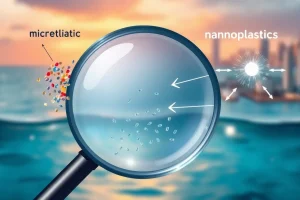
- Microplastics are plastic particles smaller than 5 millimeters, often categorized as primary (manufactured small) or secondary (from breakdown of larger plastics).
- Entry point
- Microplastics enter food webs primarily through ingestion by filter feeders and plankton at the base of the food chain.
- Trophic transfer
- Microplastics can move from prey to predator, a process known as trophic transfer, observed in many aquatic and terrestrial species.
- Bioaccumulation potential
- While microplastics themselves may not biomagnify, associated toxic chemicals can accumulate in fatty tissues and increase in concentration up the food chain.
- Human exposure
- Humans are exposed to microplastics through seafood, drinking water, salt, and even airborne particles, though health effects are still under study.
- Global distribution
- Microplastics have been found in all marine environments, from the Arctic to the deep sea, and in terrestrial food webs including soil organisms and birds.
- Particle size matters
- Smaller microplastics, especially nanoplastics, can cross biological barriers and enter tissues, potentially causing more harm.
- Research challenges
- Detecting and quantifying microplastics in organisms is difficult due to methodological limitations, leading to uncertainties in exposure levels.
Key Takeaways
- Microplastics enter food webs primarily through ingestion by organisms at the base of the food chain, such as zooplankton and filter feeders, and are then transferred to higher trophic levels through predation.
- Trophic transfer of microplastics has been documented in both aquatic and terrestrial ecosystems, with particles found in a wide range of species, from invertebrates to large mammals and humans.
- While microplastics themselves may not consistently biomagnify, the toxic chemicals they carry can accumulate in fatty tissues and increase in concentration up the food chain, posing potential health risks.
- Understanding the movement of microplastics through food webs is critical for assessing ecological and human health risks, yet significant data gaps remain regarding long-term effects and exposure levels.
What Is How Microplastics Move Through Food Webs?
How microplastics move through food webs refers to the pathways and processes by which tiny plastic particles, typically less than 5 millimeters in size, are ingested by organisms and transferred from one trophic level to another through consumption. This movement is a key component of the broader issue of plastic pollution, as it highlights how these persistent contaminants can permeate entire ecosystems, from the smallest plankton to top predators, including humans. The concept encompasses not only the physical transfer of particles but also the potential for associated chemical additives and environmental pollutants to hitchhike on microplastics and accumulate in biological tissues.
Microplastics are categorized as either primary—manufactured at a microscopic size for use in products like cosmetics or industrial abrasives—or secondary, resulting from the fragmentation of larger plastic debris due to weathering, UV radiation, and mechanical forces. Once in the environment, these particles are readily available to a wide range of organisms. The movement through food webs is not a simple linear process; it involves complex interactions such as ingestion, egestion, trophic transfer, and sometimes translocation across biological barriers. Understanding this movement is essential for evaluating the ecological and human health implications of global plastic contamination.
How It Works
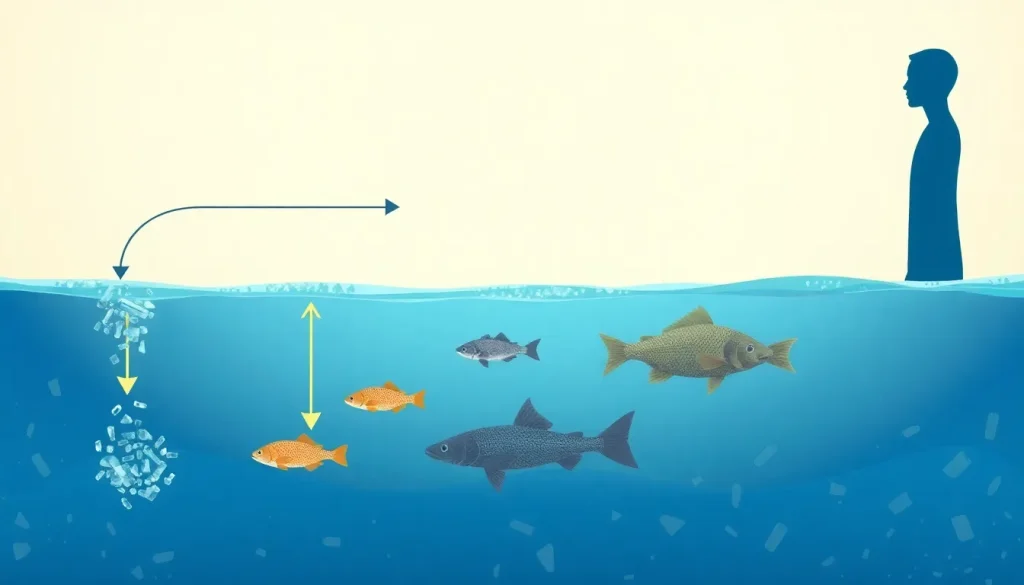
The movement of microplastics through food webs begins at the base of the food chain. Primary producers and low-trophic-level organisms, such as phytoplankton, zooplankton, and filter-feeding invertebrates (e.g., mussels, oysters), inadvertently ingest microplastics while feeding. These organisms often cannot distinguish between plastic particles and their natural food sources due to similarities in size, shape, and even color. Once ingested, microplastics can remain in the gut, be egested, or in some cases, translocate into tissues. When these contaminated organisms are consumed by predators, the microplastics are transferred to the next trophic level.
This process, known as trophic transfer, has been demonstrated in numerous laboratory and field studies. For example, microplastics ingested by zooplankton can be passed to small fish, which are then eaten by larger fish, seabirds, or marine mammals. The efficiency of transfer depends on factors such as particle size, shape, polymer type, and the feeding ecology of the organisms involved. Smaller particles, particularly nanoplastics (less than 1 micrometer), may cross gut barriers and enter the circulatory system, potentially reaching organs and muscles, where they can be retained longer and transferred more effectively to predators. In terrestrial systems, microplastics in soil can be ingested by earthworms and other detritivores, then move up to birds, small mammals, and eventually larger predators.
It is important to note that not all ingested microplastics are retained; many are egested within hours or days. However, chronic exposure can lead to a steady-state accumulation in the gut, and the presence of microplastics in the food web means that even if individual particles are transient, the continuous input ensures a persistent burden across trophic levels.
What the Evidence Shows
Evidence for the movement of microplastics through food webs comes from a combination of field observations and controlled laboratory experiments. Field studies have documented microplastics in the digestive tracts of organisms across all trophic levels, from zooplankton in the open ocean to fish, seabirds, turtles, and marine mammals. For instance, microplastics have been found in commercially important fish species, such as cod, mackerel, and shellfish, confirming that these particles are present in the human food supply. In terrestrial ecosystems, microplastics have been detected in earthworms, chickens, and even in the feces of large herbivores, indicating widespread ingestion and potential transfer.
Laboratory experiments have provided direct evidence of trophic transfer. In one common experimental design, prey organisms (e.g., brine shrimp or mussels) are exposed to fluorescently labeled microplastics and then fed to predators (e.g., crabs or fish). The presence of the labeled particles in the predators’ tissues or gut contents confirms transfer. Such studies have shown that microplastics can move from algae to zooplankton to fish, and from soil invertebrates to birds. However, the extent to which microplastics biomagnify—increase in concentration at higher trophic levels—remains unclear. Some studies suggest that microplastic concentrations do not consistently increase with trophic level, likely due to rapid egestion and dilution by other food items. In contrast, the chemical additives and adsorbed pollutants on microplastics may indeed biomagnify, as they can be released in the gut and accumulate in fatty tissues.
Environmental and Human Impacts
The movement of microplastics through food webs has significant environmental impacts. At the organism level, ingested microplastics can cause physical damage, such as abrasion of the gut lining, blockage of the digestive tract, and false satiation, leading to reduced feeding and energy reserves. These effects can impair growth, reproduction, and survival. At the population and ecosystem levels, the transfer of microplastics can alter species interactions and nutrient cycling. For example, if key prey species are affected, predator populations may decline, or if microplastics alter the behavior of organisms, food web dynamics could shift.
For humans, the primary concern is the ingestion of microplastics through seafood, drinking water, salt, and even airborne particles. While the human body can eliminate most ingested microplastics, a fraction may be retained in the gut or translocate to other tissues. The health implications are not yet fully understood, but potential risks include inflammation, oxidative stress, and the release of toxic chemicals. Microplastics can carry hazardous substances such as bisphenol A (BPA), phthalates, and persistent organic pollutants (POPs) that are known endocrine disruptors or carcinogens. The movement of microplastics through food webs thus represents a direct pathway for human exposure to these harmful agents.
Main Causes or Drivers
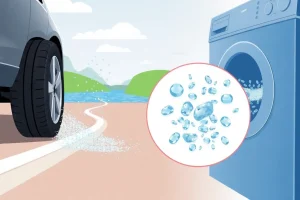
The primary driver of microplastic movement through food webs is the massive and continuous input of plastic waste into the environment. Global plastic production has increased exponentially since the mid-20th century, and a significant portion ends up in oceans, rivers, soils, and the atmosphere. Poor waste management, littering, and the breakdown of larger plastic items (e.g., bags, bottles, fishing gear) generate secondary microplastics. Primary microplastics are released directly from sources such as synthetic textile fibers during washing, tire wear particles from roads, and microbeads in personal care products (though many countries have banned microbeads).
Once in the environment, the small size and buoyancy of many microplastics make them readily available to a wide range of organisms. Their resemblance to natural prey, such as plankton or sediment particles, increases the likelihood of ingestion. Additionally, the formation of a biofilm—a coating of microbes and organic matter—on microplastics can make them smell and taste like food, further attracting organisms. The persistence of plastics, which can take hundreds of years to degrade, ensures that microplastics remain in ecosystems and continue to enter food webs over long timescales.
Why It Matters
Understanding how microplastics move through food webs matters because it reveals the extent to which human-made pollutants have infiltrated the natural world and the potential consequences for life on Earth. Microplastics are not just an aesthetic or waste problem; they are a pervasive contaminant that can affect organisms at every level of biological organization. The movement through food webs means that even species in remote, seemingly pristine environments are exposed, as microplastics are transported by ocean currents, wind, and migrating animals.
From a human perspective, the presence of microplastics in food webs directly links plastic pollution to food safety and public health. As top consumers in many food chains, humans are at the receiving end of this contamination. While the full health effects are still under investigation, the precautionary principle suggests that reducing microplastic input into the environment is a prudent course of action. Moreover, the issue highlights the interconnectedness of ecosystems and the far-reaching consequences of unsustainable consumption and waste practices.
What Individuals Can Do
Individuals can take several steps to reduce their contribution to microplastic pollution and limit personal exposure. Reducing the use of single-use plastics, such as bags, bottles, and packaging, helps decrease the overall plastic waste that can break down into microplastics. Choosing clothing made from natural fibers instead of synthetic materials can reduce the release of microfibers during washing. Installing a microfiber filter on washing machines or using a laundry bag designed to capture microfibers can also prevent these particles from entering waterways.
Proper disposal of waste, including recycling and participating in community clean-up efforts, minimizes the amount of plastic that reaches the environment. On the consumption side, individuals can reduce their intake of microplastics by opting for fresh, unpackaged foods, drinking filtered tap water instead of bottled water, and avoiding personal care products containing microbeads. While individual actions alone cannot solve the problem, they contribute to a broader cultural shift and reduce the overall burden of microplastics in food webs.
FAQ
What are microplastics and how do they enter food webs?
Microplastics are tiny plastic particles less than 5 mm in size. They enter food webs when organisms at the base, such as zooplankton or filter feeders, mistake them for food and ingest them. From there, they are passed up the food chain as predators consume contaminated prey.
How do microplastics move through different trophic levels?
Microplastics move through trophic levels via predation. For example, plankton ingests microplastics, small fish eat the plankton, larger fish eat the small fish, and so on. This process, called trophic transfer, can lead to microplastics accumulating in top predators, including humans.
Why does the movement of microplastics through food webs matter?
It matters because microplastics can cause physical harm to organisms, such as internal abrasions and blockages. They also carry toxic chemicals that can be released into tissues, potentially affecting growth, reproduction, and survival. For humans, the health implications of consuming microplastics through seafood and other sources are still being studied but are a growing concern.
References
- GESAMP (2015). Sources, fate and effects of microplastics in the marine environment: a global assessment. International Maritime Organization.
- Wright, S. L., Thompson, R. C., & Galloway, T. S. (2013). The physical impacts of microplastics on marine organisms: a review. Environmental Pollution, 178, 483-492.
- EFSA Panel on Contaminants in the Food Chain (2016). Presence of microplastics and nanoplastics in food, with particular focus on seafood. EFSA Journal, 14(6), 4501.