In brief
At a glance
Quick Facts
- Primary raw material for conventional plastics
- Petroleum (crude oil) and natural gas
- Primary raw materials for bioplastics
- Corn starch, sugarcane, potato starch, cellulose, and other biomass
- Biodegradability of conventional plastics
- Generally non-biodegradable; can persist in the environment for centuries
- Biodegradability of bioplastics
- Varies widely; some are biodegradable under industrial composting conditions, others are not biodegradable at all
- Global production share of bioplastics
- Approximately 1% of total plastics production (as of the early 2020s)
- Common bioplastic types
- PLA (polylactic acid), PHA (polyhydroxyalkanoates), starch blends, bio-PE, bio-PET
- Common conventional plastic types
- PE (polyethylene), PP (polypropylene), PET (polyethylene terephthalate), PVC (polyvinyl chloride), PS (polystyrene)
Key Takeaways
- Bioplastics are not a single material; they encompass a diverse family of plastics that are either bio-based, biodegradable, or both, while conventional plastics are derived from fossil fuels and are typically non-biodegradable.
- The environmental impact of bioplastics versus conventional plastics depends on the entire lifecycle, including raw material sourcing, production, use, and end-of-life management, not just the feedstock.
- Most bioplastics are not designed to biodegrade in natural environments or home compost; they often require industrial composting facilities to break down properly.
- Bioplastics currently represent a small fraction of the global plastics market, and their adoption faces challenges such as higher costs, limited recycling infrastructure, and potential competition with food production.
What Is Bioplastics vs Conventional Plastics?
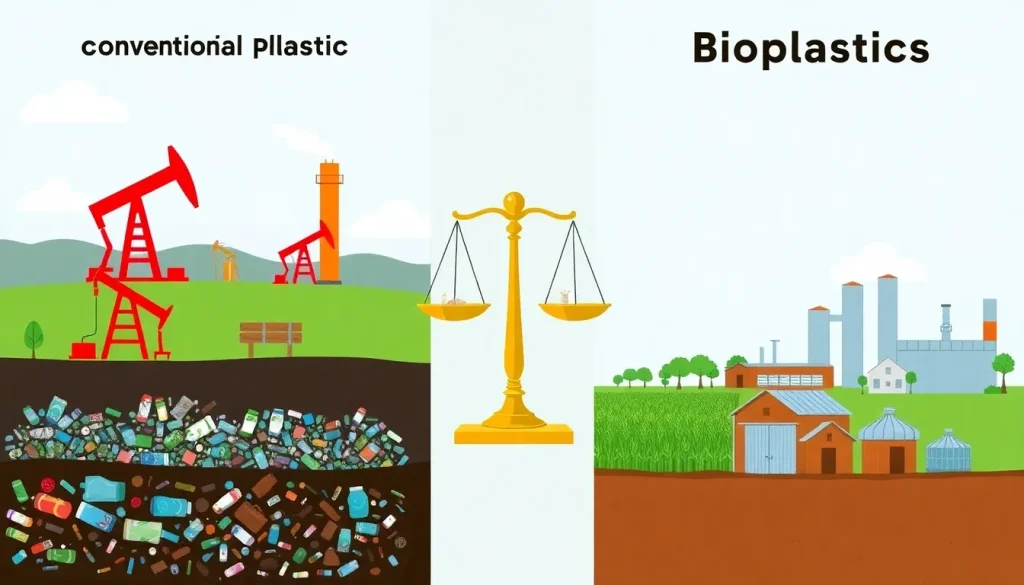
Bioplastics and conventional plastics are two broad categories of plastic materials distinguished primarily by their raw material sources and, in some cases, their end-of-life behavior. Conventional plastics are derived from non-renewable fossil fuels—primarily crude oil and natural gas—and are typically designed for durability, making them resistant to degradation. In contrast, bioplastics are either made from renewable biological sources (such as corn starch, sugarcane, or cellulose), engineered to be biodegradable, or both. However, the term “bioplastic” is often misunderstood: not all bio-based plastics are biodegradable, and not all biodegradable plastics are bio-based. For example, bio-polyethylene (bio-PE) is chemically identical to conventional polyethylene but is produced from sugarcane ethanol, while some biodegradable plastics are made from fossil fuels.
The distinction matters because the choice between bioplastics and conventional plastics involves trade-offs in resource use, carbon footprint, recyclability, and end-of-life options. Conventional plastics are valued for their low cost, versatility, and durability, but they contribute to fossil fuel depletion and persistent environmental pollution. Bioplastics offer potential benefits such as reduced reliance on finite resources and lower greenhouse gas emissions during production, yet they also raise concerns about land use, competition with food crops, and the need for specialized waste management systems. Understanding these differences is essential for evaluating the role of plastics in a sustainable economy.
Overview
Plastics have become integral to modern life, with global production exceeding 400 million metric tons annually. The vast majority of these are conventional plastics made from petrochemicals, which are valued for their strength, light weight, and low cost. However, growing awareness of plastic pollution, climate change, and resource scarcity has spurred interest in bioplastics as an alternative. Bioplastics encompass a wide range of materials, including bio-based but non-biodegradable plastics like bio-PE and bio-PET, as well as biodegradable plastics like polylactic acid (PLA) and polyhydroxyalkanoates (PHA). Some bioplastics are both bio-based and biodegradable, while others are only one or the other.
The global bioplastics market remains small, accounting for roughly one percent of total plastics production, but it is expanding as technology improves and demand for sustainable materials grows. Key applications include packaging, agriculture, textiles, and consumer goods. Despite their promise, bioplastics are not a panacea; their environmental performance depends on factors such as agricultural practices, energy sources in manufacturing, and the availability of appropriate waste management infrastructure. A nuanced comparison with conventional plastics is necessary to avoid oversimplified claims.
How It Works
The production of conventional plastics begins with the extraction and refining of crude oil or natural gas to obtain monomers like ethylene and propylene. These monomers are polymerized into long chains to form materials such as polyethylene (PE), polypropylene (PP), and polyvinyl chloride (PVC). The process is energy-intensive and relies on non-renewable resources. In contrast, bioplastics are produced through various routes. Bio-based plastics like bio-PE are made by fermenting sugars from crops into ethanol, which is then dehydrated to ethylene and polymerized—resulting in a chemically identical product to fossil-based PE. Biodegradable bioplastics, such as PLA, are produced by fermenting plant sugars into lactic acid, which is then polymerized. Other bioplastics, like PHA, are synthesized directly by microorganisms.
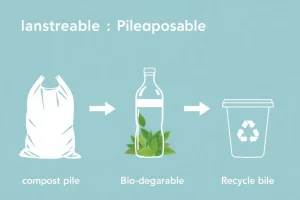
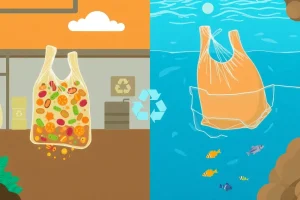
End-of-life pathways differ significantly. Conventional plastics are designed for durability and can persist in the environment for hundreds of years, fragmenting into microplastics. They are primarily managed through landfilling, incineration, or mechanical recycling, though recycling rates remain low globally. Bioplastics labeled as biodegradable require specific conditions to break down—typically high temperature and humidity found only in industrial composting facilities. In home compost or marine environments, many bioplastics degrade very slowly or not at all. Bio-based non-biodegradable plastics, like bio-PE, can be recycled alongside their fossil-based counterparts but are otherwise identical in their environmental persistence.
Environmental and Human Impacts
The environmental impacts of bioplastics versus conventional plastics are complex and depend on the entire lifecycle. Conventional plastics are associated with significant greenhouse gas emissions from fossil fuel extraction and refining, as well as persistent pollution in oceans and ecosystems. They contribute to the depletion of non-renewable resources and can release toxic additives during degradation. In contrast, bioplastics often have a lower carbon footprint during production because the plants used as feedstocks absorb CO2 as they grow. However, this benefit can be offset by land-use change, intensive agriculture, and the energy used in processing. Some bioplastics, particularly those designed to be biodegradable, may reduce long-term litter if properly managed, but they can also contaminate conventional recycling streams and do not readily degrade in landfills.
Human health impacts also differ. Conventional plastics can leach harmful chemicals like bisphenol A (BPA) and phthalates, which are endocrine disruptors. Bioplastics generally do not contain these specific additives, but they may include other chemicals, and their safety profiles are less studied. The production of bioplastics can involve pesticides and fertilizers, which have their own environmental and health effects. Overall, a comprehensive lifecycle assessment is needed to compare specific products, as there is no universal advantage to either category.
Benefits, Limitations and Trade-offs
Bioplastics offer several potential benefits: they can reduce dependence on finite fossil resources, lower greenhouse gas emissions during production, and provide options for biodegradability in controlled settings. They may also support rural economies by creating demand for agricultural feedstocks. However, these benefits come with limitations. Bioplastics are often more expensive to produce than conventional plastics, which can hinder market adoption. Their mechanical and thermal properties may not match those of conventional plastics in all applications, limiting their use in certain products. Additionally, the infrastructure for collecting and processing biodegradable bioplastics is underdeveloped in many regions, leading to confusion and improper disposal.
Conventional plastics, on the other hand, benefit from decades of optimization, resulting in low-cost, high-performance materials with established recycling systems. Yet their environmental drawbacks are severe: they contribute to climate change, ocean pollution, and microplastic contamination. The trade-offs between the two depend on the specific application and local waste management capabilities. For instance, a bio-based non-biodegradable bottle may have a lower carbon footprint but still contribute to litter if not recycled. A biodegradable bag may break down in an industrial composter but cause problems if mixed with conventional recycling. Decision-making requires a holistic view of the entire system.
Common Misconceptions
FAQ
What is the difference between bioplastics and conventional plastics?
Bioplastics are made from renewable biological sources or designed to be biodegradable, while conventional plastics are made from fossil fuels and are typically non-biodegradable. However, not all bioplastics are biodegradable, and some biodegradable plastics are made from fossil fuels.
How are bioplastics made?
Bioplastics are produced by converting biomass such as corn starch or sugarcane into monomers through fermentation or chemical processes, which are then polymerized. For example, PLA is made by fermenting sugars into lactic acid and polymerizing it.
Why does the comparison between bioplastics and conventional plastics matter?
The choice affects resource depletion, greenhouse gas emissions, waste management, and environmental pollution. Understanding the trade-offs helps consumers, businesses, and policymakers make informed decisions toward a more sustainable materials economy.
References
- European Bioplastics. (n.d.). Bioplastics facts and figures. Retrieved from https://www.european-bioplastics.org/
- ASTM International. (n.d.). ASTM D6400 - Standard Specification for Labeling of Plastics Designed to be Aerobically Composted in Municipal or Industrial Facilities.
- Narayan, R. (2011). Carbon footprint of bioplastics using biocarbon content analysis and life-cycle assessment. MRS Bulletin, 36(9), 716-721.