In brief
At a glance
Quick Facts
- Definition
- Urban mining recovers valuable materials from urban waste streams, treating cities as above-ground mines.
- Key materials recovered
- Metals (gold, copper, aluminum, rare earths), plastics, glass, concrete, and aggregates.
- Primary waste sources
- Electronic waste (e-waste), construction and demolition debris, end-of-life vehicles, and municipal solid waste.
- Gold in e-waste
- One metric ton of discarded mobile phones can contain more gold than one metric ton of gold ore.
- Energy savings
- Recycling aluminum uses up to 95% less energy than primary production from bauxite.
- Environmental benefit
- Reduces need for virgin mining, lowering habitat destruction, water pollution, and carbon emissions.
- Economic potential
- Creates local jobs in collection, sorting, and processing, and provides a domestic supply of critical raw materials.
- Challenges
- Complex product designs, hazardous substances, high processing costs, and fluctuating commodity prices.
Key Takeaways
- Urban mining treats cities as above-ground mines, extracting valuable materials from waste streams such as electronic devices, construction debris, and municipal solid waste.
- It reduces dependence on traditional mining, which is often environmentally destructive and energy-intensive, by recovering metals, plastics, and other resources already in circulation.
- Effective urban mining requires advanced sorting, separation, and processing technologies, as well as robust collection systems and supportive policies.
- While it offers significant environmental and economic benefits, challenges include complex product designs, hazardous substances, and the need for consumer participation.
What Is Urban Mining: Recovering Materials From Cities?
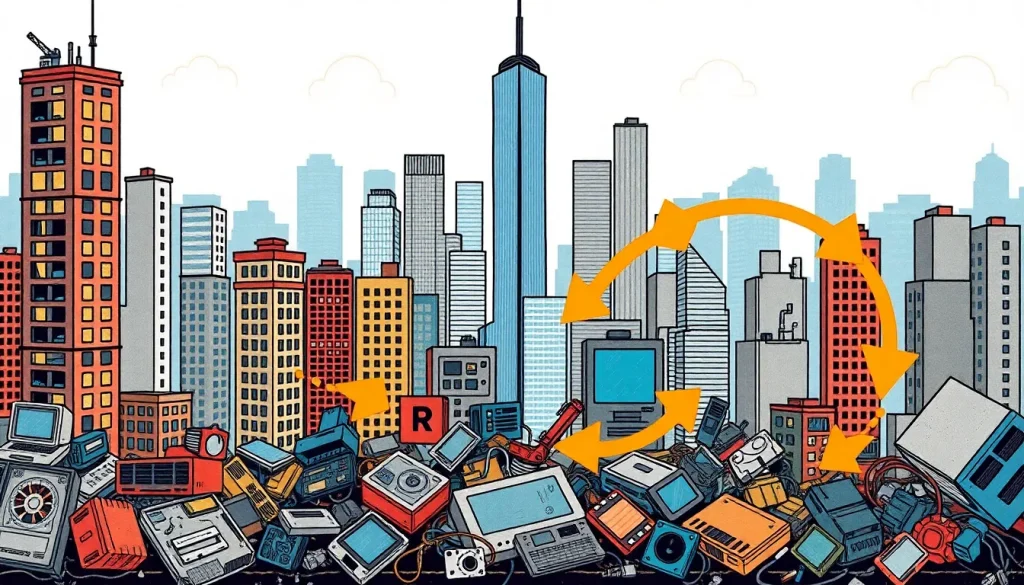
Urban mining is the process of recovering valuable materials—such as metals, minerals, and other resources—from the waste generated in urban environments. Unlike traditional mining, which extracts raw materials from the earth, urban mining treats cities as above-ground mines, targeting the vast quantities of materials embedded in buildings, infrastructure, vehicles, and consumer goods, especially electronic waste (e-waste). The concept extends beyond simple recycling by emphasizing the systematic recovery of materials that would otherwise be lost to landfills or incineration, thereby closing material loops and reducing the need for virgin resource extraction.
Urban mining is a core component of the circular economy, a model that aims to keep resources in use for as long as possible. It encompasses a range of activities, from the collection and dismantling of end-of-life products to the advanced separation and purification of constituent materials. By recovering metals like gold, copper, aluminum, and rare earth elements from discarded electronics, or by reclaiming steel and concrete from demolished buildings, urban mining transforms waste into a valuable resource. This approach not only addresses resource scarcity but also mitigates the environmental and social harms associated with primary mining, such as habitat destruction, water pollution, and greenhouse gas emissions.
Overview
The concept of urban mining emerged from the recognition that modern cities contain enormous stocks of materials, often in concentrations far higher than those found in natural ores. For example, a metric ton of discarded mobile phones can contain more gold than a metric ton of gold ore. As global population and consumption continue to rise, the accumulation of materials in the built environment—referred to as the “anthropogenic stock”—has grown to rival the reserves left in the ground. Urban mining seeks to tap into this stock, turning linear waste streams into circular resource flows.
Urban mining is not limited to high-tech metals. It also includes the recovery of construction and demolition waste, such as concrete, bricks, steel, and timber, as well as materials from end-of-life vehicles, batteries, and packaging. The practice is supported by a range of technologies, from manual disassembly and magnetic separation to advanced hydrometallurgical and pyrometallurgical processes. Policy frameworks, such as extended producer responsibility (EPR) and landfill bans, play a crucial role in incentivizing urban mining and ensuring that recovered materials re-enter the manufacturing cycle.
How It Works
Urban mining involves a series of steps that transform waste into reusable raw materials. The process typically begins with collection and pre-processing, where waste streams are gathered and sorted. For e-waste, this may involve manual dismantling to remove hazardous components and separate high-value parts. For construction and demolition waste, materials are crushed, screened, and sorted by type. Advanced sorting technologies, such as optical sensors, eddy current separators, and density-based methods, are then used to isolate specific materials.
Once separated, materials undergo further processing to extract target resources. Metals are often recovered through smelting or chemical leaching, while plastics may be shredded, cleaned, and pelletized for reuse. Precious metals like gold, silver, and palladium are extracted from electronic circuit boards using hydrometallurgical or electrochemical methods. The efficiency of urban mining depends on the purity of recovered materials and the ability to reintegrate them into manufacturing supply chains without compromising quality. This requires close collaboration between waste management companies, recyclers, and manufacturers.
Importance and Impact
Urban mining plays a critical role in addressing resource scarcity and reducing environmental degradation. Traditional mining is associated with deforestation, soil erosion, water contamination, and significant carbon emissions. By recovering materials already in use, urban mining lessens the demand for new extraction, thereby reducing these impacts. It also decreases the volume of waste sent to landfills and incinerators, which are major sources of pollution and greenhouse gases.
Economically, urban mining can create local jobs in collection, sorting, and processing, and it provides a domestic source of critical raw materials, reducing dependence on imports. For industries, it offers a more stable and potentially lower-cost supply of materials, insulating them from price volatility in global commodity markets. Moreover, urban mining supports the transition to a circular economy, where materials are kept in use for as long as possible, generating value and minimizing waste.
Benefits, Limitations and Trade-offs
Urban mining offers several clear benefits. It conserves natural resources, reduces energy consumption compared to primary production, and lowers greenhouse gas emissions. For example, recycling aluminum requires up to 95% less energy than producing it from bauxite ore. It also reduces the environmental footprint of waste disposal and can provide a secure supply of critical materials, such as rare earth elements, which are essential for modern technologies but often sourced from a limited number of countries.
However, urban mining also faces significant limitations and trade-offs. The collection and processing of waste can be logistically complex and costly, especially for dispersed or low-concentration materials. Many products are not designed for easy disassembly or material recovery, making it difficult to extract pure materials. Hazardous substances, such as lead, mercury, and flame retardants, must be carefully managed to avoid environmental and health risks. Additionally, the economic viability of urban mining depends on fluctuating commodity prices and the availability of efficient technologies. There is also a risk that focusing on urban mining could divert attention from the more fundamental need to reduce overall consumption and improve product design for longevity and repairability.
What Individuals Can Do
Individuals play a vital role in enabling urban mining by properly disposing of end-of-life products and supporting circular practices. The most direct action is to ensure that electronic waste, batteries, and other recyclable materials are taken to certified collection points rather than thrown in the trash. Many municipalities and retailers offer take-back programs for electronics and batteries. Before discarding, individuals can also explore repair, resale, or donation options to extend product lifespans.
Consumers can influence urban mining by making informed purchasing decisions. Choosing products designed for durability, repairability, and recyclability encourages manufacturers to adopt circular design principles. Supporting companies that use recycled content and offer take-back services creates market demand for urban-mined materials. Finally, staying informed about local recycling guidelines and advocating for stronger waste management policies can help build the infrastructure needed for effective urban mining.
FAQ
What is urban mining?
Urban mining is the process of recovering valuable materials, such as metals and minerals, from waste generated in cities, including electronic waste, construction debris, and end-of-life vehicles.
How does urban mining work?
It involves collecting, sorting, dismantling, and processing urban waste to extract reusable materials. Advanced technologies like magnetic separation, chemical leaching, and smelting are used to recover metals and other resources.
Why does urban mining matter?
It reduces the need for environmentally destructive traditional mining, lowers waste sent to landfills, conserves natural resources, and supports a circular economy by keeping materials in use.
References
- United Nations Environment Programme (UNEP), 'Global E-waste Monitor'
- European Commission, 'Circular Economy Action Plan'
- Journal of Industrial Ecology, 'Urban Mining: Concepts and Challenges'