In brief
At a glance
Quick Facts
- Journal / venue
- The Lancet
- Authors
- Romanello M et al. (over 100 collaborators)
- Publication date
- October 2021
- Study type
- Observational tracking report (annual indicator assessment)
- Peer-reviewed
- Yes
- DOI / link
- 10.1016/S0140-6736(21)01787-6
Study in one sentence
The 2021 Lancet Countdown report found that climate change is increasingly harming human health worldwide, with rising heat-related deaths, expanding infectious disease risks, and growing food insecurity, while the global response remains dangerously inadequate.
Publication and date
This study was published as “The 2021 report of the Lancet Countdown on health and climate change: code red for a healthy future” in The Lancet, a leading peer-reviewed medical journal, in October 2021. The lead author is Marina Romanello, and the report represents the work of over 100 experts from 38 academic institutions and UN agencies.
Research question
The Lancet Countdown is an annual international collaboration that monitors the evolving health profile of climate change. The 2021 report asks: How is climate change affecting human health today, and how adequate is the global response? It tracks progress across five key domains: climate change impacts, exposures, and vulnerability; adaptation, planning, and resilience for health; mitigation actions and health co-benefits; economics and finance; and public and political engagement.
Method
The report uses 44 indicators to assess the links between climate change and health. Data are drawn from a wide range of sources, including satellite observations, ground-based measurements, epidemiological studies, and economic models. The indicators are updated annually where possible, and new indicators are added to capture emerging threats. The analysis covers global and regional trends, with a focus on the period from 2000 to 2020. The methods are peer-reviewed and follow a standardized protocol to ensure consistency and comparability across years.
Main findings
The 2021 report documents several alarming trends:
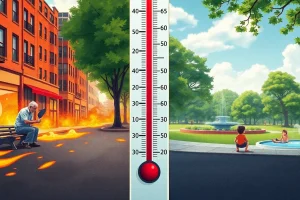
- Heat-related mortality: Between 2000–2004 and 2017–2021, the number of heat-related deaths in people older than 65 increased by 53.7%, reaching an estimated 296,000 deaths in 2018 alone.
- Infectious disease transmission: The number of months suitable for malaria transmission in highland areas of the Americas, Africa, and the Asia-Pacific region increased by 39.1% for Plasmodium falciparum and 33.6% for Plasmodium vivax from 1950–1954 to 2012–2016. The climate suitability for dengue transmission rose by 12% over the same period.
- Food insecurity: In 2019, an additional 2 billion person-days of heatwave exposure occurred among the over-65 population compared with the 1986–2005 baseline, affecting crop yields and labor capacity.
- Health system preparedness: Only 0.3% of global climate finance was directed to health systems in 2019–2020, and just 51% of countries reported having a national health and climate change strategy.
- Economic costs: The economic cost of heat-related mortality among people aged 65 and older was estimated at $1.4 trillion in 2018, equivalent to 1.8% of global gross domestic product in that year.
What the findings do not prove
The report identifies associations and trends but does not establish direct causation for every health outcome. Many of the indicators are based on modeling and observational data, which can show correlations but cannot definitively prove that climate change alone caused a specific health event. The findings do not predict future health impacts with certainty; they describe current and past conditions and project potential risks under different scenarios. The report also does not claim that all observed health effects are solely due to climate change, as other factors such as socioeconomic development and public health infrastructure play significant roles.
Limitations
The study has several limitations. Data availability is uneven across regions, with low-income countries often underrepresented, which may skew global estimates. Many indicators rely on modeling that involves assumptions and uncertainties. The report tracks a limited set of health outcomes and does not capture all climate-sensitive diseases or indirect effects. Additionally, the indicators are proxies and may not fully reflect the complexity of health impacts. The analysis is constrained by the time lag in data reporting, meaning the most recent data may already be outdated.
How it compares with previous research
The findings are consistent with earlier Lancet Countdown reports and with assessments from the Intergovernmental Panel on Climate Change (IPCC). The 2021 report shows a continued worsening of health impacts compared with previous years, particularly in heat-related mortality and infectious disease suitability. It also places greater emphasis on the health co-benefits of climate action, such as reduced air pollution from phasing out fossil fuels, aligning with a growing body of research highlighting the immediate health gains from mitigation policies.
Why it matters
This report provides the most comprehensive and up-to-date evidence that climate change is a health emergency. It underscores the need for health to be central in climate policy, from national adaptation plans to international finance. The findings are directly relevant to policymakers, health professionals, and the public, offering a clear call to action: the same actions that reduce greenhouse gas emissions can also yield substantial health benefits, such as cleaner air and healthier diets. The report’s indicators serve as a benchmark for tracking progress and holding governments accountable.
Link to the primary paper
Romanello M, McGushin A, Di Napoli C, et al. The 2021 report of the Lancet Countdown on health and climate change: code red for a healthy future. Lancet. 2021;398(10311):1613-1662. doi:10.1016/S0140-6736(21)01787-6.
FAQ
What is the Lancet Countdown?
The Lancet Countdown is an international research collaboration that tracks the relationship between climate change and health. It publishes an annual report with indicators across five domains, providing evidence to inform policy and monitor progress.
How does climate change increase heat-related deaths?
Climate change leads to more frequent, intense, and longer heatwaves. Extreme heat can cause heatstroke, cardiovascular and respiratory failure, and worsen chronic conditions. Older adults, children, and those with pre-existing illnesses are particularly vulnerable.
Can climate action really improve health?
Yes. Many actions that reduce greenhouse gas emissions also bring direct health benefits. For example, shifting from fossil fuels to renewable energy reduces air pollution, which lowers rates of asthma and heart disease. Promoting walking and cycling cuts emissions and increases physical activity, reducing obesity and related diseases.
References
- Romanello M, et al. The 2021 report of the Lancet Countdown on health and climate change: code red for a healthy future. Lancet. 2021;398(10311):1613-1662. doi:10.1016/S0140-6736(21)01787-6.
- Watts N, et al. The 2020 report of the Lancet Countdown on health and climate change: responding to converging crises. Lancet. 2021;397(10269):129-170. doi:10.1016/S0140-6736(20)32290-X.
- IPCC. Climate Change 2022: Impacts, Adaptation and Vulnerability. Contribution of Working Group II to the Sixth Assessment Report. Cambridge University Press; 2022.
- Haines A, Ebi K. The imperative for climate action to protect health. N Engl J Med. 2019;380(3):263-273. doi:10.1056/NEJMra1807873.
- World Health Organization. COP26 Special Report on Climate Change and Health: The Health Argument for Climate Action. WHO; 2021.