In brief
At a glance
Quick Facts
- EDCs can mimic or block natural hormones, disrupting the body's normal functions.
- EDCs can mimic or block natural hormones, disrupting the body's normal functions.
- Common EDCs include bisphenol A (BPA), phthalates, dioxins, and certain pesticides.
- Common EDCs include bisphenol A (BPA), phthalates, dioxins, and certain pesticides.
- Exposure to EDCs has been linked to reproductive disorders, obesity, diabetes, and certain cancers.
- Exposure to EDCs has been linked to reproductive disorders, obesity, diabetes, and certain cancers.
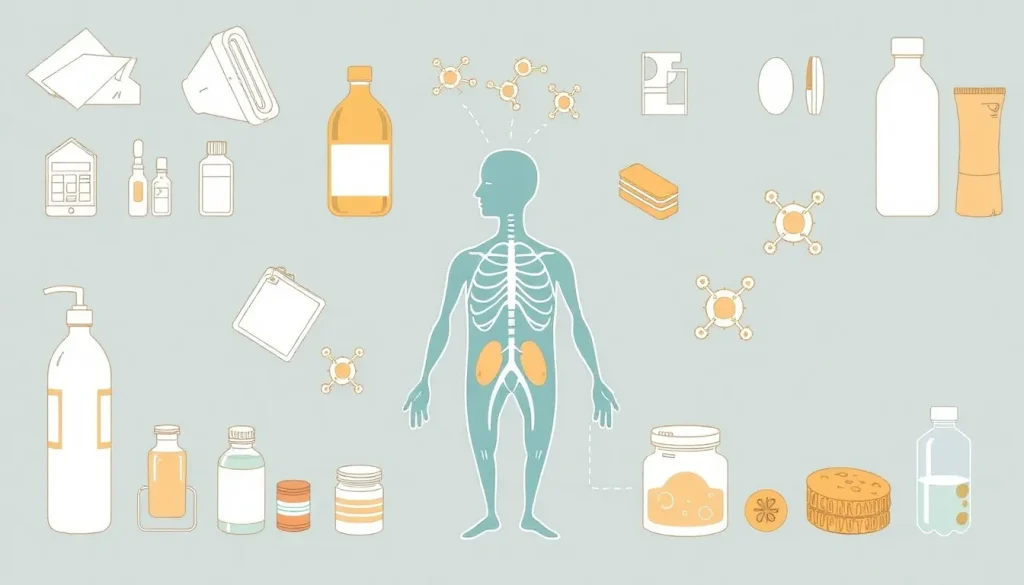
- EDCs are found in plastics, personal care products, food packaging, and industrial chemicals.
- EDCs are found in plastics, personal care products, food packaging, and industrial chemicals.
- Low-dose exposure to EDCs can have significant effects, especially during critical developmental windows.
- Low-dose exposure to EDCs can have significant effects, especially during critical developmental windows.
Key Takeaways
- Endocrine-disrupting chemicals (EDCs) are natural or synthetic substances that interfere with the body’s hormonal systems, potentially leading to adverse health effects.
- EDCs can mimic, block, or alter the production, transport, and breakdown of hormones, disrupting critical functions like reproduction, growth, and metabolism.
- Exposure occurs through everyday products such as plastics, personal care items, pesticides, and industrial chemicals, often at low doses over long periods.
- Scientific evidence links EDCs to a range of health issues, including infertility, obesity, diabetes, neurodevelopmental disorders, and hormone-sensitive cancers.
- Uncertainties remain regarding safe exposure levels and the full extent of human health impacts, prompting ongoing research and precautionary regulatory approaches.
What Is Endocrine-Disrupting Chemicals Explained?
Endocrine-disrupting chemicals (EDCs) are a broad class of compounds that can interfere with the normal functioning of the endocrine system—the network of glands and hormones that regulate vital bodily processes. According to the World Health Organization, an endocrine disruptor is “an exogenous substance or mixture that alters function(s) of the endocrine system and consequently causes adverse health effects in an intact organism, or its progeny, or (sub)populations.” In simpler terms, EDCs are foreign chemicals that can mimic, block, or otherwise disrupt the body’s natural hormones, leading to a cascade of biological effects.
These substances are not a single chemical family but rather a diverse group that includes synthetic compounds used in industrial and consumer products, as well as some naturally occurring substances. They can be found in plastics, food packaging, cosmetics, pesticides, flame retardants, and even in some foods. The defining characteristic of an EDC is its ability to interact with the endocrine system, often at very low doses, and cause changes that may not be immediately apparent but can have long-term health consequences.
Overview
The endocrine system is a complex messaging network that uses hormones—chemical signals—to regulate growth, development, metabolism, reproduction, mood, and many other physiological processes. Hormones are produced by glands such as the thyroid, pancreas, adrenal glands, and reproductive organs, and they travel through the bloodstream to target cells, where they bind to specific receptors and trigger responses. EDCs disrupt this delicate system by interfering at various points: they can mimic natural hormones and bind to receptors, triggering inappropriate responses; they can block receptors, preventing natural hormones from acting; or they can alter the synthesis, transport, metabolism, and excretion of hormones, thereby changing their normal concentrations in the body.
The concept of endocrine disruption gained prominence in the late 20th century, though observations of hormone-like effects from chemicals date back earlier. Today, hundreds of chemicals are suspected or known to have endocrine-disrupting properties. They are ubiquitous in the modern environment, and human exposure is widespread. Because hormones operate at extremely low concentrations and during critical windows of development, even minute amounts of EDCs can have significant effects, particularly on fetuses, infants, and children.
How It Works
EDCs exert their effects through several mechanisms, often simultaneously. The most well-known mechanism is receptor-mediated action. Many EDCs are structurally similar to natural hormones, allowing them to bind to hormone receptors. For example, bisphenol A (BPA) can bind to estrogen receptors, mimicking the effects of estrogen. Other chemicals, such as certain phthalates, can block androgen receptors, interfering with testosterone signaling. This receptor binding can either activate or inhibit the normal hormonal response, leading to overstimulation or suppression of biological processes.
Beyond receptor interactions, EDCs can disrupt hormone synthesis by affecting the enzymes involved in producing hormones. They can alter hormone transport by binding to carrier proteins, changing the amount of free, active hormone in the blood. EDCs can also interfere with hormone metabolism, speeding up or slowing down the breakdown of hormones, and they can affect the feedback loops that regulate hormone levels. Importantly, EDCs often do not follow the traditional toxicological principle of “the dose makes the poison”; they can have non-monotonic dose responses, where low doses produce effects that are not seen at higher doses, and they can act additively or synergistically with other chemicals.
Environmental and Human Impacts
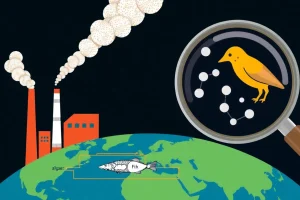
EDCs have been detected in air, water, soil, and food, leading to widespread human and wildlife exposure. In wildlife, endocrine disruption has been linked to population declines, reproductive abnormalities, and altered behavior. Classic examples include the feminization of male fish exposed to estrogenic compounds in wastewater and eggshell thinning in birds caused by DDT. These ecological effects provided early evidence that chemicals could disrupt hormonal systems.
In humans, epidemiological and experimental studies have associated EDC exposure with a range of health problems. Reproductive effects include declining sperm quality, increased rates of infertility, polycystic ovary syndrome, and earlier puberty. Metabolic effects include obesity and type 2 diabetes, potentially through disruption of hormones that regulate appetite and insulin sensitivity. Neurodevelopmental effects, such as attention deficit hyperactivity disorder (ADHD) and autism spectrum disorders, have been linked to prenatal exposure to certain EDCs. Additionally, hormone-sensitive cancers, including breast, prostate, and testicular cancers, have been associated with EDC exposure. The developing fetus and young child are particularly vulnerable because their organ systems and hormonal programming are still forming.
Why It Matters
Understanding EDCs is critical because they represent a pervasive and often invisible threat to public health. Unlike acute toxins, the effects of EDCs may not manifest for years or even decades, and they can be transmitted across generations through epigenetic changes. This means that exposure today could affect the health of future generations. The economic burden of EDC-related diseases is substantial, with estimates suggesting billions of dollars in healthcare costs and lost productivity annually in regions where such analyses have been conducted.
Moreover, EDCs challenge traditional chemical risk assessment methods. Standard toxicity tests may not capture the low-dose effects, non-monotonic responses, and critical windows of susceptibility that characterize endocrine disruption. This has led to calls for updated testing protocols and a more precautionary approach to chemical regulation. Public awareness and consumer demand for safer products are driving changes in industry practices and policy, making EDCs a central topic in environmental health discussions.
Data Limitations and Uncertainties
Despite a large body of evidence, significant uncertainties remain in EDC science. One major challenge is establishing causality in human studies, as people are exposed to complex mixtures of chemicals throughout their lives, making it difficult to isolate the effects of a single compound. Many studies rely on associations, and confounding factors such as diet, lifestyle, and genetics can complicate interpretation. Additionally, the latency between exposure and health outcomes can be decades, requiring long-term, costly studies.
Another limitation is the lack of comprehensive toxicity data for the vast majority of chemicals in commerce. Only a fraction have been adequately tested for endocrine-disrupting potential. Regulatory agencies differ in their approaches to identifying and managing EDCs, leading to inconsistent standards globally. There is also ongoing scientific debate about the existence and relevance of non-monotonic dose responses and low-dose effects, with some arguing that current risk assessment paradigms are sufficient. These uncertainties underscore the need for continued research, improved testing methods, and transparent communication about what is known and what remains unknown.
FAQ
What are endocrine-disrupting chemicals?
Endocrine-disrupting chemicals (EDCs) are substances that interfere with the body's hormonal systems, potentially causing adverse health effects. They can be found in many everyday products, including plastics, cosmetics, and pesticides.
How do endocrine-disrupting chemicals affect health?
EDCs can mimic, block, or alter natural hormones, leading to disruptions in reproduction, development, metabolism, and immune function. Effects may include infertility, obesity, diabetes, and increased cancer risk.
Why do endocrine-disrupting chemicals matter?
EDCs matter because they are widespread, can have long-term and transgenerational health effects, and challenge traditional chemical safety testing. Reducing exposure and improving regulation are important for protecting public health.
References
- World Health Organization (WHO) and United Nations Environment Programme (UNEP), 'State of the Science of Endocrine Disrupting Chemicals,' 2012.
- U.S. Environmental Protection Agency (EPA) – Endocrine Disruptor Screening Program (EDSP).
- European Chemicals Agency (ECHA) – Endocrine Disruptors.