In brief
At a glance
Quick Facts
- Definition
- PBT chemicals are substances that are persistent, bioaccumulative, and toxic.
- Persistence
- They resist degradation and can remain in the environment for years or decades.
- Bioaccumulation
- They build up in fatty tissues of organisms, increasing in concentration up the food chain.
- Toxicity
- They can cause cancer, reproductive harm, developmental defects, and immune system damage.
- Examples
- DDT, PCBs, dioxins, PBDEs, and certain PFAS are classic PBTs.
- Regulation
- Many PBTs are regulated under the Stockholm Convention and national laws like TSCA and REACH.
- Long-range transport
- They can travel far from their source, contaminating remote areas such as the Arctic.
- Human exposure
- Mainly through diet, especially fatty foods like fish, meat, and dairy products.
Key Takeaways
- PBT chemicals are substances that persist in the environment, build up in living tissues, and are toxic, posing long-term risks to ecosystems and human health.
- They resist natural degradation, remaining in soil, water, and air for years or decades, and can travel far from their original source.
- Bioaccumulation leads to increasing concentrations up the food chain, so top predators—including humans—face the highest exposure levels through diet.
- Even at low environmental concentrations, chronic exposure to PBTs can cause cancer, reproductive disorders, developmental defects, and immune system damage.
What Is Persistent, Bioaccumulative and Toxic Chemicals Explained?
Persistent, Bioaccumulative and Toxic chemicals, commonly referred to as PBTs, are a class of substances that exhibit three particularly hazardous properties: they resist degradation in the environment (persistence), they accumulate in living organisms (bioaccumulation), and they cause adverse effects to human health or the environment (toxicity). These chemicals are not defined by a specific chemical structure but rather by their behavior and impact. PBTs include many well-known industrial chemicals, pesticides, and unintended by-products of manufacturing and combustion processes.
The concept of PBTs emerged from the recognition that some chemicals pose risks that are not adequately captured by traditional toxicity testing alone. A chemical might be only moderately toxic in short-term tests, but if it does not break down and builds up in organisms over time, it can reach harmful concentrations. This combination of properties makes PBTs a priority for environmental monitoring and regulation. International frameworks such as the Stockholm Convention on Persistent Organic Pollutants and national laws like the U.S. Toxic Substances Control Act specifically target PBT substances for restriction or elimination.
Overview
PBT chemicals are a subset of substances of very high concern in chemical management policies worldwide. Their persistence means they can remain in the environment for years or decades without significant degradation. Bioaccumulation refers to the process by which these chemicals are taken up by organisms faster than they are eliminated, leading to higher concentrations in tissues over time. Toxicity encompasses a range of harmful effects, including carcinogenicity, mutagenicity, reproductive and developmental toxicity, and endocrine disruption.
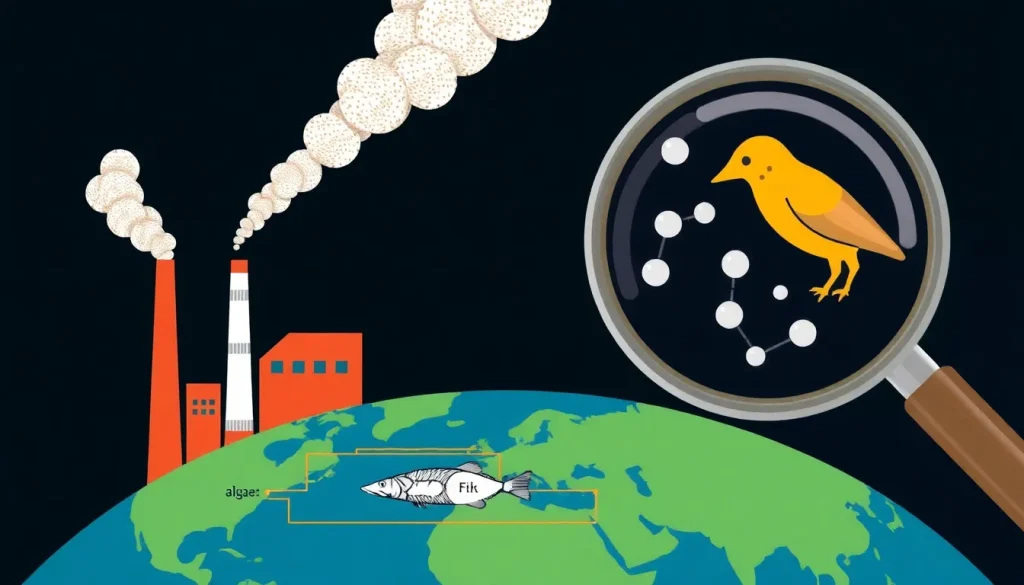
Because PBTs are often lipophilic (fat-soluble), they tend to partition into fatty tissues of organisms rather than being excreted. This property, combined with environmental persistence, allows them to biomagnify through food webs: concentrations increase at each trophic level. As a result, top predators—including humans—can be exposed to levels far higher than those found in the surrounding environment. PBTs are also subject to long-range transport, meaning they can travel far from their original source via air and water currents, contaminating remote regions such as the Arctic.
How It Works
The behavior of PBT chemicals is governed by their physicochemical properties and their interactions with environmental and biological systems.
- Persistence: PBTs resist degradation through natural processes like photolysis (breakdown by sunlight), hydrolysis (breakdown by water), and biodegradation (breakdown by microorganisms). This stability is often due to strong chemical bonds, such as carbon-halogen bonds in chlorinated and brominated compounds. As a result, they can remain in soil, sediments, and water for decades.
- Bioaccumulation: These chemicals have a high affinity for lipids (fats) and low elimination rates. When an organism ingests or absorbs a PBT, the substance partitions into fatty tissues rather than being metabolized or excreted. The bioconcentration factor (BCF) and bioaccumulation factor (BAF) are metrics used to quantify this tendency. A BCF above 5000 is often used as a threshold for bioaccumulative potential.
- Biomagnification: As contaminated prey are consumed by predators, the PBT concentration increases at each step in the food chain. For example, phytoplankton absorb PBTs from water; small fish eat the phytoplankton; larger fish eat the small fish; and birds or mammals eat the larger fish. At each level, the chemical load becomes more concentrated.
- Toxicity: PBTs can cause a range of adverse effects, often at low doses and after long-term exposure. Mechanisms include endocrine disruption (mimicking or blocking hormones), DNA damage, oxidative stress, and interference with cellular signaling. Chronic effects may not be immediately apparent but can lead to population-level impacts in wildlife and increased disease risk in humans.
Environmental and Human Impacts
The environmental impacts of PBTs are profound and far-reaching. In wildlife, classic examples include eggshell thinning in birds of prey caused by DDT, which led to population declines. PCBs have been linked to reproductive failure and immune suppression in marine mammals such as seals and dolphins. In aquatic ecosystems, PBTs can accumulate in sediments and enter benthic food webs, affecting organisms from invertebrates to fish.
Human exposure to PBTs occurs primarily through diet, especially consumption of fatty animal products like fish, meat, and dairy. Once in the body, these chemicals can be stored in adipose tissue and slowly released over time, leading to chronic internal exposure. Health effects associated with PBTs include increased cancer risk, neurodevelopmental deficits in children, thyroid disruption, reduced fertility, and compromised immune function. Vulnerable populations, such as pregnant women, infants, and communities relying on subsistence fishing, face heightened risks.
Examples
Several well-known chemical groups fall under the PBT classification. These examples illustrate the diversity of sources and the global scale of contamination.
- DDT (dichlorodiphenyltrichloroethane): A pesticide once widely used for malaria control and agriculture. It is highly persistent and bioaccumulative, and its metabolite DDE causes eggshell thinning in birds. DDT is now banned in most countries but remains in the environment.
- PCBs (polychlorinated biphenyls): Industrial chemicals used in electrical equipment, paints, and sealants. They are extremely persistent and bioaccumulative, and are known carcinogens and endocrine disruptors. Production was banned decades ago, but PCBs are still present in old equipment and contaminated sites.
- Dioxins and furans: Unintentional by-products of combustion and industrial processes, including waste incineration and chemical manufacturing. They are among the most toxic PBTs, with effects on the immune system, reproduction, and development.
- PBDEs (polybrominated diphenyl ethers): Flame retardants used in electronics, furniture, and textiles. They are persistent and bioaccumulative, and have been associated with neurodevelopmental toxicity and thyroid disruption. Certain PBDEs have been phased out under the Stockholm Convention.
- PFAS (per- and polyfluoroalkyl substances): A large group of fluorinated chemicals used in non-stick cookware, waterproofing, and firefighting foams. Some PFAS, such as PFOS and PFOA, are highly persistent, bioaccumulative, and linked to cancer, liver damage, and immune effects.
Solutions
Addressing the risks posed by PBT chemicals requires a multi-pronged approach involving regulation, innovation, and remediation.
- International treaties: The Stockholm Convention on Persistent Organic Pollutants is a global treaty that aims to eliminate or restrict the production and use of POPs, many of which are PBTs. Signatory countries commit to phasing out listed substances and managing stockpiles and wastes.
- National regulations: Countries have implemented laws to assess and control PBTs. For example, the U.S. EPA has authority under the Toxic Substances Control Act to require testing and restrict chemicals that meet PBT criteria. The European Union’s REACH regulation identifies PBTs as substances of very high concern and can subject them to authorization or restriction.
- Green chemistry: Designing chemicals that are inherently less persistent and bioaccumulative is a proactive solution. This includes developing biodegradable alternatives and avoiding halogenated compounds where possible.
- Remediation: Contaminated sites can be cleaned up through methods such as dredging, capping, thermal treatment, and bioremediation. However, remediation is often costly and technically challenging.
- Monitoring and surveillance: Ongoing environmental monitoring and biomonitoring in humans and wildlife help track trends, identify emerging PBTs, and evaluate the effectiveness of regulations.
Common Misconceptions
Several misunderstandings surround PBT chemicals, which can hinder effective risk communication and policy.
- Misconception: If a chemical is PBT, it is immediately banned worldwide. In reality, regulatory processes are complex and can take years. Some PBTs are still in use due to essential applications or lack of alternatives, and illegal production or stockpiles may persist.
- Misconception: All persistent chemicals are harmful. Persistence alone does not make a chemical dangerous; it must also be bioaccumulative and toxic. Many natural substances are persistent but not harmful. The combination of all three properties defines the risk.
- Misconception: PBTs only affect wildlife, not humans. Humans are at the top of many food chains and can accumulate high levels of PBTs through diet. Health effects are well-documented, particularly in communities with high consumption of contaminated fish or marine mammals.
- Misconception: Once a PBT is banned, the problem is solved. Because of their persistence, PBTs remain in the environment for decades after bans. Legacy contamination continues to pose risks, and cleanup is slow and expensive.
FAQ
What are PBT chemicals?
PBT chemicals are substances that are persistent (resist degradation), bioaccumulative (build up in living tissues), and toxic (cause harmful effects). They pose long-term risks to the environment and human health.
How do PBT chemicals affect human health?
Human exposure to PBTs, mainly through diet, can lead to chronic health effects including cancer, reproductive and developmental disorders, immune system suppression, and endocrine disruption. Effects may occur even at low exposure levels over time.
How are PBT chemicals regulated?
PBTs are regulated through international treaties like the Stockholm Convention, which bans or restricts persistent organic pollutants, and through national laws such as the U.S. Toxic Substances Control Act and the EU's REACH regulation, which require assessment and control of PBT substances.
References
- U.S. Environmental Protection Agency. Persistent, Bioaccumulative and Toxic (PBT) Chemicals. https://www.epa.gov/pbt
- European Chemicals Agency. PBT/vPvB assessment under REACH. https://echa.europa.eu/regulations/reach/assessment-of-regulatory-needs/pbt-vpvb-assessment
- Stockholm Convention on Persistent Organic Pollutants. http://www.pops.int/
- World Health Organization. Persistent Organic Pollutants (POPs). https://www.who.int/news-room/fact-sheets/detail/persistent-organic-pollutants-(pops)