In brief
At a glance
Quick Facts
- Definition of microplastics
- Plastic particles smaller than 5 millimeters in diameter.
- Primary microplastic examples
- Microbeads, nurdles, synthetic textile fibers, tire wear particles.
- Secondary microplastic sources
- Breakdown of larger plastic items like bottles, bags, fishing nets, and agricultural films.
- Dominant type in the environment
- Secondary microplastics are estimated to account for the majority of microplastic pollution.
- Key environmental concern
- Microplastics can absorb and transport toxic chemicals and be ingested by organisms throughout the food web.
- Human exposure pathways
- Ingestion of contaminated food and water, inhalation of airborne particles.
- Persistence
- Microplastics can persist in the environment for decades to centuries, continuously fragmenting into smaller particles.
- Policy response
- Many countries have banned microbeads in rinse-off cosmetics; global efforts to reduce plastic waste are ongoing.
Key Takeaways
- Primary microplastics are manufactured at microscopic size for specific uses, while secondary microplastics form from the breakdown of larger plastic debris.
- Both types are now ubiquitous in oceans, freshwater, soil, air, and living organisms, including humans.
- Secondary microplastics are the dominant form found in the environment, largely due to the fragmentation of improperly disposed plastic waste.
- Addressing microplastic pollution requires distinct strategies: eliminating intentional primary microplastics and preventing the release and degradation of macroplastics that become secondary microplastics.
What Is Primary vs Secondary Microplastics?
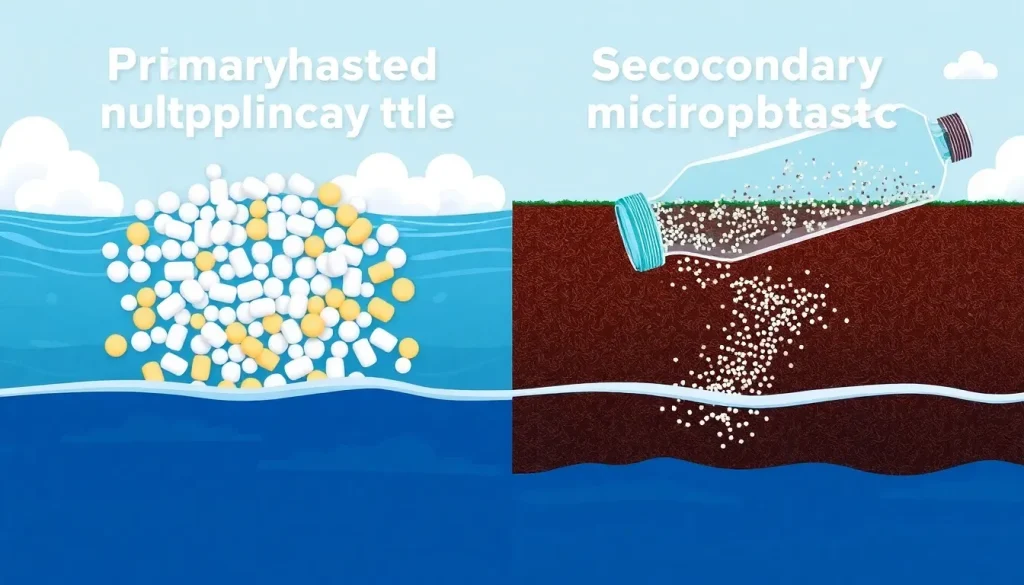
Primary microplastics are plastic particles that are intentionally manufactured to be microscopic in size, typically less than 5 millimeters in diameter. They are produced for direct use in products such as exfoliating beads in personal care items, industrial abrasives, and as pre-production plastic pellets (nurdles) that serve as raw material for manufacturing larger plastic goods. Secondary microplastics, by contrast, are not manufactured as small particles but instead result from the fragmentation and degradation of larger plastic items—such as bottles, bags, fishing nets, and synthetic textiles—due to environmental exposure to sunlight, wave action, wind, and mechanical abrasion.
The distinction between primary and secondary microplastics is fundamental to understanding the sources and pathways of plastic pollution. While primary microplastics enter the environment directly as tiny particles, secondary microplastics are generated continuously as macroplastics break down over time. Both categories are now recognized as persistent environmental contaminants that can travel long distances, absorb toxic chemicals, and be ingested by a wide range of organisms. The term “microplastics” itself was popularized in the early 2000s, but the classification into primary and secondary types has since become essential for research, policy, and mitigation efforts.
How Primary and Secondary Microplastics Form
The formation pathways of primary and secondary microplastics are fundamentally different. Primary microplastics are manufactured at the microscale through industrial processes such as polymerization, extrusion, and pelletization. They are designed to be small and uniform for specific applications: microbeads are spherical particles used in cosmetics and cleaning products, while nurdles are lentil-sized pellets that serve as feedstock for plastic production. Synthetic textile fibers, another form of primary microplastic, are produced through spinning and cutting processes that create microscopic threads. These particles are released into the environment during product use (e.g., washing synthetic clothing) or through accidental spills during manufacturing and transport.
Secondary microplastics, on the other hand, are generated by the physical, chemical, and biological breakdown of larger plastic items. The process begins with macroplastics—discarded or lost plastic objects—that are exposed to environmental stressors. Photodegradation from UV radiation causes polymer chains to break, making the plastic brittle. Mechanical forces such as wave action, wind, and abrasion then fragment the weakened material into progressively smaller pieces. Biological factors, including microbial activity and ingestion by organisms, can further degrade plastics into micro- and even nanoscale particles. This fragmentation is a continuous process: a single plastic bottle can eventually yield thousands of microplastic particles over decades or centuries, and the particles continue to break down into ever smaller sizes, eventually becoming nanoplastics.
Examples and Sources
Primary microplastics are found in a variety of products and industrial processes. Common examples include:
- Microbeads: Tiny spherical plastics historically used in facial scrubs, toothpaste, and other personal care products. Many countries have now banned their use in rinse-off cosmetics.
- Nurdles: Pre-production plastic pellets that are melted and molded into larger plastic items. Spills during transport and handling are a significant source of primary microplastic pollution in coastal and riverine environments.
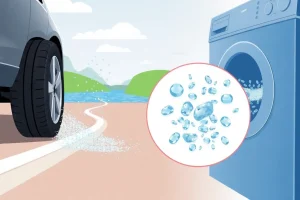
- Synthetic textile fibers: Microscopic threads shed from clothing made of polyester, nylon, and acrylic during washing. A single laundry load can release hundreds of thousands of fibers into wastewater.
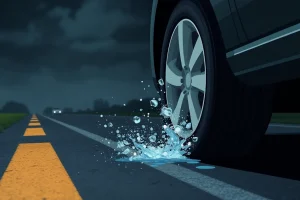
- Tire wear particles: Abrasion of vehicle tires on road surfaces generates tiny plastic-rubber particles that are washed into waterways or become airborne.
- Industrial abrasives: Plastic media used for sandblasting and cleaning surfaces, which can be released into the environment if not properly contained.
Secondary microplastics originate from the degradation of larger plastic items. Common sources include:
- Plastic packaging: Bottles, bags, films, and containers that fragment after being discarded in the environment.
- Fishing gear: Lost or abandoned nets, lines, and ropes that break down in marine environments, contributing to both macro- and microplastic pollution.
- Agricultural plastics: Mulch films, greenhouse covers, and silage wraps that degrade under sunlight and mechanical stress.
- Construction materials: Paints, coatings, and plastic building materials that weather and release microplastic particles over time.
- Vehicle tire dust: While often considered primary microplastic, tire wear particles are also generated from the degradation of larger tire pieces, blurring the line between primary and secondary sources.
Environmental and Human Impacts
Microplastics, regardless of origin, are now found in virtually every ecosystem on Earth. In marine environments, they are ingested by organisms ranging from zooplankton to large marine mammals, causing physical blockages, reduced feeding, and internal abrasion. Microplastics can also act as vectors for toxic substances: they absorb persistent organic pollutants (POPs) from surrounding water and can leach harmful additives such as plasticizers, flame retardants, and stabilizers. When ingested, these chemicals may transfer to tissues, potentially causing endocrine disruption, oxidative stress, and reproductive harm. The full extent of ecological impacts is still under investigation, but laboratory studies have demonstrated adverse effects on growth, reproduction, and survival in various species.
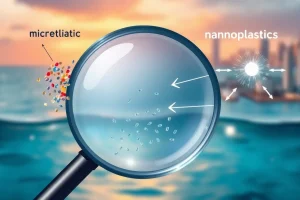
Human exposure to microplastics occurs through ingestion of contaminated food and water, inhalation of airborne particles, and possibly dermal contact. Microplastics have been detected in human stool, blood, and even placental tissue, raising concerns about potential health effects. While the direct toxicity of microplastics to humans remains uncertain, the particles can carry harmful chemical additives and environmental contaminants into the body. The smallest particles—nanoplastics—may be capable of crossing cellular membranes and entering the bloodstream, though the extent and consequences of such translocation are still being studied. Both primary and secondary microplastics contribute to this exposure, but secondary microplastics are far more abundant in the environment and thus likely represent a larger share of human intake.
Solutions and Mitigation Strategies
Addressing microplastic pollution requires distinct approaches for primary and secondary sources. For primary microplastics, the most effective strategy is source reduction: banning or restricting the intentional use of microplastics in products. Several countries have already implemented bans on microbeads in rinse-off personal care products, and there are growing calls to regulate pre-production pellet loss and to develop biodegradable alternatives. Improved industrial practices, such as better containment of nurdles during transport and manufacturing, can also significantly reduce primary microplastic emissions. For synthetic textiles, solutions include installing filters on washing machines, developing fabrics that shed fewer fibers, and promoting natural fiber alternatives.
Mitigating secondary microplastics requires tackling the broader plastic pollution crisis. This involves reducing overall plastic production and consumption, improving waste management infrastructure to prevent plastic from entering the environment, and designing products for durability and recyclability. Cleanup efforts, such as river barriers and ocean plastic removal technologies, can capture larger debris before it fragments into microplastics. However, once microplastics are dispersed in the environment, removal is extremely challenging. Therefore, prevention—stopping plastic waste at its source—is the most effective long-term solution. Policy measures like extended producer responsibility, plastic bag bans, and deposit-return schemes can help reduce the flow of macroplastics that eventually become secondary microplastics.
Common Misconceptions
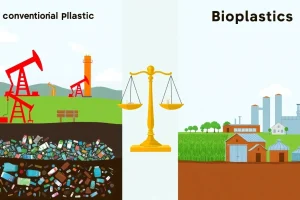
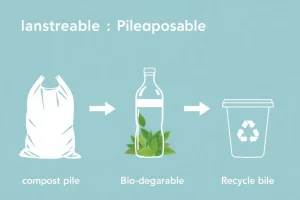
One common misconception is that all microplastics are intentionally manufactured. In reality, the vast majority of microplastics in the environment are secondary, formed from the breakdown of larger items. Another misunderstanding is that biodegradable plastics solve the microplastic problem. While biodegradable plastics may break down faster under specific conditions, many require industrial composting facilities and do not readily degrade in marine or terrestrial environments; they can still fragment into microplastics before fully mineralizing. Additionally, some people assume that microplastics are only a marine issue, but they are also widespread in freshwater systems, soils, and the atmosphere. Finally, the term “microplastics” often leads to the belief that these particles are visible to the naked eye, but many are microscopic and require specialized equipment to detect.
Data Limitations and Uncertainties
Despite growing research, significant knowledge gaps remain regarding microplastics. Standardized methods for sampling, extraction, and identification are still under development, making it difficult to compare studies and assess global contamination levels accurately. The smallest particles—nanoplastics—are particularly challenging to detect and quantify in environmental samples, yet they may pose the greatest risk due to their ability to penetrate biological barriers. The long-term ecological and human health effects of chronic exposure to low concentrations of microplastics are not yet fully understood. Furthermore, the relative contribution of primary versus secondary microplastics to total environmental loads varies by region and is often poorly quantified. These uncertainties highlight the need for continued research and harmonized monitoring protocols to inform effective policy and risk assessment.
FAQ
What is the difference between primary and secondary microplastics?
Primary microplastics are manufactured at a microscopic size for specific uses, such as microbeads in cosmetics or industrial pellets. Secondary microplastics result from the breakdown of larger plastic items, like bottles and fishing nets, due to environmental exposure.
Which type of microplastic is more common in the environment?
Secondary microplastics are far more abundant because they are continuously generated from the vast amount of plastic waste that has accumulated in the environment over decades.
Why does the distinction between primary and secondary microplastics matter?
The distinction helps target solutions: primary microplastics can be addressed through product bans and industrial controls, while secondary microplastics require reducing plastic waste and improving waste management to prevent macroplastic pollution.
References
- GESAMP (2015). Sources, fate and effects of microplastics in the marine environment: a global assessment. International Maritime Organization.
- UNEP (2021). From Pollution to Solution: A global assessment of marine litter and plastic pollution. United Nations Environment Programme.
- NOAA Marine Debris Program. What are microplastics? National Oceanic and Atmospheric Administration.