In brief
At a glance
Quick Facts
- Definition of absolute decoupling
- Economic growth occurs while total resource consumption declines in absolute terms.
- Definition of relative decoupling
- Resource use grows but at a slower rate than economic output.
- Global material extraction since 1970
- More than tripled, with only temporary absolute declines during recessions.
- Rebound effect
- Efficiency gains can increase demand, partially or fully offsetting resource savings.
- Consumption-based accounting
- Reveals that apparent decoupling in wealthy nations often reflects outsourcing of resource use.
- Key policy approaches
- Resource efficiency standards, circular economy, carbon taxes, and sufficiency strategies.
- Alternative indicators
- Genuine Progress Indicator (GPI) and Human Development Index (HDI) can complement GDP.
Key Takeaways
- Absolute decoupling means total resource use declines while GDP grows; relative decoupling means resource use grows slower than GDP.
- Global evidence shows relative decoupling is common, but absolute decoupling of material use has not been achieved at the global level.
- Efficiency gains are often offset by rebound effects, where savings lead to increased consumption elsewhere.
- Absolute decoupling may require fundamental changes in economic structures, consumption patterns, and how progress is measured.
What Is Can Economic Growth Be Absolutely Decoupled From Resource Use?
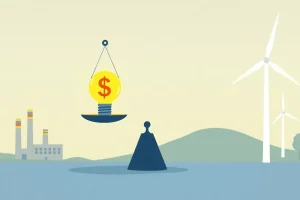
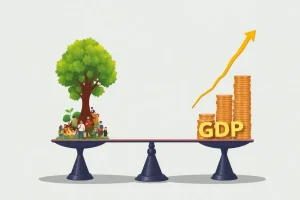
The question of whether economic growth can be absolutely decoupled from resource use asks if it is possible for an economy to expand—typically measured by Gross Domestic Product (GDP)—while simultaneously reducing the total amount of natural resources it consumes. Absolute decoupling is distinct from relative decoupling, where resource use grows but at a slower rate than the economy. The concept is central to debates about sustainable development, as it challenges the assumption that prosperity must always come at the expense of the environment.
Resource use encompasses materials (biomass, fossil fuels, metals, minerals), energy, water, and land. Decoupling can be assessed for individual resources or for aggregate material footprints. The idea is often linked to the notion of “green growth,” which posits that technological progress and efficiency improvements can enable continued economic expansion without breaching planetary boundaries. However, critics argue that absolute decoupling on a global scale may be physically impossible or insufficient to address urgent environmental crises.
Overview
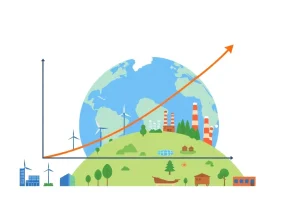
Decoupling is a key concept in environmental economics and sustainability science. It describes the relationship between economic activity and environmental pressure. When an economy grows while its resource use or environmental impact grows more slowly, that is relative decoupling. When resource use or impact declines in absolute terms while the economy grows, that is absolute decoupling. The distinction is crucial because only absolute decoupling can reduce humanity’s overall footprint on the planet.
Policymakers and international bodies often promote decoupling as a pathway to reconcile economic development with environmental limits. The United Nations Sustainable Development Goals, for example, call for decoupling economic growth from environmental degradation. However, the feasibility of achieving absolute decoupling at the speed and scale required to avoid dangerous ecological tipping points remains a subject of intense scientific and political debate.
How It Works
Decoupling can occur through several mechanisms. Technological efficiency reduces the amount of material or energy needed per unit of output—for instance, lighter vehicles, more efficient appliances, or precision agriculture. Structural change shifts the economy from resource-intensive sectors (like heavy manufacturing) to services and knowledge-based industries. Circular economy practices keep materials in use longer through recycling, reuse, and remanufacturing, reducing the need for virgin resource extraction. Dematerialization involves delivering the same or greater value with less physical material, such as digital products replacing physical ones.
However, these mechanisms often encounter the rebound effect (or Jevons paradox): efficiency improvements lower the effective cost of a resource, which can increase demand and lead to higher total consumption. For example, more fuel-efficient cars may encourage more driving, or savings from energy efficiency might be spent on other resource-intensive goods. To achieve absolute decoupling, efficiency gains must outpace both economic growth and rebound effects, which historically has been difficult to sustain over long periods.
What the Evidence Shows
Empirical studies reveal a mixed picture. At the national level, some high-income countries have achieved absolute decoupling of certain pollutants, such as sulfur dioxide or carbon dioxide from territorial emissions, while continuing to grow economically. However, when consumption-based accounts are used—including resources embedded in imported goods—the evidence for absolute decoupling weakens considerably. Many wealthy nations have simply shifted resource-intensive production to other countries, a phenomenon known as outsourcing or burden shifting.
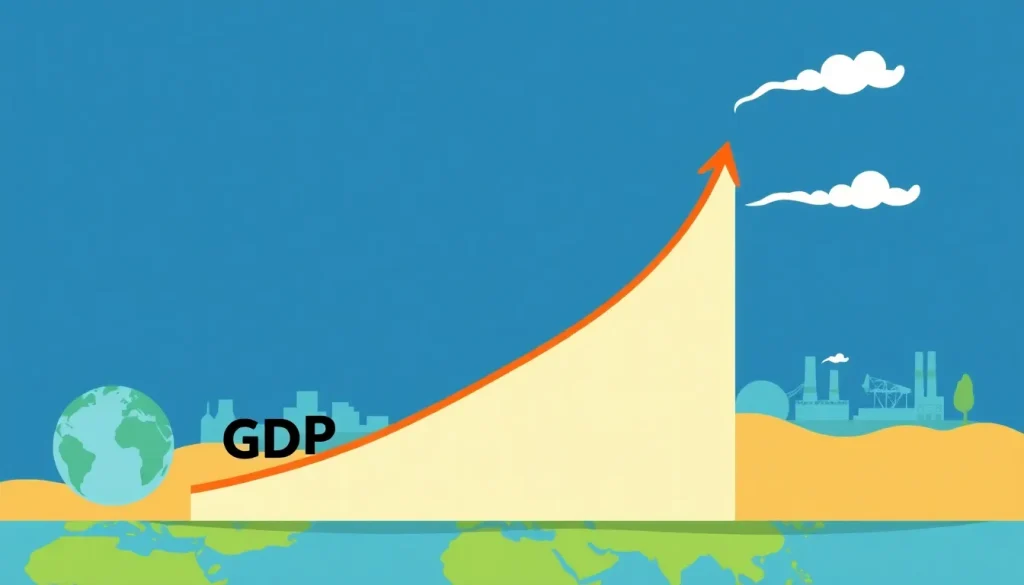
Globally, the material footprint—the total amount of raw materials extracted to meet final demand—has risen steadily alongside GDP. According to data from the United Nations Environment Programme’s International Resource Panel, global material extraction has more than tripled since 1970, with only brief periods of absolute decline during major economic recessions. While material intensity (resource use per unit of GDP) has fallen, indicating relative decoupling, absolute decoupling of total material use from global GDP growth has not been observed. For energy, carbon intensity has declined, but global energy-related CO2 emissions have continued to rise, with temporary plateaus or small declines that have not been sustained.
Importance and Impact
The possibility of absolute decoupling is fundamental to the future of human civilization. If absolute decoupling is achievable and can be maintained indefinitely, then economic growth need not conflict with environmental sustainability. This would support a “green growth” narrative where technological progress solves resource constraints. If, however, absolute decoupling is impossible or insufficiently rapid, then continued global economic growth will inevitably lead to resource depletion, ecosystem collapse, and climate destabilization.
The implications extend to policy and societal goals. Many governments and international institutions prioritize GDP growth as a primary objective. If absolute decoupling is not feasible, then alternative economic models—such as steady-state economics, degrowth, or well-being economies—may need to be considered. The debate also influences investment decisions, corporate strategies, and public expectations about the future of consumption and lifestyle.
Common Misconceptions
Misconception: Relative decoupling is enough to solve environmental problems. Relative decoupling means resource use still increases, just more slowly than GDP. As long as the economy grows, total resource use can continue to rise, worsening environmental pressures. Only absolute decoupling can reduce total resource consumption.
Misconception: Technological progress will automatically lead to absolute decoupling. History shows that efficiency gains are often outpaced by growth in consumption. Without active policies to cap resource use or shift consumption patterns, technology alone is unlikely to deliver absolute decoupling at the required scale.
Misconception: Decoupling is already happening globally. While some regions and sectors show relative decoupling, global material and energy use continue to rise in absolute terms. Apparent decoupling in wealthy countries often reflects offshoring of resource-intensive industries rather than genuine reductions in consumption.
Solutions
Achieving absolute decoupling likely requires a combination of strategies. Resource efficiency policies can set mandatory standards for energy and material use in products and buildings. Circular economy models can design out waste and keep materials in use. Sufficiency approaches encourage reduced consumption and shifts toward less resource-intensive lifestyles. Economic instruments such as carbon taxes, resource extraction taxes, and removal of harmful subsidies can internalize environmental costs.
Beyond technical fixes, some argue for rethinking economic growth itself. Alternative indicators like the Genuine Progress Indicator (GPI) or the Human Development Index (HDI) can complement or replace GDP as measures of societal well-being. Policies that promote sharing economies, product longevity, and reduced working hours may also contribute to absolute decoupling by lowering overall consumption without sacrificing quality of life.
FAQ
What is absolute decoupling?
Absolute decoupling occurs when economic output (GDP) grows while total resource use or environmental impact declines in absolute terms. It is the only form of decoupling that reduces overall pressure on the planet.
How does absolute decoupling differ from relative decoupling?
Relative decoupling means resource use grows but at a slower pace than the economy. Absolute decoupling means resource use actually decreases while the economy expands. Relative decoupling is more common but does not lower total resource consumption.
Why does absolute decoupling matter?
It matters because without absolute decoupling, continued economic growth will lead to ever-increasing resource extraction, waste, and emissions, exceeding planetary boundaries and causing irreversible environmental damage.
References
- United Nations Environment Programme, International Resource Panel. Global Material Flows and Resource Productivity reports.
- Jackson, T. Prosperity without Growth: Foundations for the Economy of Tomorrow. Routledge.
- Intergovernmental Panel on Climate Change (IPCC) Assessment Reports, Working Group III: Mitigation of Climate Change.