In brief
At a glance
Quick Facts
- Verdict
- Mixed
- Problem addressed
- Dependence on fossil fuels for energy
- Evidence strength
- Moderate
- Potential scale
- Global
- Relative cost
- Moderate
- Time to impact
- Decades
Quick verdict
While technically feasible in theory, a fully renewable energy system operating without any fossil fuel backup, manufacturing inputs, or grid support has not yet been demonstrated at the scale of a large industrial economy. High-penetration renewable grids exist (e.g., Denmark, South Australia) but still rely on interconnections and some fossil backup. The path to 100% renewable energy is plausible with continued advances in storage, grid management, and sector coupling, but complete independence from fossil fuels across all energy services (including industrial heat, aviation, and materials) remains a long-term goal with significant technical and economic hurdles.
Problem addressed
The global energy system is heavily dependent on fossil fuels—coal, oil, and natural gas—which supply over 80% of primary energy. This dependence drives greenhouse gas emissions, air pollution, and geopolitical vulnerabilities. The problem is whether renewable energy sources (solar, wind, hydro, geothermal, biomass) can entirely replace fossil fuels in electricity generation, heating, transportation, and industrial processes, thereby eliminating the need for fossil fuel extraction and combustion.
How the solution works
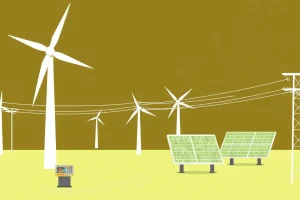
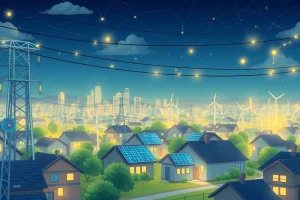
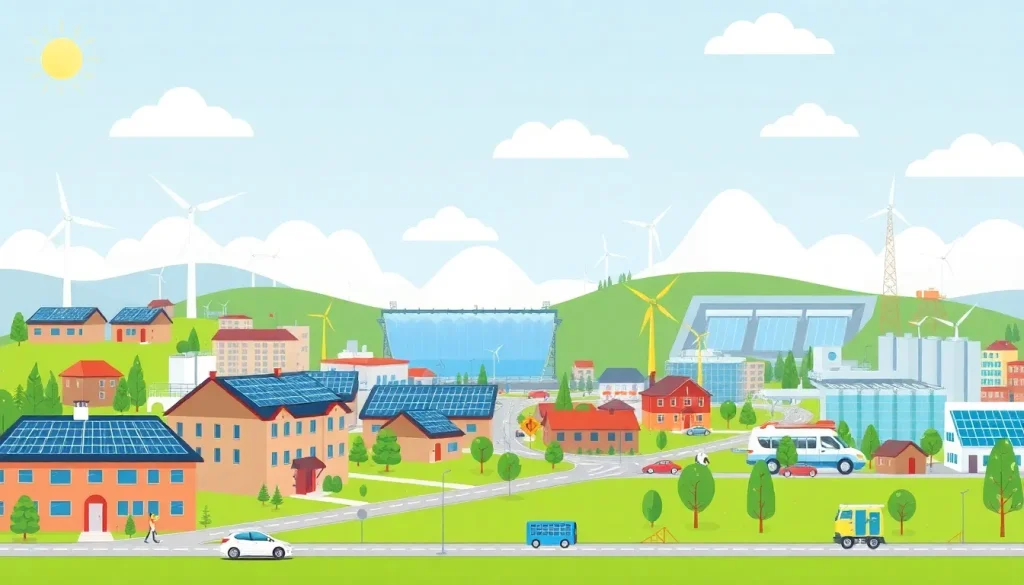
A fossil-free renewable energy system would combine variable renewable sources (mainly wind and solar) with dispatchable renewables (hydropower, geothermal, biomass, concentrated solar power with thermal storage), energy storage (batteries, pumped hydro, hydrogen, compressed air), grid interconnections over large areas to smooth variability, and demand-side flexibility (smart charging, industrial load shifting). Electrification of heating and transport (heat pumps, electric vehicles) would extend renewable electricity to other sectors. For hard-to-electrify sectors like steelmaking, aviation, and shipping, renewable hydrogen or synthetic fuels produced via electrolysis could be used. The system would be designed to ensure supply-demand balance at all times without fossil fuel backup.
Evidence strength
Numerous modeling studies (e.g., from Stanford, LUT University, IEA, IRENA) suggest that 100% renewable energy systems are technically feasible and economically viable by mid-century, often at costs comparable to or lower than fossil-based systems when externalities are considered. However, these are simulations with assumptions about technology costs, resource availability, and social acceptance. Real-world evidence is limited to smaller-scale or high-penetration grids: Denmark has operated with over 50% wind power annually, and South Australia has met 100% of demand from solar for short periods. No large, industrialized nation has yet achieved a full year of 100% renewable electricity without fossil fuel backup. The evidence base is strong for the technical potential of high shares, but moderate for complete fossil-free operation at scale.
Potential scale
Renewable resources are globally abundant: solar and wind potential far exceed current energy demand. Theoretically, a 100% renewable system could supply all energy needs worldwide. However, scaling is constrained by land use, material requirements (copper, lithium, rare earths), grid infrastructure, and the need for massive storage. The transition would require a global build-out of renewable capacity, transmission, and storage, which is feasible over several decades but faces political, financial, and supply-chain challenges.
Cost considerations
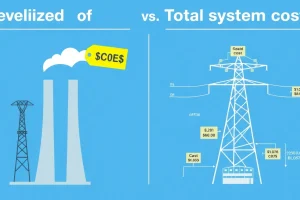
Levelized costs of electricity from solar and wind have fallen dramatically, often undercutting new fossil fuel plants. However, system costs increase with higher penetration due to the need for storage, grid expansion, and backup. Studies estimate that a 100% renewable electricity system could have total system costs 10–30% higher than today’s systems, but these costs are declining. The transition requires large upfront investments, but operational costs are low. Overall, the cost is moderate relative to the cost of climate change impacts, but the distribution of costs and benefits is uneven.
Implementation time
Building a fully renewable energy system is a multi-decade endeavor. While individual projects (solar farms, wind parks) can be deployed in 1–3 years, the necessary grid upgrades, storage facilities, and sector coupling (electrification of transport and heat) will take decades. Most net-zero scenarios target 2050 for a fully decarbonized energy system, implying a 30-year transition. Immediate results in terms of emissions reductions can be seen as renewables displace fossil fuels incrementally.
Environmental benefits
Eliminating fossil fuel combustion would drastically reduce CO2 emissions (currently ~36 Gt/year from energy), as well as sulfur dioxide, nitrogen oxides, and particulate matter. It would also reduce water consumption for thermal power plant cooling, and avoid oil spills and mining impacts. However, renewable infrastructure itself has environmental footprints: land use for solar and wind farms, mining for materials, and end-of-life waste. Overall, the net environmental benefit is large, but careful siting and circular economy practices are needed to minimize harm.
Social and economic co-benefits
Transitioning to renewables can create jobs in manufacturing, installation, and maintenance; reduce energy import dependence; improve public health through cleaner air; and provide energy access in remote areas via off-grid systems. Energy price volatility may decrease as fuel costs are eliminated. However, communities dependent on fossil fuel industries may face economic disruption, requiring just transition policies.
Risks and unintended consequences
Risks include: material supply bottlenecks (lithium, cobalt, rare earths) leading to new dependencies; land-use conflicts with agriculture and conservation; visual and noise impacts of wind turbines; hydropower’s ecological effects; biomass sustainability concerns; and the challenge of managing intermittent supply without adequate storage, potentially causing blackouts. Over-reliance on variable renewables without sufficient firm capacity could jeopardize grid reliability. Additionally, the manufacturing of renewable technologies currently relies on fossil fuels, creating a circular dependency.
Where it works best
Regions with abundant, diverse renewable resources (e.g., sunny and windy areas, hydropower potential) and strong grid interconnections are best suited. Countries like Norway (hydropower), Iceland (geothermal/hydro), and parts of Latin America can achieve near-100% renewable electricity more easily. Coastal areas with offshore wind, deserts with solar, and regions with existing nuclear or hydro baseload can integrate high shares of variable renewables.
Where it may not work
Land-constrained, densely populated regions with limited renewable resources (e.g., Singapore, some small island states) may struggle to generate enough renewable energy domestically and would rely on imports or offshore options. Areas with weak grids, political instability, or heavy dependence on fossil fuel exports may face economic and technical barriers. Industrial sectors requiring high-temperature heat or chemical feedstocks (cement, steel, aviation) are harder to electrify and may need costly hydrogen or carbon capture alternatives.
Comparison with alternatives
Alternatives to a 100% renewable system include: fossil fuels with carbon capture and storage (CCS), nuclear power, and hybrid systems that use some fossil gas with CCS for backup. Nuclear provides firm, low-carbon power but has high costs, long build times, and waste concerns. CCS is not yet proven at scale and extends fossil fuel use. A fully renewable system avoids these issues but requires solving variability. Many net-zero pathways include a mix of renewables, nuclear, and some CCS. The optimal mix is context-dependent.
Case studies
Denmark: regularly meets over 50% of electricity demand with wind, using interconnections to Nordic hydro and German markets for balancing. South Australia: has achieved periods of 100% solar power (rooftop and utility-scale) meeting demand, supported by grid-scale batteries. Iceland: nearly 100% renewable electricity from hydro and geothermal, but still uses fossil fuels for transport and fishing. Costa Rica: has run on over 98% renewable electricity for several consecutive years, mainly hydropower, but faces drought risks. These examples show high renewable shares are possible, but none have eliminated fossil fuels entirely across all sectors.
Final assessment
The evidence suggests that a global energy system operating entirely without fossil fuels is technically achievable in the long term, but the transition is complex and requires overcoming significant economic, technical, and social challenges. For electricity, high renewable shares are already practical with grid integration; for heating and transport, electrification is advancing; for industry and aviation, solutions are less mature. The most prudent path is to aggressively deploy renewables while investing in storage, grids, and research for hard-to-abate sectors, and to maintain some firm low-carbon backup (nuclear, hydro, or gas with CCS) during the transition. Complete independence from fossil fuels may be a goal for the second half of the century, but near-term focus should be on deep decarbonization using all available low-carbon tools.
FAQ
Is it possible to run a grid on 100% renewable energy without any fossil fuel backup?
Yes, in theory, with sufficient storage, demand flexibility, and overcapacity. However, no large grid has done so for a full year without relying on interconnections that may include fossil-based power. Small-scale systems (islands, microgrids) have achieved 100% renewable operation.
What are the main challenges to eliminating fossil fuels from the energy system?
Variability of wind and solar, need for long-duration storage, high costs of green hydrogen for industry and aviation, material supply chains, and the current reliance on fossil fuels for manufacturing renewable technologies.
How long will it take to transition to a fully renewable energy system?
Most scenarios project a transition by 2050 for electricity, but full decarbonization of all sectors (including industry, aviation, shipping) may take until 2060–2070. The pace depends on policy, investment, and technology development.
References
- International Energy Agency (IEA), Net Zero by 2050 report, 2021
- IRENA, Global Energy Transformation: A Roadmap to 2050, 2019
- IPCC Sixth Assessment Report, Working Group III, 2022
- LUT University and Energy Watch Group, Global 100% RE System, 2019
- Danish Energy Agency, Energy Statistics 2022