In brief
At a glance
Quick Facts
- Definition
- The disproportionate exposure of disadvantaged groups to environmental hazards and their reduced capacity to cope.
- Key Drivers
- Historical discrimination, economic inequality, land-use policies, and unequal political influence.
- Common Hazards
- Air pollution, contaminated water, toxic waste sites, extreme heat, and flooding.
- Health Effects
- Higher rates of asthma, cancer, lead poisoning, and heat-related illnesses in marginalized communities.
- Global Scope
- Environmental inequality exists in both wealthy and developing nations, often along lines of race, class, and caste.
- Policy Response
- Environmental justice movements advocate for fair treatment and meaningful involvement of all people in environmental decisions.
- Economic Cost
- Environmental health disparities cost billions in healthcare expenses and lost productivity annually.
- Climate Change Amplifier
- Climate change exacerbates existing inequalities, as vulnerable groups have fewer resources to adapt to extreme weather and sea-level rise.
Key Takeaways
- Social and economic inequality leads to the uneven distribution of environmental hazards, with disadvantaged groups bearing a disproportionate share of risks such as pollution, toxic waste, and climate impacts.
- Inequality reduces the capacity of marginalized communities to prepare for, cope with, and recover from environmental threats, creating a cycle of vulnerability.
- Historical discrimination, land-use policies, and unequal political power are among the root causes that systematically expose certain populations to higher environmental risk.
- Addressing the link between inequality and environmental risk is fundamental to environmental justice, public health, and sustainable development, requiring integrated policy solutions.
What Is How Inequality Affects Environmental Risk?
How inequality affects environmental risk refers to the ways in which social and economic disparities—such as differences in income, race, ethnicity, and social status—lead to unequal exposure to environmental hazards and unequal capacity to cope with their consequences. Environmental risks include pollution, climate change impacts, natural disasters, and proximity to hazardous sites. Inequality does not create these risks, but it systematically channels them toward disadvantaged groups while shielding more privileged populations. This relationship is a central concern of environmental justice, a field that examines the fair distribution of environmental benefits and burdens across society.
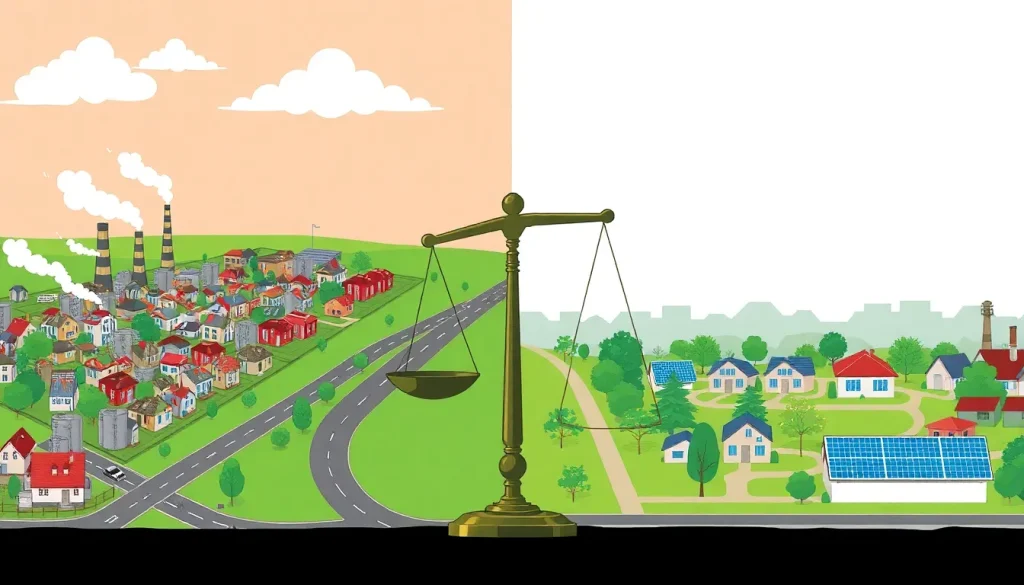
The concept is rooted in the observation that environmental quality is not randomly distributed. Instead, it mirrors existing social hierarchies. For example, low-income neighborhoods and communities of color are more likely to be located near industrial facilities, waste disposal sites, and high-traffic roadways, leading to higher exposure to air and water pollution. At the same time, these communities often have fewer resources—such as political influence, healthcare access, and financial safety nets—to mitigate or adapt to these risks. The result is a compounding of disadvantage: environmental hazards worsen health and economic outcomes, which in turn deepen inequality, making it harder for affected groups to escape harmful environments. This feedback loop is a defining feature of how inequality operates in the environmental domain.
How It Works
The link between inequality and environmental risk operates through several interconnected mechanisms. First, differential exposure places hazards closer to disadvantaged communities. This occurs through market dynamics, where cheaper land in polluted areas attracts low-income residents, and through discriminatory practices like redlining, which historically confined racial minorities to less desirable neighborhoods. Industrial facilities, waste treatment plants, and major transportation corridors are often sited in these areas due to lower land costs and weaker political opposition. As a result, residents face higher levels of air pollutants, contaminated water, and noise pollution.
Second, differential susceptibility means that even when exposure levels are similar, disadvantaged groups suffer more severe health effects. Factors such as pre-existing health conditions, limited access to healthcare, poor nutrition, and high stress—all linked to poverty and discrimination—increase vulnerability. For instance, a child with asthma living in a low-income household may experience more severe attacks from the same level of air pollution than a wealthier child with better medical care.
Third, differential capacity to cope and recover exacerbates the impact. Wealthier individuals and communities can afford protective measures like air purifiers, relocation, or insurance, while marginalized groups often lack these options. After a disaster, recovery is slower in low-income areas due to inadequate infrastructure, limited savings, and less political clout to secure government aid. These mechanisms create a self-reinforcing cycle: environmental harm deepens inequality, which in turn increases future environmental risk.
Main Causes or Drivers
Several structural factors drive the unequal distribution of environmental risk. Historical discrimination is a primary cause, particularly in countries with legacies of segregation and colonialism. Policies such as redlining in the United States systematically denied investment and services to neighborhoods based on race, creating lasting patterns of disinvestment that made these areas attractive for polluting industries. Similarly, indigenous lands worldwide have been targeted for resource extraction and waste disposal without consent.
Economic inequality itself is a powerful driver. Low-income households often have limited housing choices and are priced into areas with lower environmental quality. They may also work in more hazardous occupations, such as agriculture with pesticide exposure or factories with poor ventilation. Political power imbalances allow wealthier communities to lobby against undesirable land uses, while marginalized groups lack the resources to effectively oppose siting decisions. This is often described as “environmental racism” or “environmental classism” when it follows racial or class lines. Additionally, global economic structures export environmental risks from wealthy nations to developing countries through practices like shipping electronic waste or locating polluting industries in regions with weaker regulations.
What the Evidence Shows
A large body of research documents the connection between inequality and environmental risk. Studies consistently find that race and income are strong predictors of proximity to hazardous waste sites, air pollution sources, and contaminated water. For example, in many countries, minority and low-income communities experience higher concentrations of particulate matter and nitrogen dioxide, both linked to respiratory and cardiovascular diseases. Research also shows that these disparities persist over time and are not solely explained by market forces; they reflect deliberate policy choices and institutional discrimination.
Evidence from natural disasters further illustrates the pattern. Following events like hurricanes, floods, and heatwaves, mortality and property damage are disproportionately higher in disadvantaged areas. Recovery is often slower and less complete, widening pre-existing inequalities. Climate change projections indicate that these disparities will grow, as vulnerable populations face greater exposure to extreme weather, sea-level rise, and food insecurity while having fewer adaptation resources. The evidence base is robust across disciplines, including public health, sociology, geography, and environmental science, confirming that inequality is a fundamental determinant of environmental risk.
Environmental and Human Impacts
The convergence of inequality and environmental risk produces severe consequences for both human well-being and ecosystems. Health impacts are among the most direct: higher rates of asthma, cancer, lead poisoning, and heat-related illnesses in marginalized communities. Children and the elderly are especially vulnerable. Mental health also suffers due to the stress of living in degraded environments and the trauma of disasters.
Economic impacts include lost productivity, increased healthcare costs, and reduced property values, which further entrench poverty. Environmental degradation in disadvantaged areas can lead to a downward spiral, where blight and pollution discourage investment, limiting opportunities for residents. On a broader scale, inequality-driven environmental risk undermines social cohesion and can fuel conflict over resources. Ecosystems in these areas often receive less protection, leading to biodiversity loss and reduced ecosystem services, which disproportionately affect communities that depend directly on natural resources for their livelihoods.
Why It Matters
Understanding how inequality affects environmental risk is crucial for several reasons. First, it reveals that environmental problems are not just technical or ecological issues but are deeply intertwined with social justice. Ignoring this link can lead to policies that inadvertently worsen disparities—for example, a carbon tax that burdens low-income households without compensatory measures. Second, addressing these inequalities is essential for effective environmental protection. When a significant portion of the population is left vulnerable, the overall resilience of society to environmental threats is weakened.
Third, the issue has profound ethical implications. The right to a healthy environment is increasingly recognized as a human right, yet inequality systematically denies this right to millions. Finally, tackling the inequality-environment nexus is key to achieving the Sustainable Development Goals, which emphasize leaving no one behind. Without deliberate efforts to reduce environmental disparities, progress on health, poverty, and climate action will remain incomplete and unjust.
Solutions
Addressing the link between inequality and environmental risk requires integrated strategies that target both environmental quality and social equity. Policy interventions include strengthening environmental regulations and ensuring their enforcement in all communities, not just affluent ones. Environmental impact assessments should explicitly consider distributional effects and cumulative impacts on vulnerable groups. Zoning and land-use reforms can prevent the concentration of hazards in disadvantaged areas and promote equitable access to green spaces and clean resources.
Community empowerment is essential. Meaningful participation of affected residents in decision-making processes helps ensure that solutions are tailored to local needs and that power imbalances are addressed. Legal frameworks, such as environmental justice laws, can provide tools for communities to challenge discriminatory practices. Economic measures like targeted investments in clean energy, public transit, and affordable housing in underserved areas can reduce both inequality and environmental risk. At the global level, international cooperation is needed to prevent the export of environmental harms to poorer nations and to support climate adaptation in the most vulnerable regions.
FAQ
What is environmental inequality?
Environmental inequality refers to the unfair distribution of environmental hazards and benefits across different social groups, typically along lines of income, race, or ethnicity. It means that some communities bear a greater burden of pollution, resource depletion, and climate impacts while having less access to environmental amenities like clean air, water, and green spaces.
How does inequality increase environmental risk?
Inequality increases environmental risk through three main pathways: differential exposure (hazards are concentrated in disadvantaged areas), differential susceptibility (marginalized groups are more vulnerable due to health and social factors), and differential capacity to cope (they have fewer resources to prepare for, respond to, and recover from environmental threats).
Why does environmental inequality matter?
Environmental inequality matters because it violates principles of fairness and human rights, undermines public health, and perpetuates cycles of poverty. It also weakens overall societal resilience to environmental challenges and hinders progress toward sustainable development. Addressing it is essential for creating just and effective environmental policies.
References
- United Nations Environment Programme, 'Global Environmental Outlook'
- U.S. Environmental Protection Agency, 'Environmental Justice'
- World Health Organization, 'Environmental Health Inequalities in Europe'