In brief
At a glance
Quick Facts
- Typical power output
- Up to 300 MWe per unit, though some designs are smaller (e.g., microreactors under 10 MWe).
- Number of SMR designs worldwide
- Over 70 designs are under development or conceptual stages, according to the IAEA.
- Primary coolants used
- Light water, helium, liquid sodium, lead, or molten salt, depending on the design.
- Potential non-electric applications
- Industrial process heat, district heating, desalination, and hydrogen production.
- First SMRs in operation
- Russia’s floating nuclear power plant Akademik Lomonosov (two 35 MWe reactors) began commercial operation in 2020.
- Key safety feature
- Many designs incorporate passive safety systems that rely on natural forces, not active controls or external power.
- Regulatory status
- Several designs are under licensing review in the U.S., Canada, and the U.K., but no commercial SMR has been widely deployed.
- Estimated construction time
- Proponents claim 3–5 years for factory-built modules, compared to 6–10+ years for large reactors, but this is unproven.
Key Takeaways
- Small modular reactors (SMRs) are advanced nuclear reactors with a power capacity of up to 300 MWe per unit, designed for factory fabrication and modular deployment.
- SMRs offer potential advantages including enhanced safety features, lower upfront capital costs, and flexible applications such as electricity generation, industrial heat, and desalination.
- Significant uncertainties remain regarding the economic competitiveness, regulatory frameworks, waste management, and proliferation risks of SMRs.
- Despite growing interest and numerous designs under development, no commercial SMR has yet been widely deployed, and their role in future energy systems remains unproven.
What Is Small Modular Reactors: Potential and Uncertainty?
Small modular reactors (SMRs) are a class of nuclear fission reactors designed to be smaller in size and power output than conventional nuclear reactors, typically generating up to 300 megawatts electric (MWe) per unit. The term “modular” refers to the ability to factory-fabricate major components and transport them to a site for assembly, as well as the potential to add additional units incrementally as demand grows. SMRs encompass a wide variety of designs, including light water reactors, high-temperature gas-cooled reactors, liquid metal-cooled fast reactors, and molten salt reactors, many of which incorporate advanced safety features and simplified operating requirements.
The potential of SMRs lies in their promise to address many of the challenges associated with large-scale nuclear power plants, such as high upfront capital costs, long construction times, and siting limitations. Proponents argue that SMRs could provide reliable, low-carbon electricity to remote communities, industrial facilities, and developing countries, while also complementing intermittent renewable energy sources. However, significant uncertainties remain regarding their economic viability, regulatory approval, waste management, and proliferation resistance. As of now, no SMR design has been commercially deployed at scale, and the technology remains in various stages of development and licensing review around the world.
How It Works
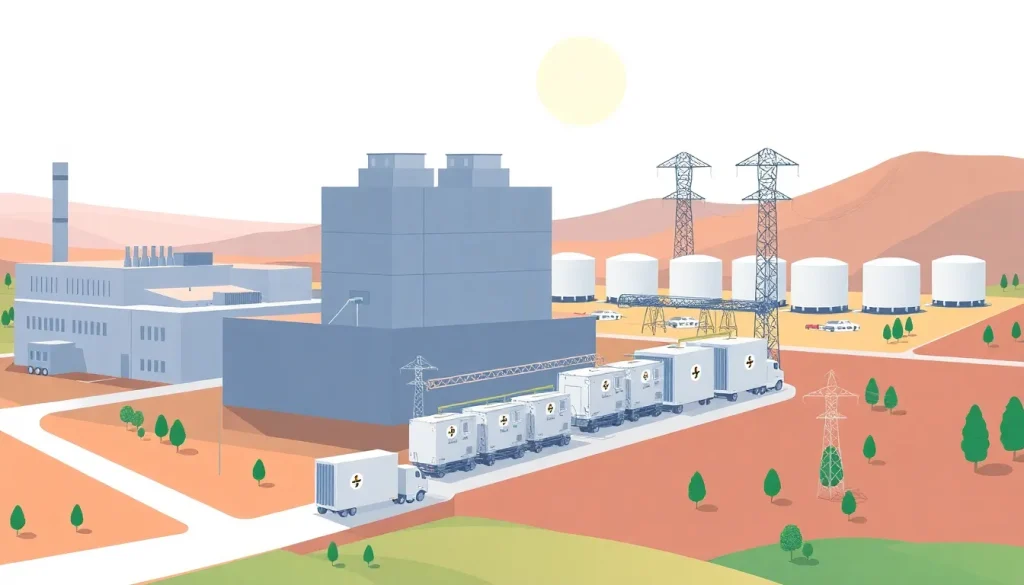
Small modular reactors operate on the same basic principle as conventional nuclear reactors: they use nuclear fission to generate heat, which is then converted into electricity. However, SMRs are designed to be manufactured in a factory setting and transported to the site as complete modules, reducing on-site construction time and costs. The smaller size allows for a range of coolant and fuel types, including light water, liquid metal, gas, or molten salt, depending on the design. Many SMRs incorporate passive safety systems that rely on natural physical processes—such as gravity, natural circulation, and convection—to remove heat from the reactor core in the event of an accident, without the need for active human intervention or external power.
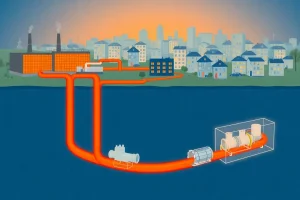
The modular nature of SMRs means that a power plant can start with a single unit and add more as needed, providing flexibility for incremental capacity expansion. Some designs are intended for deployment in remote or off-grid locations, where they can replace diesel generators or provide process heat for industrial applications. Others are designed to be integrated into existing electrical grids, offering baseload or load-following power. The smaller size also allows for underground or underwater siting, which can enhance security and reduce the risk of external hazards. Despite these design features, the actual performance and reliability of SMRs remain to be demonstrated through operational experience.
Benefits, Limitations and Trade-offs
SMRs offer several potential benefits over traditional large-scale nuclear plants. Their smaller size and modular construction can reduce upfront capital costs and financial risk, making nuclear power more accessible to a wider range of investors and countries. Factory fabrication and standardization could improve quality control and shorten construction schedules. Enhanced safety features, such as passive cooling and lower core inventories of radioactive material, may reduce the probability and consequences of severe accidents. Additionally, SMRs can be used for non-electric applications, including district heating, desalination, and hydrogen production, potentially expanding the role of nuclear energy beyond electricity generation.
However, these benefits come with trade-offs and limitations. The economic case for SMRs is unproven; while individual units may be cheaper, the cost per unit of electricity could be higher than for large reactors due to lost economies of scale. Standardization and mass production are necessary to achieve cost reductions, but this requires a large order book that may not materialize without government support. SMRs also face the same challenges as conventional nuclear power, including long-term waste management, public acceptance, and the need for robust regulatory frameworks. The smaller size does not eliminate proliferation concerns, and some designs may use fuels that require new safeguards approaches.
Environmental and Human Impacts
Like all nuclear power, SMRs produce very low greenhouse gas emissions during operation, making them a potential tool for mitigating climate change. Their smaller footprint and ability to be sited on existing industrial or brownfield sites could reduce land-use impacts compared to large nuclear plants or renewable energy installations. However, the full life-cycle environmental impacts—including mining, fuel fabrication, construction, and decommissioning—must be considered. SMRs still generate radioactive waste, including spent fuel, which requires safe, long-term management. The volume and characteristics of waste vary by design, and some advanced SMRs may produce waste with different radiotoxicity profiles.
Human impacts include the potential for accidents, although passive safety features are intended to lower risk. The routine operation of SMRs would involve radiation exposure to workers, similar to existing nuclear facilities. Public perception and acceptance remain critical; communities may be concerned about safety, waste storage, and the potential for accidents, even with smaller reactors. The deployment of SMRs in remote or developing regions could bring energy access and economic benefits, but also raises questions about regulatory capacity, emergency planning, and long-term stewardship of nuclear materials.
Regional Differences
Interest in SMRs varies significantly by region, driven by differences in energy needs, policy priorities, and regulatory environments. In North America, several SMR designs are under active development and licensing review, with government support for demonstration projects. The United States and Canada have established regulatory frameworks for advanced reactors, and some designs are progressing toward commercial deployment. In Europe, interest is mixed; some countries view SMRs as a complement to renewables and a means to reduce carbon emissions, while others remain committed to phasing out nuclear power entirely.
In Asia, countries such as China and Russia are actively developing and constructing SMRs, with some designs already in operation or under construction. These nations see SMRs as a way to expand nuclear energy to remote areas and for industrial applications. In Africa and other developing regions, SMRs are considered a potential solution for energy access, but face challenges related to financing, infrastructure, and regulatory capacity. International cooperation through organizations like the International Atomic Energy Agency (IAEA) aims to harmonize standards and support the safe deployment of SMRs worldwide.
Data Limitations and Uncertainties
Assessments of SMR potential are constrained by limited operational data. Most SMR designs exist only on paper or in early prototype stages, meaning that performance, cost, and safety claims are based on engineering analyses and simulations rather than real-world experience. Cost estimates vary widely and are highly sensitive to assumptions about learning rates, factory throughput, and regulatory costs. Without a track record of construction and operation, it is difficult to predict with confidence whether SMRs will achieve the promised economic and safety benefits.
Uncertainties also surround the regulatory pathways for SMRs. While some countries have adapted their licensing processes for advanced reactors, the time and cost required for design certification and site licensing remain significant unknowns. Additionally, the long-term behavior of novel fuels and materials under irradiation is not fully understood, and the management of waste from advanced reactor types requires further research. Proliferation risk assessments for SMRs are complicated by the diversity of designs and fuel cycles, and international safeguards frameworks may need to be updated. These data gaps and uncertainties underscore the need for continued research, demonstration projects, and transparent analysis.
Common Misconceptions
One common misconception is that SMRs are a completely new technology. In reality, small reactors have been used for decades in naval propulsion and research, and many SMR concepts are based on established reactor technologies. Another misconception is that SMRs are inherently “walk-away safe” and pose no risk of accidents. While passive safety features can reduce risk, no reactor is entirely risk-free, and the potential for human error, natural disasters, or sabotage remains. Additionally, some believe that SMRs will solve the nuclear waste problem; however, they still produce radioactive waste that requires long-term management, and some designs may even generate more complex waste streams.
There is also a misconception that SMRs are always cheaper than large reactors. While the upfront capital cost per unit is lower, the levelized cost of electricity may be higher if economies of scale are not achieved. Finally, the idea that SMRs are immune to proliferation concerns is inaccurate. The smaller size and potential for widespread deployment could increase the number of sites and materials that require safeguarding, and some designs use fuel that could be diverted for weapons purposes. Addressing these misconceptions is essential for informed public debate and policy-making.
FAQ
What are small modular reactors?
Small modular reactors (SMRs) are nuclear fission reactors with a power capacity typically under 300 MWe per unit, designed for factory fabrication and modular deployment. They encompass a variety of designs and aim to offer lower costs, enhanced safety, and greater flexibility than traditional large nuclear plants.
How do SMRs differ from traditional nuclear reactors?
SMRs are smaller in size and output, can be manufactured in a factory and transported to the site, and often incorporate advanced safety features such as passive cooling. They are designed for incremental capacity addition and can serve applications beyond electricity, such as industrial heat or desalination.
Why do SMRs matter for the future of energy?
SMRs could provide reliable, low-carbon power to complement intermittent renewables, expand energy access in remote areas, and help decarbonize hard-to-abate sectors. However, their ultimate impact depends on overcoming economic, regulatory, and technical uncertainties.
References
- International Atomic Energy Agency (IAEA), "Advances in Small Modular Reactor Technology Developments," 2022 Edition.
- World Nuclear Association, "Small Nuclear Power Reactors," updated periodically.
- U.S. Department of Energy, Office of Nuclear Energy, "Small Modular Reactors."