In brief
At a glance
Quick Facts
- Creator
- Kate Raworth, an economist and senior associate at Oxford University’s Environmental Change Institute.
- First introduced
- In a 2012 Oxfam discussion paper titled 'A Safe and Just Space for Humanity'.
- Book publication
- Doughnut Economics: Seven Ways to Think Like a 21st-Century Economist was published in 2017.
- Core visual
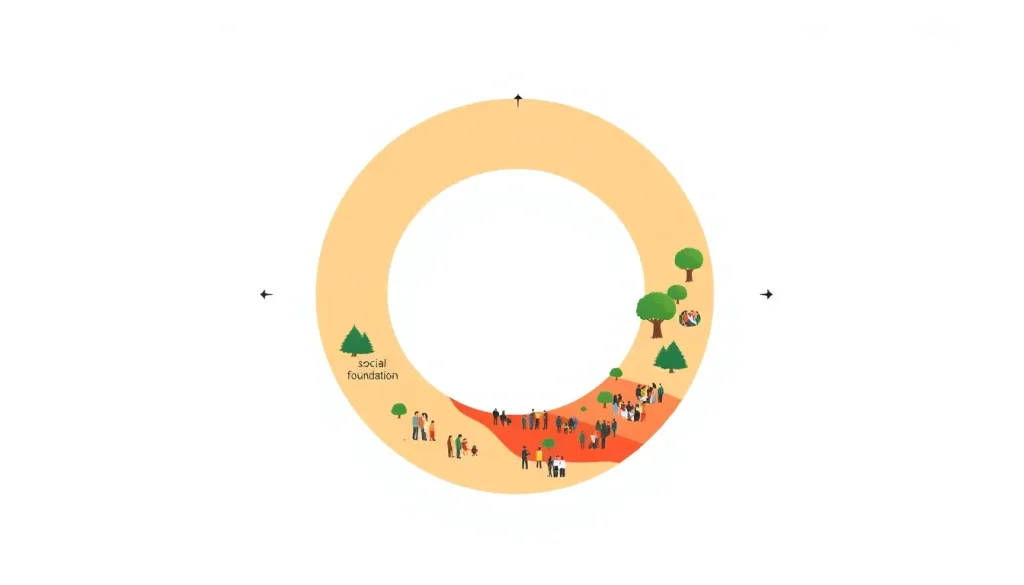
- Two concentric rings representing social foundation (inner) and ecological ceiling (outer), with the safe and just space in between.
- Social dimensions
- Twelve dimensions including food, health, education, income, water, energy, housing, gender equality, and political voice.
- Planetary boundaries
- Nine boundaries including climate change, biodiversity loss, land-system change, freshwater use, and chemical pollution.
- Key principle
- The goal of economics should be to meet the needs of all within the means of the planet, not endless GDP growth.
- Adoption
- Amsterdam became the first city to formally adopt the doughnut model in its policy-making in 2020.
Key Takeaways
- Doughnut Economics is a visual framework that defines a safe and just space for humanity between a social foundation and an ecological ceiling.
- The model integrates the concept of planetary boundaries with social priorities, aiming to meet the needs of all people within the means of the planet.
- It challenges the traditional focus on GDP growth, proposing instead that economies should be regenerative and distributive by design.
- The framework has been adopted by cities, regions, and organizations worldwide as a tool for holistic policy-making and sustainability planning.
What Is Doughnut Economics?
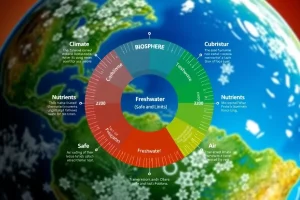
Doughnut Economics is a conceptual framework for sustainable development that reimagines the purpose of economic activity. It was popularized by economist Kate Raworth in her 2017 book Doughnut Economics: Seven Ways to Think Like a 21st-Century Economist, though the core visual model was first introduced in a 2012 Oxfam discussion paper. The framework consists of two concentric rings: an inner ring representing the social foundation, below which lies critical human deprivation, and an outer ring representing the ecological ceiling, beyond which lies critical planetary degradation. The space between these two boundaries is the “doughnut”—a safe and just space where humanity can thrive without overshooting Earth’s life-supporting systems or leaving people without essential resources.
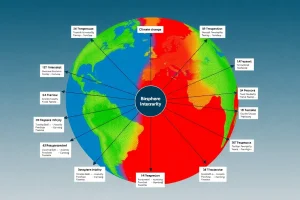
The social foundation includes twelve dimensions derived from the United Nations Sustainable Development Goals, such as food, health, education, income and work, water and sanitation, energy, housing, networks, gender equality, social equity, political voice, and peace and justice. The ecological ceiling is based on the nine planetary boundaries identified by Earth-system scientists, including climate change, biodiversity loss, land conversion, and freshwater use. Doughnut Economics argues that the goal of economic policy should be to bring all of humanity into the doughnut—above the social foundation and below the ecological ceiling—rather than pursuing endless GDP growth.
History
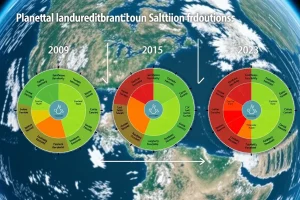
The intellectual roots of Doughnut Economics lie in the convergence of two major scientific and policy frameworks. The first is the planetary boundaries concept, introduced in 2009 by a team of Earth-system scientists led by Johan Rockström and Will Steffen. They identified nine critical Earth-system processes and proposed quantitative boundaries for each, beyond which human activities could trigger irreversible environmental changes. The second is the social foundation, which draws on the social priorities articulated in the United Nations Sustainable Development Goals (SDGs) adopted in 2015. Kate Raworth, then a senior researcher at Oxfam, combined these two frameworks in a 2012 Oxfam discussion paper titled “A Safe and Just Space for Humanity: Can We Live Within the Doughnut?” The paper presented the doughnut-shaped diagram for the first time, visually linking planetary boundaries and social thresholds.
Raworth further developed the concept in her 2017 book, Doughnut Economics: Seven Ways to Think Like a 21st-Century Economist, which expanded the framework into a broader critique of mainstream economic thinking. The book challenged seven core ideas of traditional economics, including the obsession with GDP growth, the assumption of rational economic man, and the neglect of ecological and social embeddedness. Since its publication, the doughnut model has gained traction among academics, policymakers, and grassroots organizations, leading to practical applications in cities like Amsterdam and Brussels.
How It Works
The Doughnut Economics framework operates on two levels: as a visual compass for assessing human well-being and planetary health, and as a set of seven principles for redesigning economic systems. The visual doughnut consists of two concentric rings. The inner ring represents the social foundation, below which lies critical human deprivation in areas such as food, water, health, and political voice. The outer ring represents the ecological ceiling, beyond which lies critical planetary degradation in areas such as climate change, biodiversity loss, and ocean acidification. The doughnut itself is the safe and just space where humanity can thrive without overshooting planetary boundaries or falling short on social needs.
To use the doughnut as a diagnostic tool, indicators are selected for each of the twelve social dimensions and nine planetary boundaries. For any given place—whether a city, country, or the entire planet—the framework maps how well social needs are being met and how far ecological limits are being exceeded. This creates a snapshot of current performance, highlighting areas where shortfalls or overshoots occur. The seven principles then guide the transformation of economic thinking: change the goal from GDP growth to the doughnut; see the big picture by embedding the economy in society and nature; nurture human nature by recognizing social and altruistic behaviors; get savvy with systems thinking; design to distribute wealth and power; create to regenerate natural systems; and be agnostic about growth. These principles are meant to inspire new policies, business models, and community actions.
Importance and Impact
Doughnut Economics has gained significant attention as a practical alternative to growth-dependent economic models. Its importance lies in its ability to integrate social and environmental goals into a single, intuitive framework that can be communicated to diverse audiences. By shifting the focus from GDP growth to thriving within planetary boundaries, it addresses the interconnected crises of inequality and ecological breakdown. The model has influenced international policy discussions, including the United Nations Sustainable Development Goals and the post-growth movement, and has been endorsed by figures such as Pope Francis and the Club of Rome.
The impact of Doughnut Economics is most visible in its adoption by cities and regions. Amsterdam became the first city to formally apply the doughnut model in its policy-making, using it to guide the city’s recovery strategy after the COVID-19 pandemic. The Amsterdam City Doughnut, developed in collaboration with Raworth’s Doughnut Economics Action Lab (DEAL), maps local social and ecological indicators and has inspired similar initiatives in Brussels, Copenhagen, and other municipalities. The framework has also been used by businesses, community groups, and educators to rethink their goals and strategies, demonstrating its versatility as a tool for systemic change.
Examples
Several real-world applications illustrate how the doughnut model is being used at different scales. At the city level, Amsterdam’s “Doughnut Deal” integrates the framework into circular economy strategies, housing policies, and climate action plans. The city uses a “City Portrait” methodology to assess local and global impacts, ensuring that its prosperity does not come at the expense of other regions or ecosystems. Similarly, Brussels has adopted the doughnut as a guiding vision for its transition to a sustainable and inclusive economy, with citizen assemblies and local projects aligned to the model.
At the national level, the government of Wales incorporated doughnut economics principles into its Well-being of Future Generations Act, which requires public bodies to consider long-term social, economic, environmental, and cultural well-being. In the business sector, companies like Patagonia and Interface have used the doughnut to set sustainability targets that go beyond net-zero emissions to include social and ecological regeneration. Educational institutions, from primary schools to universities, have also integrated the doughnut into curricula to teach systems thinking and sustainability.
Benefits, Limitations and Trade-offs
The doughnut model offers several benefits. It provides a clear, visual, and holistic framework that bridges social and environmental concerns, making it accessible to non-economists. It challenges the growth paradigm and encourages a shift toward regenerative and distributive economies. The model is flexible and can be adapted to different scales, from global to local, and to various sectors. It also promotes participatory approaches, as communities can define their own social indicators and ecological priorities.
However, the framework has limitations. Critics argue that it lacks a detailed theory of change or a clear set of policy instruments to achieve the doughnut. The selection of indicators and thresholds can be subjective and may not capture all relevant dimensions. Some economists contend that the model underestimates the role of technological innovation and market mechanisms in decoupling growth from environmental impact. Additionally, implementing the doughnut at a national or global level faces political and institutional barriers, as it requires fundamental changes to existing economic structures and power dynamics. Trade-offs between social and environmental goals can also arise, and the framework does not prescribe how to resolve them.
Connections to Other Systems
Doughnut Economics is closely related to several other frameworks and movements. It builds directly on the planetary boundaries framework and the social priorities of the SDGs, synthesizing them into a single model. It shares common ground with ecological economics, which emphasizes the economy as a subsystem of the biosphere and questions the feasibility of infinite growth. The concept of a steady-state economy, as advocated by Herman Daly, aligns with the doughnut’s agnosticism about growth. The framework also resonates with degrowth and post-growth movements, which call for a deliberate reduction of material throughput in wealthy nations to achieve sustainability and equity.
Additionally, Doughnut Economics connects to circular economy principles, as both aim to design out waste and regenerate natural systems. It complements the capabilities approach of Amartya Sen and Martha Nussbaum, which focuses on what people are able to do and be, rather than on income alone. The model’s emphasis on distributive design links to discussions on universal basic services, wealth taxes, and cooperative ownership. By integrating these diverse strands, Doughnut Economics provides a unifying vision for a just and sustainable future.
FAQ
What is Doughnut Economics?
Doughnut Economics is a visual framework for sustainable development that defines a safe and just space for humanity between a social foundation (minimum living standards) and an ecological ceiling (planetary boundaries). It aims to meet the needs of all people within the means of the planet.
How does Doughnut Economics work?
It works as a diagnostic tool that maps social shortfalls and ecological overshoots using indicators. The doughnut diagram shows where a country or city falls short on social needs or exceeds environmental limits. The framework also proposes seven principles to redesign economies to be regenerative and distributive.
Why does Doughnut Economics matter?
It matters because it challenges the traditional focus on GDP growth and offers a holistic alternative that addresses both social inequality and environmental crises. It provides a practical compass for policymakers, businesses, and communities to create economies that serve people and the planet.
References
- Raworth, K. (2017). Doughnut Economics: Seven Ways to Think Like a 21st-Century Economist. Random House Business Books.
- Rockström, J., Steffen, W., et al. (2009). 'A safe operating space for humanity'. Nature, 461, 472–475.
- Raworth, K. (2012). A Safe and Just Space for Humanity: Can We Live Within the Doughnut? Oxfam Discussion Paper.