In brief
At a glance
Quick Facts
- Definition
- A multi-criteria measure of the environmental performance of a product throughout its entire life cycle.
- Developed by
- European Commission's Joint Research Centre, as part of the Single Market for Green Products initiative.
- Methodology
- Based on Life Cycle Assessment (LCA) following ISO 14040/14044 standards, with additional harmonized rules.
- Impact categories
- Includes climate change, ozone depletion, water use, land use, resource depletion, ecotoxicity, and more.
- Purpose
- To harmonize environmental footprinting methods, enable fair product comparisons, and support credible green claims.
- Key documents
- PEF Guide and PEF Category Rules (PEFCRs) provide detailed requirements for specific product groups.
- Comparison to carbon footprint
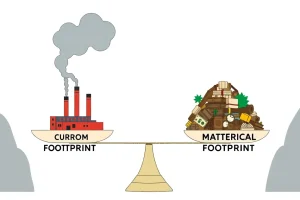
- PEF covers multiple environmental indicators, while a carbon footprint only measures greenhouse gas emissions.
- Use in policy
- Integrated into EU initiatives like the Circular Economy Action Plan and the proposed Green Claims Directive.
Key Takeaways
- The Product Environmental Footprint (PEF) is a standardized, multi-criteria method for measuring the environmental performance of a product throughout its entire life cycle.
- It goes beyond single-issue metrics like carbon footprint by assessing a wide range of impact categories, including climate change, water use, land use, and resource depletion.
- Developed by the European Commission, the PEF aims to create a level playing field for green claims and support the transition to a circular economy.
- Understanding PEF helps businesses identify environmental hotspots, improve product design, and communicate credible sustainability information to consumers and regulators.
What Is a Product Environmental Footprint?
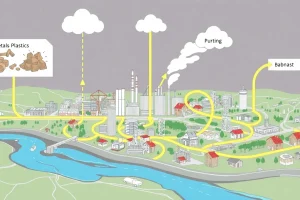
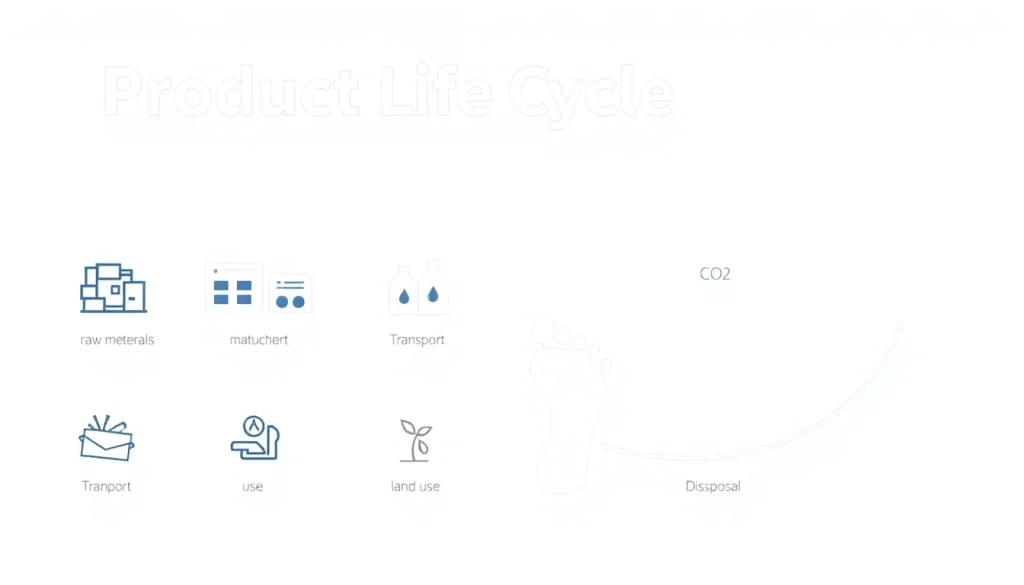
A Product Environmental Footprint (PEF) is a comprehensive, multi-indicator method for quantifying the environmental impacts of a good or service across its entire life cycle—from raw material extraction and processing, through manufacturing, distribution, use, and final disposal or recycling. It is based on the principles of life cycle assessment (LCA) as defined by international standards ISO 14040 and ISO 14044, but adds specific rules to ensure consistency and comparability between products within the same category. The PEF measures impacts across a predefined set of environmental indicators, such as climate change, ozone depletion, ecotoxicity, water use, land use, and resource depletion, providing a holistic view rather than focusing on a single issue.
The PEF was developed by the European Commission’s Joint Research Centre (JRC) as part of the Single Market for Green Products initiative. Its primary goal is to harmonize the many different environmental footprinting methods that exist, reducing confusion for businesses and consumers and preventing greenwashing. By providing a common way to measure environmental performance, the PEF supports the EU’s broader environmental policies, including the Circular Economy Action Plan and the European Green Deal. The method is documented in the PEF Guide and further specified for product groups through PEF Category Rules (PEFCRs), which ensure that assessments are reproducible and meaningful.
Overview
The Product Environmental Footprint is not a label or a certification scheme in itself; rather, it is a methodological framework that can be used to generate environmental information for various purposes, such as product comparisons, eco-design, and substantiating green claims. The framework defines a clear set of requirements for modeling the life cycle of a product, collecting data, and calculating impact scores. It covers all relevant life cycle stages: raw material acquisition, production, distribution, use, and end-of-life (including recycling, incineration, or landfilling). The PEF also accounts for transport and energy inputs at each stage.
A central element of the PEF is the use of a “functional unit”—a quantified description of the product’s function that serves as the basis for comparison. For example, the functional unit for a paint might be “covering 1 square meter of wall for 20 years.” This ensures that different products fulfilling the same function can be compared on an equal footing. The PEF methodology includes 16 midpoint impact categories, such as climate change (carbon footprint), acidification, eutrophication, and resource depletion, which are then normalized and weighted to produce a single score or a set of category results. The weighting step, while optional, allows for aggregation but also introduces value choices that are subject to ongoing scientific and policy debate.
How It Works
Conducting a Product Environmental Footprint study follows the four main phases of life cycle assessment, with additional specifications from the PEF Guide and relevant PEFCRs. The process begins with goal and scope definition, where the purpose of the study, the product system, the functional unit, and system boundaries are clearly stated. Next, a life cycle inventory (LCI) is compiled, collecting data on all inputs (e.g., energy, water, raw materials) and outputs (e.g., emissions, waste) for each process within the system boundary. This data can come from primary sources (company-specific data) or secondary databases, with the PEF Guide providing rules on data quality and selection.
The third phase is life cycle impact assessment (LCIA), where the inventory data is translated into potential environmental impacts using characterization factors. For instance, greenhouse gas emissions are converted into CO₂-equivalents to express the climate change impact. The PEF specifies a set of impact categories and models to be used, ensuring consistency. Finally, the interpretation phase involves analyzing the results, identifying significant issues, and drawing conclusions. If a PEFCR exists for the product category, it must be followed to ensure comparability; PEFCRs provide detailed rules on modeling, data requirements, and reporting. The entire process is iterative, and a critical review by an independent panel is often required when results are intended for public disclosure.
Importance and Impact
The Product Environmental Footprint matters because it addresses a fundamental challenge in sustainability: the lack of a common, reliable way to measure and communicate the environmental performance of products. Without a standardized method, companies can selectively report favorable indicators, and consumers face a confusing landscape of eco-labels and claims. The PEF provides a science-based, transparent framework that enables fair comparisons and helps identify where the most significant environmental impacts occur in a product’s life cycle. This, in turn, supports eco-design, supply chain optimization, and more sustainable consumption patterns.
At the policy level, the PEF is a cornerstone of the EU’s strategy to build a circular economy and achieve climate neutrality. It is being integrated into regulations such as the proposed Green Claims Directive, which would require companies to substantiate environmental claims using PEF-based methods. By harmonizing footprinting rules, the PEF also reduces trade barriers within the EU single market and encourages global alignment on environmental metrics. For businesses, adopting PEF can lead to cost savings through resource efficiency, enhanced brand reputation, and better preparedness for future regulatory requirements.
Benefits, Limitations and Trade-offs
The PEF offers several key benefits. Its multi-criteria approach prevents burden-shifting, where reducing one impact (e.g., carbon) inadvertently increases another (e.g., water use). The standardized methodology enhances comparability and credibility, making it easier for businesses to communicate environmental performance and for consumers to trust the information. The existence of PEFCRs for specific product groups further refines the method, reducing ambiguity and enabling apples-to-apples comparisons. Additionally, the PEF can be used to generate Environmental Product Declarations (EPDs) and support green public procurement.
However, the PEF also has limitations. Conducting a full PEF study is data-intensive and can be costly, especially for small and medium-sized enterprises. The quality of results depends heavily on the availability and representativeness of life cycle inventory data, which may be lacking for certain regions or emerging technologies. Some impact categories, such as biodiversity loss or land use change, are still methodologically challenging to quantify robustly. The weighting step, while useful for aggregation, involves subjective value judgments that can influence the final single score. There is also a trade-off between comprehensiveness and practicality: a full PEF may be too complex for rapid decision-making, leading to the development of simplified tools and screening approaches.
Common Misconceptions
One common misconception is that the Product Environmental Footprint is just another term for a carbon footprint. In reality, a carbon footprint measures only greenhouse gas emissions, while the PEF covers a broad set of environmental indicators, making it a more holistic assessment. Another misunderstanding is that the PEF is a label or certification that can be directly displayed on products. The PEF is a methodology; the results can be used to support labels or claims, but the framework itself does not provide a logo or seal of approval.
Some believe that PEF results are always directly comparable across different products. Comparability is only guaranteed when products are assessed using the same PEFCR and under consistent assumptions. Without a specific PEFCR, comparisons may be misleading. Additionally, there is a perception that the PEF is mandatory for all products sold in the EU. As of the early 2020s, the PEF is largely voluntary, though it is increasingly referenced in policy and may become mandatory for certain product groups or green claims in the future. Finally, the PEF is sometimes seen as a purely European initiative with no global relevance, but its principles align with international LCA standards and it is influencing global discussions on product environmental information.
What Businesses and Governments Can Do
Businesses can integrate the Product Environmental Footprint into their product development and sustainability strategies. By conducting PEF studies, companies can identify environmental hotspots in their value chains, redesign products to reduce impacts, and select suppliers with lower footprints. The results can be used to create credible marketing claims, support Environmental Product Declarations, and respond to customer or investor requests for transparent environmental data. Industry associations can also collaborate to develop PEFCRs for their sectors, ensuring consistent rules and reducing the burden on individual companies.
Governments and public authorities can leverage the PEF to strengthen environmental policies. They can incorporate PEF criteria into green public procurement, incentivizing the market for lower-impact products. Regulators can use the PEF as a reference method for substantiating environmental claims, helping to combat greenwashing and build consumer trust. At the international level, the PEF can serve as a model for harmonizing product environmental footprinting, facilitating trade in sustainable goods and supporting global environmental goals. By promoting the adoption of PEF, governments can accelerate the transition to a more sustainable and circular economy.
FAQ
What is a Product Environmental Footprint?
A Product Environmental Footprint (PEF) is a standardized method for assessing the environmental impacts of a product throughout its life cycle, from raw material extraction to disposal, using multiple environmental indicators.
How does PEF differ from a carbon footprint?
A carbon footprint only measures greenhouse gas emissions, while PEF covers a broader set of environmental impacts such as water use, land use, resource depletion, and ecotoxicity, providing a more complete picture.
Why does the Product Environmental Footprint matter?
It provides a consistent and comparable way to measure and communicate environmental performance, helping businesses improve sustainability, enabling consumers to make informed choices, and supporting regulatory efforts to prevent greenwashing.
References
- European Commission, 'Product Environmental Footprint (PEF)', https://ec.europa.eu/environment/eussd/smgp/pef_q_a.htm
- ISO 14040:2006 Environmental management — Life cycle assessment — Principles and framework
- ISO 14044:2006 Environmental management — Life cycle assessment — Requirements and guidelines
- Manfredi, S., et al. (2012). Product Environmental Footprint (PEF) Guide. Joint Research Centre, European Commission.