In brief
At a glance
Quick Facts
- Definition
- Material footprint measures the total raw materials extracted globally to meet a country's final demand, including imports.
- Key Components
- It includes biomass, fossil fuels, metal ores, and non-metallic minerals.
- Global Disparity
- High-income countries have per capita material footprints up to 10 times higher than low-income countries.
- Outsourcing Effect
- Much of the material footprint of wealthy nations is extracted in lower-income countries, masking domestic efficiency gains.
- Primary Drivers
- Affluence, consumer culture, infrastructure, and dietary patterns are the main drivers.
- Decoupling Challenge
- Efficiency improvements often fail to offset rising consumption, leading to continued footprint growth.
- Policy Approach
- Circular economy strategies aim to reduce material footprints by promoting reuse, repair, and recycling.
Key Takeaways
- High-income countries have larger material footprints because their high levels of consumption require vast amounts of raw materials, often extracted from lower-income nations.
- The material footprint accounts for all materials used globally to satisfy a country’s final demand, including imports, making it a more comprehensive measure than domestic material consumption.
- Affluence, consumer culture, and built environment lock-in are primary drivers, often outweighing efficiency gains and leading to continued growth in resource use.
- Reducing material footprints in wealthy nations is essential for global sustainability, as it can alleviate environmental pressures and promote more equitable resource distribution.
What Is Why High-Income Countries Have Larger Material Footprints?
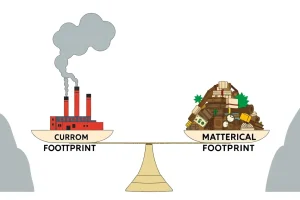
The material footprint, also known as raw material consumption (RMC), is a comprehensive indicator that measures the total amount of raw materials extracted globally to meet a country’s final demand for goods and services. Unlike domestic material consumption (DMC), which only accounts for materials extracted within a country’s borders, the material footprint includes all materials used in the production of imported goods, minus the materials used in exports. This makes it a more accurate reflection of a nation’s true resource demand. High-income countries consistently exhibit larger material footprints because their affluent populations consume more products, maintain larger built environments, and engage in resource-intensive lifestyles, all of which require substantial material inputs from around the world.
The concept of the material footprint is central to understanding the environmental pressures exerted by consumption patterns. It reveals that the apparent resource efficiency of some high-income countries, as measured by domestic indicators, often masks the displacement of resource extraction and associated environmental burdens to other regions. By accounting for the full lifecycle of materials, the material footprint highlights the unequal distribution of resource use and the global nature of supply chains, where the benefits of consumption are enjoyed primarily in wealthy nations while the environmental and social costs are frequently borne by lower-income countries.
How It Works
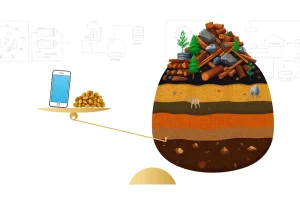
The material footprint of a country is calculated by tracing the flow of raw materials through global supply chains to meet final consumption. It encompasses four main categories of materials: biomass (such as food, wood, and natural fibres), fossil fuels (coal, oil, and gas), metal ores (iron, copper, aluminium), and non-metallic minerals (sand, gravel, limestone used in construction). When a consumer in a high-income country purchases a smartphone, for example, the material footprint includes the ores mined in one region, the fossil fuels used in manufacturing and transport, and the biomass for packaging—regardless of where these activities occurred.
High-income countries have larger footprints because their economies are structured around high levels of consumption. This includes not only personal purchases but also public infrastructure like roads, hospitals, and schools, which require continuous inputs of materials for construction and maintenance. Additionally, the service sector, which dominates many wealthy economies, still depends on material-intensive hardware, buildings, and energy systems. The material footprint thus captures the hidden resource use behind services, revealing that even post-industrial economies remain deeply reliant on material extraction.
Main Causes or Drivers
Several interconnected factors drive the large material footprints of high-income countries. The most significant is affluence: higher per capita income enables greater consumption of goods and services, from electronics and vehicles to travel and dining out. This relationship between income and resource use is well-established, with material footprints tending to rise alongside GDP per capita. Consumer culture further amplifies this effect, as social norms in wealthy societies often equate material possessions with success and well-being, encouraging frequent replacement of products and a throwaway mentality.
Another key driver is the built environment. High-income countries have extensive infrastructure—housing, transportation networks, and commercial buildings—that requires enormous quantities of materials for initial construction and ongoing maintenance. Urban sprawl and car-dependent planning lock in high material and energy use for decades. Dietary patterns also play a role: diets rich in meat and processed foods have a much higher material footprint than plant-based diets, due to the land, water, and feed required for livestock. Finally, economic structures that prioritize growth and throughput, combined with subsidies for resource extraction, perpetuate high material consumption.
Environmental and Human Impacts
The large material footprints of high-income countries have profound environmental consequences. The extraction and processing of raw materials are leading causes of biodiversity loss, deforestation, soil degradation, water scarcity, and pollution. Mining for metals and minerals can contaminate water sources and destroy ecosystems, while the combustion of fossil fuels is the primary driver of climate change. The sheer scale of material use in wealthy nations means that their consumption patterns are a major force behind global environmental degradation, even when the extraction occurs elsewhere.
Human impacts are equally significant. Resource extraction often takes place in lower-income countries with weaker environmental and labour regulations, leading to land grabs, displacement of communities, and hazardous working conditions. This dynamic, sometimes referred to as ecological unequal exchange, means that the benefits of consumption flow to wealthy nations while the social and environmental costs are disproportionately borne by poorer populations. Additionally, the waste generated by high-consumption lifestyles—including electronic waste and plastics—frequently ends up in developing countries, creating further health and environmental problems.
Regional Differences
There is a stark contrast between the material footprints of high-income and low-income countries. On a per capita basis, wealthy nations such as those in North America, Western Europe, Japan, and Australia have footprints that are several times higher than the global average, and up to ten times higher than those of the least developed countries. While some high-income countries have managed to stabilize or slightly reduce their domestic material consumption through efficiency improvements and a shift to services, their material footprints often remain high or continue to grow due to the outsourcing of material-intensive production to other regions.
In contrast, low-income countries typically have small material footprints because their consumption levels are much lower. However, they may have high levels of domestic material extraction, much of which is exported to satisfy demand in wealthier nations. This means that the environmental burdens of extraction are concentrated in these countries, while the materials themselves are consumed elsewhere. The regional disparity underscores the global inequality in resource use and the need for consumption-based accounting to reveal the true picture.
Connections to Other Systems
The material footprint is closely linked to global trade, economic growth, and sustainable development. It exposes the limitations of GDP as a measure of progress, since economic growth in high-income countries has historically been coupled with increasing material use. While some relative decoupling (using fewer materials per unit of GDP) has occurred, absolute decoupling (reducing total material use while the economy grows) remains elusive. The material footprint also connects to the concept of planetary boundaries, as the current scale of resource extraction exceeds several Earth-system limits, including those for climate change, biodiversity loss, and land-system change.
Furthermore, the material footprint is integral to the circular economy model, which aims to keep materials in use for as long as possible through reuse, repair, and recycling. It also relates to the Sustainable Development Goals (SDGs), particularly SDG 12 (responsible consumption and production) and SDG 8 (decent work and economic growth). Addressing the material footprints of high-income countries is therefore not just an environmental issue but a matter of global equity and long-term economic resilience.
Solutions
Reducing the material footprints of high-income countries requires a multifaceted approach. At the policy level, governments can implement measures such as taxes on virgin materials, extended producer responsibility schemes, and stricter regulations on waste and pollution. Investing in circular economy infrastructure—including recycling facilities, repair networks, and sharing platforms—can help decouple consumption from resource extraction. Urban planning that promotes compact, transit-oriented development can reduce the material intensity of infrastructure and transportation.
Businesses can contribute by designing products for durability, repairability, and recyclability, and by adopting service-based models that reduce the need for ownership (e.g., leasing instead of selling). Individuals can also play a role by shifting towards more sustainable consumption patterns: reducing overall consumption, choosing products with lower material footprints, adopting plant-rich diets, and supporting policies that hold producers accountable. International cooperation is essential to address the transboundary nature of material footprints, including agreements on sustainable resource management and the fair sharing of environmental costs.
FAQ
What is a material footprint?
A material footprint is the total quantity of raw materials extracted from the environment globally to meet a country's final demand for goods and services. It includes materials used in the production of imports, making it a consumption-based indicator of resource use.
How does a material footprint differ from domestic material consumption?
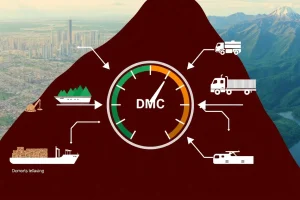
Domestic material consumption (DMC) measures only the materials extracted within a country plus imports minus exports, without accounting for the raw materials needed to produce those imports. The material footprint includes those upstream materials, offering a more complete picture of a country's resource demand.
Why do high-income countries have larger material footprints?
High-income countries have larger material footprints primarily because of higher levels of consumption driven by greater affluence, consumerist lifestyles, and extensive built infrastructure. Much of the material extraction to support this consumption occurs in other countries, but the footprint is attributed to the consuming nation.
References
- United Nations Environment Programme (UNEP), International Resource Panel
- Organisation for Economic Co-operation and Development (OECD)
- World Bank