In brief
At a glance
Quick Facts
- Definition
- Embodied carbon is the sum of greenhouse gas emissions associated with the production, transportation, installation, maintenance, and disposal of building materials.
- Share of Global Emissions
- The built environment contributes approximately 40% of global energy-related CO2 emissions, with embodied carbon accounting for a significant and growing portion.
- Lifecycle Stages
- Embodied carbon is typically divided into upfront carbon (A1-A3), use stage embodied carbon (B1-B5), and end-of-life carbon (C1-C4).
- Key Materials
- Cement, steel, and aluminum are among the most carbon-intensive materials, with cement production alone responsible for about 8% of global CO2 emissions.
- Reduction Potential
- Embodied carbon can be reduced through material efficiency, use of low-carbon alternatives, design optimization, and carbon sequestration.
- Measurement Standard
- Life cycle assessment (LCA) is the standard method for quantifying embodied carbon, guided by standards such as EN 15978 and ISO 14040/14044.
- Upfront vs. Whole-Life
- Upfront embodied carbon, emitted before a building is occupied, can account for up to 50% of total lifecycle emissions in new energy-efficient buildings.
Key Takeaways
- Embodied carbon encompasses all greenhouse gas emissions from the production, transportation, installation, maintenance, and disposal of building materials.
- Unlike operational carbon, which can be reduced over time with energy efficiency, embodied carbon is locked in once a building is constructed.
- The manufacturing of materials like cement, steel, and aluminum is responsible for a large share of global industrial emissions.
- Addressing embodied carbon is crucial for meeting climate targets, as it can account for up to 50% of a building’s total lifecycle emissions.
- Strategies such as using low-carbon materials, designing for material efficiency, and reusing existing structures can significantly cut embodied carbon.
What Is Embodied Carbon?
Embodied carbon refers to the total greenhouse gas (GHG) emissions—primarily carbon dioxide (CO₂)—released during the entire lifecycle of a material or product, from extraction and manufacturing to transportation, installation, use, and eventual disposal or recycling. In the context of the built environment, embodied carbon is the sum of all emissions associated with constructing and maintaining a building, excluding the emissions from its operational energy use (such as heating, cooling, and lighting). It is often called “embedded carbon” or “carbon footprint of materials.”
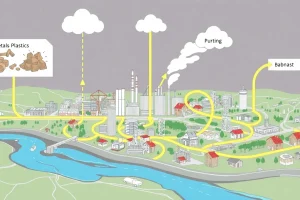
The concept emerged from lifecycle thinking, which considers the environmental impacts of a product from cradle to grave. For buildings, embodied carbon includes emissions from raw material extraction (e.g., mining limestone for cement), manufacturing (e.g., clinker production), transportation of materials to the site, construction processes, maintenance and replacement of components during the building’s life, and finally demolition and waste processing. Even though these emissions occur before or after the building’s operational phase, they are attributed to the building because they are a direct consequence of its construction and existence.
Embodied carbon is distinct from operational carbon, which is the emissions from energy used to run the building. As buildings become more energy-efficient and grids decarbonize, embodied carbon is becoming a larger proportion of a building’s total carbon footprint. In some high-performance buildings, embodied carbon can represent over 50% of total lifecycle emissions. Therefore, understanding and reducing embodied carbon is essential for achieving net-zero carbon goals in the construction sector.
Overview
The built environment is a major contributor to global greenhouse gas emissions. According to the World Green Building Council, buildings and construction are responsible for approximately 39% of global energy-related carbon emissions. Historically, efforts to reduce these emissions have focused on operational carbon—improving energy efficiency and switching to renewable energy sources. However, as operational emissions decrease, the relative importance of embodied carbon grows. In fact, between now and 2050, embodied carbon is projected to account for nearly half of total new construction emissions globally.
Embodied carbon is not just a concern for new buildings; it also applies to infrastructure, renovations, and even products like furniture and vehicles. The concept is central to lifecycle assessment (LCA), a methodology used to evaluate environmental impacts. By quantifying embodied carbon, architects, engineers, and policymakers can make informed decisions to minimize the carbon footprint of the built environment. The urgency to address embodied carbon is underscored by international climate agreements and the need to limit global warming to 1.5°C above pre-industrial levels.
How It Works
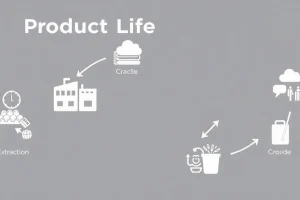
Embodied carbon is typically calculated using lifecycle assessment (LCA) standards, such as EN 15978 for buildings or ISO 14040/14044. The lifecycle is divided into stages, often labeled A through D:
- Product Stage (A1-A3): This includes raw material extraction, transport to manufacturing facilities, and manufacturing processes. It is often the largest source of embodied carbon, especially for materials like cement and steel.
- Construction Process Stage (A4-A5): Transportation of materials to the construction site and the construction activities themselves, including energy use and waste generation.
- Use Stage (B1-B5): Emissions from maintenance, repair, replacement, and refurbishment of building components over the building’s lifetime. This can be significant for materials with shorter lifespans.
- End-of-Life Stage (C1-C4): Deconstruction, demolition, waste transport, processing, and disposal. Recycling or reuse can reduce this impact.
- Beyond Lifecycle (D): Optional stage accounting for benefits from reuse, recycling, or energy recovery, which can offset some of the embodied carbon.
The total embodied carbon is the sum of emissions across these stages, expressed in kilograms of CO₂ equivalent (kgCO₂e). Upfront embodied carbon (A1-A5) is particularly critical because it is released immediately, contributing to near-term climate impacts. Tools like Environmental Product Declarations (EPDs) provide standardized data on the embodied carbon of specific materials, enabling comparisons and informed selection.
Why It Matters
Embodied carbon matters because it represents a significant and often overlooked source of greenhouse gas emissions. The construction sector is one of the largest industrial emitters, and the materials used in buildings have long-lasting climate impacts. Unlike operational carbon, which can be reduced over time through retrofits and cleaner energy, embodied carbon is “locked in” once a building is constructed. This means that decisions made during design and material selection have irreversible consequences for the climate.
Furthermore, the window for climate action is narrowing. The Intergovernmental Panel on Climate Change (IPCC) emphasizes the need for rapid, deep emissions cuts across all sectors. Addressing embodied carbon is a key strategy because it targets emissions that occur upfront, in the near term, which is critical for staying within carbon budgets. Additionally, as the global building stock is expected to double by 2060, the cumulative embodied carbon from new construction could be enormous unless mitigation measures are implemented now.
Main Causes or Drivers
The primary drivers of embodied carbon are the production of carbon-intensive materials and the scale of global construction. The main culprits include:
- Cement and Concrete: Cement production alone accounts for about 8% of global CO₂ emissions. The chemical process of calcining limestone releases CO₂, and the high temperatures required are typically achieved with fossil fuels.
- Steel: Iron and steel production is another major industrial emitter, relying heavily on coal in blast furnaces. Even recycled steel requires significant energy, though less than virgin steel.
- Aluminum: Primary aluminum smelting is extremely energy-intensive, often using electricity from fossil fuels, leading to high embodied carbon.
- Transportation: Moving heavy materials over long distances adds to emissions, though this is usually a smaller share compared to manufacturing.
- Construction Practices: Inefficient use of materials, waste generation, and energy use on construction sites also contribute.
Rapid urbanization and population growth drive demand for new buildings and infrastructure, amplifying these emissions. Without intervention, the embodied carbon of the built environment will continue to rise.
Solutions
Reducing embodied carbon requires a multi-faceted approach across the entire building lifecycle. Key strategies include:
- Material Selection: Choose low-carbon alternatives such as timber from sustainably managed forests, recycled steel, low-carbon concrete (using supplementary cementitious materials like fly ash or slag), and innovative materials like hempcrete or bio-based products.
- Design Optimization: Use less material through efficient structural design, such as optimizing floor plans, reducing over-specification, and employing modular or prefabricated construction to minimize waste.
- Reuse and Renovation: Retrofitting existing buildings instead of demolishing and rebuilding can save significant embodied carbon. Adaptive reuse preserves the carbon already invested in structures.
- Circular Economy: Design for disassembly and material recovery, enabling components to be reused or recycled at end of life, thus reducing the need for virgin materials.
- Carbon Sequestration: Use materials that store carbon, such as wood, which sequesters CO₂ during tree growth. Emerging technologies like carbon-cured concrete also show promise.
- Policy and Standards: Governments can mandate embodied carbon assessments, set limits, and incentivize low-carbon construction through building codes and procurement policies.
Whole-life carbon assessments, which consider both embodied and operational carbon, are essential for making balanced decisions that avoid burden-shifting.
Connections to Other Systems
Embodied carbon is deeply interconnected with other environmental and economic systems. It is a key component of the circular economy, where materials are kept in use for as long as possible, reducing the need for new resource extraction and associated emissions. The concept also links to energy systems, as the decarbonization of industrial processes (e.g., green hydrogen for steelmaking, electrification of cement kilns) can drastically lower embodied carbon.
Additionally, embodied carbon is tied to land use and forestry. The use of timber as a low-carbon material must be balanced with sustainable forest management to avoid deforestation and biodiversity loss. Water use, air pollution, and other environmental impacts are also co-located with the industrial processes that generate embodied carbon, meaning that reducing embodied carbon often yields co-benefits for local environments and human health. Finally, embodied carbon is a critical consideration in green building certification systems like LEED and BREEAM, which increasingly reward its reduction.
FAQ
What is the difference between embodied carbon and operational carbon?
Embodied carbon refers to emissions from the production, transportation, and disposal of building materials, while operational carbon comes from the energy used to run a building. Both are important, but as buildings become more energy-efficient, embodied carbon can represent a larger share of total lifecycle emissions.
How is embodied carbon measured?
Embodied carbon is typically measured using life cycle assessment (LCA) methodologies, which quantify the global warming potential of materials and processes across a building's lifecycle stages, from cradle to grave.
What are the main sources of embodied carbon in buildings?
The main sources are the extraction and manufacturing of materials like concrete, steel, and aluminum, as well as transportation and construction processes. Upfront embodied carbon from these stages can be particularly significant.
References
- World Green Building Council, 'Bringing Embodied Carbon Upfront' (2019)
- International Energy Agency, 'Global Status Report for Buildings and Construction'
- ISO 14040:2006 Environmental management — Life cycle assessment — Principles and framework