In brief
At a glance
Quick Facts
- Definition of Material Footprint
- The total amount of raw materials extracted to meet a country's or individual's consumption, including materials used in imported goods.
- Definition of Carbon Footprint
- The total greenhouse gas emissions caused directly and indirectly by an activity, product, or entity, expressed in CO₂ equivalents.
- Key Difference
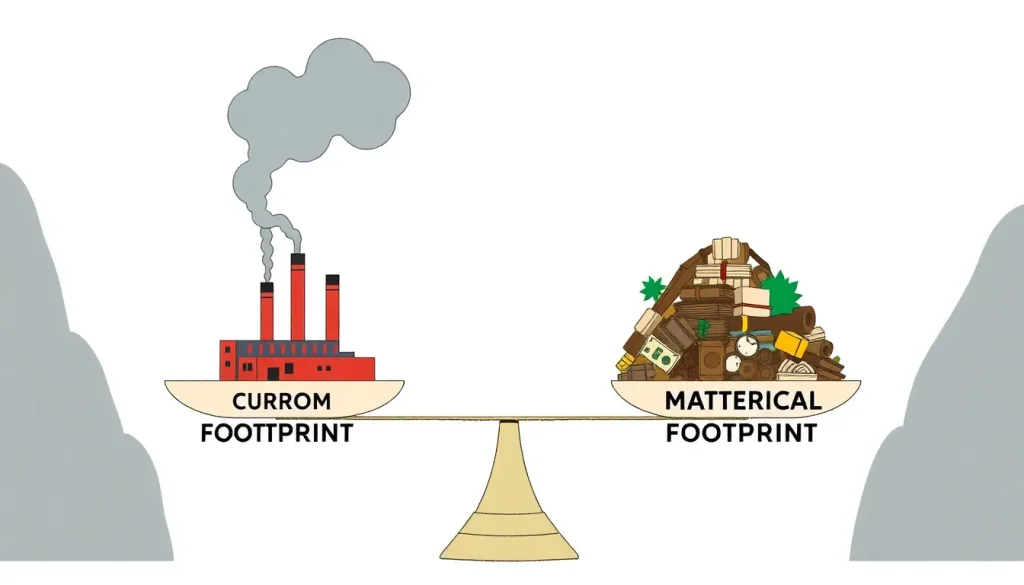
- Material footprint measures resource use; carbon footprint measures climate impact.
- Common Unit for Material Footprint
- Tonnes of raw materials (biomass, fossil fuels, metal ores, non-metallic minerals).
- Common Unit for Carbon Footprint
- Tonnes of CO₂ equivalent (CO₂e).
- Global Material Footprint Trend
- The global material footprint has been increasing, driven by rising consumption and population growth.
- Carbon Footprint Hotspots
- Energy, industry, and transportation sectors are major contributors to carbon footprints.
- Policy Relevance
- Material footprint is an indicator for SDG 8.4 and 12.2; carbon footprint is central to climate agreements like the Paris Agreement.
- Trade-offs
- Reducing carbon footprint through renewable energy may increase material footprint due to infrastructure needs.
- Per Capita Variation
- High-income countries typically have higher material and carbon footprints per capita than low-income countries.
Key Takeaways
- Material footprint measures the total raw materials extracted to meet consumption, while carbon footprint measures greenhouse gas emissions.
- Both indicators are essential for assessing environmental sustainability, but they address different aspects: resource depletion versus climate change.
- A product or country can have a low carbon footprint but a high material footprint, or vice versa, highlighting the need for a holistic approach.
- Reducing both footprints requires systemic changes in production, consumption, and waste management, and a narrow focus on one can lead to unintended trade-offs.
What Is Material Footprint vs Carbon Footprint?
Material footprint is an indicator that quantifies the total amount of raw materials—biomass, fossil fuels, metal ores, and non-metallic minerals—extracted globally to satisfy the final demand of a country or an individual. It includes the materials used in the production of imported goods, thereby capturing the full material requirements of consumption, regardless of where extraction occurs. This metric is often expressed in tonnes per capita or total tonnes and is derived from material flow accounting and multi-regional input-output models. It reveals the true resource intensity of a lifestyle or economy, accounting for the hidden flows of materials that are not physically present in the final product but were necessary for its creation.
Carbon footprint, on the other hand, measures the total amount of greenhouse gases (GHGs)—primarily carbon dioxide, methane, and nitrous oxide—emitted directly and indirectly by an activity, product, organization, or country over a specified period. It is typically expressed in tonnes of carbon dioxide equivalent (CO₂e) and is calculated using life cycle assessment (LCA) or emission factor approaches. The carbon footprint is a key metric for understanding contributions to climate change and is widely used in policy, corporate reporting, and personal carbon accounting. While both footprints stem from life cycle thinking, they illuminate different environmental pressures: material footprint focuses on resource extraction and material throughput, whereas carbon footprint centers on emissions and climate impact.
Overview
Material footprint and carbon footprint are complementary indicators within the broader family of environmental footprints, which also includes water, land, and ecological footprints. They are used to assess the sustainability of consumption and production patterns at various scales—from individual products to national economies. The material footprint concept gained prominence as a way to address the “resource curse” and the displacement of environmental pressures through international trade. It is now an official indicator for the United Nations Sustainable Development Goals (SDGs), specifically SDG 8.4 (resource efficiency) and SDG 12.2 (sustainable management and efficient use of natural resources). The carbon footprint, meanwhile, is central to climate change mitigation efforts and is embedded in international agreements such as the Paris Agreement, as well as in countless corporate net-zero commitments.
Both indicators are rooted in the principle of consumption-based accounting, which assigns environmental impacts to the final consumer rather than the producer. This perspective is critical because it reveals the true environmental cost of lifestyles in high-income countries, which often rely heavily on imports from regions with less stringent environmental regulations. By making these hidden impacts visible, material and carbon footprints enable more informed decision-making for policymakers, businesses, and individuals seeking to reduce their environmental burden.
How It Works
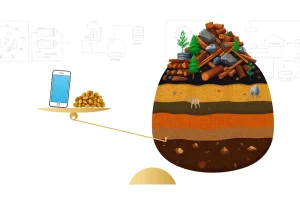
Calculating a material footprint involves tracing the entire supply chain of goods and services to determine the raw material extraction required at each stage. This is typically done using environmentally extended multi-regional input-output (MRIO) models, which link economic data from different countries and sectors with material extraction statistics. The process accounts for both used materials (those that become part of the product) and unused extraction (such as mining overburden, forestry residues, and bycatch). The result is a comprehensive measure of the total material requirement (TMR) associated with final consumption. For example, the material footprint of a smartphone includes not only the metals and plastics in the device but also the ores mined, the fossil fuels used in manufacturing, and the biomass affected by infrastructure development.
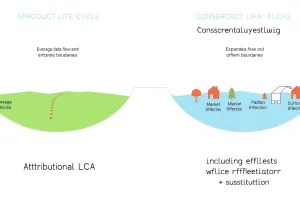
Carbon footprint calculations follow a similar life cycle approach but focus on greenhouse gas emissions. The most common method is the Greenhouse Gas Protocol, which categorizes emissions into three scopes: Scope 1 (direct emissions from owned or controlled sources), Scope 2 (indirect emissions from purchased energy), and Scope 3 (all other indirect emissions in the value chain). For products, a full cradle-to-grave LCA quantifies emissions from raw material extraction, manufacturing, transportation, use, and end-of-life disposal. National carbon footprints often use consumption-based accounting, adjusting territorial emissions by subtracting emissions embodied in exports and adding those embodied in imports. Both footprints can be normalized per capita, per unit of GDP, or per unit of product to facilitate comparisons.
Importance and Impact
Material footprint is crucial for understanding the pressures on natural resources and the environment. The extraction and processing of raw materials are responsible for over 90% of global biodiversity loss and water stress, and about half of global greenhouse gas emissions, according to the International Resource Panel. By highlighting the total material throughput of an economy, this indicator helps identify opportunities for resource efficiency, waste reduction, and circular economy strategies. It also exposes the unequal distribution of resource use: high-income countries often have material footprints per capita that are several times higher than those of low-income countries, even when their territorial material consumption appears modest.
Carbon footprint, in turn, is indispensable for climate action. It provides a standardized way to measure contributions to global warming and to set reduction targets. The concept has permeated public consciousness, driving demand for low-carbon products and services. At the policy level, carbon footprinting underpins carbon pricing mechanisms, border carbon adjustments, and national emission inventories. Together, these two footprints offer a more complete picture of environmental sustainability: material footprint addresses the finite nature of resources and the ecological impacts of extraction, while carbon footprint tackles the urgent need to decarbonize the global economy.
Connections to Other Systems
Material footprint and carbon footprint are deeply interconnected with other environmental and socioeconomic systems. Material extraction is a major driver of land-use change, water consumption, and pollution, linking material footprint to water footprint and ecological footprint. For instance, mining for metals can contaminate water sources and destroy habitats, while agricultural biomass extraction contributes to deforestation and soil degradation. Carbon footprint is tightly coupled with energy systems, as the combustion of fossil fuels is the largest source of anthropogenic GHG emissions. However, the two footprints also interact: the transition to renewable energy, while reducing carbon footprint, can increase material footprint due to the need for metals like copper, lithium, and rare earth elements for solar panels, wind turbines, and batteries.
These interlinkages mean that policies aimed at reducing one footprint can inadvertently increase the other—a phenomenon known as burden shifting. For example, lightweighting vehicles with aluminum or carbon fiber reduces fuel consumption and thus carbon footprint, but it raises the material footprint through increased bauxite mining or energy-intensive carbon fiber production. Similarly, digitalization reduces material use in some sectors (e.g., dematerialization of media) but increases energy demand for data centers, affecting the carbon footprint. A systems perspective that considers both footprints is therefore essential for avoiding unintended consequences and achieving genuine sustainability.
Benefits, Limitations and Trade-offs
The primary benefit of using both material and carbon footprints is the comprehensive insight they provide into environmental performance. Material footprint reveals the hidden resource costs of consumption, making it a valuable tool for promoting circular economy and resource conservation. Carbon footprint is widely recognized, relatively easy to communicate, and directly linked to climate policy targets. Together, they can guide more balanced decision-making, ensuring that efforts to mitigate climate change do not exacerbate resource depletion or vice versa.
However, both indicators have limitations. Material footprint data can be uncertain due to the complexity of global supply chains, variations in material intensity factors, and the difficulty of accounting for unused extraction. Carbon footprint calculations also face challenges, particularly in Scope 3 emissions estimation, where data gaps and methodological choices can lead to significant variability. Moreover, neither footprint captures all environmental dimensions: material footprint does not directly measure toxicity or ecosystem impacts, and carbon footprint ignores non-climate effects like water use or land degradation. Trade-offs between the two are common, as noted above, and a narrow focus on one metric can lead to suboptimal outcomes. Therefore, they are best used in conjunction with other indicators within a multi-criteria sustainability assessment framework.
Common Misconceptions
One prevalent misconception is that material footprint and carbon footprint are interchangeable or that a low-carbon product automatically has a low material footprint. In reality, they measure distinct environmental pressures, and a product can perform well on one while performing poorly on the other. For example, an electric vehicle may have a lower carbon footprint over its lifetime compared to a conventional car, but its material footprint is often higher due to the battery metals. Another misconception is that carbon footprint is the only environmental indicator that matters. While climate change is urgent, resource depletion, biodiversity loss, and pollution are equally critical, and material footprint helps address these issues.
Additionally, some believe that reducing material footprint always reduces carbon footprint. Although material efficiency often lowers emissions (since less extraction and processing means less energy use), there are cases where the opposite occurs. For instance, replacing single-use plastic packaging with paper can reduce material footprint if the paper is recycled, but it may increase carbon footprint if the paper production is energy-intensive and relies on fossil fuels. Finally, there is a misconception that only industrial activities have material footprints; in fact, agriculture and biomass extraction for food, feed, and biofuels are major contributors to global material flows, often exceeding industrial minerals in volume.
FAQ
What is the difference between material footprint and carbon footprint?
Material footprint measures the total raw materials extracted to support consumption, including hidden flows from imports. Carbon footprint measures the total greenhouse gas emissions caused by an activity or product. They address different environmental issues: resource depletion versus climate change.
Why is material footprint important?
It reveals the true resource intensity of consumption, helps track progress toward resource efficiency and circular economy goals, and highlights the environmental pressures from material extraction, such as biodiversity loss and water stress.
How can I reduce my material and carbon footprints?
Reduce overall consumption, choose products with recycled content, extend product lifespans through repair and reuse, shift to renewable energy, use public transportation, and support policies that promote sustainable production and waste management.
References
- United Nations Environment Programme (UNEP). (2021). Global Material Flows Database.
- IPCC. (2006). Guidelines for National Greenhouse Gas Inventories.
- Wiedmann, T. O., & Lenzen, M. (2018). Environmental and social footprints of international trade. Nature Geoscience, 11(5), 314-321.
- Eurostat. (2023). Material flow accounts and resource productivity.
- World Resources Institute. (2023). Greenhouse Gas Protocol.