In brief
At a glance
Quick Facts
- Definition of Territorial Emissions
- Emissions produced within a country's borders, regardless of where goods are consumed.
- Definition of Consumption-Based Emissions
- Emissions allocated to the final consumer, including those embedded in imported goods.
- Primary Accounting Standard
- Territorial emissions are used in UNFCCC reporting and national inventories.
- Key Data Source for Consumption-Based Accounts
- Multi-regional input-output (MRIO) models that combine trade and environmental data.
- Carbon Leakage
- When production shifts to countries with weaker climate policies, territorial emissions may decrease while global emissions do not.
- Typical Pattern
- Developed countries often have higher consumption-based emissions than territorial; developing countries the opposite.
Key Takeaways
- Territorial emissions account for greenhouse gases released within a country’s borders, while consumption-based emissions allocate emissions to the final consumer, including those embedded in imported goods.
- The difference between the two measures reveals the extent to which a country outsources its emissions through international trade.
- Consumption-based accounting can provide a more comprehensive picture of a nation’s carbon footprint and its global environmental responsibility.
- Both methods are essential for designing effective and equitable climate policies, as they highlight different aspects of emissions drivers and mitigation opportunities.
What Is Territorial Emissions vs Consumption-Based Emissions?
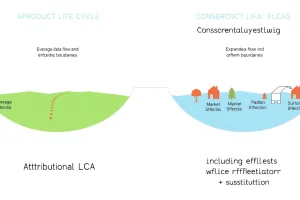
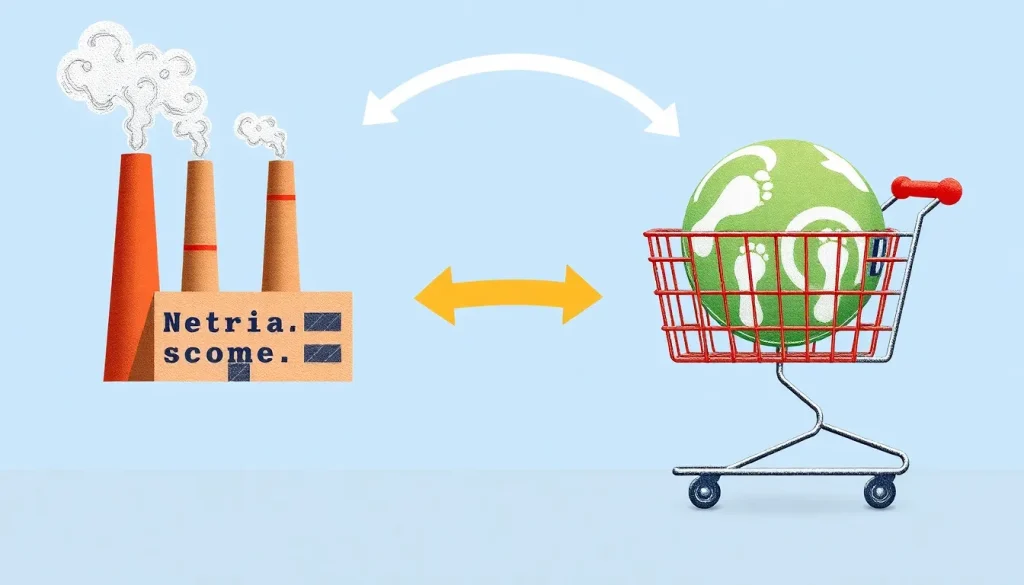
Territorial emissions (also known as production-based emissions) refer to the greenhouse gases released within the geographical boundaries of a country, regardless of where the goods and services produced are ultimately consumed. This is the standard accounting method used under the United Nations Framework Convention on Climate Change (UNFCCC) for national greenhouse gas inventories and international climate commitments. In contrast, consumption-based emissions allocate emissions to the final consumer, accounting for the carbon footprint of all goods and services consumed within a country, including emissions generated abroad during the production of imported goods, and excluding emissions from domestically produced exports.
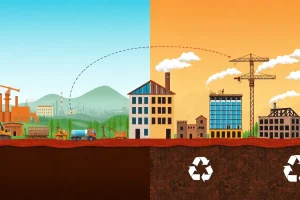
The distinction between these two accounting perspectives is critical for understanding the global distribution of emissions responsibility. Territorial accounting focuses on the location of production, while consumption-based accounting focuses on the location of final demand. This difference becomes particularly important in a globalized economy where goods are often produced in one country and consumed in another. For example, a smartphone manufactured in China but used in the United States would have its production emissions counted in China’s territorial inventory, but in the U.S.’s consumption-based inventory. Thus, consumption-based emissions can reveal the extent to which developed countries have “outsourced” their emissions to developing countries through imports of manufactured goods.
How It Works
Territorial emissions are calculated following guidelines established by the Intergovernmental Panel on Climate Change (IPCC). Countries compile inventories of emissions from sources within their borders, including energy production, industrial processes, agriculture, waste, and land-use change. These inventories are based on activity data (e.g., fuel consumption) and emission factors. The sum of all territorial emissions across all countries equals global emissions.
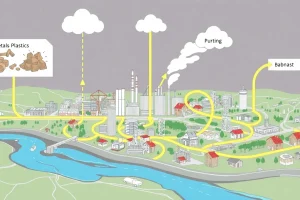
Consumption-based emissions are typically estimated using environmentally extended multi-regional input-output (MRIO) models. These models combine economic trade data with environmental accounts to trace the emissions embodied in goods and services along global supply chains. The process involves:
- Mapping the flow of goods and services between industries and countries.
- Assigning emissions to each stage of production based on the industry’s emission intensity.
- Allocating the total emissions to the final consumer of the product, whether the product is consumed domestically or abroad.
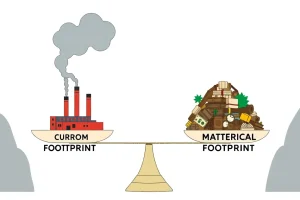
This method allows for the calculation of a country’s “carbon footprint,” which includes emissions from domestic production for domestic consumption, plus emissions embodied in imports, minus emissions embodied in exports.
Why It Matters
The choice between territorial and consumption-based emissions accounting has profound implications for climate policy and equity. Territorial emissions are the basis for international climate agreements, such as the Paris Agreement, where countries set nationally determined contributions (NDCs) to reduce emissions within their borders. This approach is straightforward to monitor and aligns with the principle of national sovereignty. However, it can mask the displacement of emissions through international trade, a phenomenon known as “carbon leakage.” If a country reduces its territorial emissions by relocating carbon-intensive industries abroad, global emissions may not decrease if those goods are still consumed.
Consumption-based accounting addresses this issue by attributing emissions to the end consumer, thereby highlighting the role of consumption patterns in driving global emissions. This perspective is crucial for understanding the full climate impact of lifestyles in affluent nations, which often have consumption-based emissions significantly higher than their territorial emissions. It also raises questions of equity and responsibility, suggesting that consumers and importing nations share some responsibility for emissions generated in producing countries.
Regional Differences
The gap between territorial and consumption-based emissions varies widely across countries and regions. Generally, developed nations with service-based economies and high levels of imports tend to have consumption-based emissions that exceed their territorial emissions. For example, many European countries and the United States are net importers of emissions, meaning the carbon footprint of their consumption is larger than what they produce domestically. Conversely, developing nations with large manufacturing sectors, such as China and India, often have territorial emissions that are higher than their consumption-based emissions, as they produce goods for export to wealthier nations.
This divergence is not uniform; some resource-rich developed countries with significant fossil fuel exports may also have higher territorial emissions. The pattern reflects the global division of labor and trade, where production of carbon-intensive goods is concentrated in certain regions while consumption is global. Understanding these regional differences is essential for designing fair and effective international climate policies that account for the emissions embedded in trade.
Benefits, Limitations and Trade-offs
Both accounting methods offer distinct benefits and face limitations. Territorial emissions accounting is well-established, relatively straightforward to compile using national statistics, and directly linked to domestic policy measures. It provides a clear framework for countries to take responsibility for emissions within their jurisdiction. However, it does not account for the global nature of supply chains and can incentivize carbon leakage.
Consumption-based accounting provides a more holistic view of a country’s contribution to global emissions, capturing the carbon footprint of its citizens’ lifestyles. It can inform policies aimed at sustainable consumption and can help address concerns about fairness in international climate negotiations. However, it relies on complex global economic models with inherent uncertainties and data gaps. It also raises challenging questions about who is ultimately responsible for emissions—the producer or the consumer—and how to allocate responsibility along the supply chain. A hybrid approach, using both metrics, is often advocated to provide a more complete picture and to design complementary policies targeting both production efficiency and consumption patterns.
Common Misconceptions
A common misconception is that consumption-based emissions are an alternative to territorial emissions for setting national targets under the Paris Agreement. In practice, consumption-based accounts are a supplementary tool, not a replacement, because they are harder to standardize and verify across all countries. Another misconception is that if a country’s consumption-based emissions are higher than its territorial emissions, it means the country is not reducing emissions at all. In reality, a country can reduce both territorial and consumption-based emissions through domestic efficiency improvements and shifts to cleaner energy, even if the gap persists. Finally, it is sometimes assumed that consumption-based accounting assigns all responsibility to consumers, ignoring the role of producers in choosing production methods; in practice, both perspectives are needed for comprehensive policy.
Data Limitations and Uncertainties
Consumption-based emissions estimates are subject to significant data limitations and methodological uncertainties. Multi-regional input-output models rely on trade data that may be incomplete, inconsistent across countries, or outdated. The aggregation of industries into sectors can mask differences in emission intensities within sectors. Allocating emissions from international transport, such as shipping and aviation, is particularly challenging and varies across studies. Additionally, the models require assumptions about the carbon intensity of production in different countries, which may not reflect actual technologies used. As a result, consumption-based emissions figures can vary between different databases and models, and should be interpreted as estimates rather than precise measurements. Ongoing improvements in data collection and modeling are gradually reducing these uncertainties, but they remain an important caveat when using consumption-based accounts for policy.
FAQ
What is the difference between territorial and consumption-based emissions?
Territorial emissions are those released within a country's borders, while consumption-based emissions account for all emissions generated to produce the goods and services consumed in that country, including those from imported products.
Why are consumption-based emissions important?
They reveal the full carbon footprint of a nation's consumption, highlighting the extent to which emissions are outsourced through trade and providing a more complete picture of global environmental responsibility.
How are consumption-based emissions calculated?
They are estimated using multi-regional input-output models that link economic trade data with environmental accounts to trace emissions along global supply chains from production to final consumption.
References
- Intergovernmental Panel on Climate Change (IPCC) Guidelines for National Greenhouse Gas Inventories
- United Nations Framework Convention on Climate Change (UNFCCC) reporting guidelines for national communications
- Global Carbon Project: Carbon Budget and Emissions Transfers