In brief
At a glance
Quick Facts
- Cradle-to-gate scope
- Covers from raw material extraction to the point the product leaves the factory, excluding distribution, use, and disposal.
- Cradle-to-grave scope
- Includes the full life cycle: raw materials, manufacturing, distribution, use, and end-of-life disposal or recycling.
- Standard reference
- Defined in ISO 14040 and ISO 14044, the international standards for life cycle assessment.
- Typical application
- Cradle-to-gate is common for intermediate products (e.g., chemicals, metals); cradle-to-grave is used for consumer goods and environmental product declarations.
- Use phase dominance
- For energy-using products like appliances or vehicles, the use phase often accounts for the majority of cradle-to-grave impacts.
- Data requirements
- Cradle-to-gate assessments are less data-intensive and more certain; cradle-to-grave requires assumptions about consumer behavior and end-of-life.
Key Takeaways
- Cradle-to-gate and cradle-to-grave are two distinct system boundaries in life cycle assessment (LCA) that define which stages of a product’s life are included in an environmental impact study.
- Cradle-to-gate covers the upstream stages from raw material extraction through manufacturing, ending at the factory gate, while cradle-to-grave adds downstream stages including distribution, use, and end-of-life disposal.
- The choice of boundary depends on the goal of the assessment: cradle-to-gate is often used for intermediate products or business-to-business comparisons, whereas cradle-to-grave is essential for consumer goods where the use and disposal phases significantly affect total impact.
- Understanding these boundaries is critical for interpreting environmental product declarations, guiding sustainable design, and avoiding misleading claims that omit important life cycle stages.
What Is Cradle-to-Gate vs Cradle-to-Grave?
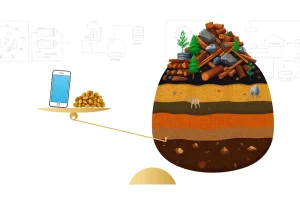
Cradle-to-gate and cradle-to-grave are two fundamental system boundaries used in life cycle assessment (LCA) to define the scope of a product’s environmental impact analysis. The “cradle” refers to the extraction of raw materials from the earth, while the “gate” is the point at which the finished product leaves the manufacturing facility. The “grave” represents the product’s final disposal, such as landfilling, incineration, or recycling. A cradle-to-gate assessment therefore includes all upstream processes—from resource extraction, transportation, and processing to manufacturing—but stops at the factory gate, excluding distribution, consumer use, and end-of-life. In contrast, a cradle-to-grave assessment encompasses the entire life cycle, from raw material acquisition through production, distribution, use, and final disposal or recycling.
These boundaries are standardized in the ISO 14040 and 14044 series on life cycle assessment, which provide a framework for defining the system boundary based on the goal and scope of the study. Cradle-to-gate is often called a “partial” LCA because it omits downstream stages, while cradle-to-grave is considered a “full” LCA. The distinction is not merely academic; it has practical implications for how environmental impacts are calculated, reported, and compared. For example, a cradle-to-gate analysis of a steel beam might show relatively low impacts, but a cradle-to-grave analysis of the same beam used in a building would include the energy consumed during the building’s lifetime and the emissions from demolition and recycling, potentially revealing a very different environmental profile.
Overview
Life cycle assessment is a methodology for evaluating the environmental aspects and potential impacts associated with a product, process, or service. The system boundary is one of the first and most critical choices in an LCA, as it determines which unit processes are included. Cradle-to-gate and cradle-to-grave are the two most common boundaries, but other variations exist, such as gate-to-gate (focusing on a single manufacturing process) and cradle-to-cradle (where end-of-life waste becomes a resource for a new product). The cradle-to-gate boundary is particularly prevalent in business-to-business (B2B) contexts, where a manufacturer supplies a component or material to another company that will further process or assemble it. In such cases, the downstream use and disposal are often unknown or highly variable, making a full cradle-to-grave assessment impractical. Cradle-to-grave, on the other hand, is the standard for consumer-facing products, environmental product declarations (EPDs), and policy-making, because it captures the total environmental burden over the product’s entire life.
The terms are widely used in sustainability reporting, eco-labeling, and carbon footprinting. For instance, a “cradle-to-gate carbon footprint” measures greenhouse gas emissions up to the factory gate, while a “cradle-to-grave carbon footprint” includes emissions from transport, use, and disposal. The choice of boundary can significantly influence the perceived environmental performance of a product, and therefore transparency about the boundary is essential for fair comparisons.
How It Works
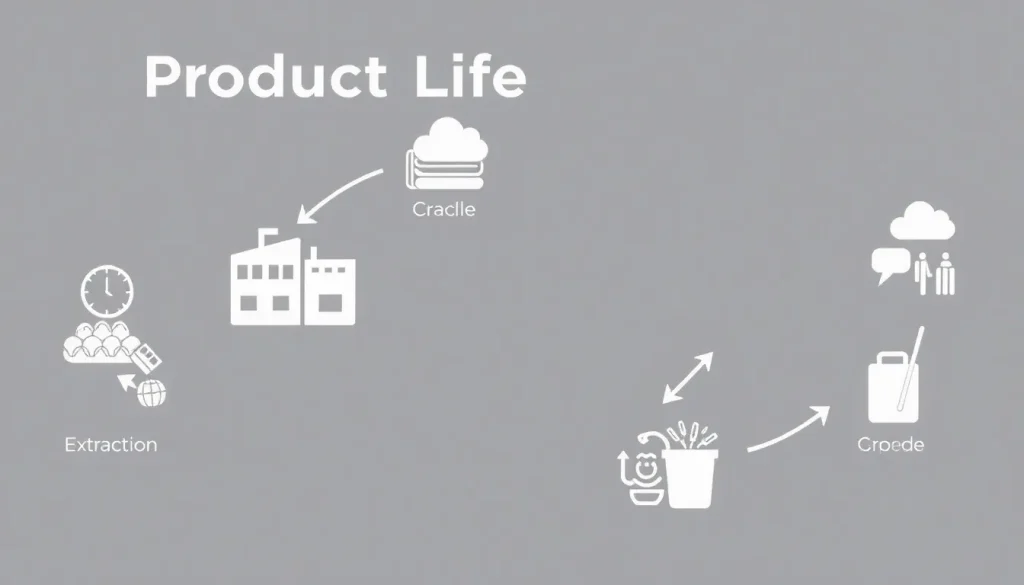
In practice, defining a cradle-to-gate or cradle-to-grave boundary involves mapping the product system and deciding which life cycle stages to include. A cradle-to-gate assessment typically includes the following stages:
- Raw material extraction: Mining, harvesting, or drilling for primary resources.
- Material processing: Refining, smelting, or chemical conversion of raw materials into usable forms.
- Transportation: Moving raw and processed materials between suppliers and to the manufacturing site.
- Manufacturing: All processes within the factory that transform inputs into the final product, including energy use, water consumption, and waste generation.
The assessment stops at the point where the product is ready to leave the factory. A cradle-to-grave assessment adds the following downstream stages:
- Distribution: Transport from the factory to warehouses, retailers, and consumers, including packaging.
- Use phase: Energy or resource consumption during the product’s operational life, as well as maintenance and repair.
- End-of-life: Disposal, recycling, incineration, or landfilling, including any transportation and processing of waste.
Data collection and modeling differ between the two boundaries. Cradle-to-gate often relies on primary data from suppliers and manufacturers, while cradle-to-grave requires assumptions about consumer behavior, product lifetime, and end-of-life scenarios, which can introduce greater uncertainty. The ISO standards require that the system boundary be clearly documented and justified, and that any excluded stages be explained.
Examples
A common example of a cradle-to-gate assessment is the production of a basic chemical like ethylene. The LCA would account for the extraction of crude oil or natural gas, transportation to a refinery, cracking processes, and purification, ending when the ethylene is stored in tanks ready for shipment. Because ethylene is an intermediate used in countless downstream products (plastics, solvents, etc.), a cradle-to-grave boundary would be impractical and highly variable. Instead, the cradle-to-gate data serves as a building block for companies that purchase ethylene to perform their own full LCAs.
In contrast, a cradle-to-grave assessment is typical for a consumer product such as a washing machine. The analysis would include the mining of metals, manufacturing of components, assembly, packaging, distribution to retailers, electricity and water consumption during years of use, and finally disposal or recycling of the machine. For many energy-using products, the use phase dominates the total environmental impact, so omitting it would give a misleading picture. Another example is a single-use plastic bottle: a cradle-to-gate analysis might show relatively low impacts from production, but a cradle-to-grave analysis reveals the significant burden of litter, landfill, or incineration.
Importance and Impact
The choice between cradle-to-gate and cradle-to-grave has profound implications for environmental decision-making. A cradle-to-gate assessment can be useful for identifying hotspots in the supply chain and improving manufacturing efficiency, but it may inadvertently shift burdens downstream. For instance, a product designed to reduce factory energy use might require more energy during use or be harder to recycle, resulting in a net increase in total life cycle impact. Cradle-to-grave assessments help avoid such burden shifting by considering the entire system.
In policy and regulation, cradle-to-grave is often required to ensure comprehensive accounting. The European Union’s Product Environmental Footprint (PEF) methodology, for example, mandates a cradle-to-grave boundary for most product categories. Similarly, many environmental product declarations (EPDs) for construction materials are cradle-to-gate because the use phase and end-of-life depend on the specific building design, but full building LCAs are cradle-to-grave. The boundary choice also affects corporate sustainability reporting: a company that reports only cradle-to-gate emissions may appear more environmentally friendly than one that reports cradle-to-grave, even if their products are identical. This makes boundary transparency critical for stakeholders.
Benefits, Limitations and Trade-offs
Each boundary has distinct advantages and drawbacks. Cradle-to-gate assessments are generally simpler, less data-intensive, and faster to complete. They are well-suited for comparing suppliers of similar intermediate products, for internal process optimization, and for providing data to downstream customers. However, they can be misleading if used to make claims about a product’s overall environmental friendliness, because they ignore potentially large impacts from use and disposal.
Cradle-to-grave assessments provide a more complete picture and are essential for consumer-facing environmental claims, eco-labels, and regulatory compliance. They enable identification of the most impactful life cycle stage, which can guide design improvements. The main limitations are greater complexity, higher data requirements, and the need for assumptions about consumer behavior and end-of-life pathways, which can reduce precision and comparability. There is also a trade-off in scope: a cradle-to-grave study of a complex product may require so many assumptions that the results become less reliable, while a cradle-to-gate study of a component can be highly accurate. In practice, many LCAs use a hybrid approach, combining cradle-to-gate data for upstream materials with modeled downstream scenarios.
Common Misconceptions
One common misconception is that cradle-to-grave is always better or more comprehensive than cradle-to-gate. While it covers more stages, the quality and relevance of the assessment depend on the goal. For a steel producer selling coils to an automotive manufacturer, a cradle-to-gate LCA is perfectly appropriate and more useful than a speculative cradle-to-grave analysis that guesses how the steel will be used and disposed of. Another misconception is that cradle-to-gate automatically excludes recycling. In fact, recycling can be included in cradle-to-gate if the recycled material is an input to the manufacturing process, but the fate of the product after the gate is not considered. Finally, some people confuse cradle-to-gate with gate-to-gate, which covers only a single process or facility. Gate-to-gate is the narrowest boundary and is rarely used alone for product claims.
FAQ
What is the difference between cradle-to-gate and cradle-to-grave?
Cradle-to-gate includes all stages from raw material extraction through manufacturing, ending at the factory gate. Cradle-to-grave adds the downstream stages of distribution, product use, and end-of-life disposal or recycling.
When should I use a cradle-to-gate assessment?
Cradle-to-gate is appropriate when the product is an intermediate material or component whose downstream use is unknown or highly variable, or when the goal is to compare suppliers or improve manufacturing processes.
Why does the choice of boundary matter?
The boundary determines which environmental impacts are counted. Omitting the use and disposal phases can hide significant impacts, leading to burden shifting or misleading environmental claims. A full cradle-to-grave view is often necessary for consumer products and policy decisions.
References
- ISO 14040:2006 Environmental management — Life cycle assessment — Principles and framework
- ISO 14044:2006 Environmental management — Life cycle assessment — Requirements and guidelines
- European Commission, Joint Research Centre. International Reference Life Cycle Data System (ILCD) Handbook.