In brief
At a glance
Quick Facts
- Definition of dispatchable
- Electricity sources that can be turned on or off and adjusted to meet demand, such as natural gas, coal, nuclear, and hydropower with reservoirs.
- Definition of intermittent
- Electricity sources whose output varies with weather and time of day, primarily solar and wind power.
- Key challenge
- Integrating intermittent sources requires grid flexibility, storage, and backup dispatchable capacity to maintain reliability.
- Environmental trade-off
- Dispatchable sources often emit greenhouse gases, while intermittent sources are clean but variable.
- Grid balancing
- Grid operators must match supply and demand in real time; dispatchable plants provide the necessary flexibility.
- Storage role
- Energy storage can make intermittent sources effectively dispatchable by time-shifting their output.
- Economic impact
- Intermittent renewables have near-zero fuel costs, lowering wholesale prices, but integration costs can be significant.
- Reliability
- No source is 100% reliable; a diverse mix and grid management ensure overall system reliability.
Key Takeaways
- Dispatchable electricity sources can be turned on or off and adjusted to match demand, while intermittent sources produce power only when natural conditions allow.
- Integrating high shares of intermittent renewables requires grid flexibility, energy storage, and backup dispatchable capacity to maintain reliability.
- The shift from dispatchable fossil fuels to intermittent renewables is a central challenge in decarbonizing the electricity sector.
- Understanding the trade-offs between dispatchability and intermittency is essential for energy policy, investment, and ensuring a stable power supply.
What Is Dispatchable vs Intermittent Electricity?
Dispatchable electricity refers to power generation that can be controlled and adjusted on demand by grid operators. These sources can be turned on or off, and their output can be ramped up or down within a relatively short time frame to match fluctuations in electricity consumption. Common dispatchable sources include natural gas power plants, coal-fired plants, nuclear reactors, hydropower with reservoir storage, biomass facilities, and geothermal plants. Their key characteristic is the ability to respond to signals from the grid, providing a reliable and flexible supply of electricity whenever it is needed.
Intermittent electricity, on the other hand, comes from sources whose output is variable and not fully controllable because it depends on natural phenomena. Solar photovoltaic (PV) panels generate electricity only when the sun shines, and wind turbines produce power only when the wind blows within certain speed ranges. While these sources can be forecasted with increasing accuracy, their inherent variability means they cannot be dispatched at will. Some sources, like run-of-river hydropower or tidal energy, are also intermittent or variable, though they may have more predictable patterns. The distinction between dispatchable and intermittent generation is fundamental to grid management, as electricity supply must match demand in real time to maintain system stability.
How It Works
Electricity grids operate on a delicate balance: at every moment, the amount of power generated must equal the amount consumed, plus losses. Dispatchable generators are the primary tools grid operators use to maintain this balance. When demand rises—such as during morning hours when people wake up and turn on appliances—operators signal dispatchable plants to increase output. When demand falls, they reduce output or shut down plants. These generators can also provide essential grid services like frequency regulation and voltage support, which help maintain power quality and prevent blackouts.
Intermittent sources, by contrast, generate electricity only when their resource is available. Solar panels produce a predictable daily curve peaking at midday, while wind output varies with weather patterns. Grid operators use forecasting tools to predict intermittent generation hours or days ahead, then schedule dispatchable plants to fill the gaps. When intermittent generation exceeds demand, output may need to be curtailed—deliberately reduced—to avoid overloading the grid. As the share of intermittent sources grows, system operators increasingly rely on flexible dispatchable plants (such as fast-ramping natural gas turbines), energy storage systems, and demand-side management to maintain the supply-demand balance.
Importance and Impact
The distinction between dispatchable and intermittent electricity is central to energy policy and grid planning. Historically, most electricity came from dispatchable sources, allowing grid operators to simply adjust generation to follow demand. The rapid growth of wind and solar power—driven by falling costs and climate goals—has introduced large amounts of intermittent generation, fundamentally changing how grids must be managed. Without sufficient dispatchable backup or storage, high penetrations of intermittent sources can threaten grid reliability, leading to frequency deviations or even blackouts.
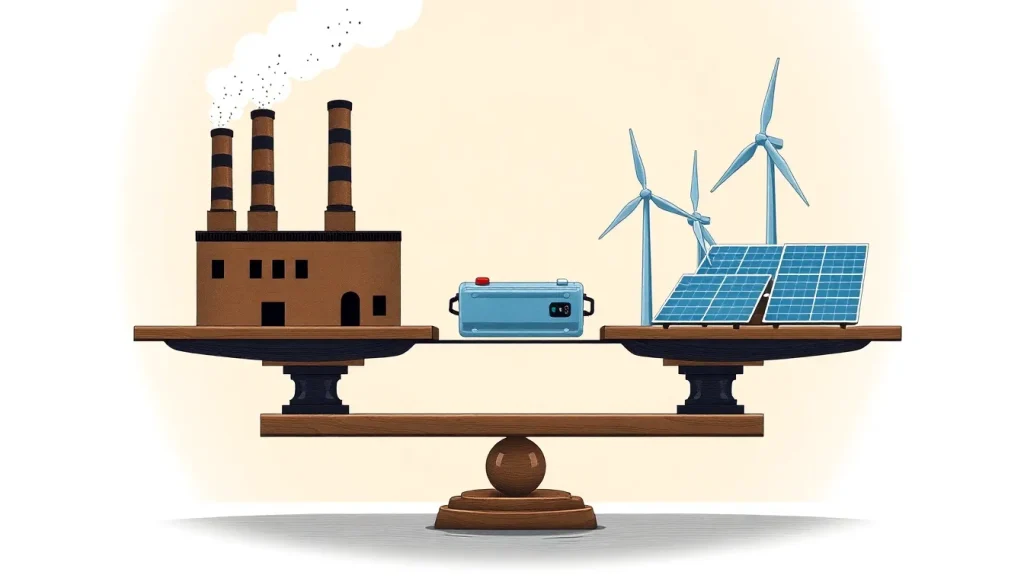
This shift has significant economic and environmental implications. Intermittent renewables have near-zero marginal costs and produce no direct emissions, which can lower wholesale electricity prices and reduce carbon footprints. However, their variability imposes integration costs, including the need for backup capacity, expanded transmission, and grid modernization. The overall impact depends on the flexibility of the existing power system, the availability of storage, and the degree of interconnection with neighboring grids. Balancing the benefits of clean intermittent energy with the reliability of dispatchable sources is a key challenge in the global energy transition.
Benefits, Limitations and Trade-offs
Dispatchable generation offers high reliability and controllability, making it the backbone of most power systems. It can provide baseload power (continuous operation), peaking power (to meet high demand), and ancillary services. However, many dispatchable sources—particularly coal and natural gas—emit greenhouse gases and air pollutants. Nuclear and large hydropower are low-carbon dispatchable options, but they come with concerns about safety, waste, and environmental impact. Geothermal and biomass are also dispatchable and renewable, but their availability is geographically limited and they may have other sustainability constraints.
Intermittent sources like wind and solar are abundant, widely distributed, and produce no direct emissions during operation. Their fuel costs are zero, which can reduce electricity prices. However, their variability requires complementary investments in grid flexibility, energy storage, or backup generation. This can increase overall system costs, though these are often offset by the low operating costs of renewables. There are also land-use and aesthetic concerns, as large solar farms and wind turbines require significant space and can face local opposition. The trade-off between clean but variable generation and reliable but often polluting dispatchable sources is at the heart of modern energy debates.
Common Misconceptions
Misconception: Intermittent electricity is unreliable. While individual intermittent sources are variable, a well-designed system with diverse renewable resources, geographic spread, storage, and grid interconnections can achieve high levels of reliability. No power source is 100% reliable; even dispatchable plants can fail unexpectedly. Grid operators manage all types of uncertainty through reserves and redundancy.
Misconception: Dispatchable electricity always means fossil fuels. Nuclear, hydropower with reservoirs, geothermal, and biomass are dispatchable and can be low-carbon. Emerging technologies like advanced nuclear and enhanced geothermal may expand dispatchable clean options. Additionally, energy storage can make intermittent sources effectively dispatchable by time-shifting their output.
Misconception: Solar and wind are always intermittent. While they are variable, their output is often predictable. Solar generation follows a daily cycle, and wind patterns can be forecast with reasonable accuracy. When combined with storage or other flexible resources, they can contribute to a reliable grid.
Connections to Other Systems
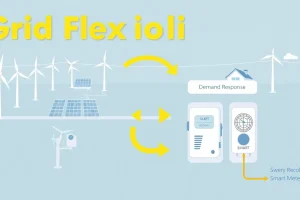
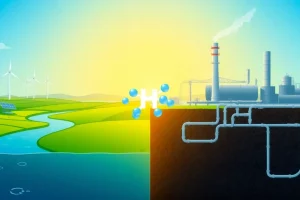
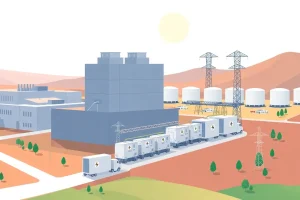
The integration of intermittent electricity is closely linked to energy storage systems, such as batteries, pumped hydro, and emerging technologies like compressed air or hydrogen storage. Storage allows excess intermittent generation to be saved and dispatched later, effectively converting intermittent sources into dispatchable ones. Demand response programs, which incentivize consumers to shift their electricity use to times of high renewable output, also help balance the grid. Additionally, stronger transmission interconnections between regions can smooth out variability by allowing power to flow from areas with surplus wind or solar to areas with deficits.
Smart grid technologies, including advanced sensors, communication networks, and automated controls, enable more precise management of both supply and demand. These systems can coordinate millions of distributed energy resources—such as rooftop solar, electric vehicles, and smart appliances—to provide flexibility. The interplay between dispatchable generation, intermittent renewables, storage, and demand-side measures is reshaping electricity systems worldwide, making them more complex but also more capable of handling high shares of clean energy.
Examples
Several regions demonstrate how dispatchable and intermittent sources can coexist. Denmark regularly meets over 40% of its electricity demand with wind power, relying on interconnections with neighboring countries and flexible dispatchable plants to balance the grid. Germany’s Energiewende has led to high penetrations of solar and wind, supported by a strong grid, storage, and remaining dispatchable capacity. California has achieved periods where renewable energy meets nearly all demand, using battery storage and imports to manage the evening ramp when solar output declines. These examples show that with adequate planning and investment, high levels of intermittent generation are feasible, though challenges remain in ensuring reliability during extreme weather or prolonged low-resource periods.
FAQ
What is dispatchable electricity?
Dispatchable electricity comes from power plants that can be controlled and adjusted on demand, such as natural gas, coal, nuclear, and hydropower with reservoirs. They can be turned on or off and ramped up or down to match electricity consumption.
What is intermittent electricity?
Intermittent electricity is generated from sources that depend on variable natural conditions, like sunlight and wind. Solar panels and wind turbines produce power only when the resource is available, making their output less controllable.
Why does the distinction between dispatchable and intermittent electricity matter?
It matters because electricity grids must balance supply and demand in real time. As intermittent renewables grow, grid operators need flexible dispatchable sources, storage, and other tools to maintain reliability and prevent blackouts.
References
- U.S. Energy Information Administration, 'Electricity Explained: How Electricity Is Generated'
- International Energy Agency, 'World Energy Outlook'
- National Renewable Energy Laboratory, 'Grid Integration Studies'