In brief
At a glance
Quick Facts
- Core Principle
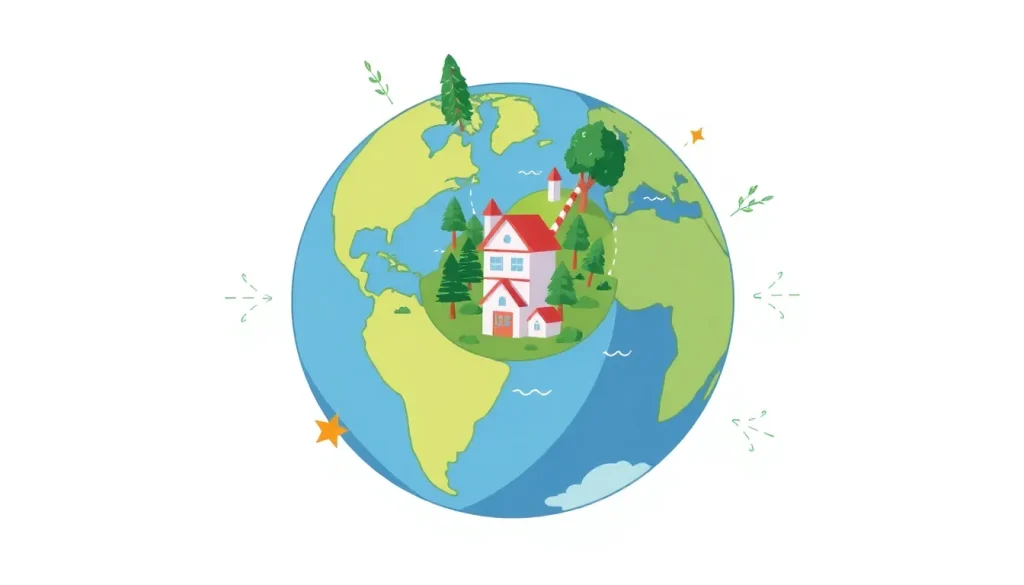
- The economy is a subsystem of the biosphere, not the other way around.
- Key Distinction
- Growth (quantitative) vs. development (qualitative); only development can be sustainable.
- Founding Figures
- Herman Daly, Nicholas Georgescu-Roegen, and Robert Costanza are among the pioneers.
- Central Concept
- Throughput: the flow of energy and materials from the environment, through the economy, and back as waste.
- Policy Goal
- A steady-state economy with stable or mildly fluctuating population and consumption within ecological limits.
- Valuation Approach
- Uses methods like contingent valuation and ecosystem service assessment to incorporate environmental costs.
Key Takeaways
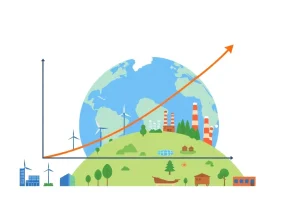
- Ecological economics treats the economy as a subsystem of the Earth’s finite ecosystem, emphasizing that economic activity must respect biophysical limits.
- It distinguishes between growth (quantitative increase) and development (qualitative improvement), advocating for a steady-state economy that prioritizes well-being over endless expansion.
- The field integrates insights from ecology, thermodynamics, and ethics to address issues like resource depletion, pollution, and ecosystem degradation.
- Ecological economics provides practical tools for valuing ecosystem services and guiding policy toward sustainability, though it faces challenges in measurement and political acceptance.
What Is Ecological Economics?
Ecological economics is a transdisciplinary field of study that defines the economy as an open subsystem of the Earth’s larger ecosystem, constrained by biophysical limits. Unlike conventional economics, which often treats the environment as a subset of the economy (a source of resources and a sink for waste), ecological economics inverts this relationship: the economy is embedded within the environment and depends on it for life-support functions. The field emerged from the recognition that traditional economic models fail to account for the finite nature of natural resources and the limited capacity of ecosystems to absorb pollution, leading to unsustainable outcomes. Ecological economics seeks to understand and manage the interactions between human economies and natural systems, with the ultimate goal of achieving sustainability, justice, and efficiency.
At its core, ecological economics is concerned with the scale of the economy relative to the ecosystem that sustains it. It draws on principles from ecology, thermodynamics, and ethics to analyze economic processes. For example, the laws of thermodynamics dictate that matter and energy cannot be created or destroyed, only transformed, and that all transformations generate waste heat and entropy. This means that economic activity—which requires energy and material inputs—inevitably depletes resources and produces waste. Therefore, the scale of the economy must be limited to what the biosphere can regenerate and absorb. Ecological economics also emphasizes the importance of just distribution and efficient allocation, but it argues that scale should be the primary concern, as a too-large economy can undermine both social equity and environmental health. The field is inherently normative, acknowledging that values and ethics are inseparable from economic analysis.
Overview
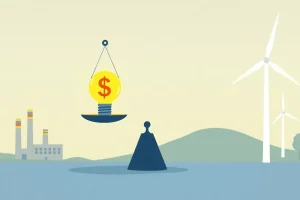
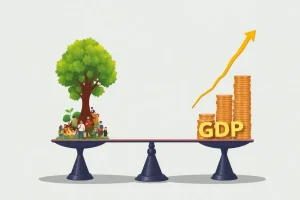
Ecological economics is distinct from both mainstream economics and environmental economics. Mainstream (neoclassical) economics typically focuses on efficient allocation of scarce resources, assuming that growth can continue indefinitely through technological innovation and substitution. Environmental economics, a subfield of neoclassical economics, applies these tools to environmental problems, often by pricing pollution or natural resources to internalize externalities. Ecological economics, however, challenges the assumption of infinite growth on a finite planet. It argues that the economy is a subsystem of the biosphere, not the other way around, and that there are absolute limits to resource use and waste absorption. This perspective leads to a focus on the optimal scale of the economy, not just optimal allocation.
The field is inherently transdisciplinary, bringing together insights from ecology, physics, ethics, and other social sciences. It recognizes that economic valuation cannot fully capture the complexity of ecosystems and that some natural assets are irreplaceable. Ecological economists often advocate for a precautionary principle, strong sustainability (maintaining critical natural capital), and the use of multiple metrics beyond GDP to measure well-being. The field also addresses issues of intergenerational and intragenerational equity, emphasizing that current economic activities should not compromise the ability of future generations to meet their needs. In practice, ecological economics informs policies such as carbon budgets, biodiversity offsets, and the circular economy, though it often critiques these as insufficient without broader systemic change.
History
The intellectual roots of ecological economics can be traced back to the 19th and early 20th centuries, with thinkers like Thomas Malthus, who worried about population growth outstripping food supply, and Nicholas Georgescu-Roegen, whose 1971 book “The Entropy Law and the Economic Process” laid the thermodynamic foundation for the field. Earlier, Kenneth Boulding’s 1966 essay “The Economics of the Coming Spaceship Earth” contrasted the “cowboy economy” of limitless frontiers with a “spaceship economy” of closed cycles. The 1972 report “The Limits to Growth” by the Club of Rome used system dynamics modeling to project the consequences of exponential growth on a finite planet, sparking global debate. These works highlighted the biophysical constraints that neoclassical economics largely ignored.
Ecological economics as a distinct discipline emerged in the 1980s. The formation of the International Society for Ecological Economics (ISEE) in 1988 and the launch of the journal “Ecological Economics” in 1989 marked its institutional birth. Key founders included Herman Daly, who articulated the concept of a steady-state economy and served as a senior economist at the World Bank; Robert Costanza, who advanced the valuation of ecosystem services and co-founded the ISEE; and AnnMari Jansson, who contributed to the integration of ecology and economics. The field gained momentum in the 1990s and 2000s with growing awareness of global environmental problems. The 1992 Earth Summit in Rio de Janeiro and the subsequent development of sustainability indicators reflected ecological economic thinking. The publication of Costanza et al.’s 1997 paper on the value of the world’s ecosystem services brought the field to wider attention, though it also sparked controversy. Over time, ecological economics has influenced policy discussions on climate change, biodiversity, and the circular economy, and it continues to evolve as a critical voice in debates about sustainable development.
How It Works
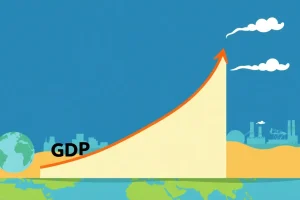
Ecological economics operates by analyzing the economy through the lens of biophysical and social systems. A central concept is “throughput”—the flow of energy and materials from the environment, through the economy, and back to the environment as waste. This flow is governed by the laws of thermodynamics: the first law (conservation of mass/energy) means that all resources extracted must end up somewhere, and the second law (entropy) means that energy becomes less available for work, and materials dissipate. Thus, the economy cannot recycle 100% of its waste, and perpetual growth is physically impossible. Ecological economists use this framework to assess the scale of economic activity relative to planetary boundaries, often employing tools like material flow analysis (MFA) and ecological footprint accounting to measure human demand on nature.
Another key tool is the valuation of ecosystem services—the benefits humans receive from nature, such as pollination, water purification, and climate regulation. While controversial, valuation can help make the economic case for conservation. Methods include contingent valuation (surveying people’s willingness to pay), hedonic pricing, and replacement cost approaches. Ecological economics also employs alternative indicators to GDP, such as the Genuine Progress Indicator (GPI) or the Index of Sustainable Economic Welfare (ISEW), which adjust for environmental degradation and social factors. The field distinguishes between strong and weak sustainability: weak sustainability assumes that natural capital can be substituted by human-made capital, while strong sustainability holds that certain natural assets are critical and non-substitutable. Policy proposals often include ecological tax reform (shifting taxes from labor to resource use), cap-and-trade systems for resources, and the establishment of maximum sustainable scale limits. Ultimately, ecological economics aims to redesign economic systems to operate within ecological limits while enhancing human well-being.
Importance and Impact
Ecological economics matters because it directly addresses the existential challenges of the 21st century: climate change, biodiversity loss, resource depletion, and pollution. By recognizing that the economy is a subsystem of the biosphere, it provides a framework for understanding why these problems occur and how to solve them. For instance, climate change is a result of exceeding the atmosphere’s capacity to absorb greenhouse gases—a scale problem. Ecological economics argues that pricing carbon alone is insufficient; we must also set absolute limits on emissions and reduce the material throughput of the economy. The field’s emphasis on planetary boundaries has influenced concepts like the “safe operating space for humanity” and the doughnut economics model, which combines social foundations with ecological ceilings.
The field has influenced international policy, including the United Nations Sustainable Development Goals (SDGs) and the concept of a “green economy.” It has also inspired grassroots movements like degrowth and the transition towns movement. In academia, it has fostered interdisciplinary research and challenged the dominance of GDP as a measure of progress. By highlighting the dependence of human well-being on healthy ecosystems, ecological economics has shifted the conversation from mere economic growth to sustainable human development. Its impact is seen in the growing adoption of natural capital accounting, ecosystem service assessments, and the integration of sustainability into corporate and governmental decision-making.
Benefits, Limitations and Trade-offs
Benefits: Ecological economics offers a holistic and realistic view of the economy’s place in the world. It provides a coherent framework for sustainability that integrates ecological, social, and ethical dimensions. Its emphasis on scale and throughput helps identify unsustainable trends early. The field also promotes the use of diverse indicators and participatory decision-making, which can lead to more equitable outcomes. By valuing ecosystem services, it can make the economic case for conservation more compelling. Moreover, it encourages long-term thinking and precaution in the face of uncertainty, which is essential for managing complex environmental problems.
Limitations: The field faces significant challenges in measurement and implementation. Valuing ecosystem services is methodologically difficult and ethically contentious, as it may commodify nature. Determining the “optimal scale” of the economy is not straightforward and involves value judgments. Ecological economic policies, such as caps on resource use or a steady-state economy, often face political resistance because they challenge the growth imperative deeply embedded in modern societies. Additionally, the transdisciplinary nature can make it hard to reach consensus among practitioners from different backgrounds. There is also a lack of widely accepted operational models that can be easily applied by policymakers, and data limitations often hinder comprehensive analysis.
Trade-offs: Pursuing ecological economic goals may involve trade-offs between short-term economic growth and long-term sustainability. For example, limiting fossil fuel extraction could lead to job losses in the short term, even if it prevents catastrophic climate change. There are also trade-offs between different environmental goals; for instance, biofuel production might reduce carbon emissions but increase land use and biodiversity loss. Ecological economics encourages transparent deliberation about these trade-offs rather than assuming they can be resolved through market mechanisms alone. It also acknowledges that some trade-offs may be unavoidable and that societal values must guide decisions about which path to take.
Common Misconceptions
Misconception 1: Ecological economics is anti-growth and anti-technology. In reality, ecological economics distinguishes between growth (quantitative increase) and development (qualitative improvement). It is not against development that enhances well-being without increasing material throughput. Technology can play a crucial role in improving efficiency, but ecological economists caution that efficiency gains often lead to increased consumption (the Jevons paradox), so they must be paired with scale limits. The goal is not to stop progress but to redefine it in terms of human and ecological well-being.
Misconception 2: It is the same as environmental economics. While both address environmental issues, environmental economics is a subfield of neoclassical economics that applies its tools to the environment, often assuming that natural capital can be substituted by human-made capital. Ecological economics, in contrast, starts from the premise that the economy is embedded in the environment and that many natural resources are non-substitutable. It is more critical of the growth paradigm and more open to interdisciplinary methods. Environmental economics typically seeks to price nature to achieve efficiency; ecological economics questions whether pricing alone can ensure sustainability.
Misconception 3: Ecological economics wants to return to a pre-industrial lifestyle. The field does not advocate for a specific lifestyle but for a sustainable scale of economic activity. It recognizes that modern society can enjoy a high quality of life with lower material throughput through better design, renewable energy, and a focus on services rather than goods. The goal is not deprivation but a redefinition of prosperity that decouples well-being from material consumption. Many ecological economists envision a future with advanced technology, vibrant communities, and a restored natural environment.
FAQ
What is ecological economics?
Ecological economics is a transdisciplinary field that studies the relationship between human economies and natural ecosystems, emphasizing that the economy is a subsystem of the biosphere and must operate within ecological limits.
How does ecological economics differ from environmental economics?
Environmental economics typically applies neoclassical economic tools to environmental problems, treating the environment as a subset of the economy. Ecological economics, in contrast, sees the economy as embedded within the environment and focuses on biophysical constraints, sustainability, and justice.
Why does ecological economics matter?
It provides a framework for understanding and addressing global environmental challenges such as climate change, biodiversity loss, and resource depletion by recognizing the finite nature of the planet and the need for a sustainable scale of economic activity.
References
- Daly, H. E., & Farley, J. (2011). Ecological Economics: Principles and Applications. Island Press.
- Costanza, R., et al. (1997). The value of the world's ecosystem services and natural capital. Nature, 387, 253-260.
- International Society for Ecological Economics (ISEE) website: http://www.isecoeco.org/