In brief
At a glance
Quick Facts
- Core idea
- Economic policy should prioritize well-being and ecological sustainability over GDP growth.
- Key distinction
- Differentiates between economic growth (quantitative) and development (qualitative).
- Origin
- Rooted in 1970s ecological economics and the limits-to-growth debate.
- Main policy tools
- Work-time reduction, resource taxation, universal basic services, and alternative indicators.
- Related concepts
- Degrowth, steady-state economy, circular economy, well-being economy.
- Primary advocates
- Tim Jackson, Kate Raworth, Herman Daly, Peter Victor.
- Key challenge
- Overcoming the structural growth dependence of modern economies.
- Global relevance
- Primarily aimed at high-income countries; acknowledges need for growth in low-income nations.
Key Takeaways
- Post-growth economics argues that continuous GDP growth is neither possible nor desirable on a finite planet, especially in already wealthy economies.
- It distinguishes between economic growth (quantitative increase in material throughput) and economic development (qualitative improvement in well-being).
- Core proposals include reducing working hours, implementing universal basic services, and shifting taxation from labor to resource use.
- The approach seeks to decouple prosperity from resource consumption, addressing both ecological crises and social inequality simultaneously.
What Is Post-Growth Economics Explained?
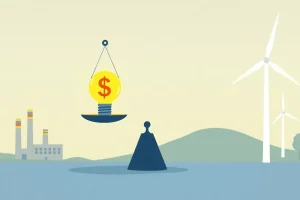
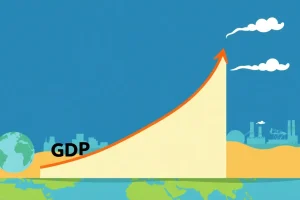
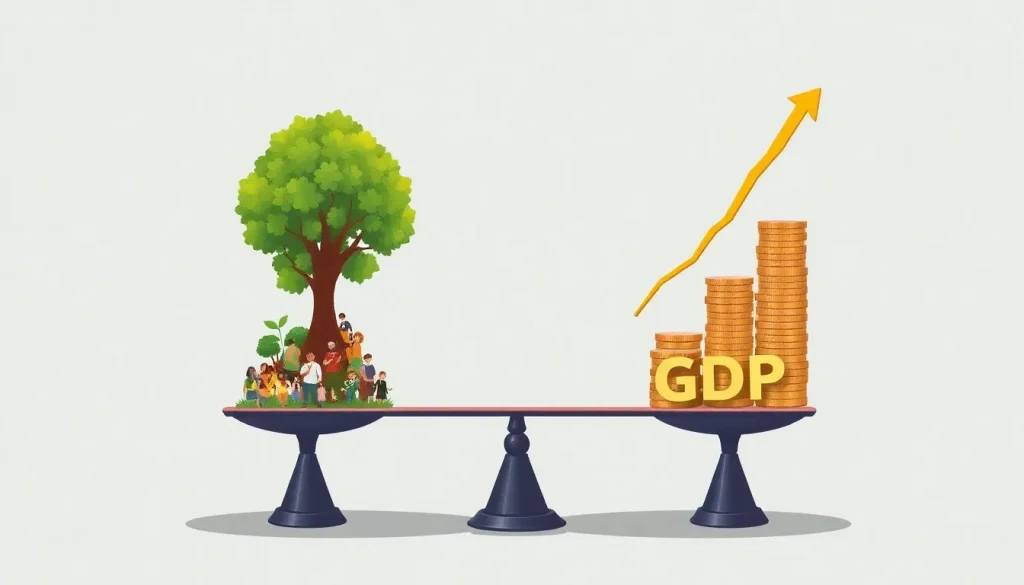
Post-growth economics is an intellectual and policy framework that questions the central role of Gross Domestic Product (GDP) growth in economic thinking and governance. It asserts that the pursuit of perpetual economic growth—measured as increasing production and consumption of goods and services—is incompatible with the biophysical limits of a finite planet. Instead, post-growth economics advocates for a deliberate transition to an economy that prioritizes human well-being, social equity, and ecological sustainability over the mere expansion of material throughput.
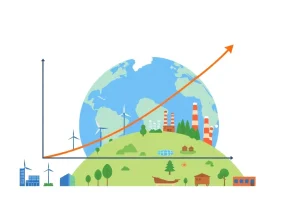
This perspective does not call for a simplistic halt to all economic activity. Rather, it distinguishes between economic growth (a quantitative increase in resource use and output) and economic development (qualitative improvements in health, education, happiness, and environmental quality). Post-growth thinking holds that in high-income countries, further GDP growth no longer reliably improves well-being and often exacerbates environmental degradation. It therefore proposes a managed reduction of material and energy use to sustainable levels, while enhancing social and ecological outcomes. The concept is closely related to, but distinct from, degrowth (which emphasizes planned downscaling) and steady-state economics (which focuses on a stable scale of throughput).
Overview
Post-growth economics is a broad umbrella term that encompasses a range of heterodox economic ideas united by a rejection of growth dependence. It draws on ecological economics, political ecology, and social critiques of consumerism. The central premise is that modern economies are structurally dependent on continuous GDP growth to maintain stability—a condition known as “growth imperative”—but that this dependence is socially constructed and can be overcome through institutional redesign. Post-growth thinking argues that beyond a certain threshold, additional wealth does not translate into greater subjective well-being (the Easterlin paradox), while the environmental costs of growth accelerate.
The framework proposes a shift from a growth-oriented economy to a “post-growth” economy where economic activity respects planetary boundaries and focuses on provisioning for human needs. This involves redefining prosperity not as material accumulation but as the ability to flourish within ecological limits. Key policy areas include work-time reduction, job guarantees, universal basic services, maximum income limits, progressive resource taxation, and alternative indicators of progress such as the Genuine Progress Indicator (GPI) or the Human Development Index (HDI).
History
The intellectual roots of post-growth economics trace back to the 1970s, when the Club of Rome’s report The Limits to Growth (1972) used computer modeling to show that exponential economic and population growth would eventually collide with finite resources. Around the same time, economist E.F. Schumacher published Small Is Beautiful (1973), advocating for human-scale, decentralized economies. The term “steady-state economy” was popularized by ecological economist Herman Daly, who argued for a constant stock of physical wealth and a stable population, with throughput kept within regenerative and absorptive capacities.
In the 2000s, the post-growth discourse gained momentum with works like Tim Jackson’s Prosperity Without Growth (2009) and Peter Victor’s Managing Without Growth (2008). These authors provided detailed macroeconomic models showing that it is possible to achieve full employment, price stability, and improved well-being without relying on GDP growth. The 2008 financial crisis and growing climate urgency further fueled interest. The degrowth movement, originating in French activist circles in the early 2000s, added a more radical, grassroots dimension, while the OECD and World Bank began exploring “beyond GDP” indicators. The post-growth label emerged as a more policy-oriented umbrella, encompassing degrowth, steady-state, and well-being economy approaches.
How It Works
Post-growth economics operates by reorienting economic policy away from maximizing GDP and toward achieving specific social and ecological goals. It does not prescribe a single blueprint but offers a toolkit of mutually reinforcing policies. A central mechanism is the reduction of working hours, which can distribute available work more evenly, reduce unemployment, and lower the environmental impact of commuting and production, while giving people more leisure time. This is often paired with a job guarantee, ensuring everyone who wants work can find meaningful employment in socially useful sectors like care, education, and ecological restoration.
Another key element is reforming the tax system to shift the burden from labor to resource use and pollution. For example, a carbon tax or material extraction tax makes resource-intensive activities more expensive, incentivizing efficiency and circularity, while reducing taxes on employment encourages hiring. Universal basic services—such as healthcare, education, housing, and public transport—are proposed to decouple well-being from income, reducing the pressure to consume. Additionally, alternative indicators of progress replace GDP as the primary measure of success, guiding policy toward genuine improvements in quality of life. These measures are designed to work together to create a stable, non-growing economy that can maintain full employment and social cohesion without relying on expansion.
Importance and Impact
Post-growth economics matters because it directly addresses the conflict between infinite growth and a finite planet. The global economy is already transgressing multiple planetary boundaries, including climate change, biodiversity loss, and nitrogen cycles. In wealthy nations, where material needs are largely met, further GDP growth often fails to improve subjective well-being and can even undermine it through longer working hours, inequality, and environmental degradation. Post-growth thinking offers a coherent framework for navigating a future where growth is no longer possible or desirable, aiming to achieve a “good life for all within planetary boundaries.”
The impact of post-growth ideas is increasingly visible in policy discussions. The European Union’s “Beyond GDP” initiative, the Wellbeing Economy Governments partnership (WEGo) including Scotland, New Zealand, Iceland, Wales, and Finland, and the UN’s Sustainable Development Goals all reflect a shift toward broader measures of progress. Academic research has demonstrated that high-income countries can reduce resource use while maintaining or improving social outcomes. The concept also influences grassroots movements advocating for localism, sharing economies, and reduced consumption, contributing to a cultural shift away from consumerism.
Benefits, Limitations and Trade-offs
The primary benefit of a post-growth economy is ecological sustainability: by reducing material and energy throughput, it directly addresses climate change, resource depletion, and biodiversity loss. Socially, it promises greater equity through redistributive policies, improved work-life balance, and enhanced public services. Economically, it can increase resilience by reducing dependence on volatile global markets and resource extraction. Psychologically, it may alleviate the stress and dissatisfaction associated with consumer culture and status competition.
However, post-growth economics faces significant limitations and trade-offs. The most pressing is the transition challenge: modern economies are structurally dependent on growth for employment, public finance, and debt servicing. Without growth, unemployment could rise, tax revenues could fall, and welfare systems could become unsustainable unless fundamental reforms are implemented. There is also a risk of political resistance, as growth is deeply embedded in cultural narratives of progress and success. Internationally, if some countries adopt post-growth policies while others continue to pursue growth, competitiveness issues may arise. Moreover, the feasibility of decoupling well-being from resource use at a global scale remains debated, with critics arguing that only absolute reductions in consumption can achieve sustainability, which may be politically and socially difficult to implement.
Common Misconceptions
A widespread misconception is that post-growth economics advocates for a recession or a permanent economic depression. In reality, it distinguishes between a planned, equitable reduction in material throughput and an unplanned, chaotic economic contraction, which is harmful. Post-growth policies aim to maintain or improve well-being while reducing resource use, not to shrink the economy arbitrarily. Another misunderstanding is that post-growth means zero technological innovation. On the contrary, it encourages innovation in areas like renewable energy, circular design, and efficiency, but redirects it away from planned obsolescence and luxury consumption.
Some critics claim that post-growth is anti-development and would trap poor countries in poverty. Post-growth advocates explicitly recognize that low-income countries may still need economic growth to meet basic needs. The framework is primarily aimed at wealthy, overdeveloped nations, and calls for a global redistribution of resources and a contraction of material use in the Global North to create ecological space for development in the Global South. Finally, post-growth is not synonymous with degrowth, though they overlap. Degrowth is a more radical, activist-oriented movement that calls for a planned reduction of economic output, while post-growth is a broader, more policy-focused umbrella that includes steady-state and well-being economy approaches.
FAQ
What is post-growth economics?
Post-growth economics is a framework that challenges the goal of endless GDP growth, advocating instead for an economy that prioritizes human well-being, social equity, and ecological sustainability within planetary boundaries.
How does post-growth economics differ from degrowth?
Degrowth is a more radical, activist-oriented movement calling for a planned reduction of economic output, while post-growth is a broader umbrella that includes degrowth, steady-state, and well-being economy approaches, often with a stronger policy focus.
Why does post-growth economics matter?
It matters because continuous economic growth is ecologically unsustainable and, in wealthy nations, no longer reliably improves well-being. Post-growth offers a pathway to a stable, equitable, and sustainable economy.
References
- Jackson, T. (2009). Prosperity Without Growth: Economics for a Finite Planet. Earthscan.
- Raworth, K. (2017). Doughnut Economics: Seven Ways to Think Like a 21st-Century Economist. Random House.
- Daly, H. E. (1991). Steady-State Economics. Island Press.
- Victor, P. A. (2008). Managing Without Growth: Slower by Design, Not Disaster. Edward Elgar.