In brief
At a glance
Quick Facts
- Definition
- Decoupling means breaking the link between economic growth and environmental harm.
- Types
- Relative decoupling: environmental impacts grow slower than GDP. Absolute decoupling: impacts decline while GDP grows.
- Global CO₂
- Global CO₂ emissions have not absolutely decoupled from GDP growth; they continue to rise.
- Material Use
- Global material extraction has grown in tandem with GDP, showing no absolute decoupling.
- Historical Rate
- The carbon intensity of the global economy declined by about 1.5% per year from 2000 to 2014, far below the 10%+ needed for climate targets.
- Rebound Effect
- Efficiency improvements can lead to increased consumption, partially or fully offsetting environmental gains.
- Sectoral Decoupling
- Some pollutants, like sulfur dioxide, have been absolutely decoupled from GDP in many developed countries.
- Consumption-based Emissions
- When accounting for trade, many rich countries' carbon footprints have not decoupled from GDP.
- Policy Role
- Strong policies, such as carbon pricing and resource efficiency standards, are essential for decoupling.
- Planetary Boundaries
- Absolute decoupling of all environmental pressures at a global scale is necessary to stay within planetary boundaries.
Key Takeaways
- Decoupling economic growth from environmental damage means increasing economic output without a corresponding rise in resource use or pollution.
- Relative decoupling (where environmental impacts grow slower than GDP) is common; absolute decoupling (where impacts decline while GDP grows) is rarer and often temporary or local.
- Technological innovation, structural economic change, and policy interventions are key drivers, but they face limits due to rebound effects and the scale of global consumption.
- Achieving global absolute decoupling is critical for long-term sustainability, yet current evidence suggests it remains elusive for many key environmental indicators.
What Is Decoupling of Economic Growth From Environmental Damage?
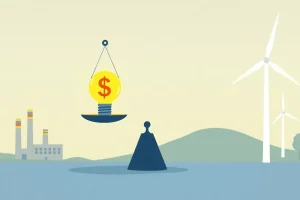
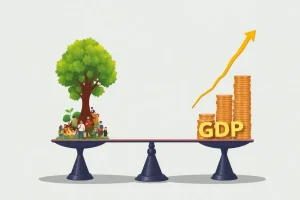
Decoupling, in the context of sustainability, refers to severing the historical link between economic growth and environmental degradation. Traditionally, as economies expand—measured by gross domestic product (GDP)—they consume more resources and generate more waste and emissions. Decoupling occurs when economic growth continues while environmental pressures stabilize or decline. The concept is central to the idea of “green growth,” which posits that continued economic expansion can be compatible with environmental sustainability if the right policies and technologies are in place.
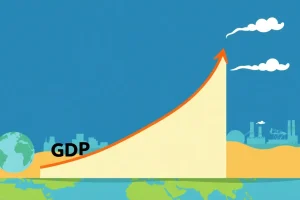
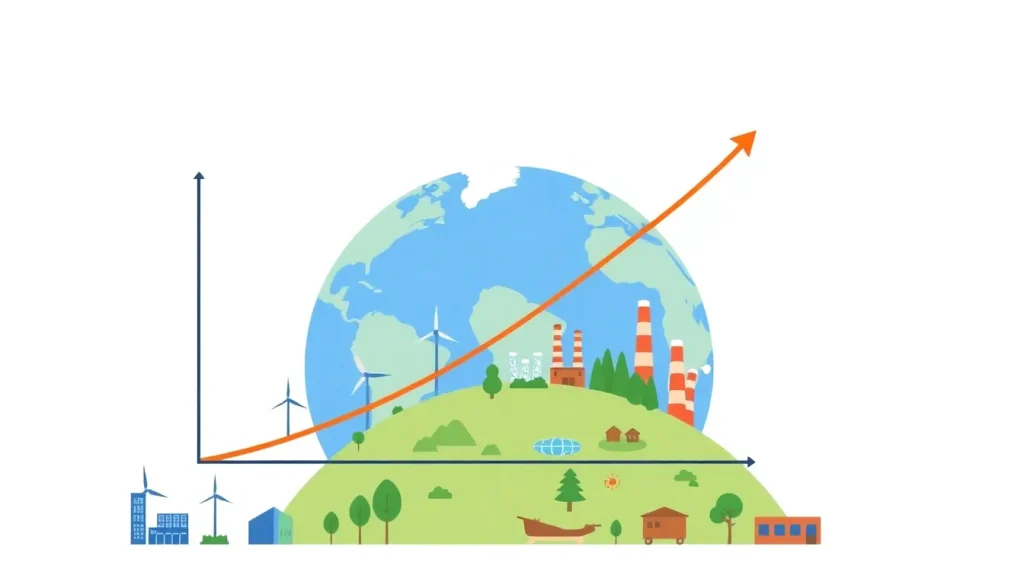
There are two main types of decoupling: relative and absolute. Relative decoupling means that environmental impacts grow at a slower rate than GDP. For example, if GDP grows by 3% and carbon emissions grow by 1%, relative decoupling has occurred. Absolute decoupling, on the other hand, means that environmental impacts decline in absolute terms even as the economy grows. This is the more ambitious and necessary form for achieving long-term environmental goals, such as staying within planetary boundaries. The debate over whether absolute decoupling is possible at the global scale and for all critical environmental pressures lies at the heart of sustainability science and policy.
Overview
The relationship between economic growth and environmental impact has been a subject of intense study and debate since the 1970s. The concept of decoupling emerged from the recognition that infinite growth on a finite planet is impossible unless the link between economic activity and resource use or pollution can be broken. The idea is embedded in international policy frameworks such as the United Nations Sustainable Development Goals (SDGs), particularly Goal 8 (Decent Work and Economic Growth) and Goal 12 (Responsible Consumption and Production). Decoupling is often discussed in terms of resource use (materials, energy, water, land) and environmental impacts (greenhouse gas emissions, biodiversity loss, pollution). While some countries have achieved relative decoupling for certain indicators, the question of whether absolute, global, and permanent decoupling is feasible remains contentious.
The term gained prominence with the 2011 UNEP report “Decoupling Natural Resource Use and Environmental Impacts from Economic Growth,” which highlighted the potential and challenges. Since then, a growing body of research has examined empirical trends, often finding that while relative decoupling is widespread, absolute decoupling is rare and typically limited to specific pollutants in wealthy nations. The discussion is further complicated by the distinction between territorial (production-based) and consumption-based accounting, as well as the need to consider multiple environmental pressures simultaneously.
How It Works
Decoupling can occur through several interconnected mechanisms. Technological innovation improves efficiency, allowing more output per unit of input—for example, more energy-efficient appliances, vehicles, and industrial processes. Structural economic change shifts the economy from resource-intensive sectors (like manufacturing and mining) to less resource-intensive ones (like services and information technology). Policy interventions, such as carbon pricing, emissions standards, and subsidies for clean energy, can accelerate these shifts. Additionally, the “dematerialization” of the economy—using fewer materials to produce the same value—can contribute to decoupling. For instance, digitalization has reduced the need for physical media and paper in some areas.
However, these mechanisms often face countervailing forces. The rebound effect (or Jevons paradox) occurs when efficiency gains lower the effective cost of a resource, leading to increased consumption that partially or fully offsets the savings. For example, more fuel-efficient cars may encourage more driving. Similarly, economic growth itself can drive up total resource use even if per-unit efficiency improves. For absolute decoupling to occur, the rate of improvement in environmental efficiency must outpace the rate of economic growth. This requires not only technological progress but also systemic changes in consumption patterns and strong policy frameworks that cap or price environmental impacts.
What the Evidence Shows
Empirical studies present a mixed picture. For some pollutants, such as sulfur dioxide and nitrogen oxides, many high-income countries have achieved absolute decoupling from GDP growth, largely due to air quality regulations and technological changes like scrubbers on power plants. For carbon dioxide emissions, the evidence is more nuanced. Some developed nations have shown periods of absolute decoupling, but these are often linked to offshoring of manufacturing (so emissions are merely displaced) or one-off shifts like the decline of coal. When emissions are measured on a consumption basis—accounting for the carbon embedded in imported goods—the decoupling often disappears or weakens significantly.
At the global level, absolute decoupling of CO₂ emissions from GDP has not been achieved; emissions continue to rise, albeit at a slower rate than GDP in some years. For material use, global resource extraction has grown in tandem with GDP, indicating no absolute decoupling. A comprehensive 2020 review of over 800 studies found that while relative decoupling is common, absolute decoupling is rare, temporary, and usually limited to specific environmental pressures in wealthy countries. The carbon intensity of the global economy declined by about 1.5% per year from 2000 to 2014, far below the 10%+ annual reduction needed to meet Paris Agreement targets. This suggests that current efforts are insufficient for achieving the scale of decoupling required.
Benefits, Limitations and Trade-offs
The primary benefit of decoupling is that it would allow continued economic growth—and the associated improvements in living standards, employment, and poverty reduction—without breaching environmental limits. This is the core promise of “green growth.” If absolute decoupling could be achieved globally, it would resolve the apparent conflict between economic development and environmental protection, enabling a transition to a sustainable economy without sacrificing prosperity.
However, there are significant limitations. The scale of decoupling required to meet climate targets is unprecedented: carbon intensity would need to decline at over 10% per year globally, far exceeding historical rates. Rebound effects can erode savings, and efficiency improvements in one area may increase resource use elsewhere (e.g., energy-efficient lighting leading to more extensive lighting use). Moreover, decoupling in one environmental domain (e.g., carbon emissions) may come at the expense of another (e.g., increased material use for renewable energy infrastructure). There is also the risk of “problem shifting,” where environmental pressures are exported to other regions through trade. These trade-offs highlight the complexity of achieving genuine sustainability and have led some scholars to argue that absolute decoupling may be impossible without fundamental changes to the economic system, including a move away from the pursuit of endless GDP growth.
Regional Differences
Decoupling patterns vary significantly across countries and regions. High-income nations have generally achieved relative decoupling for many environmental indicators, partly due to the shift to service-based economies and the import of resource-intensive goods. For example, the European Union has reduced its territorial greenhouse gas emissions while growing its economy, but its consumption-based emissions (including imports) are higher. The United States has seen a decline in CO₂ emissions since the mid-2000s, driven by a shift from coal to natural gas and renewables, alongside economic growth, though this trend may not be permanent.
In contrast, emerging economies like China and India have seen rapid GDP growth accompanied by large increases in resource use and emissions, though they are also investing heavily in renewable energy. China, for instance, is the world’s largest emitter but also the largest producer of solar panels and wind turbines. Low-income countries often have low per capita environmental impacts but face challenges in decoupling because they are still building basic infrastructure and lack access to advanced technologies. This divergence raises questions about equity and the feasibility of global decoupling without significant technology transfer and financial support from wealthier nations. The principle of “common but differentiated responsibilities” in climate negotiations reflects these regional disparities.
Data Limitations and Uncertainties
Measuring decoupling accurately is challenging due to data limitations. Many environmental indicators, such as biodiversity loss or soil degradation, are difficult to quantify and monitor consistently across countries. Consumption-based accounting, which allocates environmental impacts to the final consumer rather than the producer, is methodologically complex and data-intensive, often relying on trade models with significant uncertainties. There are also gaps in data for material flows, water use, and land-use change, making comprehensive assessments difficult.
There are also uncertainties about the potential for future decoupling, as it depends on technological breakthroughs, policy choices, and behavioral changes that are hard to predict. Models used to project decoupling often rely on assumptions about efficiency improvements and economic structural change that may not materialize. Furthermore, the rebound effect is difficult to measure and often underestimated. These uncertainties mean that claims of achieved or future decoupling should be treated with caution. A precautionary approach suggests that relying solely on decoupling to solve environmental problems may be risky, and complementary strategies—such as reducing overall consumption and rethinking economic goals—may be necessary.
FAQ
What is decoupling?
Decoupling refers to breaking the link between economic growth and environmental damage, so that the economy can grow without increasing resource use or pollution.
How does decoupling work?
It works through technological innovation, structural economic change, and policies that improve resource efficiency and shift to cleaner production, though rebound effects can limit its effectiveness.
Why does decoupling matter?
It matters because it offers a potential pathway to reconcile economic development with environmental sustainability, avoiding the need to choose between prosperity and a healthy planet.
References
- Haberl, H., et al. (2020). A systematic review of the evidence on decoupling of GDP, resource use and GHG emissions. Environmental Research Letters.
- UNEP (2011). Decoupling natural resource use and environmental impacts from economic growth. A Report of the Working Group on Decoupling to the International Resource Panel.
- Jackson, T. (2017). Prosperity without Growth: Foundations for the Economy of Tomorrow. Routledge.