In brief
At a glance
Quick Facts
- Definition
- Fair treatment and meaningful involvement of all people regardless of race, color, national origin, or income in environmental decision-making.
- Key Event
- The 1982 protests against a PCB landfill in Warren County, North Carolina, are widely seen as the start of the modern environmental justice movement.
- Landmark Report
- The 1987 United Church of Christ report 'Toxic Wastes and Race' found race to be the strongest predictor of hazardous waste facility locations.
- U.S. Policy
- Executive Order 12898, signed in 1994, directs federal agencies to address environmental justice in minority and low-income populations.
- Core Principle
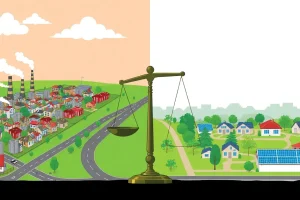
- No community should bear a disproportionate share of negative environmental consequences or be denied environmental benefits.
- Health Impact
- Environmental injustice is linked to higher rates of asthma, cancer, lead poisoning, and other diseases in overburdened communities.
- Global Dimension
- Environmental justice principles apply worldwide, including in climate justice, indigenous rights, and the transboundary movement of hazardous waste.
- Foundational Document
- The 1991 Principles of Environmental Justice outline 17 tenets connecting environmentalism to social justice and human rights.
Key Takeaways
- Environmental justice is the principle that all people have the right to equal protection from environmental hazards and equal access to environmental benefits, regardless of race, income, or nationality.
- It addresses the disproportionate siting of polluting facilities and lack of environmental amenities in marginalized communities, a pattern often termed environmental racism.
- The movement has led to policy changes, such as the U.S. Executive Order 12898, and continues to influence global discussions on climate and sustainability.
- Achieving environmental justice requires inclusive decision-making, equitable enforcement of laws, and targeted investments in overburdened communities.
What Is Environmental Justice?
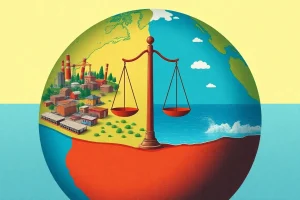
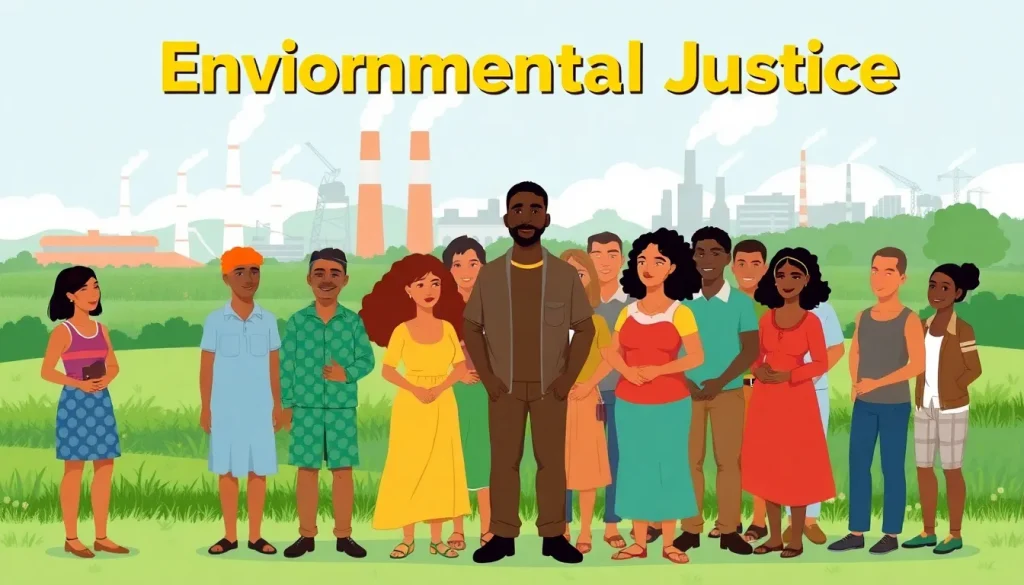
Environmental justice is the fair treatment and meaningful involvement of all people regardless of race, color, national origin, or income with respect to the development, implementation, and enforcement of environmental laws, regulations, and policies. This definition, widely used by the U.S. Environmental Protection Agency, emphasizes that no group should bear a disproportionate share of negative environmental consequences resulting from industrial, governmental, and commercial operations or policies. The concept extends beyond mere protection from harm; it also encompasses the right to access environmental benefits such as clean air and water, green spaces, healthy food, and safe housing.
Environmental justice is both a social movement and a field of study. As a movement, it emerged from grassroots activism in communities that experienced firsthand the unequal distribution of environmental risks. As an academic and policy framework, it examines the systemic factors—historical, economic, and political—that lead to environmental inequities and seeks to develop solutions that promote fairness. The term is often used interchangeably with “environmental equity,” though justice places greater emphasis on procedural fairness and the recognition of community voices. At its core, environmental justice challenges the notion that some populations can be treated as sacrifice zones for the benefit of others.
History
The environmental justice movement has deep roots in the civil rights and environmental movements of the 20th century. While concerns about environmental conditions in poor and minority neighborhoods existed earlier, the modern movement is often traced to 1982, when residents of Warren County, North Carolina—a predominantly African American community—protested the siting of a hazardous waste landfill for polychlorinated biphenyls (PCBs). The protests drew national attention and led to the arrest of hundreds of demonstrators, including civil rights leaders. This event catalyzed research that documented the systemic nature of environmental inequities.
In 1987, the United Church of Christ Commission for Racial Justice published a landmark report, “Toxic Wastes and Race in the United States,” which found that race was the most significant predictor of the location of hazardous waste facilities. This study provided empirical evidence for what activists had long claimed. In 1991, the First National People of Color Environmental Leadership Summit produced the “Principles of Environmental Justice,” a foundational document outlining 17 principles that connect environmental issues to social justice, self-determination, and human rights. The movement gained further institutional recognition in 1994 when President Bill Clinton signed Executive Order 12898, directing federal agencies to identify and address disproportionately high and adverse human health or environmental effects of their programs on minority and low-income populations. Since then, environmental justice has become a global concern, influencing international agreements and local policies alike.
How It Works
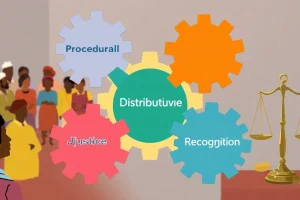
Environmental justice operates through a combination of community organizing, legal advocacy, policy reform, and scientific research. At its heart is the principle of procedural justice, which demands that affected communities have a meaningful voice in decision-making processes. This includes access to information, opportunities for public participation, and the ability to influence outcomes. Substantive justice focuses on the equitable distribution of environmental burdens and benefits, ensuring that no group is unfairly targeted or excluded.
The framework typically involves several key steps:
- Identifying disparities: Using data on pollution sources, health outcomes, and demographic information to map environmental inequities.
- Community engagement: Empowering residents to articulate their concerns and participate in planning and regulatory processes.
- Legal and policy action: Challenging discriminatory practices through litigation, advocating for stronger regulations, and pushing for cumulative impact assessments that consider the total burden on a community.
- Remediation and investment: Directing resources to clean up contaminated sites, improve infrastructure, and enhance environmental amenities in overburdened areas.
- Institutional change: Embedding environmental justice principles into the operations of government agencies, corporations, and international bodies.
Why It Matters
Environmental justice matters because environmental quality is a fundamental determinant of health, well-being, and economic opportunity. When certain communities are systematically exposed to higher levels of pollution, they suffer from elevated rates of respiratory illnesses, cancer, and other health problems. Children in these areas may experience developmental delays and educational setbacks due to lead poisoning or asthma-related school absences. These health disparities perpetuate cycles of poverty and limit social mobility.
Beyond health, environmental justice is a matter of basic fairness and human rights. The unequal distribution of environmental risks often reflects historical patterns of discrimination, such as redlining and exclusionary zoning, which have concentrated marginalized groups in less desirable areas. Addressing environmental injustice is therefore essential to rectifying past wrongs and building a more equitable society. Moreover, as climate change intensifies, low-income communities and communities of color are often the most vulnerable to extreme weather events, sea-level rise, and food insecurity, making environmental justice a critical component of climate resilience.
Examples
- Warren County, North Carolina (1982): The protest against a PCB landfill in a predominantly Black community is widely considered the birthplace of the environmental justice movement. The site was eventually detoxified, but the struggle highlighted the need for equitable siting processes.
- Cancer Alley, Louisiana: An 85-mile stretch along the Mississippi River between Baton Rouge and New Orleans, home to numerous petrochemical plants and refineries. The predominantly African American residents experience elevated cancer rates and respiratory illnesses.
- Flint Water Crisis, Michigan (2014): A state-appointed emergency manager switched the city’s water source to the Flint River, leading to lead contamination and a Legionnaires’ disease outbreak. The crisis exposed how austerity measures and neglect disproportionately harm low-income, majority-Black communities.
- Navajo Nation and Uranium Mining: Indigenous communities in the southwestern United States have suffered from abandoned uranium mines, leading to contaminated water and high rates of cancer. This exemplifies environmental injustice on tribal lands.
- Global South and E-Waste: Developed countries export electronic waste to countries in Africa and Asia, where informal recycling exposes workers and communities to toxic materials, illustrating environmental injustice on an international scale.
Solutions
Addressing environmental injustice requires a multi-pronged approach that includes policy, community empowerment, and economic transformation. Key solutions include:
- Strengthening legal protections: Enacting and enforcing laws that require environmental impact assessments to consider cumulative effects and explicitly prohibit discriminatory practices.
- Community-led planning: Ensuring that affected residents have decision-making power in land-use planning, permitting, and remediation projects through mechanisms like community benefit agreements.
- Targeted investments: Directing public and private funds to improve infrastructure, clean up contaminated sites, and create green jobs in overburdened communities.
- Data transparency and mapping: Using tools like the EPA’s EJScreen to identify and communicate environmental risks, enabling informed advocacy.
- Incorporating environmental justice into climate policy: Designing climate adaptation and mitigation strategies that prioritize the needs of vulnerable populations and avoid exacerbating existing inequities.
- Education and capacity building: Supporting grassroots organizations and providing technical assistance to help communities navigate regulatory processes.
Common Misconceptions
Environmental justice is only about pollution.
Reality: It also encompasses access to environmental benefits like parks, clean water, and healthy food, as well as procedural fairness in decision-making.
Environmental injustice is solely a racial issue.
Reality: While race is a major factor, low-income white communities and indigenous groups also face disproportionate burdens. The issue intersects with class, geography, and political power.
Environmental justice is a niche concern.
Reality: It affects public health, economic development, and social stability broadly. Everyone benefits from a cleaner, more equitable environment.
The problem has been solved by existing laws.
Reality: Despite policies like Executive Order 12898, enforcement remains inconsistent, and many communities continue to experience environmental racism and inequity.
FAQ
What is environmental justice?
Environmental justice is the fair treatment and meaningful involvement of all people, regardless of race, income, or national origin, in environmental decision-making. It aims to ensure that no group bears a disproportionate share of environmental harms and that everyone has equal access to environmental benefits.
How does environmental justice work?
It works through community organizing, legal advocacy, policy reform, and research. Key steps include identifying disparities, engaging affected communities, pursuing legal and policy changes, directing resources to overburdened areas, and embedding equity into institutional practices.
Why does environmental justice matter?
It matters because environmental quality directly affects health, economic opportunity, and quality of life. Systemic environmental inequities perpetuate poverty, worsen health outcomes, and undermine human rights. Addressing them is essential for a fair and sustainable society.
References
- U.S. Environmental Protection Agency (EPA) – Environmental Justice
- Bullard, R. D. (1990). Dumping in Dixie: Race, Class, and Environmental Quality. Westview Press.
- The Principles of Environmental Justice (1991), First National People of Color Environmental Leadership Summit.